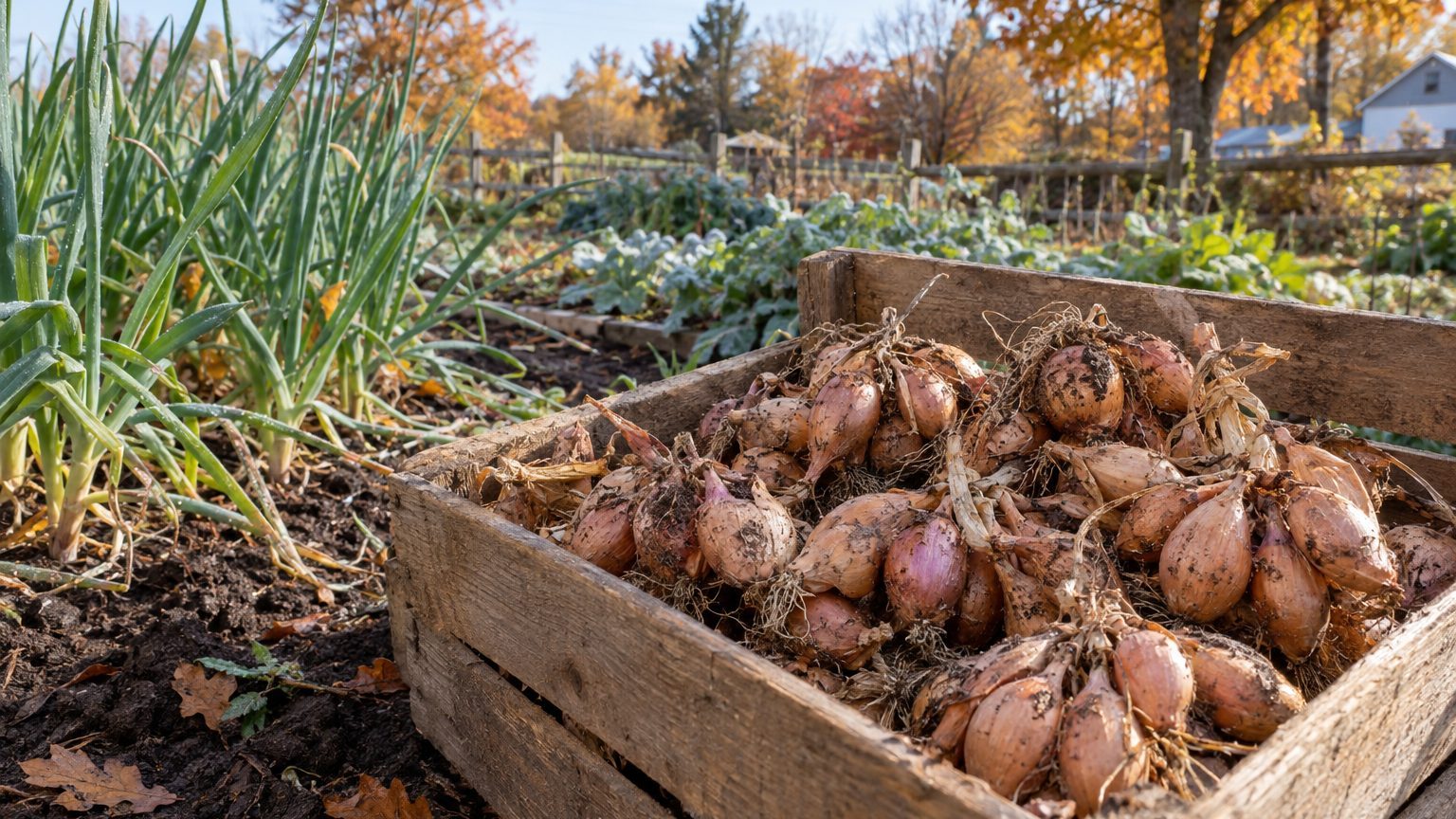

For most Michigan gardeners, the best shallots are multiplier types grown from bulbs and planted in fall, with seed-grown shallots as the spring option when fall slips past. Michigan’s frost dates leave room for both, but not for everything. The state spans USDA zones 4a to 6b, so the right pick near Detroit is not automatically the right pick up north. Here is what to choose, what to skip, and where county advice beats this page.
The short answer for Michigan
Choose by type, not by name. Fall-planted multiplier shallots, the kind grown from bulbs that split into a cluster, are the safest choice across most of Michigan. Spring-planted bulbs come second, and seed-grown shallots started indoors are the backup plan.
Why the type matters more than the cultivar
The numbers explain it. The last spring frost falls around April 30 in the Detroit area and in early to mid May across most of the Lower Peninsula. The first fall frost runs October 6 to October 21 (zone 6a). That is a little over five months at the shortest, which is enough for a shallot that starts early and tight for one that starts late. A bulb planted the previous fall has roots in the ground before winter. It restarts at the first thaw while a spring planting is still waiting for workable soil.
Winter cold is the other half. The mean daily minimum of the coldest month at the Detroit reference station (NOAA 1991-2020 normals) is 19.2°F. That is an average of the nightly lows, not the record low, but it shows what a fall planting faces: a few months of freeze-and-thaw, and in the north, harder cold. Bulbs sit in soil that buffers air temperature, and a layer of mulch evens out the swings.
Three types compared
| Type | Planted | Best fit in Michigan |
|---|---|---|
| Multiplier bulbs, fall | Fall, before the ground freezes | Default choice for the Lower Peninsula; mulch required |
| Multiplier bulbs, spring | As soon as soil is workable | Colder zones, or any gardener who missed fall |
| Seed-grown, transplanted | Seeded indoors, set out in spring | Gardeners who want to avoid carrying bulbs over; needs a head start |
This page names types rather than cultivars because it has no county trial results to back a specific list. For the timing of each planting, see When to Plant Shallots in Michigan.
What will not work here
A short season defeats the slowest shallots first. Shallots form bulbs as days lengthen and warm, so a plant that has not grown enough leaves by then makes a small bulb. In Michigan that squeezes any variety that needs a long run from seed to harvest, especially when the seedlings go out after the mid-May frost window has already passed.
Late spring starts and sloppy fall timing
Seed sown directly in the garden in May is the clearest failure. Michigan’s frost-free window is a little over five months at the shortest, and direct-sown seed spends the first weeks barely visible. Starting seed indoors and setting out transplants is the version that has a chance. This page does not have first-frost dates for zones 4a or 5, so northern gardeners should assume less margin than the zone 6a dates suggest.
Fall planting has its own ways to fail. Plant too early and the bulb pushes green tops that winter will burn back. Plant too late and the roots never anchor, so the first hard freeze heaves the bulb out of the soil. An unmulched bed is the third mistake. The 19.2°F figure is a Detroit average. Colder parts of the state run lower, and bare soil there gives a fall planting little protection.
Wet soil and tight rows
Heavy ground that stays soggy through spring is hard on any member of the onion family, and close spacing makes it worse because the foliage stays damp. This page has no rainfall or soil data, so treat that as a general caution, not a measurement. Raised rows or beds amended with compost solve most of it. If water pools in your garden after a spring storm, shallots planted there will rot instead of multiplying.
What changes across Michigan
The USDA Plant Hardiness Zone Map (2023, built on 1991-2020 normals) puts Michigan in zones 4a to 6b. That is three full zones, so there is no single answer for the state. Zones rest on one variable, the average annual extreme minimum temperature, which makes them a measure of winter survival rather than season length.
The warm end of that range is where the fall-planted multiplier advice fits best, and the frost dates above come from that end. The cold end shifts everything. Gardeners in the north, or on higher ground where cold air settles and spring arrives late, should plant fall bulbs earlier so roots can establish before freeze-up. They should also mulch more heavily and keep spring planting in reserve as a backup. Seed-grown shallots deserve a second look in the north, since they skip the question of whether a bulb survives winter.
Do not guess your own zone. The USDA map lets you search by ZIP code, and that is the quickest way to see where your garden falls inside this three-zone spread. Even then, treat the result as a starting point. A garden on a slope, near one of the Great Lakes, or in a low spot can behave differently from the zone printed for its ZIP code.
Where to check this for your own county
The best next stop is MSU Extension, Michigan’s land-grant extension service. It has county offices across the state, and its staff know local conditions that no statewide page can capture.
Look for two things. The first is a local planting calendar for alliums, or for garlic and onions if shallots are not listed, since the timing logic is close. The second is any record of varieties trialled in your county, meaning which ones came through winter and matured on time there. Both beat a statewide guess. A county recommendation outranks a state one, and this page is the state one: it works from state-level frost dates, one reference station and a zone range, not from your soil or your county’s weather.
Ask the county office plainly when fall planting should happen in your area and whether anyone has tried multiplier shallots locally. If you want the full growing sequence once you have picked a type, Growing Shallots in Michigan covers it from bed prep to curing.
Checking this against your own garden
Your own observations outrank every date above. Three are worth tracking, and none needs equipment.
- Soil warmth by feel: In spring, push your hand into the bed. Cool and crumbly means it is workable, while cold and sticky means wait. If your soil reaches that point a week or two ahead of a neighbor’s, you have a warmer spot, perhaps sheltered or sandier.
- The first true leaves: Note the date green shoots show on fall-planted bulbs, or when seedlings put out their first true leaves, which come after the thin seed leaf. Early dates mean a mild microclimate. Late dates mean plan around a later start.
- The first frost on tender plants: Watch when frost first blackens tomato or squash leaves. Compare it to the October 6 to October 21 range for zone 6a. A garden that frosts earlier is a cold pocket and needs earlier fall planting.
Write the dates in a notebook for a couple of seasons. Two years of your own records tell you more about your garden than any state-level range.
Common questions
Do shallots survive Michigan winters?
Fall-planted bulbs generally do, particularly with mulch. The mean daily minimum of the coldest month at the Detroit reference station is 19.2°F. Colder parts of the state, down to zone 4a, run harsher, so the mulch matters more there.
Is fall or spring planting better?
Fall is the default for the Lower Peninsula because the bulbs root before winter. Spring works too and is the sensible fallback in colder zones. The planting calendar covers the timing.
Are seed-grown shallots worth trying?
Yes, if you start them indoors and transplant them. Direct sowing in May leaves too little growing time, given the frost dates above.
Which named variety should I buy?
This page does not name cultivars because it has no Michigan trial data to support a list. Ask your county office at MSU Extension which ones have performed locally, then pick a type that fits your zone.