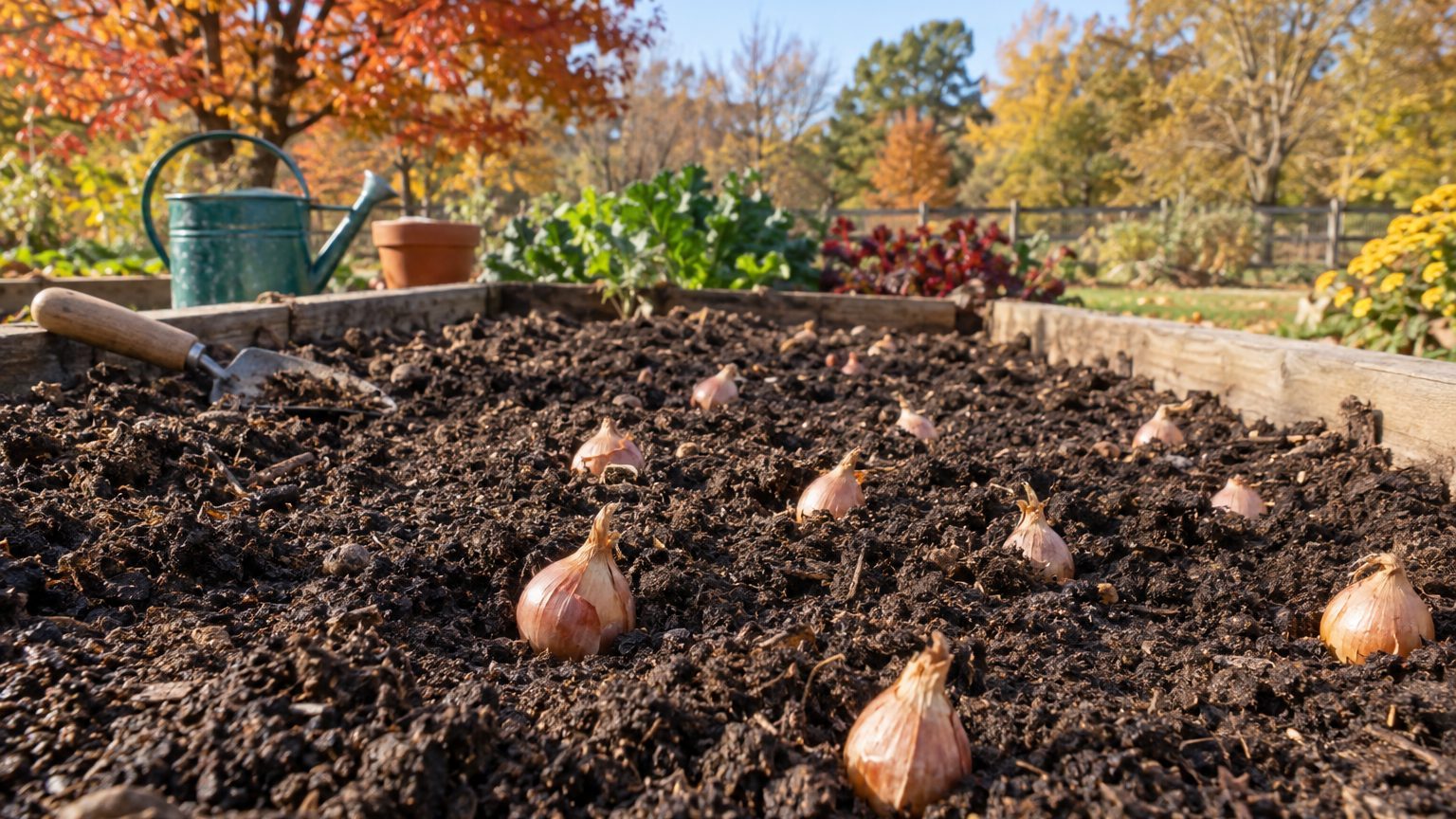

Plant shallots in Mississippi in fall, in the weeks around the first fall frost, or in late winter once the soil can be worked. Spring planting that drifts well past the March frost window runs into heat before the bulbs are ready. The dates below come from the Jackson reference station, and most home gardens should nudge them a week or two.
The short answer for Mississippi
At the Jackson reference station, the first fall frost falls between November 7 and November 22. The last spring frost falls between March 6 and March 22. Fall planting, around that November window, is the main plan. A late-winter planting that goes in near that March window is the backup.
Both ranges are probabilities, not forecasts. They come from NOAA’s 1991-2020 Climate Normals and describe the stretch of dates over which the odds of a 32°F freeze run between 30 and 70 percent. Any single year can land outside them. A frost on March 28 or a mild stretch into December would not break the statistics.
| Event | Reference-city window | What it measures |
|---|---|---|
| Last spring frost | March 6 to March 22 | 30-70% band of 32°F freeze probability |
| First fall frost | November 7 to November 22 | 30-70% band of 32°F freeze probability |
Why fall leads
Shallots need roots and leaves before they bulb. A set planted in the fall window gets a mild winter to build roots. Jackson’s coldest month still averages a nightly low of 36.6°F, above freezing, so the ground rarely shuts the plant down. Cold snaps still happen on individual nights, but the average winter is easy on a shallot. That head start becomes bigger bulbs when the days lengthen and warm in spring.
What these dates do not tell you
This page has no county-tested planting date, soil-temperature trigger or yield trial for Mississippi, so the frost windows are anchors, not guarantees. Airport readings also run on the optimistic side. Suburban and rural gardens typically see the last spring frost later and the first fall frost earlier than the reference city, often by one to two weeks, and more at elevation. Shift your own plan accordingly. For crop basics beyond timing, see Growing Shallots in Mississippi.
What will not work here
Planting in late spring is the most common failure. The reference city’s last frost window ends on March 22, and gardens farther from the airport run later. A shallot set pushed into the ground in April or May has little time to grow leaves before Mississippi’s summer heat arrives. The result is small bulbs. Shallots that are not well leafed out when the weather turns hot have little to put into the bulb.
Northern advice is the second trap. Many guides tell you to plant “as soon as the ground thaws.” Mississippi soil rarely freezes hard enough to thaw in any meaningful sense, so that cue never arrives. Instructions built around a frozen winter can leave a gardener waiting for a signal that does not exist. Use the frost windows above, or your own observations, instead.
Wet is the third problem. Mississippi is humid for much of the year, and a fall-planted shallot sits through a long, damp winter. Sets buried deep in flat, heavy clay can rot before they root. Planting on raised rows or mounded beds, with the tips just showing, gives water somewhere to go. Close spacing makes it worse. Crowded foliage stays wet and invites fungal disease, so give each plant elbow room. A thick mulch held tight against the necks can trap moisture in the same way.
A fixed watering routine is a smaller but real mistake. In a place with frequent rain, watering once a week on schedule can overwater beds that are already wet. Check the soil first. Keeping the bed on the dry side of moist is safer here than the reverse.
Finally, variety matters. Types that mature slowly are a gamble when the bulbing window closes with summer heat. Which types suit the state is covered in The Best Shallots to Grow in Mississippi.
What changes across Mississippi
Mississippi does not have one hardiness zone. The USDA Plant Hardiness Zone Map (2023 edition, built on 1991-2020 normals) places the state in zones 7b to 9a. That is a spread of several half-zones, and the system rests on a single variable: the average annual extreme minimum temperature. There is no single planting answer for the state, only a range, and the Jackson dates sit somewhere in the middle of it.
In practical terms, the northern part of the state runs colder in winter, and the Gulf Coast runs milder. A reader in the north should expect a later last spring frost and an earlier first fall frost than Jackson’s, and should build in at least the one-to-two-week cushion described above. Higher ground adds to that. In the north, planting at the early end of the fall window gives roots more time to settle before the soil cools. Pushing spring planting late is the wrong move there, because the season runs out sooner.
Farther south, the reverse applies. Winters are milder, so fall-planted sets keep growing for more of the winter. That sounds like an advantage, but it also means warmer, wetter ground and higher rot risk, so drainage matters even more. Spring warmth also arrives sooner, which shortens the window before heat shuts the bulbing season down.
A hardiness zone is also about winter lows only. It says nothing about summer heat, humidity or rainfall, which matter at least as much for shallots here. I cannot tell you which zone your yard falls in. The USDA Plant Hardiness Zone Map lets you look up your ZIP code, and the number you find there is a good first step toward adjusting the Jackson dates.
Where to check this for your own county
Your state extension service is the best next stop. In Mississippi that is Mississippi State University Extension, the land-grant university’s outreach arm. It maintains offices at the county level, staffed by agents who know local soils and weather.
Two things are worth looking for. The first is a local planting calendar for onions and shallots, or for the allium family generally if shallots are not listed on their own. A county calendar tells you when gardeners nearby actually put sets in the ground, which beats any date derived from an airport. The second is variety trial results. Extension programs sometimes run trials of vegetable varieties, and a result from your own area tells you what has been grown successfully near you, not just somewhere in the South.
A phone call or a visit to the county office is often the quickest route. Agents can usually say whether your area runs wetter, colder or sandier than the state norm. They can also tell you about local disease pressure, which affects both spacing and variety choice.
A county recommendation beats a state one, every time. This page is the state one. It uses a single reference station in the central part of Mississippi and a federal climate dataset, and it cannot see your soil, your slope or your neighbor’s creek bottom. Treat these dates as a starting frame and let your county’s guidance tighten them.
Checking this against your own garden
Your own observations outrank every date on this page. Three are worth watching, and none needs equipment.
Soil warmth by feel. Push your hand a few inches into the bed. Fall soil that feels cool but crumbly is ready. Soil that feels cold, sticky and heavy is telling you about drainage, not just temperature. A bed that warms faster in late winter than the one across the yard is the better spot for your backup planting. Compare two spots and you will learn something about your microclimate quickly.
The first green shoots. Note the day you plant and the day the first green tips break the surface. A long gap tells you the bed is cold or waterlogged. A short one means a warm, well-drained spot. Write both dates down for next year. After a season or two you will have a local calendar better than any general one.
When the tops start to fall. In late spring, shallot tops yellow and flop as the bulbs finish. If some plants do this earlier than others, the early ones sit in a hotter or drier pocket. Any flower stalks that appear are another sign of stress or a mismatch with the planting date, and they show you where the plants struggled.
Together, these three notes turn a general guide into a plan that fits your yard. The broader growing picture is in Growing Shallots in Mississippi.
Common questions
Can I plant shallots in spring in Mississippi?
Yes, but early. Late winter, near the March 6 to March 22 window at the reference city, works better than April or May. Later plantings have less time to grow leaves before the heat arrives.
Do I have to wait for the first frost to plant?
No. The November 7 to November 22 window is an anchor, not a trigger. Plant around it, adjusting for your area, and use how the soil feels as your guide.
Do the Jackson dates apply on the Gulf Coast or in the north?
Only roughly. The state spans USDA zones 7b to 9a, so the north runs colder and the coast milder. Check your county’s extension office.
Is fall or spring planting better?
Fall is the main plan because roots grow through a mild winter. This page has no Mississippi trial data comparing the two, so ask your county extension office what has worked locally.