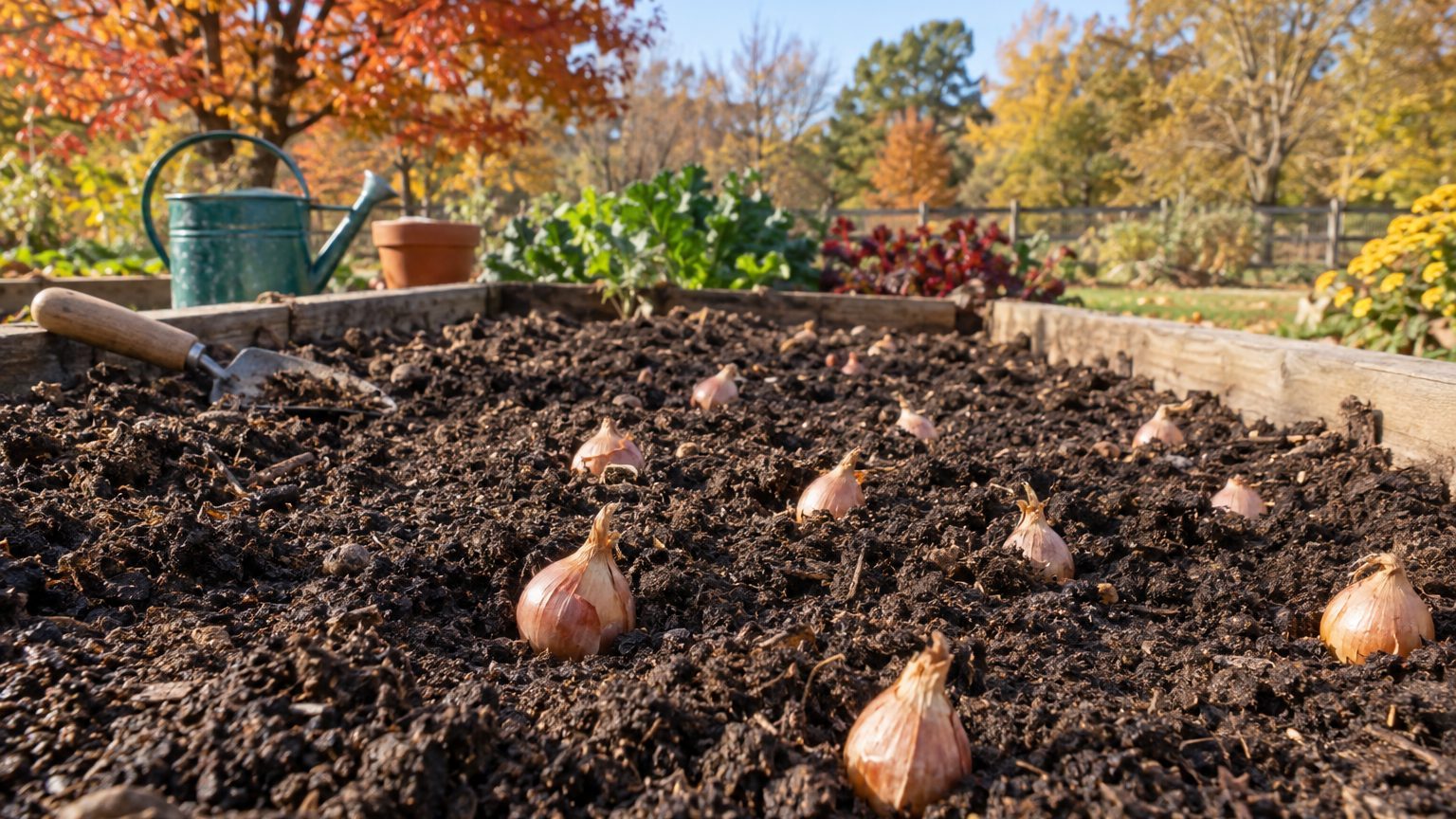

Across Nevada’s warm low desert, shallots go in during fall. In the cold north and at elevation, they go in as early in spring as the soil can be worked. That split is the real answer, not a single date. The state spans USDA hardiness zones 4a to 10a, so a calendar written for one valley will be wrong for the next.
The short answer for Nevada
Plant in fall where winters are mild, around Las Vegas and the low desert. Plant in early spring, as soon as the ground is workable, in the Reno and Carson City area and anywhere up in the hills. This page does not have a verified statewide shallot sowing window, and the only frost data it holds comes from one Las Vegas station, so it will not invent one.
What the Las Vegas numbers say
NOAA’s 1991-2020 U.S. Climate Normals for the Las Vegas airport put the last spring frost between January 7 and February 1. The first fall frost falls between December 8 and December 23. Those dates are a probability of a 32°F freeze, taken from the 30 to 70 percent band. They do not promise the last freeze has passed on a given day. They mark the stretch where a freeze is still a real possibility.
The same station’s coldest month has a mean daily minimum of 39.6°F. That is the average overnight low in the chilliest month, not the record low. It tells you a dormant shallot in that part of the state faces a mild winter. Cold hardiness is simply not the worry there.
What they cannot say
The Las Vegas airport is a desert urban heat island, and its frost dates are an extreme. Reno, Carson City and anywhere at elevation get frost months earlier in fall and months later in spring. So treat these figures as the warm end of Nevada’s range, not as guidance for the state. For the full growing picture, start with Growing Shallots in Nevada. For choosing what to plant, see The Best Shallots to Grow in Nevada.
What will not work here
The most common failure is borrowing a date from the wrong end of the state. Say a gardener in the north follows Las Vegas timing and plants in early December, when the airport’s first frost is only just arriving. By then the ground in much of the north has been frosting for months. Sets dropped into cold or frozen soil never root before winter, and they heave or rot.
The reverse mistake is just as real. A low-desert gardener who waits for a northern-style spring window, planting once the soil thaws and the frost danger is clearly over, will find that the last likely freeze at the airport is as early as January 7 to February 1. Waiting until March or April on a northern schedule leaves the plants too little cool weather to build leaves before summer heat arrives. Fewer leaves means smaller bulbs. Spring planting in the low desert only works if it is done very early.
Summer is the second problem. Nevada’s summers are hot and dry, and a shallot’s root system is shallow. Watering once a week with a long soak suits a lawn or a shrub, but it leaves a shallot’s top few inches of soil bone dry between drinks. Plants that swing from parched to soaked split, stall, or bolt. Mulch and more frequent, lighter watering during bulb swelling do far more than any fertilizer.
Season length is the third. At high elevation, where frost comes months earlier and leaves later, the slowest-maturing shallots simply run out of season. A variety that needs a long, mild stretch to size up will be caught by fall frost before it finishes. Pick faster types for the cold end of the state, and use the best shallots to grow in Nevada list to match type to your conditions.
One more thing that fails is trusting a single number. The 39.6°F winter minimum is reassuring in Las Vegas and meaningless in a mountain valley. A figure from one station describes one station.
What changes across Nevada
There is no single answer for Nevada, and the hardiness map shows why. The USDA Plant Hardiness Zone Map (2023, built on 1991-2020 normals) places the state anywhere from zone 4a to zone 10a. That is seven zones, a spread few states approach. The system rests on one variable, the average annual extreme minimum temperature, so it tells you about winter cold and nothing directly about frost dates or summer heat.
A gardener in the Las Vegas valley sits at the warm end of that spread, where winter lows rarely threaten a dormant bulb. A gardener in a high mountain valley sits near the other end, where the same fall planting could be killed outright. The territory is several gardens stacked together, and a recommendation that works at one end can fail at the other.
If you garden in the north or at altitude, shift your thinking in three ways. Lean toward spring planting, as early as the soil can be worked, unless you can get sets in early enough to root well before the ground freezes. Choose varieties that mature faster. And if you do plant in fall, expect to mulch the bed to cushion freeze-thaw swings.
Which zone are you in? Look it up yourself on the USDA map, by ZIP code, rather than assuming. Zones can change within a few miles of elevation, and a ZIP code shows the map’s current reading for your exact area.
Where to check this for your own county
Your state extension service is the best next stop. Nevada’s is University of Nevada, Reno Extension, part of the land-grant extension network. Its county offices work with local soil, local elevation and local frost patterns, which no statewide page can match.
Look for three things there. First, a planting calendar for your county or nearest town, ideally one covering onions and other alliums, since shallots are timed the same way. Second, any variety trials run in your area, which show what has actually grown in your conditions rather than what a catalog claims. Third, local frost dates for the town closest to you, which will differ from the Las Vegas figures above.
A county recommendation beats a state one, every time. This page is the state one. It can tell you which direction to lean and warn you about which mistakes to avoid. It cannot tell you that your valley’s soil warms two weeks later than the next valley over. If the extension office offers a call line or a Master Gardener helpline, use it, and ask specifically about fall versus spring planting for shallots or onion sets.
Checking this against your own garden
Your own observation outranks every date on this page. Three things are worth watching, and none needs equipment.
Soil warmth by feel. Push a bare hand a few inches into the bed in the morning. Cool and workable is what you want. Cold enough to ache, or a crust that stays frozen, means wait. A bed that feels warm early in spring is probably sheltered, perhaps by a south-facing wall, and can be planted sooner.
The first green shoots. After planting, watch for the first leaves to break through. Slow emergence in a fall planting points to a cold pocket or heavy, wet soil. Quick, even emergence tells you the spot holds heat and drains well, and next year you can plant there a little earlier.
Your neighborhood’s frost signs. Note when the first frost blackens tender plants such as basil or squash, and when the last frost nips new growth in spring. Write the dates down for two or three years. Those dates describe your microclimate better than any airport station, and they are the ones to carry to your extension office.
Common questions
Can I plant shallots in fall in Las Vegas?
Yes, fall is the usual choice in the low desert, where the winter minimum at the airport station averages 39.6°F in the coldest month. Local timing still matters, so check your extension office.
Do Las Vegas frost dates apply to Reno or Carson City?
No. The Las Vegas airport is an urban heat island. Reno, Carson City and higher ground see frost months earlier in fall and later in spring.
Is spring or fall better for planting shallots in northern Nevada?
Spring is the safer lean in the cold north and at elevation, planted as soon as the soil is workable. Fall planting only suits those who can root sets well before the ground freezes.
What hardiness zone is Nevada?
The USDA Plant Hardiness Zone Map (2023) spans 4a to 10a across the state. Look up your own ZIP code on the map instead of guessing.