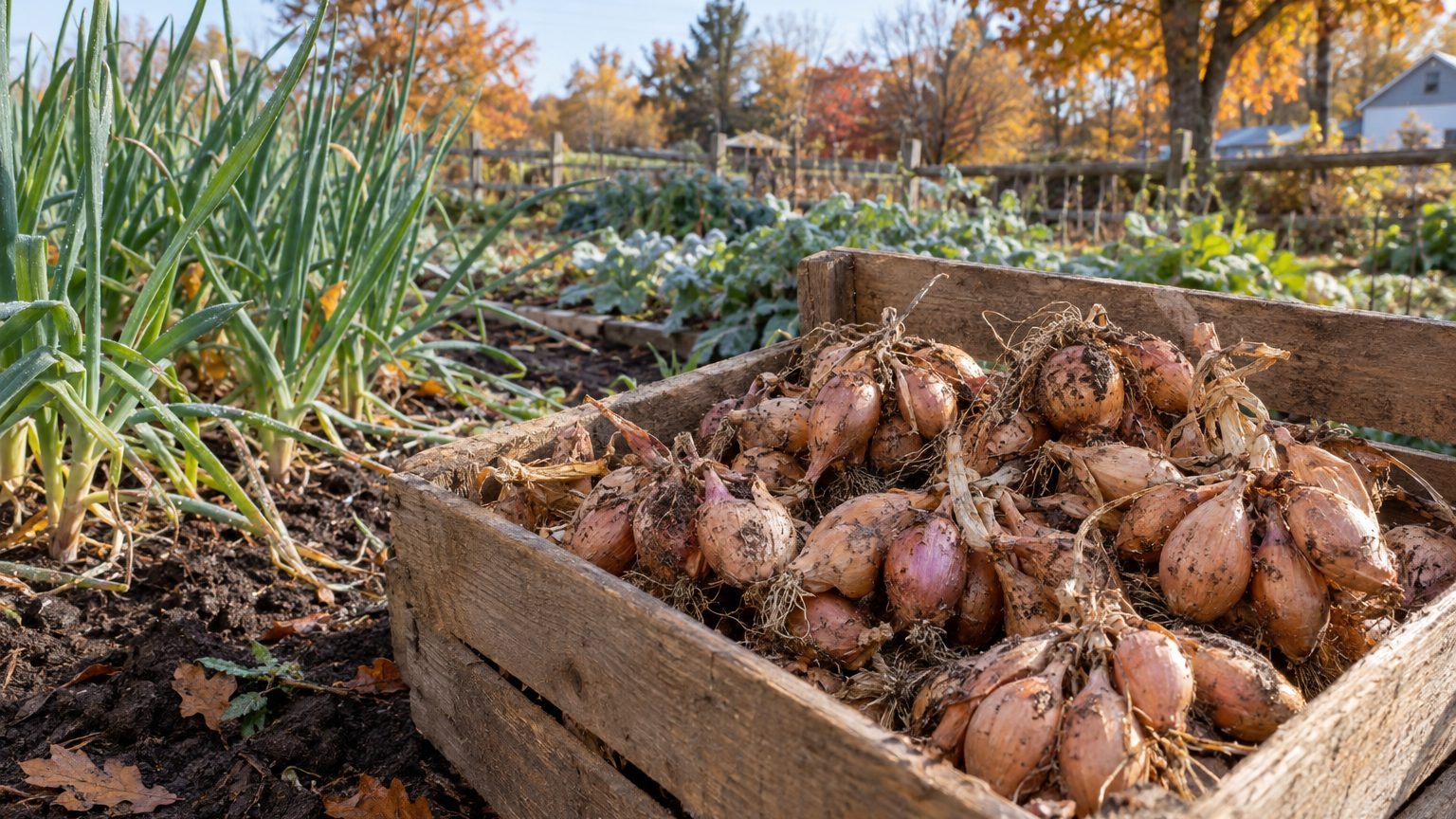

For most Ohio gardeners, the best shallots are multiplier types grown from bulbs, either planted in fall under mulch or set out the moment spring soil can be worked. Seed-grown shallots are a workable second choice. This page decides by type rather than cultivar name, because the facts behind it cover Ohio’s frost dates and hardiness range but include no county variety trials.
The short answer for Ohio
Multiplier shallots from bulbs fit Ohio’s season best. One planted bulb splits into a cluster of new bulbs, and the crop is ready before the worst of midsummer. Fall planting suits the colder parts of the state, early spring planting is the fallback, and seed-grown shallots suit gardeners who want cheap, disease-free starts and don’t mind the indoor work.
The numbers explain why. For zone 6a, Ohio State University Extension lists the last spring frost as May 5 to May 15 and the first fall frost as October 5 to October 15. Those are average dates, a probability of frost arriving, not a promise. A frost can land a week either side of them in any given year. Between them sits a frost-free stretch of roughly five months, but shallots don’t wait for it. They are cool-season plants that need to be growing before the last frost and finished before summer heat peaks.
Winter matters too. At the Columbus reference station, the mean daily minimum of the coldest month is 22.0°F (NOAA Climate Normals, 1991-2020). That is an average of nightly lows, not the record cold, so individual nights run colder. It is cold enough that fall-planted bulbs need a few inches of straw or shredded leaves, yet mild enough that hardy shallot types generally come through under that cover.
Choosing by type
| Type | Planting window | Fits Ohio when | Main risk here |
|---|---|---|---|
| Multiplier bulbs, fall-planted | Fall, before the ground freezes | You want the earliest, largest bulbs | Heaving, rot in wet winter clay |
| Multiplier bulbs, spring-planted | As soon as soil is workable | You missed fall or have heavy soil | Smaller bulbs if spring turns hot fast |
| Seed-grown | Start indoors, transplant in early spring | You want low cost and clean stock | Slow starts, extra seedling care |
For exact timing, see When to Plant Shallots in Ohio. For the broader picture, start with Growing Shallots in Ohio.
What will not work here
The first failure is a late start. Ohio’s spring can swing from frost to heat quickly, and a shallot planted well after the May 5 to May 15 last-frost window gets little cool weather to build leaves. Bulb size follows leaf count. Sets pushed into the ground in late May tend to produce small, early-maturing bulbs, and a slow seed-grown crop transplanted that late can fall short altogether.
Very slow types are the second casualty. Anything that needs a long, mild season to size up will meet Ohio’s summer before it is ready. With the first fall frost arriving October 5 to October 15 in zone 6a, there is room for a crop planted on time, but not much room for a plant that dawdles. Choose types known for finishing in a moderate season, and treat a catalog’s silence on maturity as a reason to ask.
Humidity is the quieter enemy. Ohio summers are often muggy, and shallots are harvested in the damp stretch of early summer. Close spacing traps moisture around the necks, which invites fungal disease and rot. Crowd them for a bigger row count and you may lose the lot. Give clusters real room, and plant where air moves.
Wet winter soil is another problem. Many Ohio gardens sit on heavy clay, and fall-planted bulbs in a spot where water stands will rot long before they sprout. Raised rows or a bed with real drainage fix this. A flat bed that holds puddles in March does not suit this crop, no matter how good the variety.
Weekly watering habits can also backfire. A gardener who waters on a fixed schedule in a rainy June is inviting bulb rot, not growth. Shallots want steady moisture early and then dry-down as the tops yellow. Ohio’s rainfall often does that job unaided, so the failure here is overwatering, not drought.
Finally, don’t rely on the 22.0°F average to keep fall bulbs safe without cover. That figure is a mean of daily lows. Real cold snaps dip below it, and a bare, thawing bed can heave bulbs out of the soil. Mulch fixes this too, and it is cheap.
What changes across Ohio
Ohio is not one garden. The USDA Plant Hardiness Zone Map (2023, built on 1991-2020 normals) puts the state across zones 5b to 6b. That spread rests on a single variable, the average annual extreme minimum temperature, so it says how cold the worst nights get, not how long the season is or how wet the soil stays. There is no single answer for the state, and the frost dates above are tied to zone 6a, so other parts of Ohio will differ from them.
If your garden sits toward the colder end of that range, in the north or on higher ground, shift your plan in three ways. Favor fall planting with thicker mulch, because established roots give you a head start once the ground thaws. Expect frost dates later in spring and earlier in fall than the zone 6a figures, which shortens your window. And lean toward types with a reputation for finishing early.
In the warmer pockets of zone 6, the issue flips. You can plant earlier in spring, but you also meet heat sooner, so early planting matters more, not less. Seed-grown shallots are riskier there because they need more weeks of cool weather to size up than bulbs do.
Don’t guess your zone from a neighbor’s or from a seed packet. Look up your own location on the USDA Plant Hardiness Zone Map and read the zone for your ZIP code. Hilly land, city heat islands and low frost pockets can all put your garden a half zone away from the next town.
Where to check this for your own county
Your state extension service is the next stop. Ohio State University Extension runs county offices across the state, and their staff know local soils, frost patterns and what has actually grown in your area. Two things to look for: the local planting calendar for your county, and any varieties trialled in your county or a neighboring one.
Be clear about what this page is. It is the state-level view. It works from one hardiness range, one set of zone 6a frost dates and one reference station for winter cold. A county recommendation beats it every time, because a county office can say what holds up in your clay, your wind and your rainfall.
When you reach the extension site, search for onion-family guidance, since shallots are often covered alongside onions and garlic. Ask the office, by phone or email, whether any shallot cultivars have been trialled nearby. This page does not have that data, and it would be wrong to pretend it does.
One caution about calendars. Extension materials from other states are tempting to borrow, but they are written for other climates and often for other crops. A calendar built for a southern lawn grass, for example, tells you nothing about an Ohio shallot bed. Use Ohio sources for Ohio dates.
Checking this against your own garden
Your own observations outrank every date here. Three are worth watching, and none needs equipment.
- Soil warmth by feel. In spring, push a hand or trowel into the bed. If the soil is cold and clumps into a wet ball, it is too early or too soggy to plant. If it crumbles and no longer feels icy, you can plant. Beds that reach this stage a week ahead of a neighbor’s show a warm, well-drained microclimate.
- First green shoots, or first true leaves. Note the day shoots break through on fall- or spring-planted bulbs, or when seedlings put out their first true leaf beyond the grassy seed leaf. A slow, late bed is telling you it is colder or wetter than the state calendar assumes.
- Tops flopping and yellowing. When leaves fall over and fade, the bulbs are finishing. If this comes early in a hot spot, plant earlier next year. If it drags into damp weather, you have a humid pocket and should widen spacing.
Keep a few notes from year to year, even on the back of a seed packet. Two or three seasons of your own dates will tell you more than any statewide chart.
Common questions
What is the best type of shallot for Ohio?
Multiplier shallots grown from bulbs are the best all-round choice. Fall planting under mulch gives the earliest start, and early spring planting works well if fall passes. Seed-grown types are a lower-cost option.
Can shallots survive an Ohio winter?
Fall-planted bulbs generally can, with mulch. The mean daily minimum of the coldest month at Columbus is 22.0°F, but that is an average, so colder nights occur. Mulch protects against heaving and sharp cold snaps.
Which specific cultivar should I buy?
This page does not have Ohio variety trial results, so it names no cultivar. Ask your county extension office which ones have been grown nearby, and favor types described as maturing in a moderate season.
Do northern Ohio gardens need a different approach?
Often, yes. Ohio spans USDA zones 5b to 6b, and colder areas should lean on fall planting with thicker mulch and expect a shorter window than the zone 6a frost dates suggest. Check your own spot on the USDA map first.