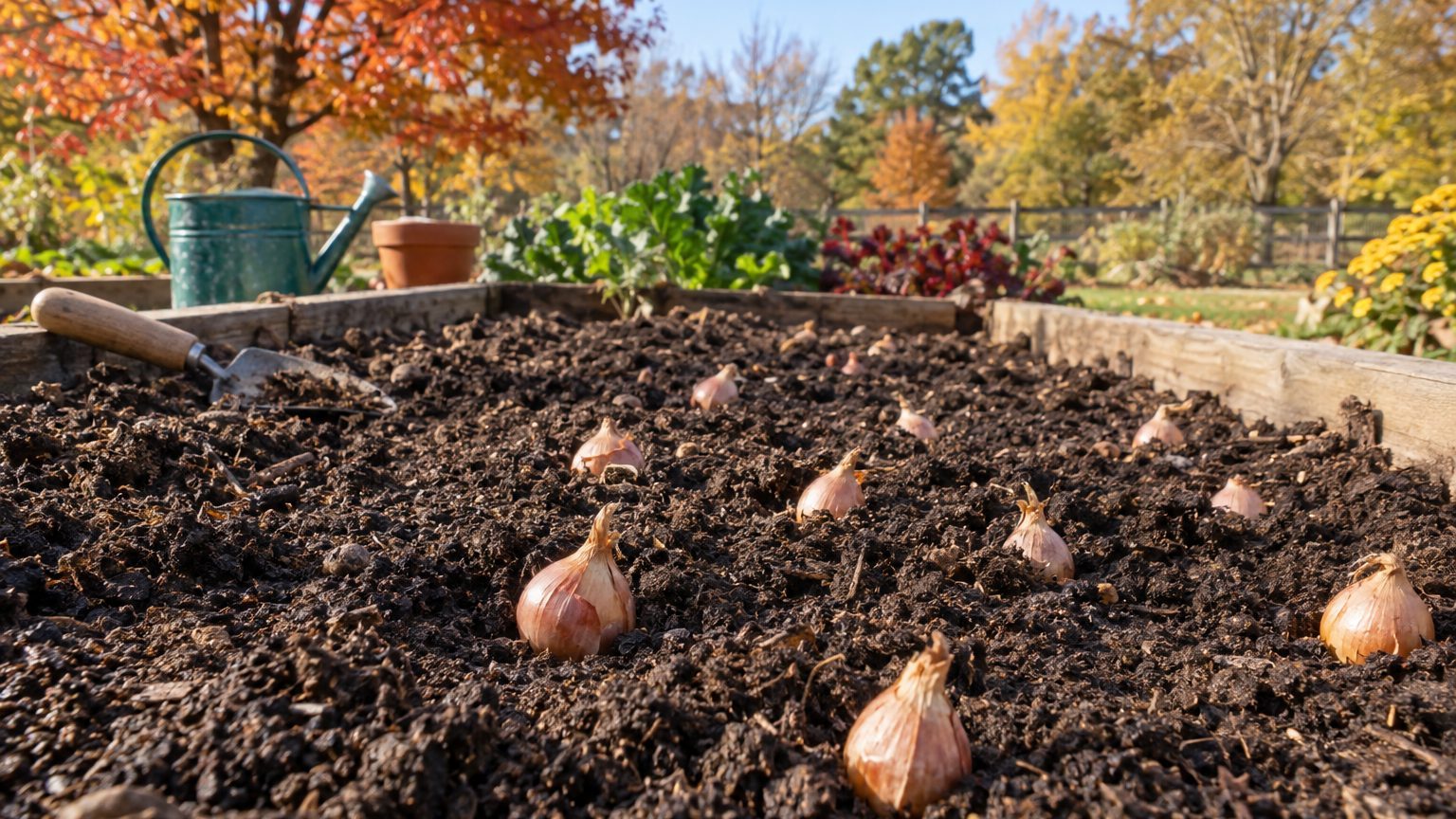

Plant shallots in Pennsylvania in fall, ahead of the first freeze, or in early spring as soon as the soil can be worked. In Philadelphia, the reference point here, spring planting lines up with a last-frost window of March 29 to April 6. Fall planting belongs in October, before the first-frost window of November 5 to November 16. The rest of the state runs later in spring.
The short answer for Pennsylvania
Those frost dates come from the NOAA NCEI U.S. Climate Normals for 1991-2020, and they are probabilities, not deadlines. Each date marks the stretch in which the chance of a 32°F freeze falls between 30 and 70 percent. March 29 to April 6 is not the day the last freeze will happen. It is the week or so when a freeze is still a live possibility, roughly a coin flip. The same logic applies in the fall: from November 5 to November 16, a first 32°F freeze goes from unlikely to likely.
Shallots do not need you to wait for the end of that uncertainty. They are a cool-weather crop, and the cloves tolerate cold snaps. That is why the working calendar is built around the frost window rather than after it. For a deeper look at the crop itself, see Growing Shallots in Pennsylvania.
Fall planting
The goal in fall is roots, not leaves. A clove set in October has time to anchor itself in cooling soil and should send up only a short green shoot, if any, before winter. Aim to finish well ahead of the November 5 to 16 band, because once the ground is cold and wet, getting a clove in at the right depth gets harder. The 1991-2020 normals put the coldest month’s mean daily minimum at 26.0°F in Philadelphia. Winters there are cold on most nights but not brutal, so the main winter risk is freeze-and-thaw heaving the cloves out of the soil, which a layer of mulch handles.
Spring planting
Spring planting works when the soil is workable: crumbly, not sticky, not frozen. In Philadelphia that overlaps with the March 29 to April 6 frost window, and a late freeze at that point will not hurt a clove that has not yet pushed much growth. Spring is the fallback for anyone who missed fall or lost a planting to a wet, cold winter. Which varieties suit each season is covered in The Best Shallots to Grow in Pennsylvania.
What will not work here
Using Philadelphia’s dates for the whole state is the biggest mistake. The data station sits in the mildest corner of Pennsylvania. The northern tier and the Alleghenies run two to four weeks later in spring. Adding that to March 29 to April 6 puts their equivalent window at roughly mid-April to early May. A gardener near the New York line who plants on a Philadelphia schedule may be setting cloves into frozen or waterlogged ground.
Planting too early in fall also fails. A September planting, while the soil is still warm, pushes cloves into leafy growth with weeks of mild weather ahead of the November 5 to 16 frost band. That tender top growth then takes the cold, and the plant spends reserves it needed for bulbing the following summer. Waiting until October is not procrastination. It is the point of the schedule.
The opposite error is planting too late in spring. Shallots bulb up as days lengthen and warmth builds. A planting in late May, after a cold, soggy April kept someone out of the garden, gives the plant little time to grow before summer. The result is small bulbs, and many of them will look more like scallions than shallots.
Waterlogged ground defeats both seasons. Pennsylvania springs often turn wet as the frost goes out, and a clove sitting in saturated clay in March or early April can rot before it roots. Heavy soil in a low spot is a poor bet no matter what the calendar says. A raised bed or a ridge of loosened soil fixes this better than any date change.
One thing that is not a problem here: winter hardiness. With a coldest-month mean daily minimum of 26.0°F at the reference station, and hardy bulbs in the ground, plain cold rarely decides whether a planting survives. Timing, drainage and heaving do.
What changes across Pennsylvania
Pennsylvania spans USDA hardiness zones 5a to 7b (USDA Plant Hardiness Zone Map 2023, built on 1991-2020 normals). That is a wide spread, and there is no single answer for the state. The zone system rests on one variable, the average annual extreme minimum temperature, so it says how cold the worst nights get. It does not say when spring warms up or when fall closes in. Still, it is a useful proxy for how far a garden sits from Philadelphia’s mild conditions.
For a reader in the north or at altitude, the shift is mostly in spring. The caution on the frost data is explicit: those regions run two to four weeks later than the Philadelphia window. Spring planting moves later by the same amount, and fall planting needs to be finished with more margin before the ground freezes. This page does not have a fall-frost figure for the northern tier or the Alleghenies, and I would rather say that than borrow one from a neighbor.
Fall planting in colder places also leans harder on mulch. A few inches of straw or shredded leaves over the planted bed evens out soil temperature through winter and limits heaving, which matters more where the freeze-thaw cycles are sharper and the cold is deeper. In the mildest parts of the state, a lighter layer is enough.
The map is the right place to find your own zone. Look up your address on the USDA Plant Hardiness Zone Map rather than guessing from a county name. Zones can change over a few miles, particularly in the ridge-and-valley country, where a hilltop and the valley floor below it can sit in different categories. Treat the Philadelphia dates as a baseline and the map as the way to see how far your garden departs from it.
Where to check this for your own county
The best next stop is Penn State Extension, the state’s land-grant extension service. Look for two things. The first is a local planting calendar for alliums or for vegetables generally, ideally one tied to your county’s frost dates rather than the state’s. The second is any variety information from trials near you: which shallots, garlic or onions have actually been grown in your county’s soil and weather.
A county recommendation beats a state one. That is not a polite disclaimer. A state page has to cover a range from Philadelphia’s mild corner to the Alleghenies, and it can only offer a baseline and a direction of adjustment. This page is the state one. Extension educators and Master Gardener volunteers see local conditions year after year, including the late freezes, the wet Aprils and the soils that stay cold into May, and they can tell you whether the typical dates hold up.
If your county office offers a soil test, use it. Drainage and pH matter for shallots, and a test result tells you more about next season than any average will. Calling a local extension office with a specific question, such as when the ground is usually workable in your area, often gets a faster and more useful answer than searching the web.
Checking this against your own garden
Your own observations outrank every date here. Three are worth watching, and none needs an instrument.
- Soil by feel. Grab a handful from a few inches down. If it crumbles and does not stay in a wet ball, it is workable. If it is still stiff with cold or smears like putty, wait. A bed that reaches this state a week before your neighbor’s tells you it drains and warms quickly.
- First green growth. Notice when chives, volunteer onions or perennial alliums push up their first leaves. That is your garden’s own signal that spring has turned, and it often shows up earlier on a south-facing slope than in a frost pocket.
- The first killing frost. When tender plants like basil or tomatoes blacken in your yard, note the date. Compare it with the November 5 to 16 window, since a gap of a couple of weeks either way tells you how your site differs from Philadelphia’s.
Write those dates down for a year or two. A notebook entry beats a forecast, because it records what your own plot did.
Common questions
Can I plant shallots in spring in Pennsylvania?
Yes. Plant as soon as the soil is workable. In Philadelphia that overlaps with the March 29 to April 6 last-frost window. In the northern tier and the Alleghenies, expect it to be two to four weeks later.
Is October too late to plant shallots?
No. October is the target for fall planting, ahead of the first-frost window of November 5 to November 16 at the Philadelphia reference station. The risk comes later, when the ground turns cold and wet or freezes, especially in the colder north.
Do the frost dates mean I should wait until they pass?
No. The dates are probabilities of a 32°F freeze, in a 30 to 70 percent band, not deadlines. Shallots can be planted while a freeze is still possible. The soil being workable matters more than the date.
Does my hardiness zone tell me when to plant?
Not directly. The USDA zone is based on the average annual extreme minimum temperature, so it describes winter cold, not planting dates. Pennsylvania ranges from zone 5a to 7b, so check the USDA map for your address and then your county extension for local timing.