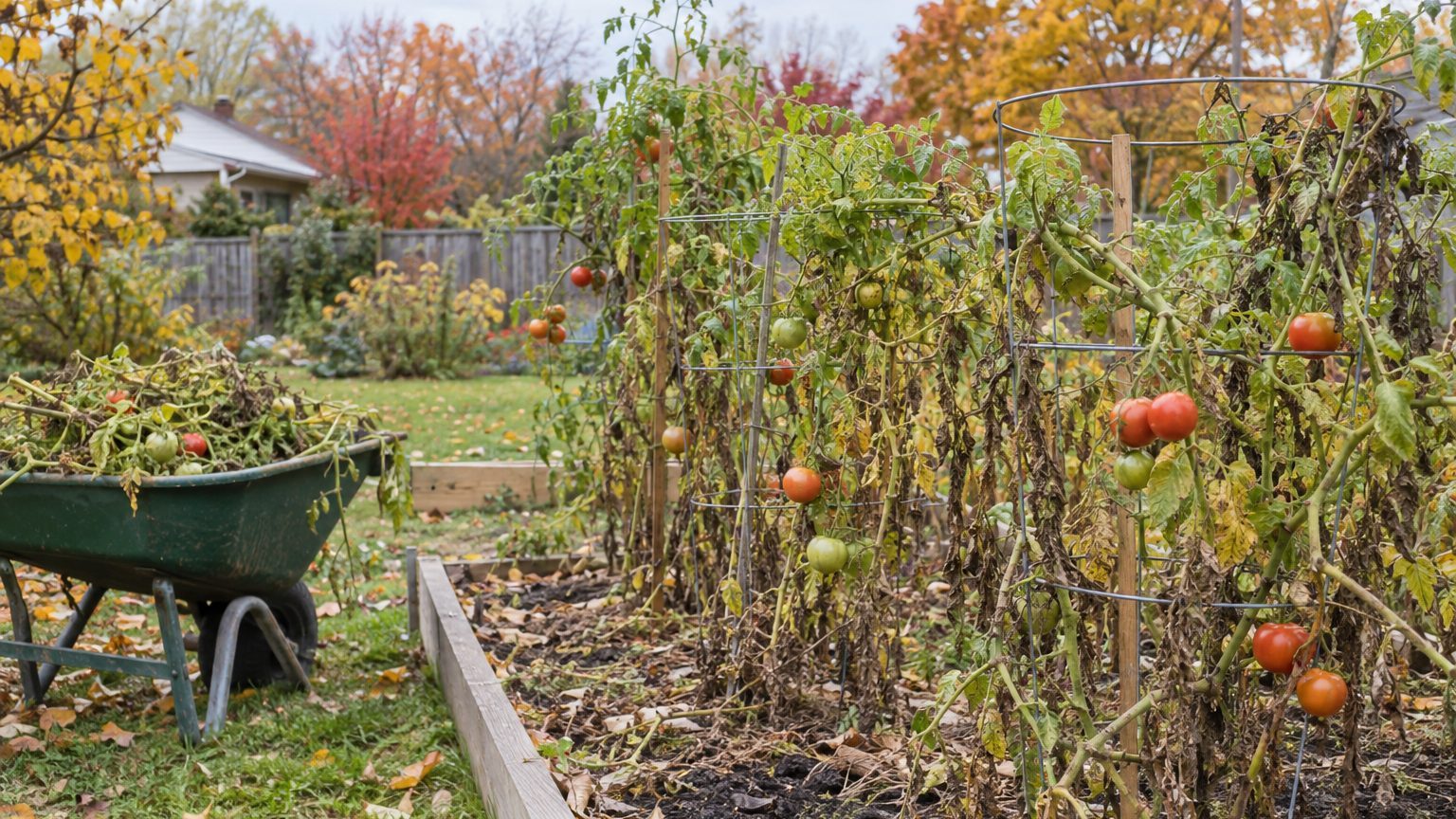

Blackened tomato vines look finished, but the plants are not the first job when frost is on the forecast. Pick every mature fruit before the frost arrives, then pull the plants when the season is over and take all the debris out of the garden. Look up your first frost window now, so the harvest happens on your schedule and not the weather’s.
When to pull the plants: after the frost kills them, or just before

Harvest first, pull second. Iowa State University Extension and Outreach says that just before the first frost you should remove all mature, greenish white fruit from the vines. Colorado State University Extension (PlantTalk Colorado) gives the same advice in other words: harvest fruit before the frost event and carry it indoors. Neither source treats the plant itself as the urgent job. The fruit is.
Find your own frost window
Frost timing differs from one county to the next, and a neighbor two valleys over may be on a different calendar from you. Check the first and last frost dates by state page for the typical window where you live, then watch your local forecast as that window approaches. A frost date is an average, so a cold snap can arrive ahead of it. Canadian readers should use their provincial agriculture guidance where it differs from the US sources quoted here.
When a frost warning appears, go down the row and pick everything that has reached the stage Iowa State describes. Green fruit that is still small and hard is a separate question, and the section on green tomatoes below covers it.
Pulling the plants
Once the season is over, pull the tomatoes out and clear the stems, leaves and any fruit that dropped. You can wait until frost has finished the foliage, or pull plants that have stopped producing earlier. The sources here set no deadline for the pulling itself. What they care about is that the plant material leaves the garden.
Roots are the part many people agonize over. Ask Extension (eXtension) says you do not have to dig out the roots. That means the real work is above ground, where the stems, leaves and dropped fruit sit. Get those into a bag as you go, rather than leaving a pile at the end of the row to be dragged across the bed later.
Why the debris has to go
The reason is disease. Tomato foliage carries fungal and bacterial problems through the season, and dead plants are not clean plants. They are a stockpile.
Rutgers NJAES Cooperative Extension, in its fact sheet FS547 on fungal diseases of tomato in the home garden, says that at the end of the growing season all tomato refuse should be removed and discarded. The word to notice is discarded. It does not say tilled in, and it does not say left to rot where it stands.
University of Maryland Extension is more specific about where the debris goes. It says this debris should be bagged and put out for the trash and not put in the compost pile. If you want the broader rules for what does belong in a pile, see what goes in a compost pile. Tomato vines that carried disease are not on the list of things to hand over to it.
The Maryland Grows blog from the same extension explains why small leftovers matter. Many diseases can survive over the winter on small pieces of leaves and stems. A vine you pull cleanly in one piece is easy to deal with. A crumbled brown leaf left behind in the mulch is how the problem gets to next year.
What happens if you leave it
South Dakota State University Extension, in its fall vegetable garden cleanup guidance, warns that diseased plants left over the winter can provide fungal or bacterial spores waiting to infect your new plants. Your next crop goes into soil that already holds the problem, and the young plants meet it before they have had a chance to grow.
Treat every tomato plant as suspect when you clear it, including ones that looked healthy in August. Disease is not always obvious on a vine in late season, and the extension advice does not ask you to sort healthy from sick. It asks you to remove it all. Bagging the lot is simpler than judging each plant, and it is what the sources recommend.
The rule is also easy to follow. You are not being asked to disinfect the whole bed or to guess at spores. You are being asked to take the plant material out, bag it, and send it away from the garden.
What to do with the bed afterwards
With the plants gone, the bed still needs a pass. University of Maryland Extension’s Maryland Grows blog gives the instruction plainly: rake up the surface of your beds and get all that plant debris out. A rake picks up what your hands missed, and the small pieces are the ones that count.
A short cleanup routine
- Pick all mature fruit before frost, then pull the plants.
- Bag stems, leaves and fallen fruit for the trash.
- Rake the bed surface and bag what you collect.
- Leave the roots in the ground if you prefer, as Ask Extension allows.
- Decide what goes in the bed next.
Cover the soil or plant something
A bare bed has options. One is a cover crop. University of Maryland Extension says fall-sown cover crops are typically planted in a two-month window, and the window closes at a set point in autumn. Maryland’s calendar does not match yours, so work out your own start and finish with your county extension office before you buy seed.
If you want something in the ground that suits the season, garlic is a page worth reading before the bed is bare. This page does not tell you that any crop is a good follow-on to tomatoes, because the sources do not.
Do not plant tomatoes back in the same spot
Clemson Cooperative Extension’s Home & Garden Information Center, in its tomato diseases and disorders fact sheet, says that crop rotation of 3 years and sanitation, meaning removal of crop debris, will reduce the amount of inoculum. Inoculum is the disease material waiting in the soil. Rotation and cleanup work together. Cleanup alone leaves the soil exposed, and rotation without cleanup leaves the debris behind.
Make a note of where each tomato plant stood this year. A sketch of the bed on the back of a seed packet is enough, and it will save you guessing in spring.
The green tomatoes you picked
Pulling fruit before frost leaves you holding tomatoes in several stages. The two extension sources quoted at the top of this page are the ones that apply here. Iowa State says to take mature, greenish white fruit just before the first frost, and Colorado State says to harvest ahead of the frost event and carry the fruit indoors. Beyond that, neither source says here how long ripening takes, and this page will not guess.
If you are left with fruit that stays hard and green, the page on tomatoes that will not ripen picks up from there. It deals with what to expect and what to do with fruit that has come off the vine early.
Bring the fruit in before the frost, not after. Fruit that has been caught by the cold is a different problem from fruit you picked on time.
Common questions
Should I pull tomato plants before or after the first frost?
Pick the fruit before and pull the plants whenever you are ready after that. The sources here set the timing for the harvest, not for the pulling. If frost has already hit, clear the plants anyway and bag everything, since the cleanup rules do not change.
Can I leave dead tomato plants in the garden over winter?
No. South Dakota State University Extension warns that diseased plants left over the winter can provide fungal or bacterial spores to infect new plants, and Rutgers says all tomato refuse should be removed and discarded at season’s end. Leaving them is the opposite of what these sources advise.
Can I put healthy-looking tomato vines in the compost?
The sources here do not say so. University of Maryland Extension says tomato debris should be bagged for the trash and kept out of the compost pile, and it makes no exception for plants that looked healthy. If your town runs a yard-waste program, ask your county extension office what it accepts.
Do I have to clean my stakes and cages too?
The sources quoted on this page do not address stakes or cages. The Maryland Grows blog notes that diseases can survive on small pieces of leaves and stems, so at minimum knock off any plant material still clinging to them. Ask your county extension office whether further cleaning is advised.
Rules and recommendations change over time, so confirm current guidance with your county extension office before you act.