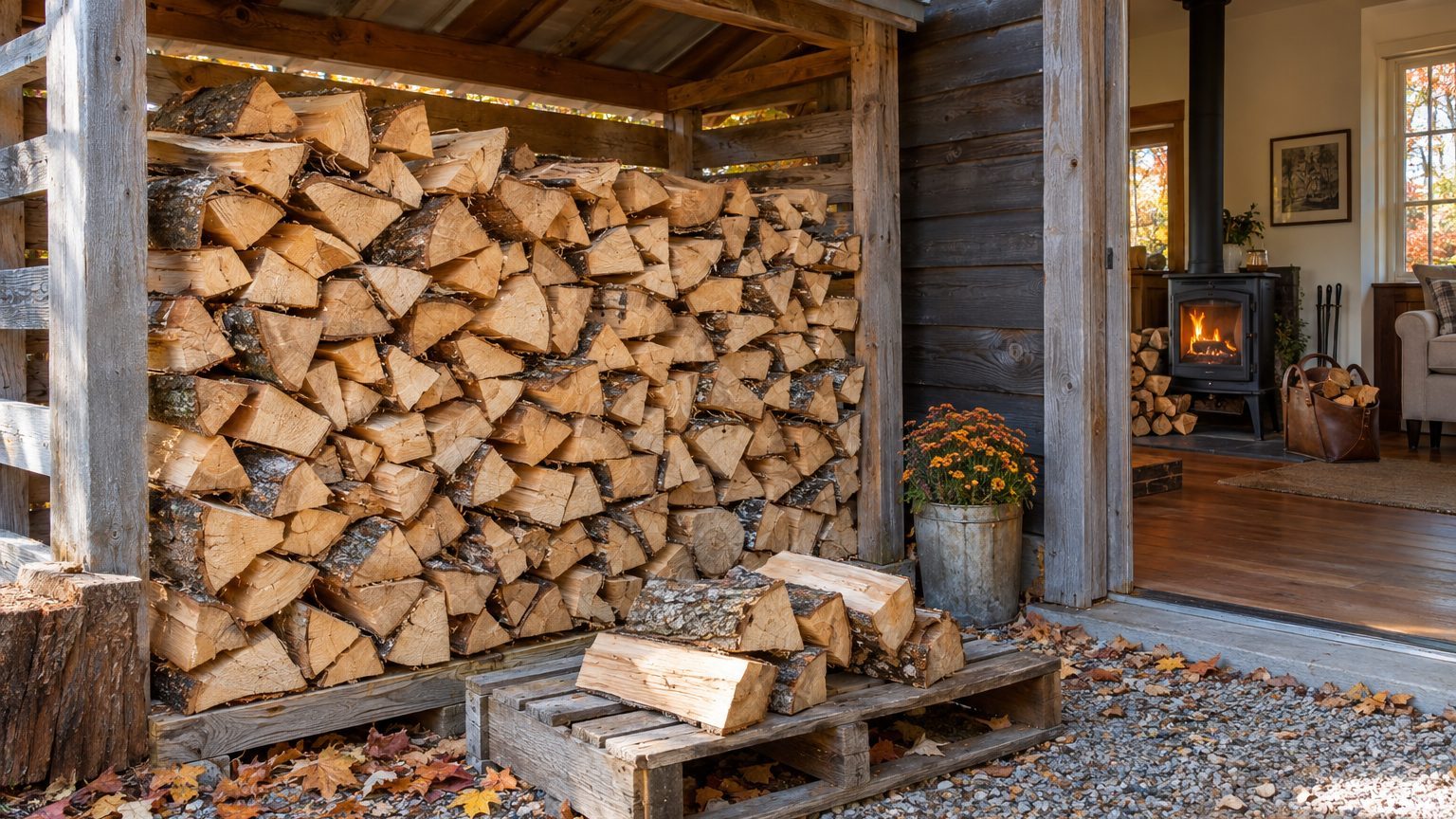

Ironwood (eastern hophornbeam) is a clean, quiet firewood. The University of Missouri Extension rates its smoke as low and its sparks as none, so it is safe to burn in an open fireplace and pleasant to burn in a closed stove. What the data for this page does not include is a BTU number for the species, and I won’t make one up. The real obstacles are finding it and drying it properly.
How much heat Ironwood (eastern hophornbeam) gives
The figures on this page come from the University of Missouri Extension, publication G5450 « Wood Fuel for Heating » (revised January 2023). That guide is the reference I’m following, and it is the one you should open if you want the exact heat value for ironwood. The data supplied for this page carries ratings for smoke and sparks but no BTU-per-cord figure for this species. A made-up number would be worse than none, so I’m leaving it out.
A number alone tells you little anyway. Firewood heat content varies widely across species, and the gap is large. Oak gives nearly twice the heat of cottonwood from the same volume of wood. Burn a cord of the first and a cord of the second, and the oak pile will carry you through roughly the same stretch of winter as two cords of the lighter wood. That gap is why species choice shows up in your wood bill, your stacking space and how often you reload the stove.
Where ironwood probably sits
The common name is a clue. Trees get called “ironwood” because the wood is hard, tight-grained and heavy, and heavy wood packs more fuel into each split. The extension table is where you confirm the placement, though, not a nickname. Published figures also differ between sources, because moisture content, wood density and test method all change the result. Two respected tables can disagree on the same species. The sensible habit is to pick one source and compare species within it. Don’t average numbers from two tables, and don’t treat the gap between them as an error.
One point outranks every figure in any table: seasoning. Green wood spends its heat boiling off its own water before it can warm a room. A green oak burns worse than a seasoned aspen. Someone who picks the hottest species and burns it wet gets less heat than someone who seasons a modest one properly. Ironwood is no exception, however dense it is.
Smoke, sparks, and which stove suits it
BTU charts rank species by heat. They say nothing about whether a wood is safe in your fireplace or pleasant in your living room, and that is where this species shines. The University of Missouri Extension lists ironwood with low smoke and no sparks. Those two ratings cover most of the decision.
Sparks matter because of the appliance. A species that throws many sparks is a hazard in an open fireplace, where a popping ember can land on a rug or a hearth-side armchair, and it is harmless behind a closed glass door. Ironwood skips that problem entirely. With none, an open fireplace becomes a reasonable place to burn it, though you will still want a screen and a clear hearth as ordinary habit.
Smoke is the opposite case. A heavy-smoking species can heat as well as the best and still be unpleasant indoors, because smoke means unburned material heading up the flue. It leaves creosote on the chimney walls. Low smoke is what you want for a house you actually live in.
Matching ironwood to your appliance
| Appliance | Fit with ironwood | Why |
|---|---|---|
| Open fireplace | Good | No sparks, so little ember risk on the hearth |
| Closed wood stove | Good | Low smoke keeps the glass and flue cleaner |
| Fireplace insert | Good | Same low-smoke, no-spark profile in a sealed box |
| Outdoor fire pit | Good | No sparks means fewer burn holes in chairs and clothes |
This table rests on the two ratings from the extension guide. It says nothing about how long a load lasts or how hot it burns, since that figure isn’t in the data here. A stove owner who wants long overnight burns will want the BTU row from G5450 before committing to a full cord.
For contrast, a softwood such as lodgepole pine as firewood: heat, smoke and sparks sits at a very different point on the same two ratings, and a sparky wood suited to a closed stove is a different purchase from ironwood. The pairing logic is the same in every case: look at what you burn in, then check the species.
How long it takes to season

Firewood has to drop below about 20 percent moisture before it gives its full heat. Until then, every pound of water in the log must be boiled off, and that consumes the energy you wanted for the room. Green wood hisses, steams, blackens the stove glass and leaves a sticky creosote film in the chimney. The fire looks busy while the house stays cold.
Dense hardwoods dry slowly. Their cells are packed tightly, and water leaves through the end grain far more readily than through the bark and sides. Ironwood is a dense wood, so expect it to take its time. The extension source used here does not give a drying time for this species, and I won’t invent one. Plan on seasoning it longer than a light wood, and start well ahead of the burning season rather than in early fall.
Splitting speeds things up more than almost anything else. A split log exposes fresh surface and shortens the path the water has to travel. Stack it off the ground, split side up where you can, with the ends open to wind, and put a cover over the top of the pile only. Wrapping the whole stack in a tarp traps moisture and defeats the purpose.
You do not need a meter to check progress, though a cheap one with pin probes is useful. Look at the end grain: seasoned wood shows cracks radiating from the center. Try the bark: on dry wood it lifts or peels away by hand, where green bark clings. Pick up a split, too. Dry wood feels noticeably light for its size, and two pieces knocked together ring with a sharp crack instead of a dull thud. If you can, split one open and test the fresh face with a meter. Readings under 20 percent mean it is ready.
Getting hold of it
This is the hard part. Eastern hophornbeam is a small understory tree found across much of the eastern half of the country. It rarely grows large, so it seldom turns up in the loads a commercial firewood seller delivers. You are more likely to get it mixed into a general hardwood order, or from a neighbor or landowner clearing woodlots, than to buy a cord labeled as ironwood. Ask a seller what they have, and if “ironwood” comes up, find out which tree they mean. The name is also used for other hard, dense trees, including American hornbeam (also called musclewood), and the two are not the same species.
Whatever you end up with, buy it near where you burn it. Moving firewood is how the emerald ash borer reached the Midwest, and the insect has killed more than fifty million ash trees. Insects and diseases hide in bark and under it, and a bundle bought at a gas station two states away can carry them across a border without anyone noticing. Local wood stays inside the range where the pests already live. A good rule is to stay within a few dozen miles of the source, and to check your state’s firewood rules, because some states restrict movement across county or state lines.
If you are weighing ironwood against other regional choices, the hub page on firewood by species lays out the options side by side. A species with different habits, such as American sycamore as firewood: heat, smoke and sparks, is often far easier to find in quantity, and properly seasoned wood of an easier species will beat unseasoned wood of a better one.
Common questions
Is ironwood safe to burn in an open fireplace?
Yes, on the extension rating. The University of Missouri Extension lists its sparks as none, which removes the main open-hearth danger. Use a screen and keep the hearth clear regardless.
Does ironwood smoke a lot?
No. Smoke is rated low in the same extension guide. Smoke from any species rises sharply when the wood is wet, so the rating assumes properly seasoned fuel.
How many BTUs does ironwood produce?
The figure is not published in the data used for this page, so no number appears here. Check the table in University of Missouri Extension G5450 « Wood Fuel for Heating » (revised January 2023), and compare other species only within that same table.
Can I burn it right after cutting?
Not if you want heat. Wood needs to be below about 20 percent moisture, and dense species like this one dry slowly. A green split of any species wastes its energy boiling off water, and a seasoned, lower-rated wood will outperform it. Split it, stack it, and test with a meter or the end-grain check before you load the stove.