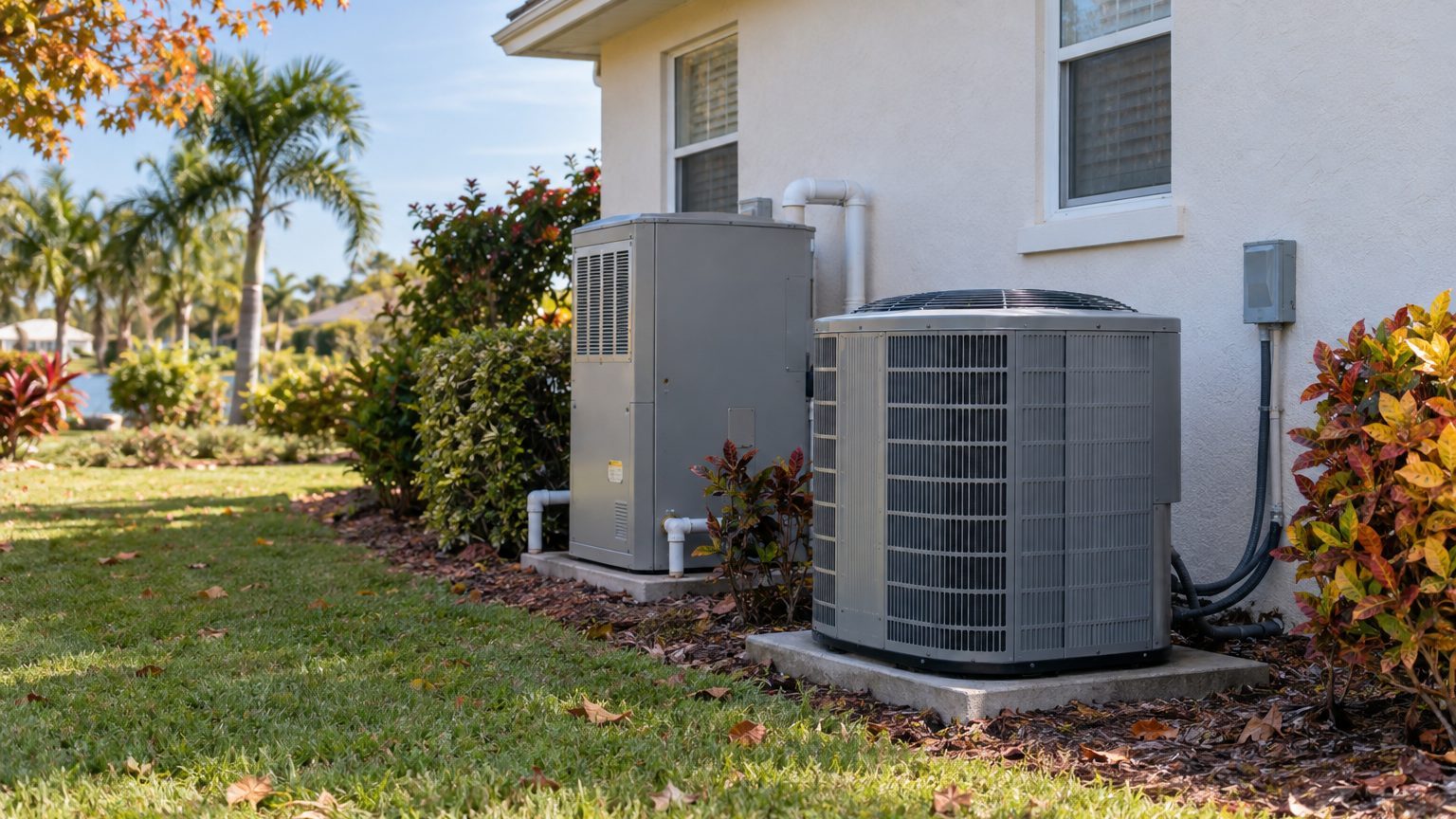

Where a gas line already runs to the house, a gas furnace costs less to run than a heat pump in Connecticut. Where it doesn’t, the heat pump takes over as the cheaper electric option. Two other things can tip the choice: whether you want air conditioning, and how much life an existing system has left.
The short answer for Connecticut
Start with the cost of the heat itself. Computed from EIA average residential prices and ENERGY STAR efficiencies, a million Btu delivered to the house costs $15.88 with a natural gas furnace at 97% AFUE and $34.53 with a heat pump at 8.1 HSPF2 (a seasonal COP of about 2.4). That puts the gas furnace $18.65 less per million Btu than the heat pump. Electric resistance, meaning baseboard heat at 100% efficiency, comes in at $81.98.
Read those numbers for what they are. They compare fuels on the same unit of heat, so they are running costs for the same hypothetical house. They are not a yearly bill, which depends on square footage, insulation, and how warm you keep the place. They also say nothing about what the equipment costs to buy and install, and that side of the ledger can change the math over a 15-year horizon.
The gas figure uses the statewide residential average from the EIA, and your utility’s actual rate will differ with its tariff and the season. Electricity varies too. For a quote that applies to your address, pull both numbers from your own bills.
What each option costs to run in Connecticut
| System | Efficiency used | Cost per million Btu delivered |
|---|---|---|
| Electric resistance (baseboard) | 100% | $81.98 |
| Heat pump | 8.1 HSPF2 (seasonal COP about 2.4) | $34.53 |
| Natural gas furnace | 97% AFUE | $15.88 |
The electricity behind the first two rows is the EIA’s average residential price: 27.97 cents per kWh, year-to-date through July 2026 (Electric Power Monthly, Table 5.6.B). That is a high price per kilowatt-hour, which is why electric baseboard sits at the top of the table. The natural gas row uses the EIA’s average residential gas price, converted at about 1,037 Btu per cubic foot. The conversion for electricity is 3,412 Btu per kWh.
Efficiency matters as much as the price of the fuel. Baseboard turns every kilowatt-hour into heat. A heat pump moves heat from outdoor air instead of creating it, so at a seasonal COP of about 2.4 each kWh delivers roughly two and a half times as much to the house. A 97% AFUE furnace wastes very little, but it can never deliver more heat than the fuel contains. Electricity costs more per Btu, and the heat pump’s multiplier closes most of that gap without erasing it.
The 8.1 HSPF2 in the table is the ENERGY STAR minimum for ducted systems. Ductless units must reach 8.5 for the same label, since they have no duct losses to hide behind. What HSPF2 Measures, and Why Ductless Asks for More explains the rating in detail. A better-rated unit would pull the heat pump row down, and a worse one would push it up.
How cold it gets, and what that does to a heat pump
The reference weather station for Connecticut is Bridgeport’s Sikorsky Memorial Airport, where NOAA’s 1991-2020 normals show about 5,140 heating degree days a year (base 65°F). Degree days add up, for every day of the year, how far the average temperature sat below 65°F. Double the degree days and the same house burns roughly double the fuel. At about 955 cooling degree days, the same station also records a real cooling season.
The coldest month has a mean daily minimum of 24.4°F at that station. That sits below freezing, but it describes a long, moderate heating season rather than a brutal one. It is one coastal station, though. Inland and higher ground in the state can run colder, so treat these numbers as a reference point, not a forecast for your street.
Here is where the table needs a footnote. The heat pump’s $34.53 uses a seasonal efficiency, an average across the whole heating season. In deep cold a heat pump’s efficiency drops, and on the coldest nights the system leans on backup, either electric resistance strips or a furnace. On those nights the gap in running cost is wider than the table shows, because gas efficiency barely moves while the heat pump’s does. Plan for a backup source on the coldest nights whichever heat pump you choose, and price that backup into your estimate.
For the details on how cold-climate units behave as temperatures fall, see How Cold Is Too Cold for a Heat Pump. The brief version: no single temperature settles it, because performance depends on the model and on how well the house holds heat.
What homes in Connecticut already heat with
The EIA’s 2020 Residential Energy Consumption Survey gives Connecticut’s shares by equipment and by fuel. Furnaces heat 61% of homes, and steam or hot-water boilers heat 23%. By fuel, fuel oil or kerosene leads at 39%, ahead of natural gas at 36%, electricity at 19%, and propane at 4%. The survey does not publish a figure for central heat pumps: the estimate was suppressed as unreliable, which is not the same as zero.
These shares describe what was installed, not what is advisable. They do change how the comparison reads. Oil leads gas here, so a large share of homes has no gas line to compare against. The gas row in the table applies only where service exists, and the facts here carry no oil or propane price, so an oil or propane house needs its own delivered-fuel price before the comparison means anything. The electricity share of 19% covers baseboard and heat pumps together.
A boiler house is a different conversion altogether. Hot-water radiators and steam systems have no ducts, so swapping the fuel source means either adding a new distribution system or going ductless in the rooms you use most. That is a question of layout more than of price. Ductless or Central sorts out which route suits which floor plan. For a broader view of how local fuel, climate, and housing stock fit together, see Heating a Home in Connecticut.
When the other choice wins
The cheaper-to-run system is not always the right call. The simplest case is a house with no gas service. Without a line, the gas furnace’s $15.88 is theoretical, and the real choice is between a heat pump at $34.53 and baseboard at $81.98. Extending a line is its own project, and whether it is possible depends on your street and your utility.
Air conditioning is the second case. With about 955 cooling degree days at the reference station, Connecticut summers do ask for cooling. A heat pump handles both seasons with one machine, while a gas furnace house still needs separate air conditioning. If the central air is also due for replacement, a heat pump covers two jobs, and the running-cost gap in winter has to be weighed against that. The cooling side of a heat pump is rated in SEER2, not HSPF2, so compare the same letter when you shop.
Dual fuel is the third. A heat pump carries the mild months and a gas furnace takes over on the coldest nights. It keeps the furnace’s low cost per Btu for the hard stretches and uses the heat pump’s efficiency when the weather is gentle. It costs more up front, since you maintain two systems, but it answers the worry about deep-cold performance directly.
The last case is an old system with years left. A working furnace that heats the house reliably has already been paid for, and the running-cost gap alone rarely justifies tearing it out early. If yours is aging, Repairing a Furnace or Replacing It lays out how to judge the call.
Common questions
Is gas always cheaper to run than a heat pump in Connecticut?
At the statewide average prices used here, yes: $15.88 against $34.53 per million Btu delivered. Your utility’s rates, your rate plan, and the specific efficiency of the equipment can shift both numbers. A bill from each fuel is the only way to check your own case.
Does the heat pump figure apply to a ductless system?
The $34.53 uses 8.1 HSPF2, the ENERGY STAR minimum for ducted systems. Ductless systems must reach 8.5 for the same label, so a ductless unit at its minimum is more efficient than the one in the table. The table was not computed for it, so the exact cost isn’t stated here.
Can a heat pump heat a Connecticut home without backup?
The facts here don’t set a cutoff temperature, and none should be invented. The coldest month’s mean daily minimum at the reference station is 24.4°F, with colder nights possible and inland areas running colder. The right answer depends on the unit, the house, and a proper load calculation by a qualified installer.
What does 5,140 heating degree days mean for my bill?
It measures how hard winter works at the Bridgeport reference station, and it scales fuel use: twice the degree days means roughly twice the fuel for the same house. It does not give you a bill. Insulation, air leakage, and thermostat habits move your total more than the climate figure does.