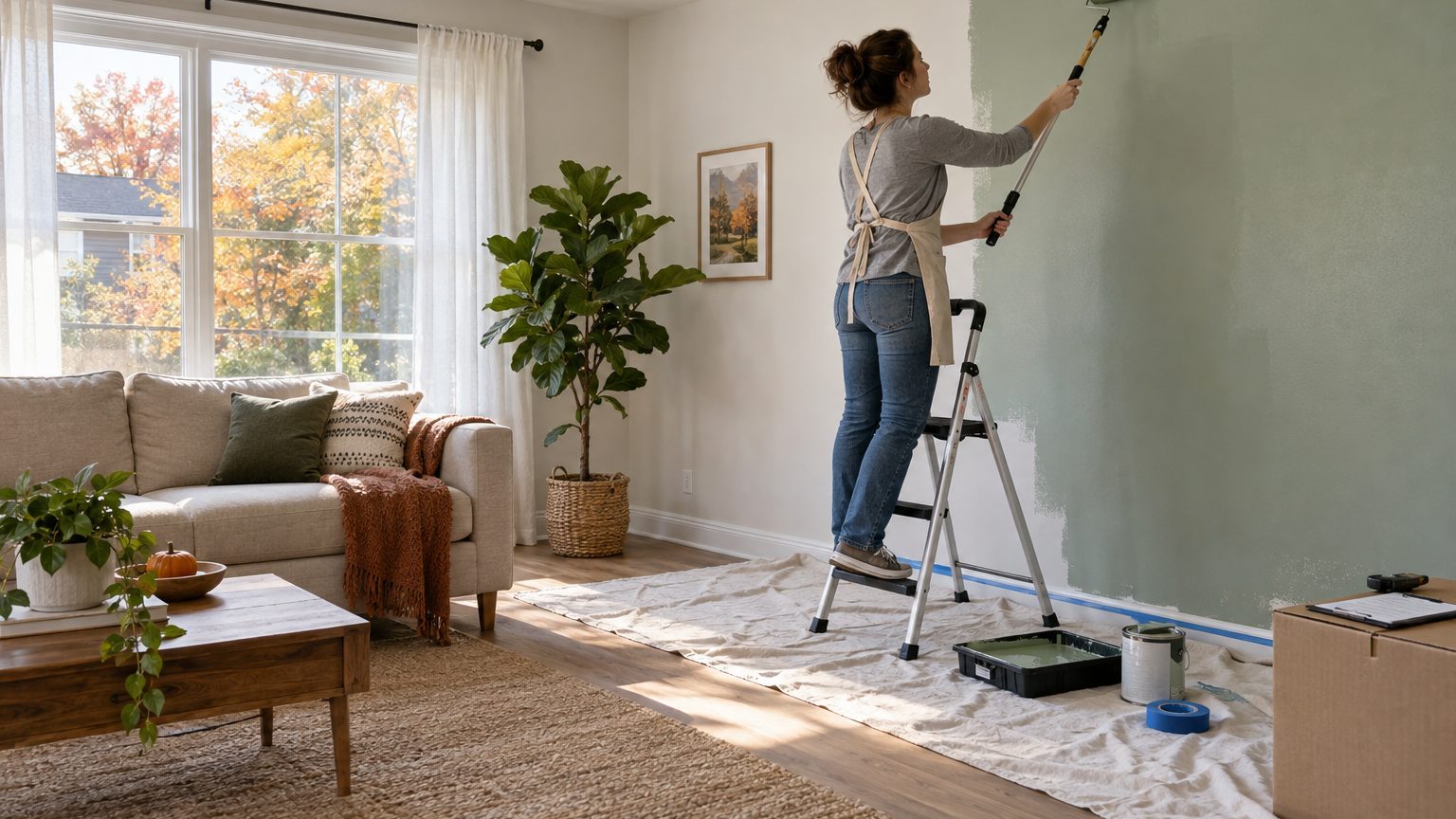

No paint peels off a wall like a sticker, so “renter friendly paint” really means a combination of four things: written permission from your landlord, a color you can reverse, a low-odor washable formula, and a record of exactly what you used. Get those right and painting a rental is a modest project. Get them wrong and the cost can come out of your security deposit. Roughly one in three U.S. households rents, and most of those leases say something about walls, so the rules are worth knowing before you open a can.
Start with the lease, then get the answer in writing
Lease language on paint falls into three camps. Some leases ban any alteration without consent. Some allow painting if you return the walls to their original color when you leave. A few say nothing, which is not the same as permission. Silence leaves you arguing with a landlord after the fact, and that argument rarely goes well for the tenant.
An email is enough to start a paper trail. Name the rooms, the color (a brand and color name, or a photo of the paint chip), and the sheen. Ask two direct questions: do you have to repaint when you move out, and will the landlord supply or approve the paint? Some property managers keep a standard off-white on file and will hand over the exact name, which makes touch-ups seamless later. Others agree to a bold color on the condition that you return the room to white at your own expense. Either way, you want that agreement sitting in your inbox with a date on it.
Deposit law varies by state, and the details matter. Many states let landlords deduct for damage beyond normal wear and tear but not for ordinary aging, and interior paint is typically treated as having a limited life. Courts and housing agencies often assume it lasts somewhere between two and five years, so a tenant who stayed four years generally can’t be billed for a full repaint of walls that had simply gotten tired. Some states also cap deposits. California, for example, limits most deposits to one month’s rent as of 2024. A color the landlord never approved is a different story, because that can be classed as damage. Check your state attorney general’s tenant guide or your local housing authority for the rule that applies to you.
A safety check for older buildings
If the building went up before 1978, lead paint may be in the layers under the current finish. Federal law requires landlords to disclose known lead hazards, and the EPA’s renovation rules put heavy limits on contractors who disturb it. As a tenant, your rule is simple: don’t sand, scrape, or heat-strip old paint. If it’s peeling or chipping, tell the landlord in writing and let them handle it. Intact paint that’s been cleaned and lightly deglossed with a liquid deglosser, then painted over, is a very different situation from dry-sanding a flaking window frame.
What actually makes a paint renter friendly
Marketing aside, the features that matter to a tenant are ordinary ones. Low-VOC or zero-VOC formulas keep the smell down, which counts when you can’t air out a studio apartment for three days and the bedroom is also where you sleep. Water-based latex paints clean up with soap and water and dry quickly enough to put furniture back the same evening. Both are standard in the big-box paint aisle now, so you aren’t hunting for a specialty product.
Sheen is the next decision. Flat paint hides wall flaws well but scuffs and doesn’t scrub clean, which makes it a poor fit for hallways or a kitchen. Eggshell and satin handle fingerprints and the occasional wipe-down. The tradeoff is that glossier finishes show every dent and roller mark on older walls, and rentals often have plenty of both. For most living spaces, eggshell is the safe middle.
Be skeptical of any product claiming to be “removable paint.” Some peelable or strippable coatings exist, but results depend heavily on the surface underneath, and a coating that grips a glossy wall one way may lift the old paint with it. If you’re curious, test a small patch somewhere hidden, such as the inside of a closet, and try removing it a week later. If the old finish comes along with it, you have your answer before you’ve committed a whole wall.
Quantity is where tenants most often miscalculate. A gallon covers about 350 to 400 square feet. A 12-by-12-foot bedroom with 8-foot ceilings has roughly 340 square feet of wall after subtracting a door and a window, so you need about one gallon per coat. Two coats is the realistic plan, and if you’re covering a dark color with a light one, expect to add a primer or a third coat. Buy a little extra and keep it. Label the lid with the room, color name, sheen, and the date, and store the can sealed. Latex paint kept in a closet usually stays usable for a few years, and having the exact match makes the move-out touch-up a ten-minute job rather than a disagreement.
- Painter’s tape, a drop cloth, and a small roller cover cost little compared to a deposit deduction
- Fill nail holes with spackle and sand only if the paint is confirmed lead-safe
- Take dated photos of every wall before you start
Choosing a color you can live with, and undo
A rental limits your options, but light still decides how any color looks, and rental apartments tend to have fewer windows and less control over fixtures. Paint chips list a light reflectance value (LRV) on a scale where 0 is black and 100 is pure white. A deep navy sits near the bottom and soaks up most of the light that reaches it. A soft greige or warm white sits much higher and bounces light back into the room. In a small apartment with one window, that difference can decide whether a room feels cozy or cave-like.
Exposure matters as much as LRV. North-facing rooms get cooler, steadier light that pushes colors toward gray and blue, so warm undertones (cream, soft clay, muted peach) help balance them. South-facing rooms are warmer and brighter, which lets cooler colors like sage or pale blue stay fresh instead of turning cold. Your bulbs count too: a 2700K bulb gives a yellow-warm glow, while 5000K reads as blue-white daylight, and the same wall color can look like two different paints under them. Test the swatch on the wall, in the room, at morning and evening, before you commit.
Who uses the room changes the calculation. A bedroom you only sleep in can handle a darker, moodier shade. A home office needs light that doesn’t strain your eyes during an afternoon on video calls. A child’s or teenager’s room is often where tenants most want a personal color, and the answer there is usually to let the occupant weigh in, as covered in A Teenage Girl’s Room: She Chooses, You Live With It. Just be honest about the repaint you’ll owe at move-out. A bold color that takes three coats to cover is a real cost, and it’s one the tenant bears.
Ceilings are the surface most renters overlook, partly because landlords rarely care what color they are. A pale tint of your wall color overhead can make a low room feel finished without touching the walls. If you want to explore it, The Ceiling Does Not Have to Be White walks through the options, though you should still ask permission, since a ceiling is paint too.
When the landlord insists on returning the walls to white, choose a color that’s easy to reverse. Mid-tones in the greige, soft green, or warm gray range cover cleanly with white in two coats. Saturated reds, deep teals, and near-blacks do not. Painting one accent wall instead of the whole room also cuts the move-out repaint to a single wall.
When the answer is no: ways to change a room without paint
Plenty of leases flatly prohibit painting, and some landlords refuse regardless of how politely you ask. You still have options, and most of them rely on the same principles of color and light.
Removable wallpaper is the closest cousin to paint. It works best on smooth, properly cured walls and can fail on textured or freshly painted surfaces, where adhesive may pull paint when it comes off. Apply a test strip in a hidden spot, leave it for a week, and peel it back slowly. Even then, check your lease: some landlords treat any adhesive as an alteration.
Textiles do a lot of the work that paint would. A large rug, floor-length curtains hung high and wide, and a bedspread in your chosen color can shift a room’s temperature. Oversized art leaned against a wall, rather than hung, covers a lot of surface without a single nail hole. And painting what you own is fair game: a dresser, a bookcase, or a thrift-store side table takes color from you and moves when you do.
Lighting is the quiet fix. Swapping cool 5000K bulbs for 2700K warm ones changes how a beige rental wall reads, and a couple of plug-in sconces or a floor lamp bounce light off the ceiling in a way a single overhead fixture never does. All of it leaves with you at the end of the lease. You can browse more ideas across the Decor section.
One last practical detail that saves arguments: shoot a short video of each room at move-in and again at move-out, with the lights on and the camera panning slowly along each wall. In a dispute over paint condition, a timestamped video of the walls before you touched them carries more weight than a stack of photos, and it takes about five minutes.