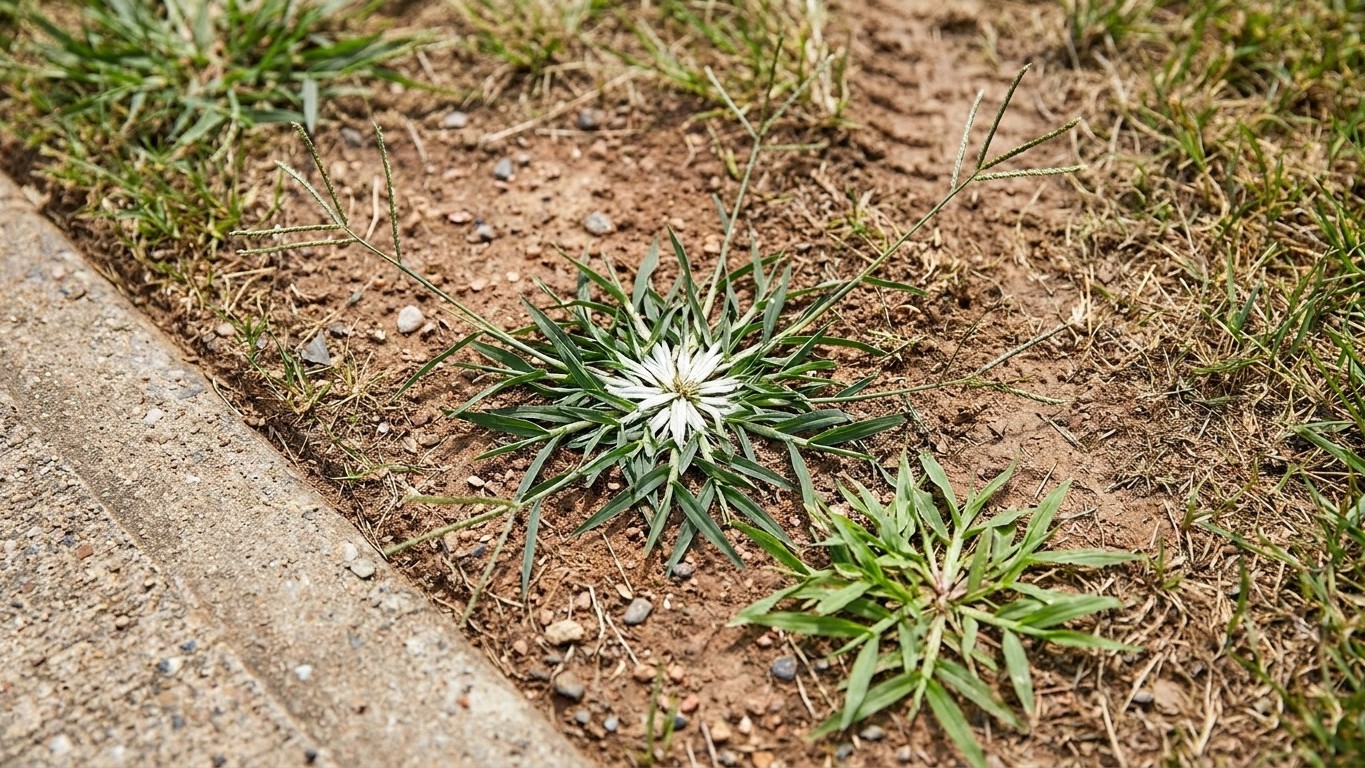

In the Twin Cities, get grass seed down between late August and about September 8, when the soil has cooled into the 50 to 65 °F range. Seed needs roughly 45 days of growing weather before the first fall freeze, and in the Twin Cities that freeze typically lands between October 11 and October 23. Spring is the backup, once the ground warms. Northern Minnesota runs two to three weeks tighter at both ends, so move every date earlier.
The best time to sow grass seed in Minnesota
Reading the soil, not the calendar
Cool-season grass seed germinates in soil between 50 and 65 °F, and the reading that counts is taken two inches down, mid-morning. A cheap soil thermometer pushed into the ground settles the question faster than any date on a bag. Air temperature misleads. A warm afternoon in April can sit on top of ground that is still too cold to wake the seed.
Late summer into early fall is the strongest window because the soil holds summer’s warmth while the air cools. Seedlings get moisture, daylight and mild nights, and they have not yet met a freeze. A spring-sown lawn faces the reverse: it has to build roots in a few short weeks before summer heat and dry spells arrive. It can work, but it asks more of the watering hose.
The frost dates frame the calendar. At the Twin Cities station in the NOAA NCEI 1991-2020 Climate Normals, the 30 to 70 percent probability band for a 32 °F freeze falls between April 17 and April 30 in spring. In fall it runs October 11 to October 23. Those are the middle of the odds, not guarantees. A freeze can arrive before or after the band, and no single city speaks for a state that stretches from the Iowa line to the Canadian border.
Which grasses hold up here
Minnesota winters are built for cool-season species. The recommended grasses are:
- Kentucky bluegrass
- Fine fescues
- Tall fescue
- Perennial ryegrass
- Rough bluegrass
Grasses of the warm season are the wrong bet. They grow hardest in sustained summer heat and slow down in cool soil. Minnesota’s long freezing winters leave them with a short growing season and a harsh dormancy, and a patch that browns in September stays brown through the following spring. Cool-season grasses do their growing in the mild shoulders of the year and sit out the cold intact.
Gardeners elsewhere face a different calendar altogether. Readers in the Mid-Atlantic can compare their timing in When to Plant Grass Seed in Virginia, and those farther up the Atlantic coast can see a similarly short season in When to Plant Grass Seed in Nova Scotia.
The last date that still works
Work backward from the first fall freeze. Forty-five days of growing weather is the minimum a seedling needs to knit together before winter. Count 45 days back from October 11 and you reach August 27. Count back from October 23 and you reach September 8. For the Twin Cities, that gives a final sowing window of roughly August 27 to September 8, and earlier is safer than later.
Seed sown after that point still germinates. That is the trap. The grass sprouts, looks green for a week or two, then dies over winter because it never built enough root or crown to survive the freeze. The money is gone and the bare patch is back by spring.
North of the metro, the same arithmetic applies to earlier dates. Subtract two to three weeks from the Twin Cities window and you are in mid-August territory for the northern tier. The safest move is to find that town’s own normals and run the 45-day count yourself.
If you are reading this in mid-October 2026, the Twin Cities window has closed or is closing, and farther north it closed weeks ago. Do not gamble the seed. Hold it, store it somewhere cool and dry, and plan for spring, when the soil crosses back into the 50 to 65 °F range. The spring frost band of April 17 to April 30 tells you roughly when the ground is thawing and the soil is beginning to warm, and the thermometer tells you when to start.
For the full sequence from bare dirt to mowed lawn, the broader guide, Starting a New Lawn From Seed, walks through the steps in order.
Seed rate and soil preparation
Rates for a new lawn are measured in pounds per 1,000 square feet, and they differ by species:
| Grass | New lawn (lb per 1,000 sq ft) |
|---|---|
| Tall fescue | 6 to 8 lb |
| Fine fescues | 4 to 6 lb |
| Rough bluegrass | 2 to 3 lb |
| Kentucky bluegrass | 1 to 3 lb |
| Perennial ryegrass | 4 to 10 lb |
Overseeding an existing lawn takes half those amounts. More seed is not insurance. Crowded seedlings compete for light and water and thin themselves out, so heavy sowing buys a weaker stand, not a thicker one.
Depth matters more than rate. Cover seed with no more than 0.25 inch of soil, and press it down for good seed-to-soil contact. Grass seed buried deeper often never emerges, and that is the most common reason a new lawn comes up patchy. Raking lightly, then rolling or walking the area, does the job.
Minnesota’s state soil, the Lester series, gives a sense of what the ground tends to do. It is a forest soil of moderate fertility that holds nutrients reasonably well. USDA records for its surface layer show a loam to silt texture (39 percent sand, 24 percent clay, 37 percent silt), organic matter around 3.0 percent, and a surface pH of about 6.6, near neutral. It drains well. That is a friendly profile for grass.
It is also the soil that represents the state, not the soil in your yard. Minnesota has hundreds of soil series, and river bottoms, hill country and any lot a builder has scraped or filled can behave completely differently. Compacted subsoil under a thin layer of fill is common on new construction, and no state profile will predict it. A soil test gives your own pH and nutrient numbers; University of Minnesota Extension can point you to testing options. Loosen compacted ground, rake it level, and work in any amendment the test calls for before the seed goes down.
Watering a new lawn until it holds
Seed sits in the top fraction of an inch of soil, and that thin layer dries out quickly. Once a seed has started to germinate, a dry spell can kill the sprout. So the job in the first weeks is to keep the surface damp, never soaked and never dusty. Think wrung-out sponge.
That usually means short, light watering sessions, more than once on a warm or windy day, rather than one long soak. A long soak runs off or pools in low spots and can wash seed into clumps. Watch the soil rather than the clock. When the surface starts to pale, it is time again.
As seedlings fill in and roots go down, stretch the interval between waterings and make each one deeper. The goal is a lawn that reaches for moisture below the surface instead of depending on the sprinkler. Late-season seeding helps here. As nights cool through September and October, evaporation slows, and the same watering lasts longer than it would in August.
Hold off on the first mowing until the grass is clearly taller than its final height, and keep foot traffic off the new lawn while it knits together. Those 45 days of growing weather are the target. A lawn sown at the start of the window gets them with room to spare. One sown at the edge may be marginal.
Common questions
Can I seed in spring instead of fall?
Yes, once soil two inches down reaches 50 to 65 °F. Expect to water more, since the seedlings must establish before summer heat.
What if I missed the fall window?
Do not sow late. Seed that sprouts without 45 days of growing weather before the first freeze dies over winter. Wait for spring.
Do I use the same seed rate to overseed?
No. Overseeding an existing lawn takes half the new-lawn rate. A tall fescue lawn, for example, would get 3 to 4 lb per 1,000 square feet.
Should I test my soil first?
Yes. State soil figures describe a typical profile, not your yard. A test gives your own pH and nutrient numbers, and it costs far less than reseeding a failed lawn.
The Moon calendar is a separate, older custom: see when to plant grass seed by the moon, written as tradition rather than fact.