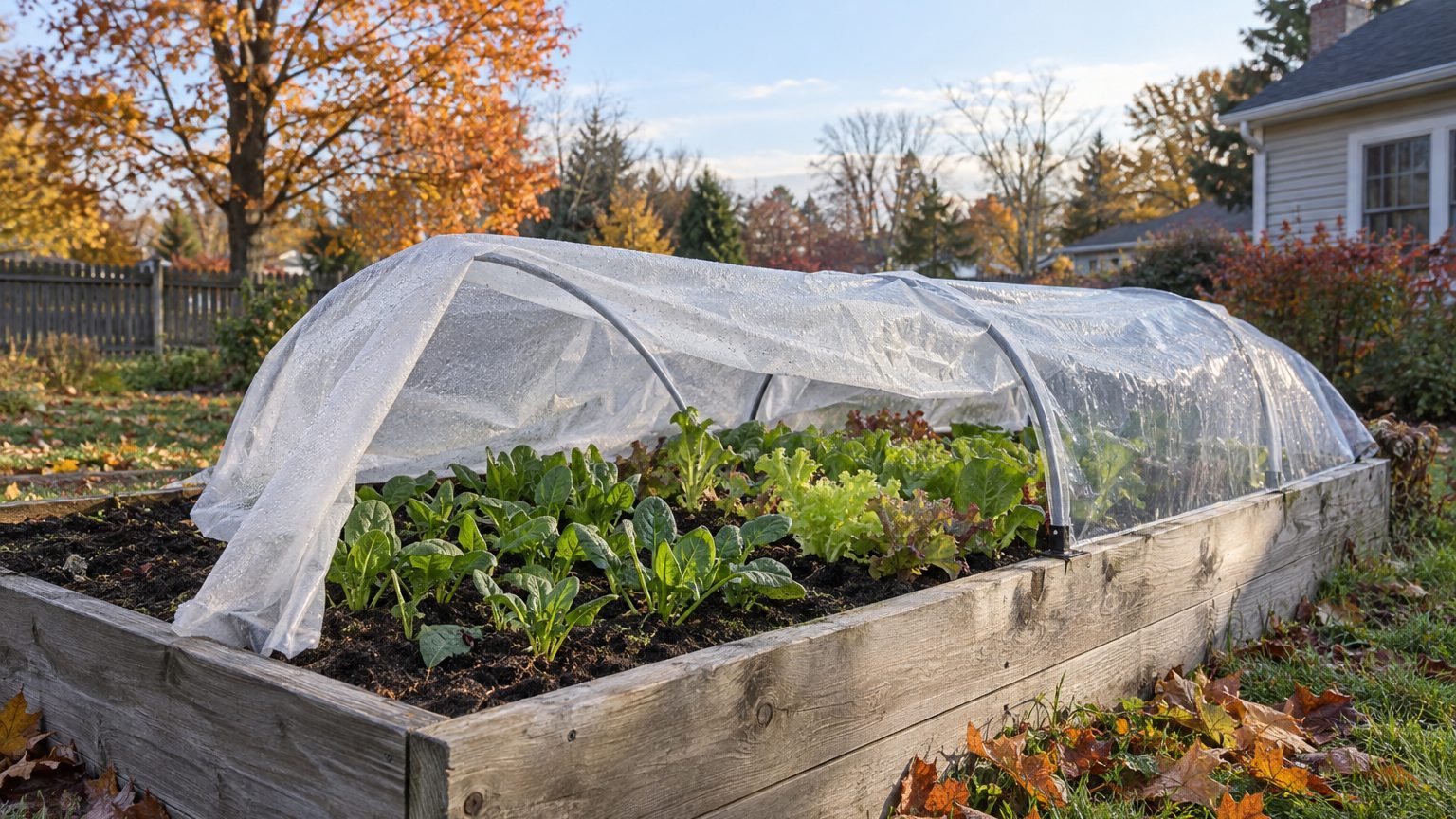

In western Washington, using the Seattle reference station, the last spring freeze (32°F) falls between February 27 and March 18, and the first fall freeze arrives between November 13 and November 30. That is a generous window, and covers stretch it further at both ends. But the frost date is not the planting date here. Cold wet soil and thin winter light set the real calendar, and eastern Washington follows different rules entirely.
When the soil is warm enough in Washington
Start with the date everyone asks about. The NOAA NCEI 1991-2020 Climate Normals, using the 32°F freeze probabilities for station USW00024233, place the last spring freeze in a 30 to 70 percent probability band running from February 27 to March 18. A frost date is a probability, not a promise, and a late cold snap after March 18 would surprise no one who has gardened here for a few years.
Frost is a proxy, and an early one
Frost date tells you when freezing air stops being a threat to tender leaves. Seeds, however, are waiting for warm soil, and soil warms after the frost risk ends, not with it. In a maritime climate the gap is wide. Soil in a western Washington bed in early March is typically cold and saturated, and wet soil takes far longer to warm than dry soil because water soaks up a lot of heat before its temperature moves. Seed sown into it tends to sit, rot, or sprout weakly while the days are still short.
So the date to watch is not February 27 or March 18. It is the week your own bed drains, crumbles in your hand instead of smearing, and reads at or above the minimum soil temperature printed on the seed packet. A cheap soil thermometer, pushed in a couple of inches at mid-morning, settles the argument better than any normal.
What a cover does to the soil clock
A cover is useful mainly because of what it does to that soil. By day the ground absorbs sun; at night it gives the heat back. Fabric or plastic over hoops traps some of that radiated warmth and, just as important, holds the air still so it cannot carry the warmth away. Add a second layer, such as a light fabric inside a tunnel, and you create another pocket of calm air. The gain is real but variable. It depends on the material, the night, the wind, and whether the ground was warm to begin with, which is why this page gives no single figure for it.
A cover shifts the limit; it does not remove it. On a clear, still night after a mild day, the sky pulls heat out of the soil fast, and a thin cover over a crop that cannot take a freeze can still lose it. For the wider picture of what covers buy and where they stop, see Extending the Season: What a Cover Buys, and What It Cannot.
One rule applies to every closed structure. A cold frame or sealed tunnel in spring sun can cook its contents within an hour, even when the air outside is cool. Venting is part of keeping the crop alive, not an optional tweak. Everything described here is passive: no heaters, no lamps, no candles, nothing that burns or plugs in.
How long the season lasts here
Take the two frost windows and subtract. From the late end of spring (March 18) to the early end of fall (November 13) is about 240 days. From the early end of spring (February 27) to the late end of fall (November 30) is about 276 days. So the freeze-free stretch in western Washington runs roughly 240 to 276 days, depending on which end of each band the year lands on. Eastern Washington has its own dates, which are not among the verified figures here, so no subtraction is offered for it.
Those are calendar days between freezes, not days of growth, since winter light and cold soil eat into both ends. Still, a window this long changes what you can do with it.
A long window allows a second sowing. A bed of early greens or peas can come out in early summer and be followed by a fall crop sown in July or August, with time to size up before the light fades. The same logic runs the other way: three or four small sowings of a quick crop, staggered a couple of weeks apart, beat one big sowing that all matures in the same week. The succession sowing guide on this site works through the spacing and timing in more detail.
Window length also bears on the transplanting question. Moving a seedling costs it a root check, a pause while damaged roots recover. Where the window runs 240 days or more, root-sensitive crops such as carrots, beets and many greens can simply be direct-sown once the soil is ready, and they often catch up with starts set out into cold ground. Transplants still earn their place for warm-season crops that want a head start.
Heat and water in Washington
The verified data for this page does not include a count of days above 90°F or a summer rainfall total, so no figure for either appears here. For the west side, the omission tells you something anyway. Summers there are mild, and heat is not the factor that limits most gardeners. For readers who want that contrast, Extending the Growing Season in Mississippi deals with a state where heat and humidity do the limiting.
What governs the west side is light and cold, working together. The Seattle reference station sits at 47.44 degrees north, and that latitude decides how quickly daylight shrinks in fall. Somewhere in late fall, days become too short for most crops to put on meaningful growth, whatever the thermometer says. Past that date a cover holds a crop alive rather than growing it. Spinach or mâche under fabric in December is being stored in the ground, not raised. Plan the fall harvest so plants reach size before the light drops, because they will not get much bigger afterward.
That 47.44 figure belongs to the Seattle reference station, not the whole state. Washington spans several degrees of latitude, so a gardener near the Canadian border or down by the Columbia should check their own latitude before leaning on any date from this page. East of the Cascades the state is high desert with a far shorter season, and the Seattle window should not be applied there.
Cold decides the next question: fabric or frame. The mean daily minimum of the coldest month at Seattle is 37.1°F. That is an average of nights, and it sits above freezing, which is why a light fabric is often enough for hardy greens and roots on a typical winter night. But averages hide the clear, calm nights that run colder, and they say nothing about rain, wind or snow load. Where you want tender crops to hold on, or you want rain kept off, a framed structure is the better tool. Any closed frame still has to be vented on mild or sunny days.
The USDA Plant Hardiness Zone Map (2023, built on 1991-2020 normals) lists Washington as zones 4a to 9a. That range is wide because the state runs from mountain tops to the Puget Sound lowlands to the eastern basin, and the system rests on a single variable, the average annual extreme minimum. It tells you whether a plant survives winter. It says nothing about how fast spring soil warms. Use your own city’s zone, not the range.
Water, in a cool maritime climate, shows up as damp rather than drought. Cold wet soil in spring, long humid stretches in fall, and condensation inside poorly vented covers invite mildew, slow ripening and disease. A cover left closed through a damp week can hurt more than it helps. Gardeners in the cool wet North Atlantic face a similar problem, and Extending the Growing Season in Newfoundland and Labrador covers it from a colder starting point.
Which season extension suit Washington
Choose by type, matched to what limits you. The table lays out the common options for the west side.
| Type | Suits | Watch for |
|---|---|---|
| Floating row cover (light fabric) | Hardy greens and roots, warming soil a little ahead of sowing, shielding from light frost | Wind lifting it; trapped moisture if left on too long in a damp spell |
| Hooped low tunnel | Beds of spring and fall crops that need more shelter and some rain protection | Heat build-up on sunny days; must be vented or opened |
| Cold frame | Seedlings, hardening off, small winter plantings | Overheating within an hour in spring sun if closed; needs daily attention |
| Unheated high tunnel or greenhouse | Tender crops, a real winter harvest of hardy ones, keeping rain off | Airflow and humidity; disease can spread fast in still, damp air |
Layering a fabric inside a tunnel is the passive way to gain more, but it never makes a crop frost-proof. If a hard freeze is forecast on a clear night, a covered crop that cannot take freezing is still at risk.
On the west side, a humid, damp season makes disease resistance the first criterion. For a bed of fall greens or winter roots in Seattle, favor types bred to resist mildew and to keep growing in low light and cool soil. A short season favors the earliest-maturing types, which describes parts of eastern Washington and higher elevations more than the west side.
This page names no cultivar, and that is deliberate. A variety that thrives in the Puget Sound lowlands can fail in the Columbia Basin, and the only recommendations worth following are those trialled locally, which this page does not have. Washington State University Extension runs county offices and publishes regional planting guidance, and that is where to find what has actually been tested near you. It is also where a gardener east of the Cascades should look first, since the dates and cautions here belong to the west side.
Common questions
Can I plant on March 18 because that is the last freeze date?
Not safely, and not usefully. March 18 is the late end of a probability band at the Seattle reference station. Cold wet soil and low light still hold spring crops back, so wait until the bed drains and crumbles and the soil reads at the seed’s minimum.
Does the Seattle window apply across the whole state?
No. The dates come from a western Washington station with a mild maritime climate. Use dates for your own county.
Is row cover enough to carry crops through winter?
For hardy greens and roots, often yes, since the coldest month’s mean daily minimum at Seattle is 37.1°F. But that is an average, and clear nights can run colder. By late fall, light is the real limit, so a cover keeps a crop alive rather than growing it.
How do I know my soil is ready?
Use a soil thermometer at planting depth in mid-morning and compare it to the minimum on the seed packet. Then squeeze a handful. If it crumbles, it is workable; if it holds as a slick ball, it is too wet and will stay cold longer.