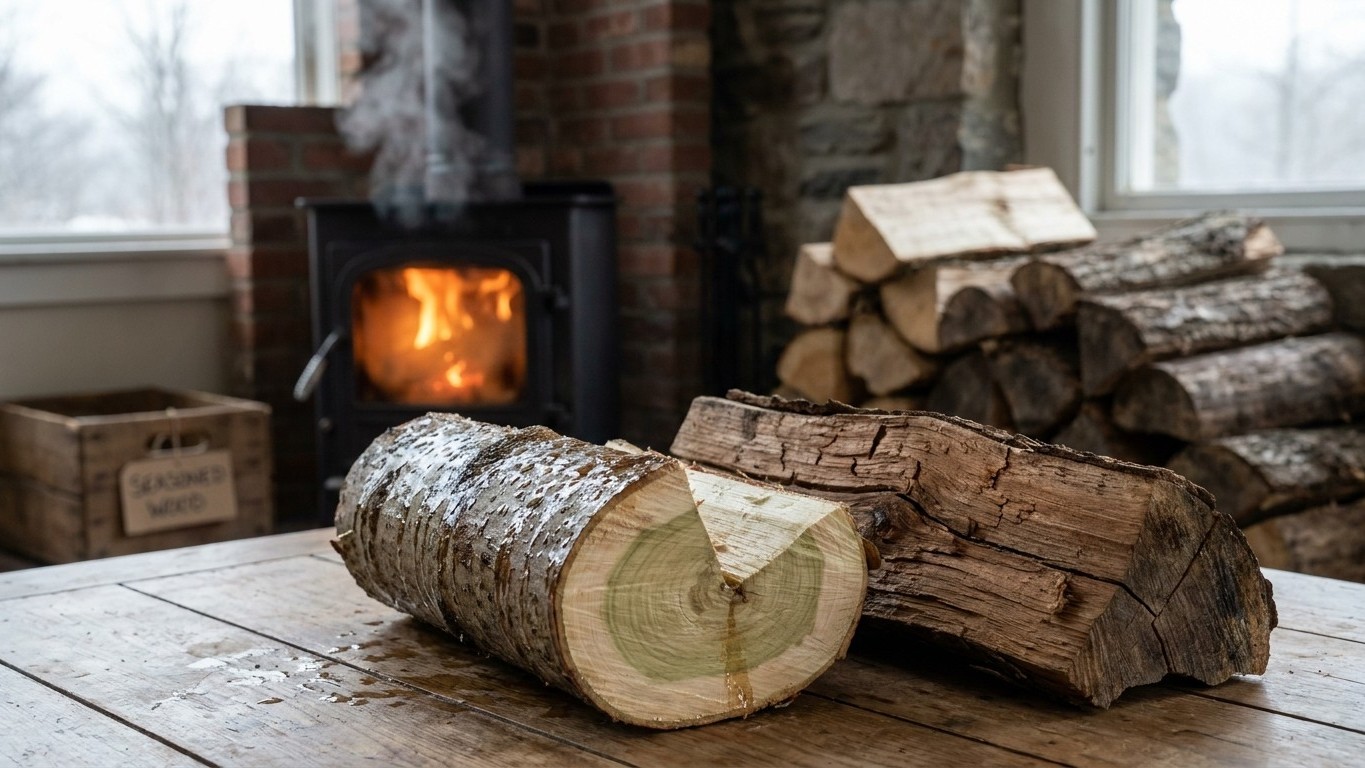

Green wood robs you of heat because up to half its weight is water, and every ounce of that moisture has to boil off inside your stove or fireplace before the wood itself starts to burn efficiently. That process consumes energy that should be warming your living room. A cord of properly dried firewood can deliver noticeably more usable heat than the same cord cut and burned within a few months, which is why seasoning isn’t a nice-to-have step, it’s the difference between a stove that heats your house and one that mostly heats your chimney.
What “Green Wood” Actually Means

Freshly cut, or “green,” wood typically holds 45% to 60% moisture content by weight, depending on the species and the season it was felled. Spring-cut oak, for example, can be even wetter than wood cut in late fall because trees pull more water up through their trunks during active growing months. The U.S. Environmental Protection Agency recommends burning wood with a moisture content of 20% or less for both efficiency and safety, a benchmark cited on the agency’s Burn Wise program pages (epa.gov/burnwise).
That 20% threshold isn’t arbitrary. Below it, wood ignites faster, burns hotter, and produces measurably less smoke. Above it, you’re fighting physics every time you strike a match. Wood at 45% moisture needs to shed roughly twice as much water weight as wood at 20% before combustion even gets efficient, and that gap shows up directly in your heating bill or your firewood budget.
The Physics of Wasted Heat
Water absorbs an enormous amount of energy when it turns to steam. Boiling off the moisture trapped in green wood consumes heat that would otherwise radiate into your room, and that energy leaves through your flue as water vapor instead of warming your space. Think of it like running a space heater with a wet towel draped over the coils. The heater still works, but most of its output goes into drying the towel rather than heating the air around it.
There’s a second penalty beyond lost heat. Burning wet wood at low, smoldering temperatures produces far more smoke and creosote than burning seasoned wood at a proper combustion temperature. That creosote builds up inside your chimney or flue liner, and it’s the fuel source behind most residential chimney fires. So green wood doesn’t just shortchange your heat output, it actively raises your fire risk every time you load the stove.
Wet wood also hisses, pops, and sputters rather than catching cleanly, which is often the first clue a batch hasn’t seasoned enough. If you’re regularly fighting to keep a fire lit, or your glass door fogs with black soot within an hour, moisture is almost always the culprit rather than a problem with your stove or your technique.
How Long Seasoning Really Takes
Seasoning time depends heavily on species density, how the wood was split, and local climate, but general guidelines hold up across most of the country. Softer, less dense woods like pine, poplar, and birch can reach burnable moisture levels in six to twelve months under good drying conditions. Dense hardwoods, especially oak, often need a full eighteen to twenty-four months before they hit that 20% target.
Fast-Seasoning vs Slow-Seasoning Species
Ash, maple, and cherry sit in the middle, typically ready in about a year when split and stacked promptly after cutting. Oak is the outlier on the slow end; its tight grain structure and naturally higher moisture retention make it the wood most likely to get burned too early by impatient homeowners. If you’re buying wood specifically labeled “seasoned oak” less than a year after it was cut, treat that claim with some skepticism.
Climate matters just as much as species. Wood stacked in a sunny, breezy spot in Arizona will dry noticeably faster than the same species stacked in a shaded, humid corner of coastal Georgia. Splitting wood into smaller pieces also speeds the process considerably, since it exposes more surface area to air and sun. A round left whole can take twice as long to season as the same wood split into standard 4 to 6 inch pieces.
How to Tell When Wood Is Ready
A moisture meter remains the most reliable way to check, and inexpensive pin-style models are widely available at hardware stores. Split a piece fresh and test the newly exposed face, since the outer surface dries faster than the core and will give you a falsely low reading. Anything reading 20% or below on that fresh split face is ready to burn.
Short of a meter, several physical cues help. Seasoned wood is noticeably lighter than green wood of the same size, since it has shed a large percentage of its original water weight. The bark tends to loosen or peel away easily, and the ends of the logs often show visible cracking or checking as the wood shrinks while drying. Two pieces knocked together produce a sharp, hollow crack rather than the dull thud you’d hear from wet wood.
Color offers a rough clue too. Green wood usually looks vibrant or slightly damp on a fresh cut, while seasoned wood fades to a grayer, duller tone on its exposed surfaces. None of these signs alone is definitive, but taken together, along with an actual moisture reading when possible, they’ll keep you from burning wood before it’s ready.
Stacking and Storage That Speeds Drying
How you stack wood affects seasoning time almost as much as how long it sits. Air circulation is the key variable, since moving air carries evaporated water away from the wood surface faster than still air does. A single row stacked off the ground, with gaps between rows, dries far faster than a dense pile where interior pieces stay trapped against damp neighbors.
Keep the stack elevated on pallets, rails, or scrap 2x4s rather than directly on soil or grass. Ground contact wicks moisture back into the bottom logs and invites rot and insect activity. Covering only the top of the stack, leaving the sides open, strikes the right balance between shedding rain and snow while still allowing wind to pass through and pull moisture out.
Orientation relative to prevailing wind and sun exposure matters more than most people realize. A stack running parallel to your area’s dominant wind direction, positioned where it catches several hours of direct sun, will consistently outdry a stack tucked against a shaded fence line. In humid regions of the Southeast, that difference can shave months off the seasoning timeline.
Splitting sooner rather than later pays off too. Bark acts as a natural moisture barrier, so wood left in round, unsplit logs holds onto water far longer than split pieces with exposed wood grain. Processing your wood within a few weeks of cutting, rather than letting rounds sit whole through a season, gives you a real head start on the drying clock.
One detail often overlooked: wood that’s already seasoned can reabsorb moisture if left uncovered through a wet season or stored somewhere damp, effectively resetting part of the drying progress. Firewood is hygroscopic, meaning it will trade moisture with the surrounding air over time in either direction. That’s the practical reason experienced burners bring in only a few days’ worth of wood to a covered porch or breezeway rather than storing the whole supply somewhere it can catch rain or high humidity right before it’s needed.