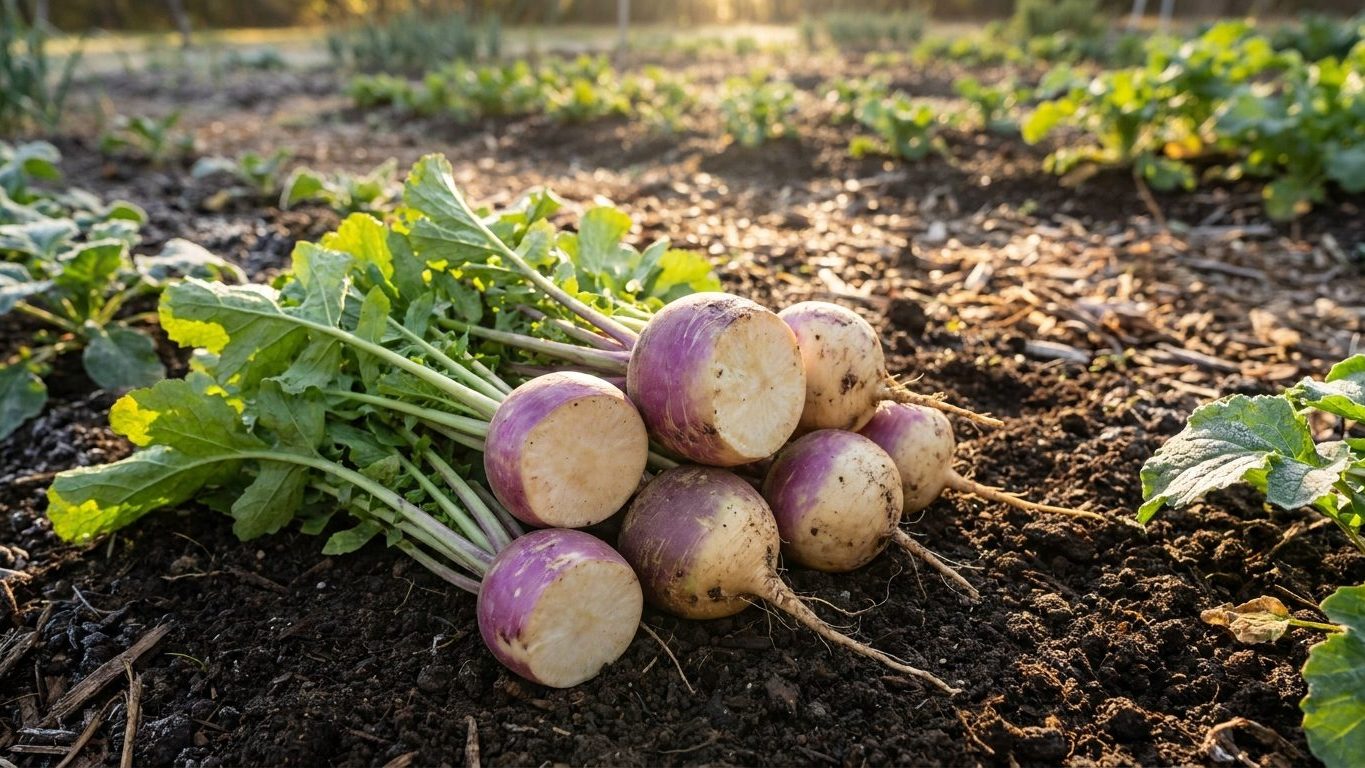

Spring turnips in Kentucky go in once the soil has warmed, and that moment trails the last frost rather than matching it. Louisville’s frost band runs March 24 to April 4. Rutabaga and the main turnip crop belong in late summer, timed to finish in cool autumn weather. Which crop and which date you choose depends on the soil, the growing window and the rest of your garden, and the sections below cover each.
When the soil is warm enough in Kentucky
Start with the number most gardeners look up first. At the Louisville reference station, NOAA’s 1991-2020 Climate Normals put the last spring 32 F freeze between March 24 and April 4 (the 30-70% probability band, NOAA NCEI data). That is a probability, not a promise, and a late cold snap can still land after the band closes.
The frost date is also a stand-in for what the crop needs. Turnip and rutabaga seed wants warm, workable soil, and soil lags the air. Cold nights end first, and the ground catches up days or weeks later, depending on drainage, sun and how much mulch or snowmelt the bed has seen. A sowing date taken straight from the frost table is a guess. A soil thermometer pushed a couple of inches into the bed is a measurement. Take readings in the morning, when the soil is at its coolest, and let the University of Kentucky’s published thresholds, not a rule of thumb from a seed rack, tell you what counts as ready.
Two cautions come with this station. NWS Louisville warns that it runs later in spring and earlier in fall than the rural parts of Jefferson County around it, so a country garden should expect a tighter window than the table shows. Kentucky is also a long state. The USDA Plant Hardiness Zone Map (2023, built on 1991-2020 normals) places it in zones 6a to 7a, and that is a statewide range, not a single value. A garden in the far west, in the mountains or along the Ohio River can sit well away from Louisville’s figures.
What goes in the ground first matters too. Spring sowings in Kentucky are a race against summer heat, which is why quick-maturing, small-rooted turnip types suit the spring slot. Rutabaga is a slow, long-season root. It does its best work when the roots swell in the cool, short days of fall, so it is usually a late-summer sowing, not a March one.
For variety choice, this page names none. The cultivars worth sowing are the ones trialled in your part of the state, and your University of Kentucky Cooperative Extension Service office holds that information. Speaking in types is the honest option.
How long the season lasts here
The same NOAA normals give the fall side. The first 32 F freeze at the Louisville reference station falls between November 2 and November 12, using the same 30-70% probability band. Subtract the spring dates from the fall ones and the growing window is anywhere from 212 to 233 days.
- Shortest case: April 4 to November 2, which is 212 days.
- Longest case: March 24 to November 12, which is 233 days.
Seven months or more is generous for a root crop, and that length changes what you can do with it. The main thing it allows is a second sowing. A spring planting of quick turnips can finish and be pulled before summer heat wrecks the texture, and the bed is then free for a late-summer sowing that matures in the cool weather of fall. Rutabaga fits into that second slot because its long maturation still ends well ahead of the November frost band. The succession sowing guide on this site walks through spacing those planting dates, and the Growing Turnips and Rutabaga: An Autumn Crop, Sweetened by Frost overview explains why fall is the stronger half of the year.
A long window also settles the transplanting question. Turnips and rutabaga form a taproot that dislikes being disturbed, and a damaged or bent root can fork or stall. When the season is short, some gardeners start seedlings indoors to gain days and accept the risk. Kentucky’s window removes that pressure. Direct sowing works, and if you do start plants, inspect the root when they come out of the tray and discard any that are curled or kinked.
Remember the rural caution, though. The figures above come from an urban station, and a tighter rural season shortens everything. If your garden sits in a frost pocket or on higher ground, leave extra margin on the fall sowing, because a late planting that gets caught by an early freeze produces leaves and little else.
For contrast, see how Growing Turnips and Rutabaga in West Virginia and Growing Turnips and Rutabaga in Rhode Island handle their own windows. A shorter season turns a second sowing into a gamble, where Kentucky treats it as routine.
Heat and water in Kentucky
Two climate figures normally belong in this section: the number of days above 90 F, and summer rainfall. The verified data set for this page does not include either one, so I won’t put a count or a rainfall total here that I cannot source. NOAA’s Climate Normals for Louisville carry both, and the Kentucky Mesonet and your extension office can fill in the numbers for the county where you actually garden.
What can be said without numbers is the pattern. Kentucky summers are hot and humid. Heat makes root crops tough, pithy or bitter, and it pushes plants toward bolting. Humid air and heavy foliage invite fungal and bacterial disease on the leaves. Both problems explain why the autumn sowing is the dependable one: roots form as temperatures fall, and the disease pressure of midsummer eases.
Water follows the same logic. Even moisture keeps roots from splitting and keeps flavor mild, and uneven watering, with a dry spell followed by a soaking, is what cracks them. Mulch helps the bed hold steady between rains. Turnips and rutabaga are brassicas, like cabbage, kale and mustard, so they share those crops’ diseases and pests. A gardener who rotates them into a bed that held cabbage has rotated nothing. Check the crop rotation guide on this site before you plan beds.
The cold half of the year is where this crop gets its character, and here the facts are firm. The mean daily minimum of the coldest month at the Louisville station is 27.8 F (NOAA Climate Normals, 1991-2020). That is an average, so some nights run colder, but a typical night in the coldest month dips only a few degrees under freezing. For the crop, that suggests two things.
First, frost sweetening has time to work. Between the first fall freeze in the November 2 to 12 band and the deep of winter, there are many nights cold enough to push starch toward sugar in the roots, without the ground locking up solid. Second, roots can often stay in the ground under a layer of mulch and be harvested as needed, rather than all being lifted at once. Treat that as a likelihood. A hard cold snap can freeze mulched roots, and a root that has frozen, thawed and gone soft is finished.
If you lift roots to store them, inspect each one. Discard anything with a soft patch, a spot that weeps liquid, or a moldy crown. A root that looks firm on the outside is not proof that it is sound, and no storage period should be taken for granted. Check stored roots regularly and cut your losses early.
Which turnips and rutabaga suit Kentucky
The reasoning here starts from Kentucky’s conditions, and none of it requires a variety name. The season is long, 212 to 233 days at the reference station, so you are not forced into the very earliest types the way a northern gardener would be. Earliness still has value in the spring slot, though, because the quicker a turnip matures, the less summer heat it has to endure.
Heat and humidity make two other criteria matter more. For the summer-exposed spring crop, favor types and growing practices that give the roots airflow and some shade: spacing that lets leaves dry quickly, mulch that keeps soil from baking, and, for gardeners with the option, a bit of afternoon shade from taller plants. For the fall crop, disease resistance should be the first thing you look for on a seed description, since humid weather encourages leaf spots and root rots. Seed catalogs list resistances, and your extension office can tell you which ones matter in your county.
That brings us to the choice no web page should make for you. This page names no cultivars, deliberately. The varieties that perform in Kentucky are the ones that have been grown, tested and recorded here, and I don’t have those trial results. An invented list would send you to buy seed on the strength of a name, and a gardener who knows the area would spot the error immediately. The University of Kentucky Cooperative Extension Service is the right place to ask, and your county office can tell you what has done well locally.
When you ask, bring three details: which part of the state you garden in, whether the site is rural or in town, and which slot you are filling, spring or fall. Those answers matter more than any seed catalog. The zone range of 6a to 7a hides real differences between the western and eastern ends of the state, and a local answer accounts for them.
Bed planning is the last piece. Wherever the seed comes from, rotate away from every brassica crop, which means cabbage, kale and mustard as well as turnips and rutabaga. A bed shared with any of those carries their diseases into the next planting.
Common questions
When should I sow turnips in Kentucky?
Spring sowings wait for workable, warm soil, which arrives after the last frost band of March 24 to April 4 at the Louisville reference station. Fall sowings are timed back from the November 2 to 12 first-freeze band. Rural gardens should expect a tighter window.
Can I leave turnips and rutabaga in the ground over winter?
Often, with mulch, since the coldest month’s average minimum is 27.8 F at Louisville. A severe cold spell can still freeze roots, so dig up and inspect any that look doubtful.
How do I know a stored root has gone bad?
Look for a soft patch, a spot that weeps, or a moldy crown. Any of those ends the question, and so does doubt. A root that looks sound is not guaranteed safe, so do not assume a keeping time.
Can I plant turnips where cabbage grew last year?
No. Turnips and rutabaga are brassicas and share diseases and pests with cabbage, kale and mustard. Move them to a bed that has not held any brassica recently.