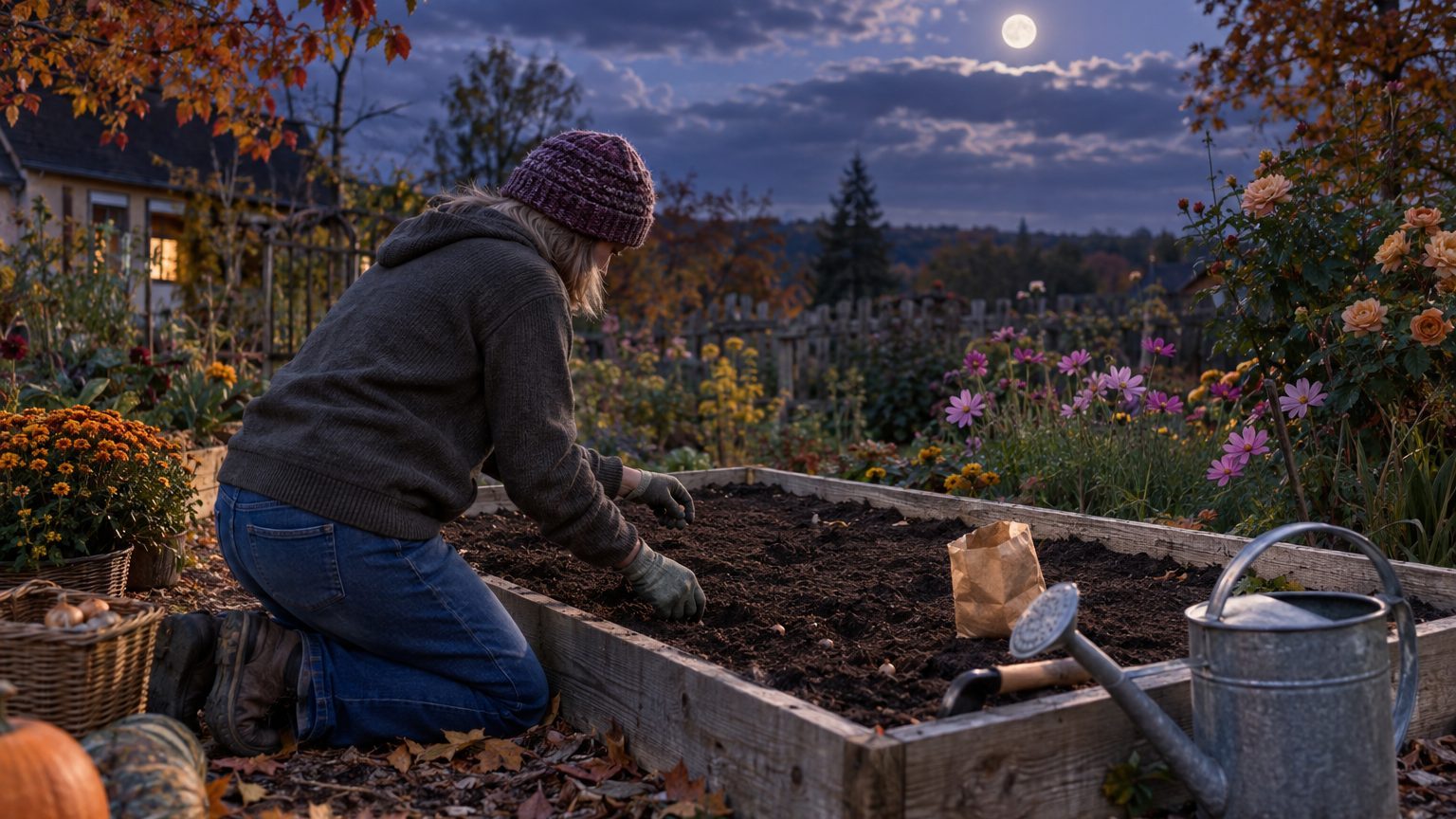

According to almanac tradition, the Moon in Libra is a semi-fruitful sign, and biodynamic gardeners call it a flower day. Nothing shows that the Moon changes how plants grow, so both labels are conventions and not measurements. The next time the Moon enters Libra is October 9 at 4:10 a.m. ET. Below is what the tradition assigns to those days and how to read it next to your local planting calendar.
What the tradition says about the Moon in Libra
The Moon passes through the twelve zodiac signs and stays about two and a half days in each. Gardeners who plant by the Moon attach a label to every sign and consult that label before sowing. Libra carries two labels, one from almanacs and one from biodynamic gardening. They come from different systems, and they do not always point the same way.
The almanac label: semi-fruitful
Moon-sign almanacs usually sort the signs into three classes:
- Fruitful: Cancer, Scorpio, Pisces
- Semi-fruitful: Taurus, Libra, Capricorn
- Barren: Aries, Gemini, Leo, Virgo, Sagittarius, Aquarius
Sources differ on Virgo, Sagittarius and Aquarius, so it pays to check which almanac you follow. Libra sits in the middle class. Under this convention, Taurus, Libra and Capricorn are labeled semi-fruitful, and the label is a filter, not a crop list. The sign has no list of vegetables of its own. The phase of the Moon names the crop group, and the sign decides whether that day counts as a traditional sowing window. For more on how the labels are built, see moon sign gardening.
The crop groups come from the four quarters. According to almanac tradition, the first quarter (new moon to first quarter) belongs to leafy crops that bear above ground, such as lettuce, spinach, cabbage, broccoli and celery. The second quarter (first quarter to full moon) belongs to above-ground crops that bear seed inside the fruit: tomatoes, peppers, beans, squash and corn. The third quarter (full moon to last quarter) belongs to root crops, bulbs and perennials, such as potatoes, carrots, garlic, onions and beets. The fourth quarter (last quarter to new moon) is a rest period for weeding, pruning, turning the soil and composting. A Libra stay inherits whichever list matches the phase it falls in.
The biodynamic label: flower day
Maria Thun’s biodynamic scheme groups the signs into four sets of three. Root days are Taurus, Virgo and Capricorn. Flower days are Gemini, Libra and Aquarius. Leaf days are Cancer, Scorpio and Pisces. Fruit days are Aries, Leo and Sagittarius. In that scheme a Libra day is a flower day, which the tradition sets aside for flowering plants. The almanac label ranks a sign by fertility and the biodynamic label names a plant part, so the two systems ask different questions.
No effect of the Moon’s phase or sign on germination or yield has been established. Treat all of this as an old custom, followed for its own sake. The Moon never overrides the calendar of the place. Frost dates and soil temperature decide whether a crop can go in the ground. For those who follow the custom, the Moon only chooses among days the local calendar already allows. Your state’s planting guide is where to find those dates.
When the Moon is in Libra next
Four entries into Libra follow in the months after early October. Times are Eastern time.
| Moon enters Libra | Time (ET) |
|---|---|
| October 9 | 4:10 a.m. |
| November 5 | 9:38 a.m. |
| December 2 | 3:03 p.m. |
| December 29 | 9:26 p.m. |
From each entry, the Moon stays in Libra for about two and a half days. The stay is not a block of whole calendar days. It begins at the clock time in the table and ends partway through a later day. The October 9 entry falls in the early morning, so most of that calendar date is inside the stay. The December 29 entry comes late in the evening, so nearly all of that date falls before the Moon reaches Libra. Anyone following the sign closely would count from the entry time, not from midnight.
Readers outside the Eastern time zone need to convert the times. The table gives the Moon’s sign and nothing else. It does not say which quarter the Moon is in at each entry, and the quarter decides which crop group the tradition attaches to the stay. Whether any of these dates suits a particular crop in your yard is a question for your local frost dates and soil conditions, not for the table.
The sign and the phase together
Almanacs that use signs rarely use them alone. The usual rule pairs two conditions. A root crop wants the third quarter and a fruitful or semi-fruitful sign. Above-ground crops that bear seed inside the fruit want the second quarter and the same kind of sign. A Libra day inside the right quarter meets both conditions, and the almanac counts it as a traditional window. A Libra day outside the matching quarter meets only one, and the almanac does not count it for that crop.
Conflicts are common because the two cycles do not line up. The phase repeats about every month, and the Moon visits all twelve signs in about the same span. Which sign falls in which quarter shifts from month to month. A third-quarter day can land on a barren sign. A semi-fruitful sign like Libra can land in the fourth quarter, when the tradition assigns rest tasks and no sowing. Biodynamic gardeners add a third layer. A root crop sown in the third quarter during Libra meets the almanac condition but falls on a flower day, not a root day in the Thun scheme. Virgo reverses the pattern: it is a root day for biodynamic gardeners and a barren sign in the almanac convention (see Moon in Virgo).
The tradition does not settle which rule wins. Almanacs differ, so someone following the custom has to choose a rule in advance and stay with it. For the full method, start with planting by the moon. For October’s sign and phase dates, see the October 2026 calendar.
Questions
Is Libra a fruitful sign? Not in the almanac convention. The fruitful signs are Cancer, Scorpio and Pisces. Libra is labeled semi-fruitful, in the same class as Taurus and Capricorn.
Does a Libra Moon mean I can plant before my last frost date? No. Frost dates and soil temperature come first, and the Moon is only a way to choose among days that are already open. Your state’s planting guide has the dates for your area.
Is the Moon in Libra for the whole calendar day? Only for part of it on the first and last days. The Moon stays in Libra about two and a half days from its entry, and the entry times in the table are in Eastern time. The Moon enters Libra on November 5 at 9:38 a.m. ET, so the hours before that belong to the previous sign.