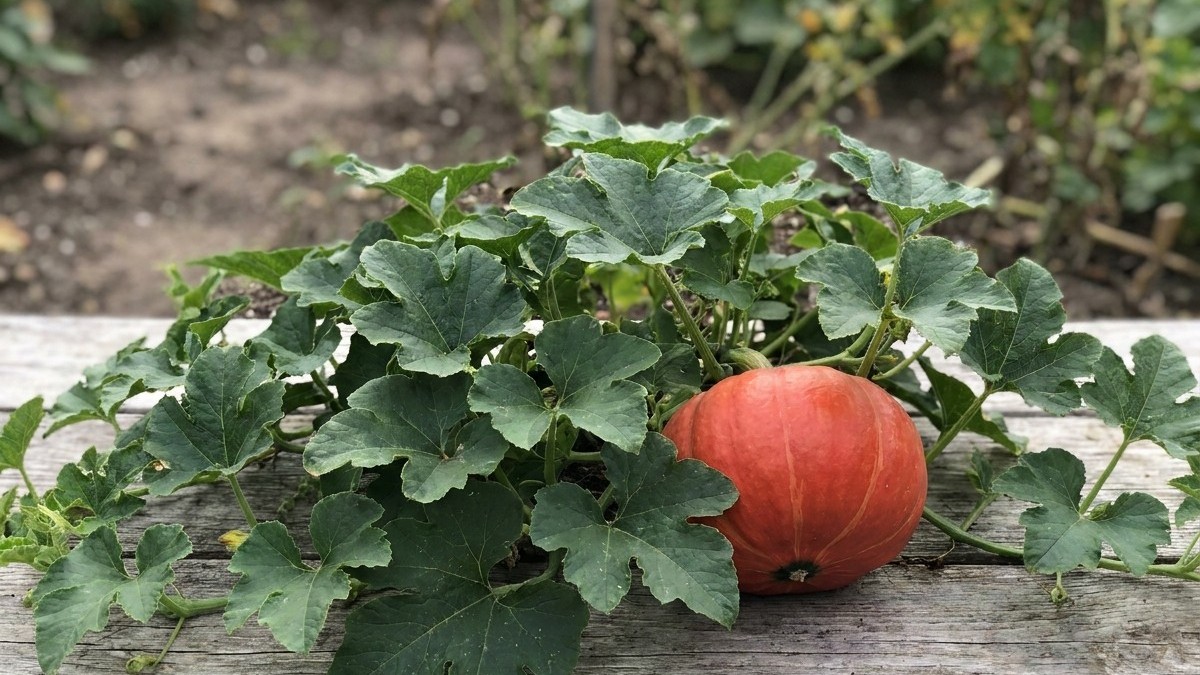

Cut Arkansas pumpkins before the first fall freeze, which the Little Rock climate normals place between November 7 and November 20. The fruit has to be ripe by then, so the flower that made it must have opened no later than somewhere between mid-September and early October. Count from the flower, never from the seed. A whole pumpkin cut with its stem attached keeps three to six months in the right spot. The full growing calendar lives in Growing Pumpkins in Arkansas.
The short answer
The NOAA NCEI 30-year climate normals for the Little Rock station give a first fall freeze of November 7 to November 20. That range spans the dates where the odds of a 32 F freeze run from 30 to 70 percent, so it is a window, not a promise. A pumpkin takes 45 to 55 days to mature after flowering. Subtract those days from the window and you find the last moment a flower can open and still give a ripe fruit.
Counting back from the frost window
Start with the early edge. Fifty-five days before November 7 is September 13. Now the late edge: 45 days before November 20 is October 6. The latest a flower can open and still ripen is therefore somewhere in the window of September 13 to October 6. The spread is wide because two uncertainties stack, a pumpkin that may be slow or quick and a frost that may arrive early or late. A gardener who wants the odds on their side treats mid-September as the cutoff and counts anything in October as a bonus.
A worked example shows how tight it gets. A flower that opens on September 20 plus 45 days is November 4. The same flower plus 55 days is November 14. That fruit finishes right as the frost window opens. A coin toss, basically.
Those are 32 F dates. NWS Little Rock gives October 31 as its fall date at the 36 F light-frost threshold (and April 3 in spring), and tender plants need those dates instead. Counting back from October 31 moves the cutoff to roughly September 6 through September 16. The station figures also describe Little Rock only. This page publishes no county-by-county dates, so check your own area before trusting the edges of the window.
The clock starts at the flower. Seeding date and transplant date do not move it. Utah State University Extension, the source for the 45 to 55 days after flowering figure, ties it to flowering and nothing else. No variety-specific day counts are attached to this page, so a variety name is not a reason to shorten or stretch the range. When the calendar runs out before the fruit does, Will Pumpkins Ripen Before Frost in Arkansas? covers what to do.
How long they keep once cut
Harvest with the stem attached, before frost. Utah State says only to keep pumpkins where they will not freeze. It gives no storage temperature, no humidity and no keeping time. The numbers come from University of Illinois Extension: a whole pumpkin keeps three to six months in a cool, dark location between 45 and 50 F.
The same source adds a second rule that few people know. Store pumpkins away from ripening fruit and vegetables such as apples, potatoes and tomatoes. Ripening produce gives off a gas that ages the pumpkin faster, which is why the porch beside the apple crate is the worst spot for it. And the 45 to 50 F range applies to a whole pumpkin only. Neither source gives a figure for a carved one, so none is offered here.
When to sow here
Sowing follows the soil, not the last spring frost. Utah State University Extension says to sow when the soil reaches 65 F, and soil lags the air by weeks. The steps below turn that into a date.
- Start with the last spring frost. The NOAA NCEI normals for Little Rock put it between March 12 and March 28. That marks when freezing air stops, not when seeds should go in.
- Add the soil lag. The soil warms behind the air by weeks. Take the frost window, add those weeks, and the sum is the date your soil is likely to reach 65 F. This page publishes no soil-temperature date, so the sum is a forecast, not a fact.
- Confirm with a thermometer. Push a soil thermometer into the planting spot and sow only when it reads 65 F. Doing this beats any calendar, because a warm week in March can fool the air without fooling the ground.
- Subtract two weeks if you use row covers. Covers buy about two weeks. Take the date your soil would reach 65 F on its own and sow two weeks earlier under cover. The arithmetic in words: last frost, plus the soil lag, minus two weeks, equals your earliest covered sowing date.
- Do not count the finish from the seed. The 45 to 55 days begin when the first flower opens, and no seed-to-flower figure is published here. Judge the season by the flower cutoff of September 13 to October 6, not by the sowing date.
Why the season rarely runs short at the start
Even the tightest pairing, a March 28 last frost and a November 7 first freeze, leaves about 224 days of frost-free air. Sowing a few weeks late costs little. The real risk is the opposite, a vine that sets its first fruit late or stalls midsummer, so that its best flowers open after the September cutoff. Hot, dry spells and insect damage can both delay flowering, which is why the What Eats Pumpkin in Arkansas, and When page matters before the harvest calendar does.
What goes wrong here
The Arkansas season is long, but it still ends on a date, and every failure below comes from a fruit or a vine meeting that date unprepared.
- A late flower that never colors. A bloom that opens after the cutoff window yields a green fruit, because 45 days will not fit before frost. Pinch off new flowers and tiny fruit once mid-September passes so the vine feeds the pumpkins that can still finish, and sow earlier next year.
- A fruit caught by frost. The first freeze can arrive as early as November 7, and a pumpkin left in the field that night is lost. Watch the forecast from the start of November and cut everything that has color, stem attached, before the freeze, not after it.
- A vine that dies back before the skin hardens. Pests and disease can strip a vine weeks before frost, leaving fruit with a soft rind. Squash bugs and cucumber beetles are the usual suspects, and What Eats Pumpkin in Arkansas, and When covers them. Once the vine is dead it stops feeding the fruit, so cut the pumpkin with its stem on and move it somewhere cool and dry.
- A cut that loses the stem. Utah State says to harvest with the stem attached. Cut a few inches above the fruit with pruners and carry the pumpkin by its body, never by the handle, which can snap off.
- Storage beside ripening fruit. A pumpkin stored next to apples, potatoes or tomatoes ages faster because of the gas they give off. Keep it in a cool, dark place at 45 to 50 F, and expect three to six months for a whole fruit.
Common questions
Do I count the 45 to 55 days from seeding?
No. The figure starts at flowering. Counting from the seed or the transplant date gives a harvest date that is wrong by weeks, and the cutoff window of September 13 to October 6 is a flower date, not a sowing date.
Is the last frost date the day to sow?
No. Sow when the soil reaches 65 F, which comes weeks after the air stops freezing. For Little Rock, the last spring frost sits between March 12 and March 28, and the soil catches up later. Row covers let you sow about two weeks earlier than the soil allows on its own.
How long does a cut pumpkin keep?
A whole pumpkin keeps three to six months in a cool, dark place between 45 and 50 F, away from apples, potatoes and tomatoes. Utah State says only to keep them where they will not freeze. No keeping time or temperature for a carved pumpkin is published here.
What if frost is forecast before the pumpkin has fully colored?
Cut it with the stem attached before the freeze arrives, because a frozen fruit will not keep. Whether a partly colored pumpkin will finish ripening off the vine is covered in Will Pumpkins Ripen Before Frost in Arkansas?