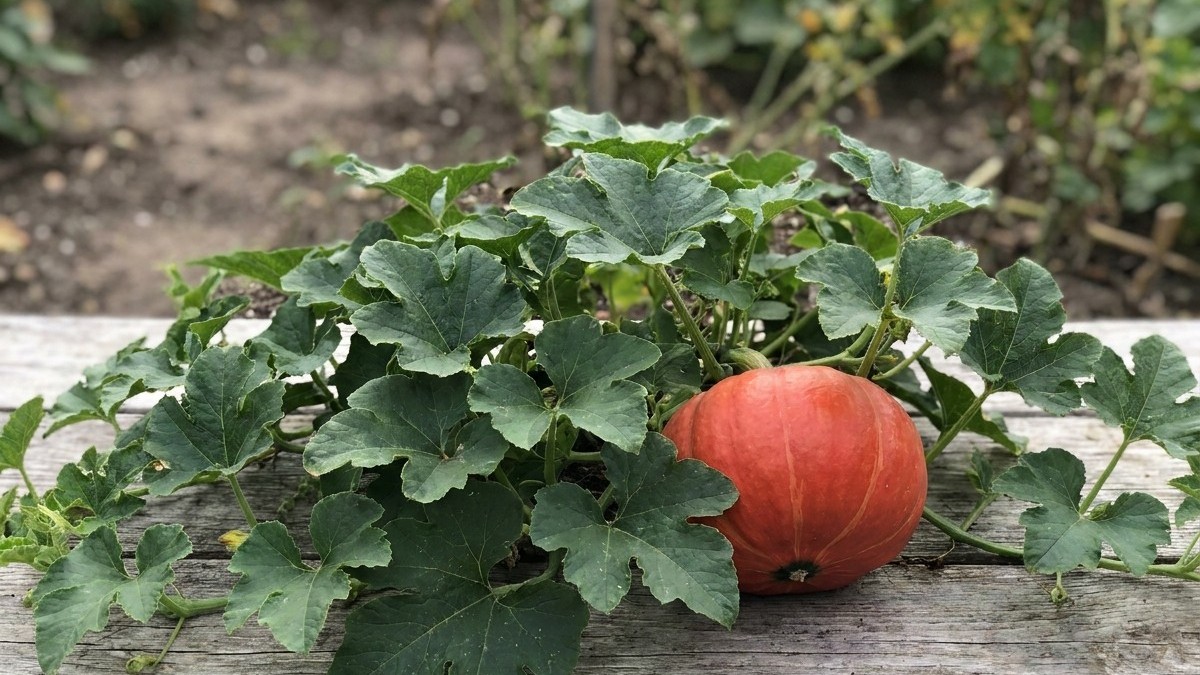

Cut a pumpkin when it has colored fully and the skin has hardened, which falls 45 to 55 days after the flower opened, not after the seed went in. Where a freeze comes, cut with the stem attached before it arrives. Along the coast and across Southern California, no freeze comes in an average year, so the calendar rarely forces your hand. Kept whole in a cool, dark spot between 45 and 50°F, a pumpkin lasts three to six months.
The short answer
Los Angeles has no first fall frost to plan around. NOAA’s National Centers for Environmental Information (NCEI) lists no computable freeze normal for the station there, and NOAA’s Regional Climate Centers daily records show zero days at or below 32°F across 30 years. The frost-free season is listed at 365 days (NOAA NCEI data). That holds for coastal and southern California. It does not hold for the whole state.
Where a freeze does arrive
Northern California, the Central Valley and the Sierra all freeze. This page does not publish a first-frost date for those areas, and guessing one would be worse than leaving it blank. Look up the normal for the weather station nearest your garden, then do the arithmetic yourself.
Pumpkins take 45 to 55 days to mature after flowering, according to Utah State University Extension. So take your first fall freeze and step back about six and a half weeks, then nearly eight weeks. Those two marks bracket the latest flower that can still give a ripe pumpkin. A flower that opened before the earlier mark is safe even for a slow variety. One that opened between the two marks is a gamble. One that opened after the later mark will not ripen, even for a fast variety. The answer is a window about ten days wide, not a single day, because pumpkins do not all run on the same clock.
The count starts at flowering. It does not start at seeding or transplanting, and mixing those up throws off every date that follows. A garden tag or a strip of tape on the vine, marked the day a female flower opens, takes the guesswork out of it.
Where it doesn’t
Without a freeze, there is no deadline to count back from. You cut when the fruit is ripe: fully colored, skin hardened, stem still attached. The constraints here are heat, drought and water restrictions. The real question is whether the vine survives a hot summer, and whatever irrigation limits your area imposes, long enough to finish the fruit.
For a closer look at the frost side of the math, see Will Pumpkins Ripen Before Frost in California?
When to sow here
Sowing is gated by soil temperature, not by the calendar. Utah State University Extension puts the threshold at 65°F. Here is how to turn that into a date.
- Measure the soil, not the air. Push a soil thermometer in at seed depth in the morning, when the ground is at its coolest. Sow once it reads 65°F and holds there. A warm afternoon does not count.
- Expect the soil to lag the air. The 65°F mark is not the last frost date, and the two should never be treated as the same day. Soil trails the air by weeks. In the freeze-prone parts of the state, planting on the day of the last frost puts seed into cold ground. On the coast and in Southern California there is no last spring frost at all (the same NOAA records show no freezes), so soil temperature is the only gate.
- Add row covers if you want a head start. A cover buys about two weeks. In plain arithmetic: take the day your bare soil is expected to reach 65°F and subtract 14 days. That is your earliest sensible sowing date under cover. Those two weeks come off the front of the season, which matters most where a freeze closes the back end.
- Count forward to the first flower. Days from sowing to the first female flower vary by variety and by how warm the weather runs. This page does not publish a figure, so use your seed packet. Then add 45 to 55 days after that flower opens. The full sum is sowing date, plus days to flower, plus 45 to 55 days.
- Check the sum against your limit. In freeze country, compare it with your first fall freeze minus 45 to 55 days. If it lands past that window, sow earlier under covers or choose a pumpkin whose packet promises an earlier harvest. Along the coast and in the south, check it against summer instead: will the fruit be sizing up in the hottest weeks, and can you water through them?
The general steps for a pumpkin patch, from bed prep to spacing, are covered in Growing Pumpkins in California.
What goes wrong here
Season length is the root of most pumpkin failures in California. Which one you meet depends on which side of the Sierra, or which side of the coastal hills, you garden on.
- A late flower that never colors. A flower that opens after the window closes sets a fruit that stays green. Once you pass the later mark in your calculation, pinch off new flowers and tiny fruits so the vine puts its energy into pumpkins that can still finish. A green pumpkin will not turn orange on the shelf, so don’t count on one.
- A fruit caught by frost. Utah State University Extension says to harvest with the stem attached before frost, and to store pumpkins where they will not freeze. In the Central Valley, northern counties and the Sierra, watch the forecast from late in the season. Cut the mature fruits, stems on, ahead of any freeze night. Pumpkins that already froze are poor candidates for storage, so use them first.
- A vine that dies back before the skin hardens. Heat stress, dry soil and insect damage can all kill the vine early, and fruit left bare then has little time to toughen up. Keep the watering even through hot spells, and check the undersides of leaves. The usual culprits already have a page here: What Eats Pumpkin in California, and When. If the vine collapses anyway, cut mature pumpkins with the stem on and move them to a spot that stays cool and dry. Eat the soft-skinned ones first.
- A pumpkin stored beside the apple crate. Ripening fruit gives off a gas that ages the pumpkin faster. Apples, potatoes and tomatoes are the ones to keep it away from. A porch next to the fruit bowl is the worst spot in the house.
- A storage spot that runs warm. The 45 to 50°F range comes from University of Illinois Extension. Many California garages and sheds sit well above that in early fall. A cooler, darker corner, such as an interior closet or a shaded cellar, is closer to the target. The source’s one firm warning is the freezing mark. Never let a stored pumpkin get that cold.
Common questions
Do I need to worry about frost if I live in Los Angeles?
No, not in an average year. NOAA’s climate normals and daily records show zero days at or below 32°F in 30 years, and a frost-free season of 365 days. Your limits are heat, drought and water restrictions. If you garden in northern California, the Central Valley or the Sierra, frost is very much in play.
How long will a whole pumpkin keep?
University of Illinois Extension gives three to six months in a cool, dark location between 45 and 50°F. Keep it away from ripening fruit and vegetables such as apples, potatoes and tomatoes. Utah State University Extension adds only that pumpkins should be stored where they will not freeze, and gives no temperature or keeping time of its own.
Do the 45 to 55 days start at seeding?
No. They start when the flower opens. The days from sowing to flower come first, and they vary. Counting from the seed makes you think the pumpkin is ready weeks before it is.
How long does a carved pumpkin last?
This page has no figure for it. The 45 to 50°F range and the three to six months apply to a whole, uncut pumpkin, and the sources say nothing about one that has been carved. Once the rind is opened, expect a much shorter life than a whole pumpkin gets.