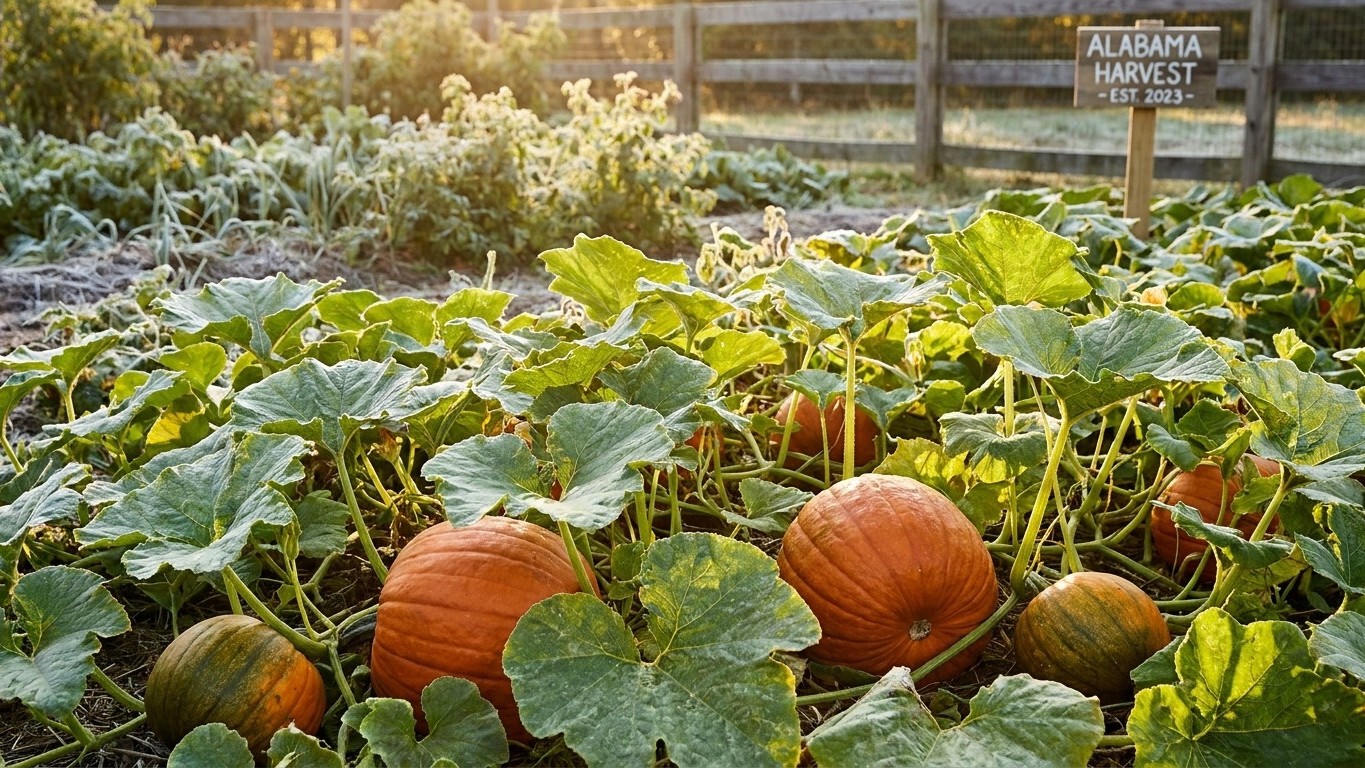

Coastal and Southern California don’t have a frost date to race against; NOAA records show no freeze at all in an average year there, so pumpkins have the whole season to color up. In the Central Valley, the Sierra, and Northern California, frost is real but region-specific, and growers there still need to count backward 45 to 55 days from flowering, not from seeding, to know if a late bloom will finish or freeze green on the vine.
The short answer
Start with the frost, or the lack of one. NOAA’s 1991-2020 Climate Normals for the coastal and Southern California station show no computable freeze normal at all, code -666 in the federal dataset, which is the agency’s way of saying the math for a frost date breaks down because there isn’t one. Thirty years of daily records back that up: zero days at or below 32°F, and a frost-free season listed as 365 days. That’s not a rounding error. It means a pumpkin flowering in coastal Los Angeles or San Diego in October has no frost deadline pressing on it at all.
Work backward from that, and the math changes shape. Pumpkins need 45 to 55 days from the day a flower opens to a ripe, hard-shelled fruit, according to Utah State University Extension. In a region with no frost window, that 45-to-55-day clock has nowhere to run out. The limiting factor in coastal and Southern California isn’t cold, it’s heat, drought, and whatever water restrictions your county has in place that August and September. A flower that opens in early October still has time to ripen before any cold arrives, because cold, in the frost sense, doesn’t arrive.
Northern California, the Central Valley, and the Sierra are a different conversation entirely, and lumping them in with Los Angeles is the single biggest mistake in California pumpkin planning. Those regions do freeze in a normal year. No specific frost date for the Central Valley or the Sierra is published in the data behind this page, so none is given here rather than guessed at. What can be said plainly: if you garden in Fresno, Redding, Sacramento, or anywhere at elevation in the Sierra foothills, you need your own local first-fall-frost date, and you count back 45 to 55 days from it to find the last safe day for a flower to open, not the last safe day to plant.
| Region | Frost status | What actually limits the season |
|---|---|---|
| Coastal & Southern California | No freeze in an average year (NOAA, 1991-2020) | Heat, drought, water restrictions |
| Central Valley | Freezes in a normal year; local date not published here | First fall frost, counted back from flowering |
| Sierra / Northern California | Freezes in a normal year; local date not published here | First fall frost, often earlier at elevation |
When to sow here
Soil temperature drives the sowing date, not the calendar, and the two are further apart in California than most gardeners expect.
- Check soil, not air. Utah State University Extension puts the sowing threshold at 65°F soil, measured a few inches down, not the daytime air temperature. Soil warms weeks behind the air, especially under morning coastal fog or in a shaded Sierra garden bed, so a warm afternoon in April doesn’t mean the ground is ready.
- Account for the lag where there’s no frost to reference. In coastal and Southern California, there’s no last-spring-frost date to measure against at all, since NOAA’s normals show no freeze in an average year. That removes one variable but not the other: the soil still has to hit 65°F on its own schedule, which on the immediate coast can run later into spring than inland valleys just a few miles away.
- In frost-prone regions, count forward from your local last frost. Growers in the Central Valley or Sierra should expect the 65°F soil mark to land measurably after their last spring frost, since soil lags air by weeks, not days. No specific number of weeks is published in the data behind this page, so treat a soil thermometer as the only reliable answer, not a date on paper.
- Use row covers to buy two weeks. Black plastic mulch or a floating row cover over the planting area can pull the effective sowing date about two weeks earlier by warming the soil faster than open air alone would. That’s the buffer, not a shortcut past the 65°F threshold itself.
- Set the sowing date by working forward from the flowering deadline. Once you know how late a flower can open and still ripen, whether that’s “no real deadline” on the coast or your local frost date inland, sow early enough that flowering happens with room to spare, not right up against the line.
What goes wrong here
- A late flower that never colors. In the Central Valley and Sierra, a flower that opens too close to the local first frost gives a fruit that’s still green and soft when cold hits, because it never got its full 45 to 55 days. The remedy is sowing early enough, once soil hits 65°F, that flowering finishes with margin before frost, rather than pushing the sowing date late to dodge a cool spring.
- A fruit caught by frost before the shell hardens. This is strictly an interior and Sierra problem, since coastal and Southern California don’t get a freeze in an average year at all. Where frost is a real risk, harvest with the stem attached as soon as the shell resists a fingernail, rather than leaving a nearly-ripe pumpkin on the vine for a few more “safe” days that might not be safe.
- A vine that dies back before the skin hardens. Powdery mildew thrives in California’s dry heat and can collapse a vine’s leaf canopy weeks before fruit is ready, leaving pumpkins exposed to sunscald and stalling the ripening the plant needs to finish. Watering at the base rather than overhead, and giving vines enough space for air movement, slows the spread; a vine that’s already collapsing should have its remaining fruit harvested rather than left to gamble on a green rind turning orange with no leaves left to feed it.
- Pests finishing off a stressed vine. Squash bugs and cucumber beetles both weaken vines fast enough to shorten the ripening window on their own, independent of frost or heat; both have their own dedicated pages on this site covering identification and control specific to California conditions, worth checking before assuming a collapsing vine is purely a weather problem.
Common questions
Does Los Angeles ever get a frost that could kill pumpkin vines?
Not in an average year. NOAA’s 30-year daily record for the coastal and Southern California station shows zero days at or below 32°F, and the frost-free season is listed at 365 days. That’s why the gardening constraints there are heat and water, not cold.
Is the Central Valley the same as coastal California for pumpkin timing?
No, and treating them the same is the most common planning mistake. The Central Valley freezes in a normal year, while coastal and Southern California typically don’t. No specific Central Valley frost date is included in the data behind this page, so growers there need their own local frost information rather than borrowing a coastal figure.
Can I just plant pumpkins early to be safe, before the soil hits 65°F?
Seed sown into cold soil tends to rot or germinate poorly rather than get a head start, according to Utah State University Extension’s guidance on the 65°F threshold. A row cover or black plastic mulch to warm the soil about two weeks faster is the recommended shortcut, not sowing into soil that hasn’t reached temperature yet.
How do I know when a pumpkin flower has “started the clock” toward ripeness?
The 45-to-55-day window begins at flowering, specifically when the female flower opens and is pollinated, not when the seed went into the ground or when the vine first sprouted. Marking the date a fruit sets, rather than the sowing date, is the only way to estimate a realistic harvest window under this timeline.