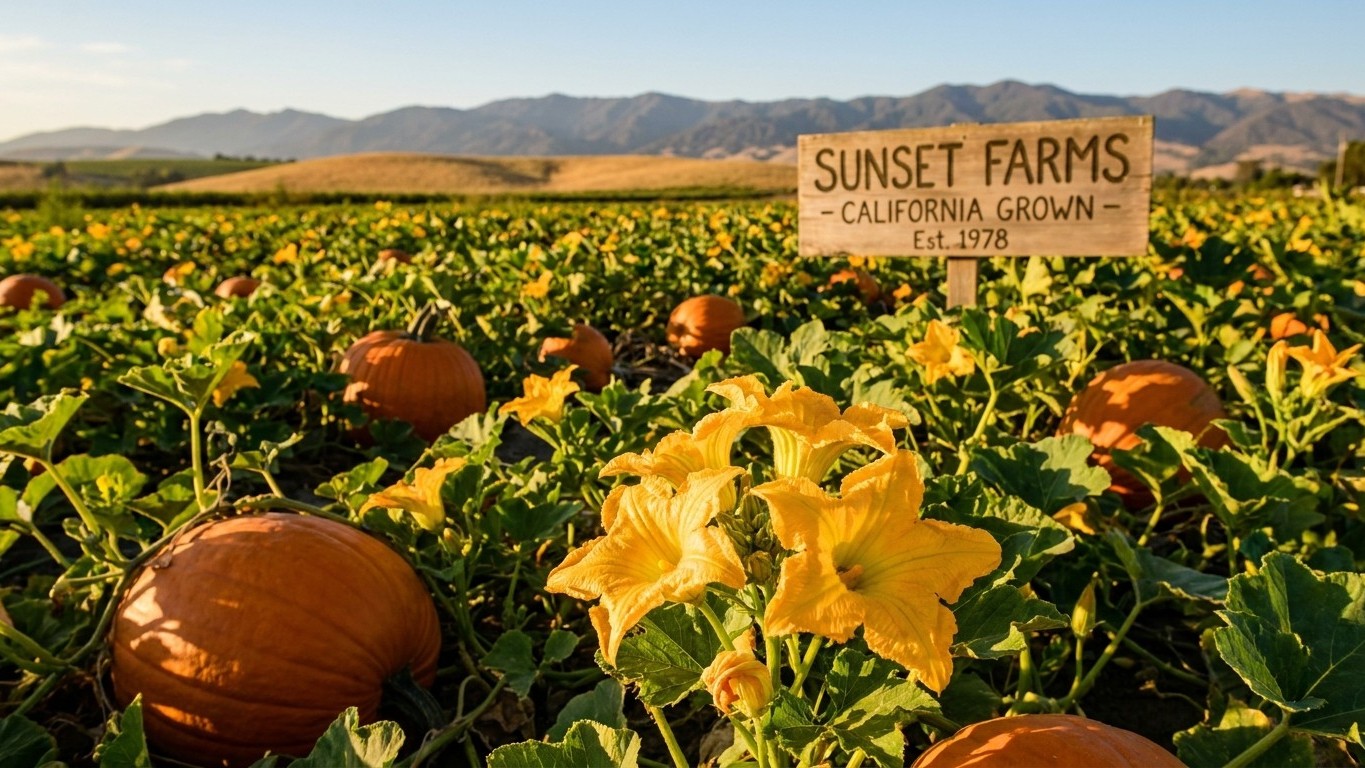

Ask this question in Los Angeles and the answer is “you have all the time in the world.” Ask it in Sacramento or Truckee and it’s a different conversation, because California doesn’t have one climate, it has a dozen. Will Pumpkins Ripen Before Frost in California? Coastal and Southern California don’t get a killing freeze in an average year, so the pumpkin clock isn’t set by frost there at all. Head inland toward the Central Valley or up into the Sierra, and frost becomes the real deadline again, just one this page can’t hand you a single date for.
The short answer
Start with what the weather record actually shows. At a long-running Southern California station, NOAA’s 1991-2020 Climate Normals couldn’t even compute a freeze date, because zero days at or below 32°F showed up across three decades of daily records. The frost-free season there is listed as 365 days. That’s not a typo and it’s not an exaggeration. It means the fall-frost backstop that shapes pumpkin timing almost everywhere else in the country simply doesn’t apply along the coast and through the southern part of the state.
Pumpkins need 45 to 55 days after flowering to finish ripening, and that clock starts the moment a female flower opens, not when the seed goes into the ground. In a place with a normal fall frost, you’d work backward from that frost date to find the last safe day a flower can open, which is exactly the kind of calculation covered in When to Sow Pumpkins in California. In frost-free California, there’s no frost date to work backward from. The flower can open in early fall and still have its 45 to 55 days without a freeze cutting it short in most years.
That doesn’t mean timing stops mattering. It just means the constraint moves. In coastal and Southern California, the thing that ends the season isn’t cold, it’s heat stress in midsummer, drought, and increasingly tight water allocations that make growers reluctant to keep long-season vines going into late fall regardless of temperature. A vine can survive the weather and still get pulled because the water bill or the drought restrictions say otherwise.
Inland is where the calculation flips back to something more familiar. The Central Valley, Northern California, and the Sierra foothills and higher elevations do see freezing temperatures, sometimes hard ones. This page can’t give those regions a specific first-frost date, because the frost data available here comes from a Southern California station that recorded no freeze at all. If you’re gardening in Fresno, Redding, or up around Lake Tahoe, that 45-to-55-day window from flowering has a real deadline behind it, and the only way to know exactly where that deadline falls is to check your local frost record rather than borrow a Southern California one.
So the honest short answer splits in two. Near the coast and through the southern half of the state, pumpkins ripen in time almost every year, and the limiting factor is heat and water, not the calendar. Everywhere with real winters, the flowering-to-frost math still applies, and it has to be checked locally.
When to sow here
Soil temperature, not the last frost date, is what decides when seed goes into California ground, and in a state without a computable frost date in the warm zones, that distinction matters even more than usual. Pumpkin seed wants soil at 65°F before it goes in the ground. In regions with a normal spring frost, that threshold arrives well after the frost itself, because soil warms slower than air. In frost-free California, there’s no spring frost to measure against at all, so the soil thermometer becomes the only honest signal.
- Stop guessing from the calendar. Because this station shows no computable last-spring-frost date, any date you’ve heard for “when it’s safe to plant” in Southern California is really someone’s guess about soil warmth, not a frost-based rule. Set the calendar aside.
- Buy a soil thermometer and use it at planting depth. Push it about two inches down, check it in the morning before the sun heats the surface, and track it over several consecutive days rather than trusting a single warm afternoon.
- Wait for a run of readings at or above 65°F. One warm day doesn’t count. Cold soil, even under warm air, will rot pumpkin seed or leave it sitting dormant for weeks.
- Use row covers if you want to push the date earlier. Row covers trap heat and can move effective planting about two weeks earlier than bare soil would allow, which matters more inland, where a shorter frost-free stretch makes every extra week count.
- Count backward from your target harvest, not forward from planting. Once you know roughly when you want ripe pumpkins, and you know flowering needs 45 to 55 days before that, work backward through the time from seed to first flower for your variety, then confirm your soil-temperature window allows for it.
The two-week gain from row covers isn’t a rounding error. In a region where inland frost can genuinely cut a season short, two extra weeks of growing time can be the difference between a vine that finishes and one that’s still carrying green fruit when the cold arrives.
What goes wrong here
- A late flower that never colors. This shows up most in coastal zones where marine layer fog and cool mornings can delay pollination into late summer or early fall. A flower that opens too close to the point where a grower stops watering, or where cooling temperatures slow ripening, may set fruit that stalls out green. The remedy is tracking your first female flower date directly rather than assuming an early planting guarantees an early bloom, and hand-pollinating on foggy mornings when bees are scarce.
- A fruit caught by frost inland. In the Central Valley, Northern California, and the Sierra, a flower that opens too late in the season runs straight into the region’s real freeze, something this page can’t put a date on because the frost data behind it comes from a frost-free coastal station. The remedy there is checking your own local frost history before counting backward, not borrowing a Southern California timeline.
- A vine that dies back before the skin hardens. Powdery mildew thrives in the humid, foggy mornings common near the California coast, and it can take down foliage weeks before fruit is ready, leaving pumpkins with soft, unhardened rinds that won’t store. Watering at the soil line instead of overhead, and giving vines enough spacing for airflow, slows this down. Insect pressure adds to the same problem: squash bugs and cucumber beetles both weaken vines from the base, and this site’s own squash bug page and cucumber beetle page cover identification and control in more depth than fits here.
- Pulling fruit too early out of frost anxiety. In frost-free zones especially, some growers harvest early out of habit, assuming a frost is coming that the record shows almost never arrives. Utah State University Extension is clear that harvest should wait until the stem is attached and firm, and happen before frost, not preemptively based on a fear of frost that, in Southern California’s averages, doesn’t materialize most years.
Checking this against your own county
California’s climate range, from frost-free coastline to Sierra winters, means no single page can give every gardener in the state a workable frost date. The University of California’s statewide extension network, UC ANR, connects to county-level Cooperative Extension offices that track local frost history, soil conditions, and planting windows specific to your address. Before locking in a planting or harvest date based on statewide averages, a call or visit to your county’s UC ANR office will tell you whether you’re gardening in a frost-free pocket or one of the inland zones where the flowering-to-harvest math still runs against a real deadline.
Common questions
Do pumpkins need frost-free conditions to ripen well?
No. Ripening depends on the 45 to 55 days after flowering and on heat accumulation, not on the absence of frost. Frost only becomes a factor if it arrives before that window closes.
Why does Southern California show no frost date at all?
NOAA’s 1991-2020 Climate Normals couldn’t compute a freeze normal for this station because the daily record shows zero days at or below 32°F across thirty years, making the frost-free season effectively 365 days in an average year.
If there’s no frost, why would a California pumpkin still fail?
Heat stress, drought, water restrictions, marine-layer humidity feeding mildew, and insect pressure from squash bugs or cucumber beetles all end seasons in frost-free zones. Cold isn’t the limiting factor there, but plenty of other things are.
Should Central Valley or Sierra gardeners use the coastal frost data on this page?
No. That data comes from a frost-free Southern California station and doesn’t apply to regions that do freeze. Those gardeners should get a local frost date from their county UC ANR extension office before counting backward from flowering.