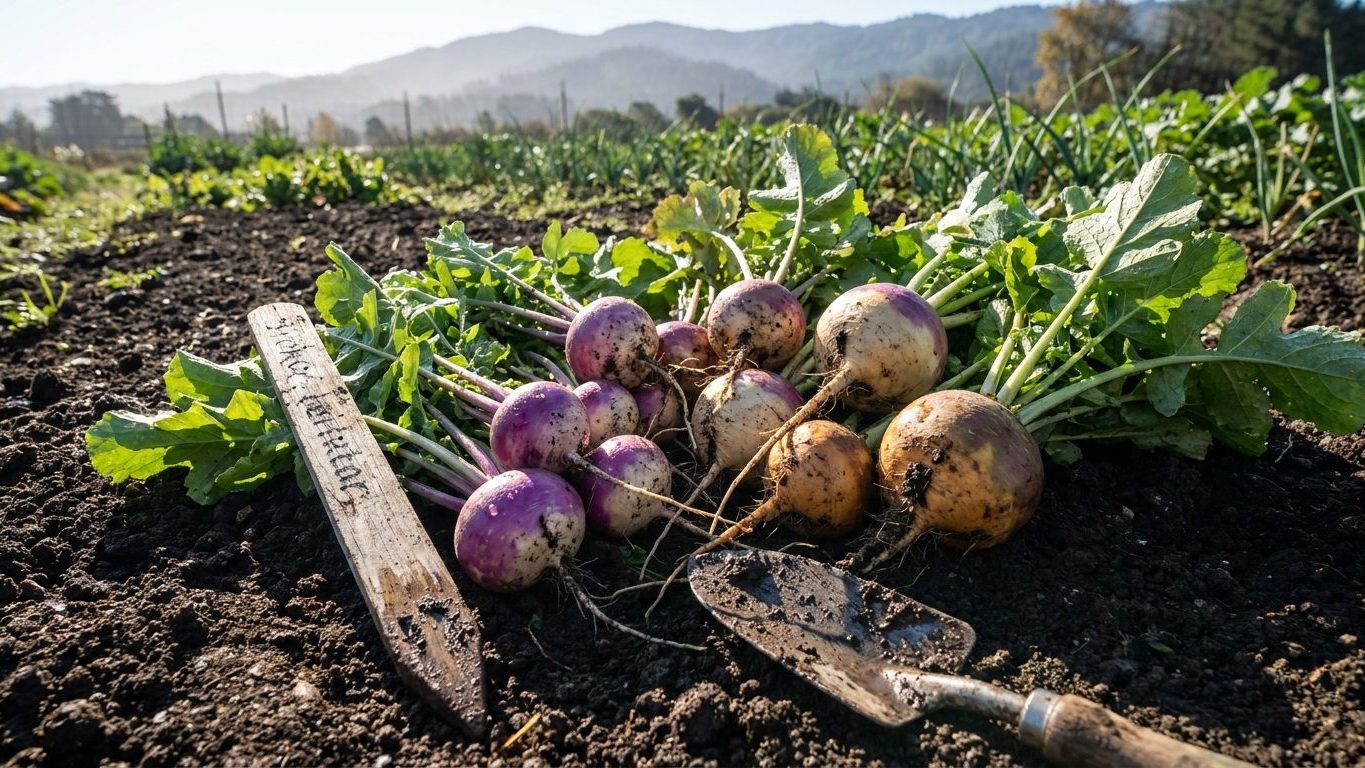

For most Tennessee gardens, the best turnip is a fall-sown one: a purple-top globe for roots, a greens type like Seven Top for the pot, and a quick white salad turnip if you want something tender. Rutabaga also works here, but only as a fall crop. Spring plantings are the gamble, and heat decides how they turn out.
The short answer for Tennessee
Pick by type, and let the calendar do the sorting. Fall is the main season for every type. Spring is a short window for fast turnips only, and rutabaga should wait for late summer. The dates behind that advice come from the NOAA 1991-2020 Climate Normals for the Nashville station, and they are probabilities, not promises. The last spring frost falls between March 31 and April 12, which is the band where the odds of a last 32°F freeze having already passed run from 30% to 70%. The first fall frost falls between October 28 and November 8, the same kind of 30-70% band for the first 32°F freeze. Any given year can land outside both.
What that means for varieties is simple. Turnips and rutabaga are cool-season roots, and Tennessee has a long stretch between those frost dates, with a hot, humid middle. The crop has to be timed so it sizes up in cool weather at one end or the other. Nashville’s coldest-month mean daily minimum is 30.1°F, which tells you winters here sit right around freezing at night instead of staying deeply frozen. Roots left in the ground in fall generally handle a normal Tennessee winter night far better than they handle July.
Here is how the types sort out for a Tennessee garden:
| Type | Where it fits in Tennessee | Season |
|---|---|---|
| Globe turnips (purple-top white globe style) | The dependable all-rounder; roots and greens from one planting | Fall first, spring if sown early |
| Greens-type turnips (Seven Top and similar) | Best for leaf harvest, forgiving of crowding in a cool fall | Fall, with a possible early spring sowing |
| Quick white salad turnips (Hakurei style) | Fast and tender; the one type that can beat spring heat | Early spring or fall |
| Rutabaga (Laurentian style) | Needs the longest cool stretch; sweetens after cold nights | Fall only |
Variety names change with seed catalogs, so treat these as styles to look for, not a shopping list. For exact sowing dates, see When to Sow Turnips in Tennessee. For the full picture of the crop, start with Growing Turnips and Rutabaga in Tennessee.
What will not work here

Rutabaga sown in spring is the classic Tennessee failure. It is the slowest crop in the family, and a planting that goes in around the April 12 end of the frost window still has to bulk up as the weather turns hot and humid. The roots tend to turn out tough and bitter, if they size up at all. Rutabaga wants a long, cooling run, which is exactly what a fall sowing gives it between late summer and the October 28 to November 8 first-frost band.
Season length is not the problem in Tennessee that it is in northern states. The frost-free stretch is generous. The trouble is what fills the middle of it. A turnip sown in mid-spring and still in the ground when summer arrives will bolt, send up a flower stalk, and turn woody. Spring turnips work only if they go in at the front of the window, and even then the margin is thin. A late spring sowing is the single most common way to waste a packet of seed here.
Humidity beats tight spacing
Tennessee’s muggy weather makes crowding costly. Rows planted shoulder to shoulder, the way a dry-climate seed packet might suggest, hold moisture in the leaf canopy and invite foliar disease. Thin globe turnips and rutabaga to the spacing on the packet, and give greens-type turnips room too, even though they tolerate more crowding than roots do. Good airflow matters more in this state than in drier ones.
Watering is a different story. Tennessee gets plenty of rain in most years, so the weekly-watering problem that sinks gardeners in dry states is less of a concern. Overhead watering in the evening is the habit to drop, since leaves that stay wet overnight feed the same disease pressure.
Sowing too late in fall
The opposite mistake happens in autumn. Seed sown too close to the first-frost band gives seedlings too little growing time before cold stalls them. Greens and small salad turnips forgive that better than globes do, and rutabaga forgives it least. Because the frost band is a 30-70% probability window and not a deadline, a year with an early freeze can arrive before a late planting has made a root worth pulling.
One more thing that fails: assuming a variety bred for another region will behave the same. Seed labeled for northern gardens may assume cool summers. Check the seed company’s notes on heat and bolting before you buy.
What changes across Tennessee
The state is not one garden. The USDA Plant Hardiness Zone Map (2023, built on 1991-2020 normals) places Tennessee across zones 5b to 8a. That is a spread of several zones, and it means there is no single answer for the whole state. The USDA system is built on one variable only, the average annual extreme minimum temperature, so it tells you about winter cold and says nothing about summer heat or humidity. For a cool-season crop, both ends matter.
The frost dates above come from a Nashville station, and the data itself carries a warning: East Tennessee and the Cumberland Plateau are cooler and run later in spring than Nashville. A reader on the Plateau should not assume the March 31 to April 12 window applies. Spring in those areas arrives later, which pushes any spring sowing later and shrinks it further. Fall works the other way: cooler places tend to reach the cold sooner, so fall sowing generally moves earlier as you gain elevation or head north. The exact shift depends on your site, so treat these as directions, not dates.
Gardeners in the cooler, higher parts of the state have one advantage. Summer heat there is less punishing than in the warm lowlands, so spring turnips and even a spring-sown rutabaga have a better chance. Those in warm, low-lying areas have the reverse problem, with longer, hotter summers that make fall sowing the only sensible plan for rutabaga.
Which zone you are in is not something this page can tell you. Look up your location on the USDA Plant Hardiness Zone Map. Zones are drawn finely enough that two nearby towns can fall in different ones, and a neighboring valley can differ from a ridge.
Where to check this for your own county
The best next stop is your state land-grant extension service, University of Tennessee Extension. Look for two things there. The first is a local planting calendar for fall vegetables, ideally one tied to your county or region and not to the whole state. The second is the list of varieties that have been trialed, or are recommended, where you live. Trial results beat catalog descriptions because they come from real Tennessee soil and weather.
Your county extension office also employs people who answer questions from home gardeners. If your turnips bolted last spring or your rutabaga came up woody, describe what happened and ask which variety and sowing date they see working locally. They know which flea beetle or fungal problems show up in your area and when.
A county recommendation beats a state one, and that is not modesty. This page is the state one. It uses a single Nashville station for frost dates and a zone range that covers nearly the whole state, so it is a reasonable starting point and nothing more. A county office can account for your elevation, your soil, and the frost pockets in your part of Tennessee, which no statewide page can.
Checking this against your own garden
Your own observations outrank every date on this page. Three are worth watching, and none needs a gadget.
- Soil warmth by feel. Push your hand into the bed in the morning. In late summer, soil that still feels warm is warm enough to germinate seed quickly but may be too hot for seedlings to thrive. Soil that feels cool and slightly damp says conditions are settling into the fall range. A bed that cools sooner than your neighbor’s tells you it is a cooler microclimate.
- First true leaves. The first pair of leaves are the seed leaves, and the first rough-edged leaves after them are the true leaves. How long your seedlings take to get there, and how sturdy they look, shows how well your spot suits the crop. Fast, even growth means the timing is right. Slow, leggy or stalled seedlings mean the sowing was too hot or too late.
- First frost on the grass. Walk the yard on a cold morning and note where frost shows up first. The low spots that whiten before the rest are your frost pockets, and they are where the first-frost band will hit earliest. Higher, sheltered spots near a wall may stay clear for days longer.
Write down what you see each year. After two or three seasons, your own notes will be a better guide than any statewide window, and they will tell you whether to shift your sowing a week earlier or later than the state advice suggests.
Common questions
Which is easier to grow in Tennessee, turnips or rutabaga?
Turnips. They mature faster and can be sown in fall or, with care, early spring. Rutabaga needs the long, cool run of a fall planting and is the less forgiving of the two.
Can I grow turnips in spring in Tennessee?
Yes, but only fast types sown at the front of the window. The last spring frost falls between March 31 and April 12 at the Nashville station, and cooler areas like East Tennessee and the Cumberland Plateau run later. Anything that must mature in summer heat risks bolting.
Will turnips survive a Tennessee winter?
In a normal year, mostly yes. Nashville’s coldest-month mean daily minimum is 30.1°F, so nights hover around freezing. Colder parts of the state, within the 5b to 8a zone range, see harder cold, so protect roots there or harvest them before a deep freeze.
What is the best turnip for greens?
A greens-type such as Seven Top, sown in fall, is the usual choice. Globe turnips also give good greens along with their roots, which makes them handy if you want both from one planting.