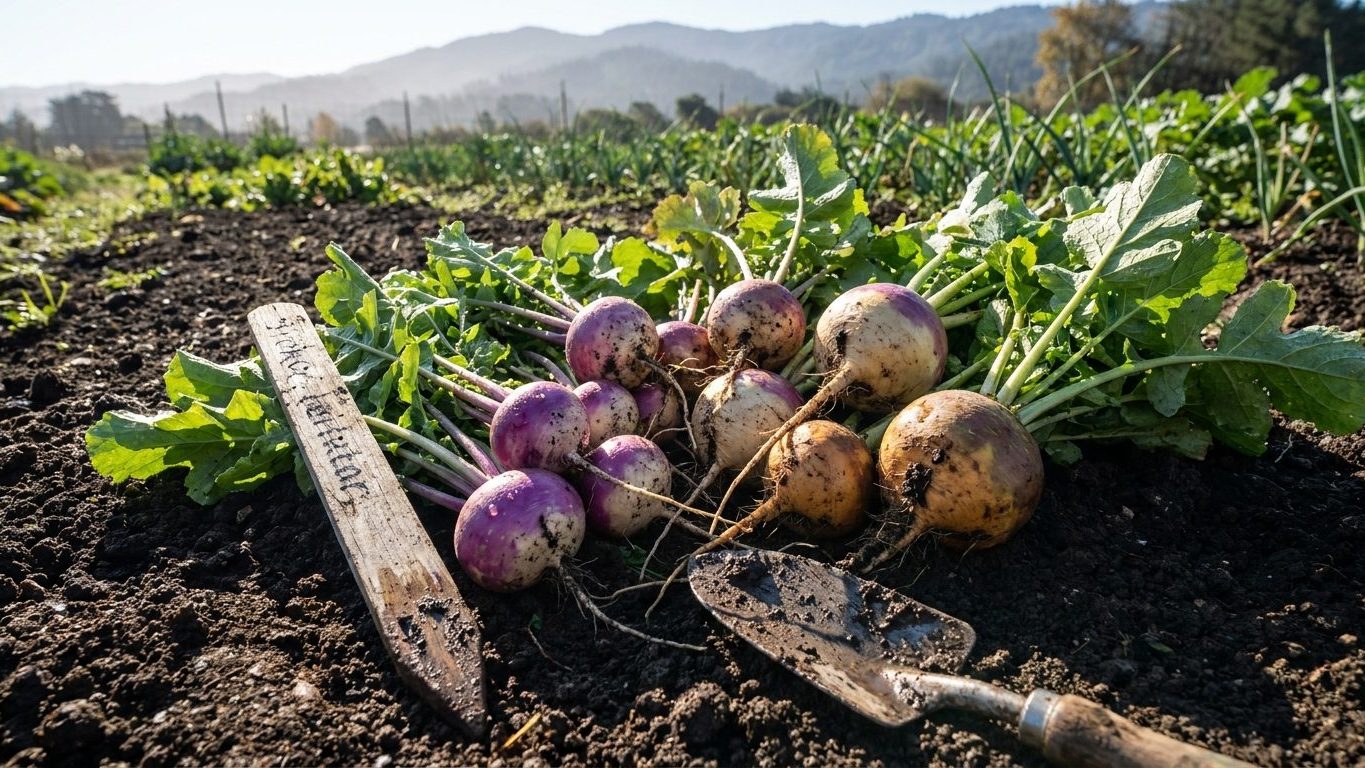

In Utah, choose turnips by type before you choose by name. Fast-maturing turnips fit the state best, sown in spring and again in late summer. Rutabaga is the fussy one, because it needs a long, cool finish that only some Utah gardens give it. This page sorts the types, the failures and the local checks, and it builds on Growing Turnips and Rutabaga in Utah.
The short answer for Utah
The best turnips for Utah are the quick ones: small salad types and greens-type turnips that size up fast, sown once in early spring and once in late summer for a fall harvest. The best rutabaga is whichever slow-maturing type your own season can finish, and in much of the state that means you should treat rutabaga as a fall crop in the valleys and the warmer south, not a default.
The dates behind that advice come from the NOAA NCEI 1991-2020 Climate Normals for the Salt Lake City station. Last spring frost runs from April 12 to April 29, and first fall frost runs from October 18 to October 29. Those dates are a probability of a 32°F freeze, taken from the 30 to 70 percent band. Inside the window, a freeze is neither certain nor ruled out. Salt Lake sits in a mild valley, so most of Utah is higher and colder, and southern Utah is warmer. Use the dates as one reference point, not as your town’s calendar.
Sorting by type
Simple arithmetic on those dates shows the room you have. From April 29 to October 18 is about 171 days. From April 12 to October 29 is about 200. That is plenty for quick turnips, which can fit twice into one season, and tight for anything that wants a full summer plus a cool autumn.
| Type | Fit in Utah | When it works best |
|---|---|---|
| Quick salad turnips (small, tender, eaten young) | Best all-around choice | Early spring, then again in late summer |
| Greens-type turnips (grown for the tops) | Reliable, forgiving | Spring and fall, cut young |
| Standard globe or storage turnips | Good as a fall crop | Sown late summer so roots swell in cool weather |
| Rutabaga | Conditional | Sown early enough to finish before hard freezes, mostly valleys and the south |
For exact sowing dates by month, see When to Sow Turnips in Utah. This page does not have named-variety trial results for Utah, so it stays at the level of type, where the facts are solid.
What will not work here
Utah punishes a few habits that work fine in wetter, milder states. Most of the failures trace back to the season being shorter than the catalog assumed, or to heat arriving before the roots are ready for it.
Slow rutabaga on a short window
Rutabaga is the slowest root in this group, and it sweetens as nights cool. Start it too late, or grow it somewhere the fall freeze comes early, and you get tops and a root the size of a golf ball. The Salt Lake figures (first fall frost between October 18 and October 29) belong to a mild valley. A garden at higher elevation has a shorter run from the last spring frost to the first fall one, so the same slow type that finishes in the valley may stall there. The slowest types are the first to fail.
Weekly watering in a hot, dry summer
Turnips have shallow, thirsty roots. A hot, dry Utah summer swings soil from soaked to baked, and a once-a-week soak cannot hold the moisture steady. The results are familiar: cracked roots, woody centers, a sharp bite where there should be sweetness, and plants that bolt and send up flower stalks. A spring crop that is still in the ground when the real heat arrives will go that way. The fix is to finish spring turnips early and move the main crop to late summer sowing, which matures in cooling weather. This page does not have a state rainfall figure, so judge dryness by how fast your own bed dries out.
Counting on the ground to be your winter cellar
At the Salt Lake City reference station, the mean daily minimum of the coldest month is 24.2°F. Nights below freezing are normal there in midwinter, and that is the mild valley, not the high country. Turnips and rutabaga handle light frost and often taste better after it, but roots left unprotected through a hard midwinter freeze are a gamble. Pull them before the ground locks up, or mulch deeply and accept some loss.
One more mistake is common enough to name. Gardeners in a high town often copy Salt Lake dates because they are the ones printed most often. If your town is colder than a valley floor, those dates are too early in spring and too late in fall, and sowing by them sets you up for a frozen seedling or a half-grown root.
What changes across Utah
Utah is not one garden. The USDA Plant Hardiness Zone Map 2023, built on 1991-2020 normals, places the state across zones 4a to 9a. That is a spread of many zones, so there is no single answer to what to plant and when. The Salt Lake City reference station sits in a mild valley, and the advice on this page leans on its numbers. Other parts of the state differ, sometimes by a lot.
One caution about that zone number. Hardiness zones rest on one variable, the average annual extreme minimum temperature. That tells you about winter cold. It says little about how many frost-free days you get, which is what turnips care about most. Two gardens in the same zone can have quite different growing windows.
If you garden in the north or at altitude, shift everything toward speed. Plan on a later spring start, an earlier fall deadline, and quick turnips as your core crop. Count on rutabaga only if your own frost dates leave generous room, and sow the fall crop earlier than the valley schedule suggests so roots size up before hard freezes. If you garden in the warmer south, the pressure runs the other way. Spring is brief before heat arrives, and the fall crop becomes the main event. Sow later in the summer than you would farther north, so seedlings do not emerge into scorching weather.
To learn which zone covers your own ground, use the USDA Plant Hardiness Zone Map and enter your ZIP code. Do not guess from a neighbor’s town, because a short drive up a canyon can change the answer.
Where to check this for your own county
Your state extension service is the right next stop. For Utah, that is Utah State University Extension, part of the land-grant extension network. Its horticulture staff know how local conditions behave, and their advice is written for gardens in the state, not for an average of all of them.
Look for two things when you get there. The first is the local planting calendar for your county, which gives sowing windows tied to nearby frost dates instead of one reference station. The second is any list of vegetable varieties trialled in your county, since a variety that performed in a trial at your elevation is better evidence than a catalog claim. Search the site for turnips and rutabaga by name, and for vegetable planting guides by county or region. If the site does not list a turnip trial for your area, ask the county office directly.
A county recommendation beats a state one. This page is the state one: it draws on a single mild-valley station, gives general guidance by type, and cannot see your elevation, your slope or your irrigation. Treat it as a starting frame, then let your county’s numbers overrule it where they disagree.
Checking this against your own garden
Your own observations outrank every date here, and you do not need a gadget for any of them. Three are worth watching each season.
- Soil warmth by feel. Squeeze a handful from a few inches down. If it crumbles, feels cool but not cold, and is not soggy, it is workable for spring turnips. A bed that reaches that point early tells you it is a warm microclimate, probably a south-facing wall or a slope that drains fast. A bed that stays cold and wet longer is telling you to wait.
- First true leaves. After the seed leaves, the first true leaves show how quickly your bed is moving. If they appear fast, your conditions suit a tight sowing schedule. If seedlings sit and sulk, your season is slower than the calendar suggests, so favor the quickest types.
- The last frost nip in your yard. Note the date a tender plant, such as a basil seedling or tomato start, last got burned. Compare it with the Salt Lake range of April 12 to April 29. A yard that nips later than that is colder than the reference, and one that never does is warmer.
Write those dates down once and you will have a calendar no website can match.
Common questions
What is the best turnip for a first Utah garden?
A quick-maturing salad turnip. It finishes before summer heat gets serious, tolerates the swings of a Utah spring, and leaves room for a second sowing in late summer.
Can I grow rutabaga in Utah?
Yes, in gardens where the frost-free season is long enough to finish it. At the Salt Lake City reference station, first fall frost falls between October 18 and October 29, which can work. At higher elevations, check your own frost dates first, because the slowest types may not finish.
Should I plant turnips in spring or fall in Utah?
Both can work, but fall is the safer main crop. Roots sown in late summer mature as the weather cools, which avoids the woody, bitter roots that hot, dry weather produces. Spring is best for quick types that finish early.
Are the frost dates on this page right for my town?
They describe the Salt Lake City station, based on the chance of a 32°F freeze between 30 and 70 percent. Most of Utah is higher and colder, and southern Utah is warmer, so your town will likely differ. Check Utah State University Extension or your own garden records.