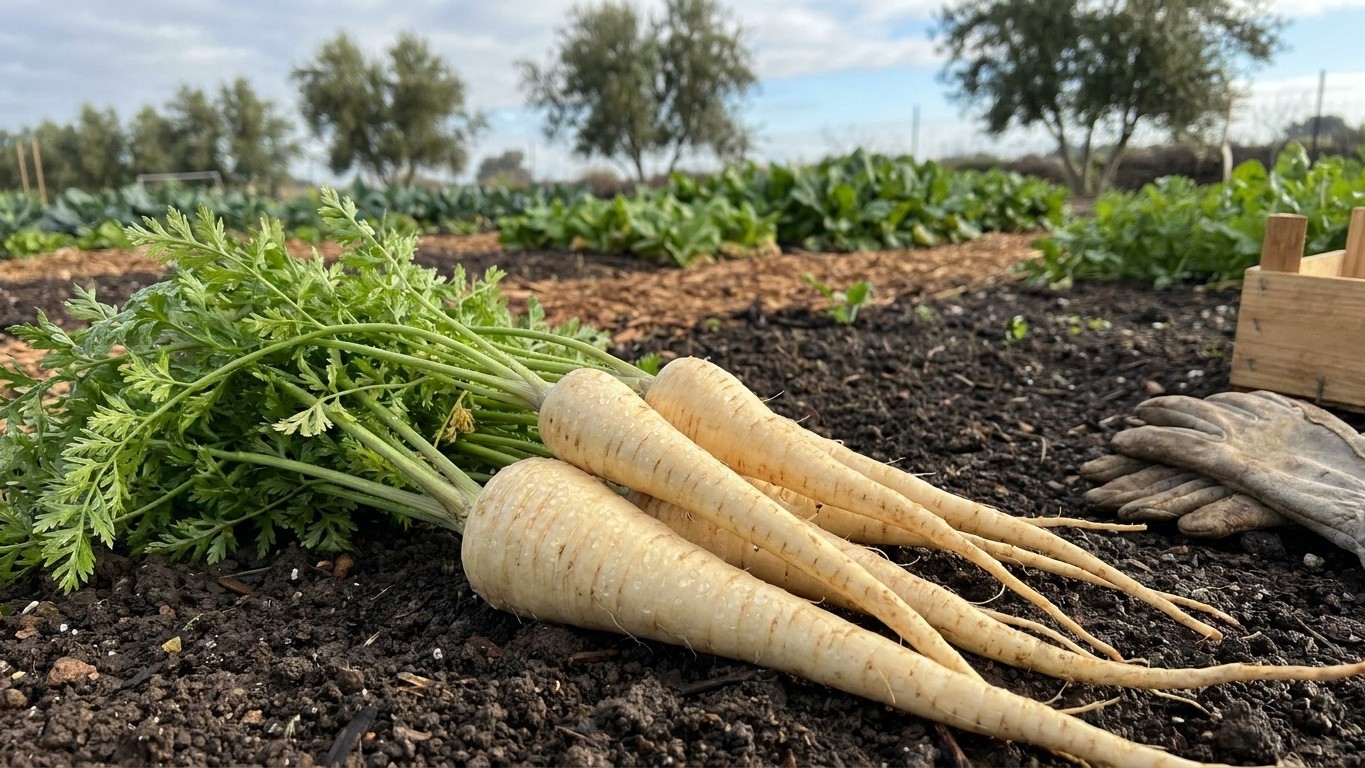

Lift parsnips in Rhode Island after several weeks of frost. In practice that means late November at the earliest, then any day the ground is workable through winter. Roots left in the soil keep well and taste sweeter for the wait. Dug and stored at 32 to 34 °F with high humidity, and kept well away from apples, they hold four to six months. The arithmetic behind those dates, and the ways a Rhode Island bed can spoil the crop, follow below.
The short answer
Does Rhode Island deliver several frosty weeks? It does. At the Providence reference station, NOAA NCEI Climate Normals put the mean daily minimum of the coldest month at 22.1 °F, nearly ten degrees under freezing. Nights in that stretch are routinely below 32 °F, and that exposure is what a parsnip needs. Cold converts stored starch to sugar, and Utah State University Extension says the roots taste best after several weeks of cool, frosty weather. A parsnip grown here will sweeten, not merely grow.
The frost exposure does the work, not the hardiness zone. A zone number says whether a plant survives winter. It says nothing about how many nights drop below freezing, and a comfortable zone is not several frosty weeks. Rhode Island passes on the frost count itself.
The clock starts at the first fall frost. For the reference city, NOAA NCEI places it between October 24 and November 3 (the 30 to 70 percent probability band). Add several weeks and the first good digging lands in late November, with December the safer bet. Those are airport-station dates. Suburban and rural gardens usually get their first frost one to two weeks earlier, so check your own county’s dates before you pencil anything in. Sources do not publish an exact count of frosty days that guarantees sweetness, and I would rather say so than invent one.
Lift on a day when the soil is soft. Loosen the row with a fork first, because pulling by the leaves snaps the shoulders off. Parsnips overwintered in the ground will start new top growth in spring, and that is the signal to finish digging.
Storage is where the best parsnips get ruined. USDA Agricultural Handbook 66 gives four to six months at 32 to 34 °F and 98 percent relative humidity. That is a long keeper by any standard, but it assumes those conditions are held steady, and almost no house does that. Treat the range as a ceiling.
The surprise is that cold is not the danger. The handbook says parsnips are not chilling sensitive. The danger is ethylene, the gas ripening fruit gives off. Even low levels in cold storage make parsnips bitter, likely through a compound called xanthotoxin. A parsnip in the crisper next to apples will turn bitter even at the right temperature. Give it its own bin, or its own shelf in another room.
Top the roots after harvest, but do not trim into the crown. For the full growing picture, see Growing Parsnips in Rhode Island, and for the sugar side of the story, Will Parsnips Sweeten in Rhode Island?
Does the season fit?
A parsnip needs 100 to 120 days counted from seeding, and it is sown in place, not transplanted. The recommended sowing is two to three weeks before the last spring frost. Here is the arithmetic against the Providence reference figures:
- The last spring frost at the reference station falls between April 7 and April 17.
- Sowing two to three weeks ahead of that puts seed in the ground between about March 17 and April 3.
- Add 100 to 120 days. The earliest sowing reaches size between late June and mid-July. The latest sowing reaches it between mid-July and the first days of August.
- The first fall frost arrives October 24 to November 3. From the latest estimate, August 1, that leaves about twelve weeks of growing and cooling before frost begins. From the earliest, it leaves closer to nineteen.
- For an inland garden, shift the spring dates one to two weeks later and the fall dates one to two weeks earlier. The latest sowing then matures around mid-August, still roughly eight weeks ahead of an early frost.
- Count germination as part of the run, not extra. Seed takes 14 to 21 days to come up, so bare soil for two or three weeks is normal. Do not dig it over and re-sow.
The verdict is a comfortable fit. The crop finishes weeks before frost and then sits through the cold it needs. The margin only disappears if sowing slips well past mid-April, since every week of delay uses up the same slack. Pest pressure along the way is a separate matter, covered in What Eats Parsnip in Rhode Island, and When.
What goes wrong here
Rhode Island’s season and winter are kind to parsnips. The failures come mostly from the ground and from the gardener’s timing:
- Forked roots from heavy or stony ground. A root that hits a stone or a dense layer splits around it. Parsnips want deep, loose, sandy ground, and USU says heavy soil must be double dug. Dig a hole a foot deep in your bed before sowing and see what you hit. The state’s general soil type is a starting point, not a diagnosis of your yard. Remove stones and loosen the full depth you want the root to reach.
- Forked roots from overwatering. This is a separate cause with a separate fix. Constantly soggy soil encourages branching even in good loam. Keep the seedbed evenly moist until the seedlings are up, then water deeply and less often, and let the top inch or two dry between sessions.
- A season that runs out. Rarely a Rhode Island problem, but a seeding pushed to late spring will not finish 100 to 120 days before frost. Sow in the early window above, and if the weather keeps you out of the bed, start counting from the date the seed actually went in.
- Digging before the frost has done its work. A parsnip lifted in October is a perfectly good vegetable that tastes bland. The remedy is patience, usually into late November or December. A thick layer of straw or leaves over the row keeps the ground workable if you want to dig during a hard cold snap.
- A winter too mild to sweeten. Coastal pockets and sheltered yards run warmer than the reference city, and a milder season can mean fewer frosty weeks. If your parsnips come out starchy rather than sweet, leave the next batch in the ground longer.
Common questions
Can parsnips stay in the ground all winter in Rhode Island?
Yes, and many gardeners prefer it, since the roots keep sweetening while they wait. Mulch the row so you can get a fork in during freezing spells. Dig what is left before spring growth starts.
How many frosty weeks are enough?
USU says several weeks of cool, frosty weather, and gives no exact count. With the first fall frost at the reference station between October 24 and November 3, waiting until late November gives the roots a reasonable stretch. Taste one and decide.
Can I store parsnips with apples?
No. Ripening fruit gives off ethylene, and even low levels turn stored parsnips bitter. Keep them cold, humid and in a different place from any fruit.
Should I trim the tops before storing?
Remove the leaves, but do not cut into the crown. USDA Handbook 66 says parsnips are topped after harvest but should not be trimmed into the crown, which is the part that decides how well the root keeps.