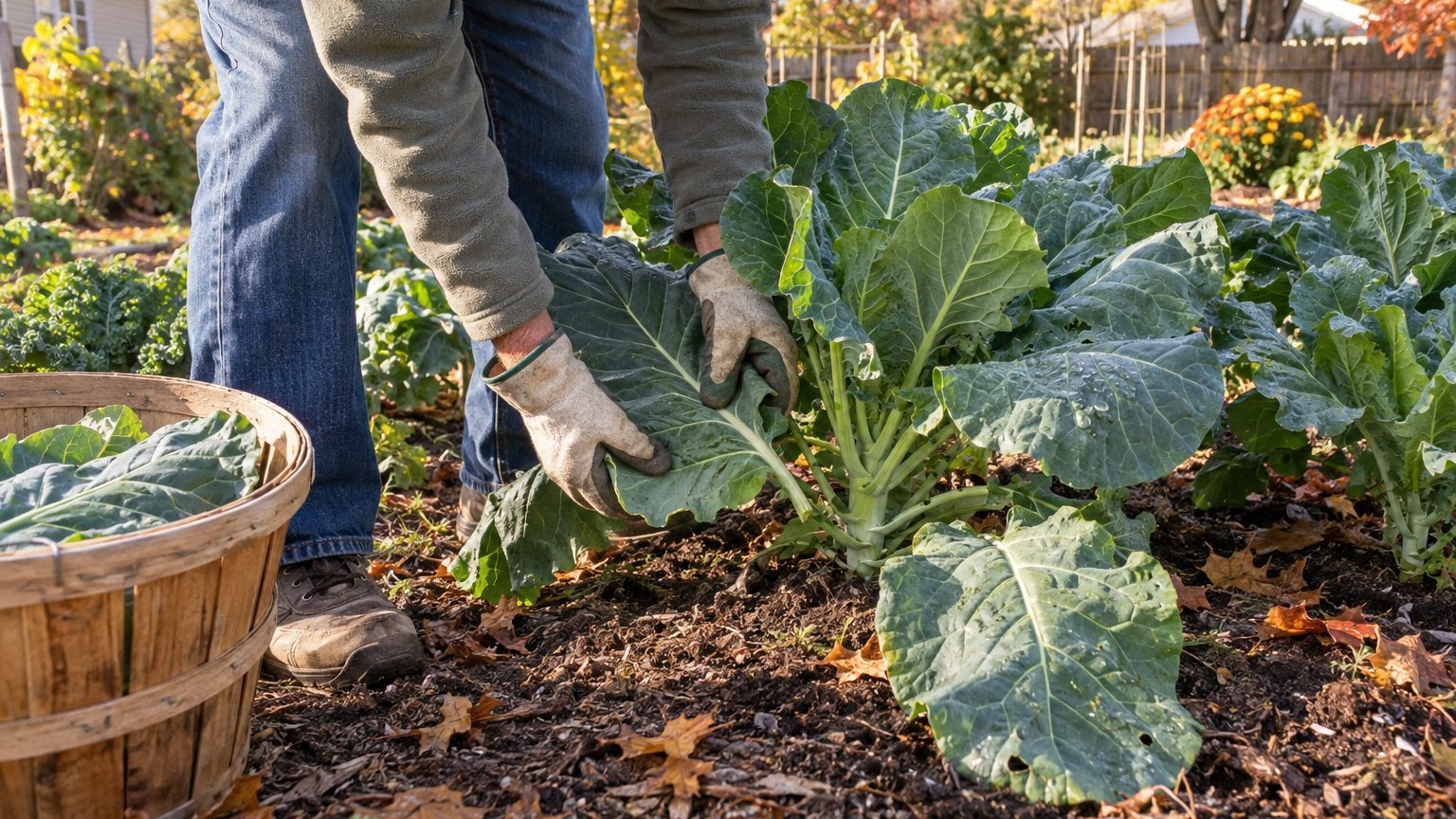

Pick the lowest leaves first, once they reach about 8 to 10 inches long, and leave the growing tip and the top five or six leaves alone. Snap or cut each leaf close to the main stem, then come back in a week or so for the next round. A plant harvested this way keeps pushing out new growth from the crown, which is how a single planting of collards can feed a household for months. The rest of this guide covers the details: how to judge ripeness, how many leaves to take, and how to keep the plant producing. For the bigger picture on planting and care, start with Growing Collards: One Planting, Months of Harvest.
How to tell a leaf is ready
Size is the most reliable signal, and it beats counting days on the calendar. Collards grown from transplants typically give a first picking around 50 to 60 days after planting. Direct-seeded plants take longer, often 70 days or more. Those numbers shift with variety, soil, and weather, so treat them as a rough guide and look at the leaves.
A leaf in the 8 to 10 inch range is the sweet spot for most gardeners. It’s large enough to feel substantial in the pan and small enough to be tender, with a mild flavor and a midrib you can often eat without trimming. Past 12 inches, leaves usually get tougher and stronger tasting, though they’re still perfectly good for long, slow cooking. Many Southern cooks prefer them that size for exactly that reason.
Color tells you something too. A healthy leaf is deep blue-green with a slight waxy bloom, a dusty look that rubs off on your fingers. Pale, yellowing leaves at the bottom of the plant are past their best. Take them off and compost them, since they’re feeding nobody, including the plant.
Then there’s frost. Collards are a cool-season crop that tolerates heat better than most of its relatives, but the flavor gets better after a few cold nights. Cold pushes the plant to convert starches into sugars, which helps keep the leaves from freezing. A fall crop picked after the first light frost tastes noticeably sweeter than the same plant picked in August. Gardeners in the Deep South often plant in late summer for exactly this reason, while those in northern states time spring planting so the plants mature before midsummer heat.
Time of day matters less than people claim, but morning is still the better choice. Leaves are full of water after a cool night, which means they come off the plant crisp and hold that crispness longer in the refrigerator. An afternoon pick in July sun tends to wilt on the way to the kitchen.
The leaf-by-leaf method, step by step
Start at the bottom. Collards grow like a slow fountain, with new leaves emerging from the center at the top while the oldest leaves hang lowest and outermost. Harvesting from the bottom up respects that order. You take what’s already mature and leave the youngest tissue to keep growing.
Grip the leaf stalk (the petiole) near the main stem and bend it down and away from the plant. A healthy leaf will snap cleanly with a small tug. If your plants have gotten thick and woody, a pair of clean garden snips or a sharp knife makes a neater cut. Leave a short stub of stalk, about an inch, rather than tearing right against the trunk. A ragged wound is an entry point for rot and pests.
How much to take is where beginners usually go wrong. A good rule is to pick no more than about a third of the leaves at one time, and always leave at least five or six healthy leaves at the top. Those leaves are the plant’s solar panels. Strip them and the plant stalls, because it has less surface area to make the sugars that fuel new growth. A plant stripped bare may sulk for weeks.
For a household of four, three or four mature plants will usually supply enough for a weekly meal, depending on how greedy you are about pot likker. A single plant, picked lightly, might yield a handful of good leaves every week or so through the growing season. If you want enough to freeze for winter, plan on more plants rather than harder picking.
Baby leaves versus full-size leaves
Young leaves of 4 to 6 inches are a different crop from mature ones. They’re tender enough for salads, wraps, and quick sautés, and they cook in a few minutes instead of an hour. The trade-off is volume. A baby leaf weighs a fraction of a mature one, so you’ll pick far more of them for the same amount of food, and heavy early picking can slow the plant’s growth. Some gardeners sow a thick row just for baby leaves and grow a separate, wider-spaced row for full-size ones. That’s a sensible split if you have the room.
The cut-the-whole-plant option
Some growers prefer to harvest the whole plant at once, cutting the stem about an inch or two above the soil. Collards will often resprout from the stump and produce a smaller second flush. This works well at the end of a season, or when you need a big batch for canning, freezing, or a church supper. It’s less useful for steady weekly eating, since you swap a long, even harvest for one big pile of greens.
Keeping the plant producing for months
Harvest rhythm matters more than any single pick. Every 7 to 10 days is a workable pace in good growing weather. Faster than that and the plant doesn’t have time to replace what you’ve taken. Slower and the lower leaves grow oversized and start to yellow. Consistency beats intensity.
Feeding helps. Collards are leafy, hungry plants, and repeated harvesting pulls nitrogen out of the soil. A side-dressing of compost or a balanced fertilizer every four to six weeks keeps the new leaves coming in dark and full. Water counts as much as food. An inch a week, whether from rain or the hose, is the usual target, and mulch helps hold it. Plants that dry out between waterings turn bitter and tough, which is a common reason people think they dislike home-grown collards.
Pests show up as you harvest, and picking is one of your best defenses. Cabbage worms and loopers chew ragged holes in leaves, and aphids cluster on the undersides of older foliage. Look under each leaf as you pick. Remove badly chewed leaves entirely, check the underside of the ones you keep, and wash everything well before cooking. Light damage is cosmetic and doesn’t affect eating quality. Row cover over young plants stops many problems before they begin, though you’ll want to remove it or lift it for tall plants.
Heat and bolting are the other threat. Collards hold up in summer far better than spinach or lettuce, but extreme heat can still make leaves bitter and send the plant toward a flower stalk. If you see the center elongating into a stem with flower buds, pick the remaining leaves promptly, because quality drops fast after bolting. Collards are biennial, so in most climates this happens in the second year, though stress can trigger it sooner.
Cold weather is where collards shine. In much of the South, plants can be picked right through winter, and even in colder zones a hardy plant will often survive well below freezing. Dedicated winter gardeners use row cover, mulch, or low tunnels to stretch harvests further. The details of that approach, including how cold is too cold, are covered in Collards Standing Through the Winter.
One caution on frozen leaves: don’t pick them while they’re solid with ice. Cells are fragile in that state, and handling them can bruise the leaf and leave dark, slimy patches. Wait until they thaw naturally, usually by mid-morning, then harvest as usual.
From garden to kitchen without losing quality
What you do in the first hour after picking decides how long the leaves last. Get them out of the sun right away. A shaded bucket or a basket lined with a damp towel will do. Don’t pile hot, bruised leaves in a closed bag in the car, since they’ll start to break down quickly.
Back inside, shake off soil and insects, but hold off on a full washing if you plan to store them. Excess moisture speeds spoilage. Unwashed leaves wrapped loosely in a paper towel and sealed in a perforated bag or container generally keep for about a week in the refrigerator’s crisper drawer. Leaves you plan to cook the same day can go straight into a sink of cool water. Collards trap grit along the ribs and in the ruffled edges, so two or three changes of water are normal.
Prepping the leaf is easy once you’ve done it a few times. Fold it in half along the midrib, hold the stem end, and strip or slice the tough rib away. On young leaves you can skip this step. Stack several de-ribbed leaves, roll them into a cigar, and slice crosswise into ribbons (called a chiffonade) or wider strips, depending on how you cook them. Narrow ribbons cook faster, while big squares hold their shape in long braises.
Cooking and storage techniques deserve their own space, including freezing, blanching times, and the traditional Southern simmer with smoked meat or a vegetarian substitute. Those are laid out in Keeping and Cooking Collard Greens.
Last, a small thing worth knowing: the stems you trim away aren’t waste. Chopped finely, collard ribs can go into soups, stir-fries, or the pot alongside the leaves, where a longer cook softens them. Whatever you don’t eat belongs in the compost, which feeds the soil that grows the next round of leaves.