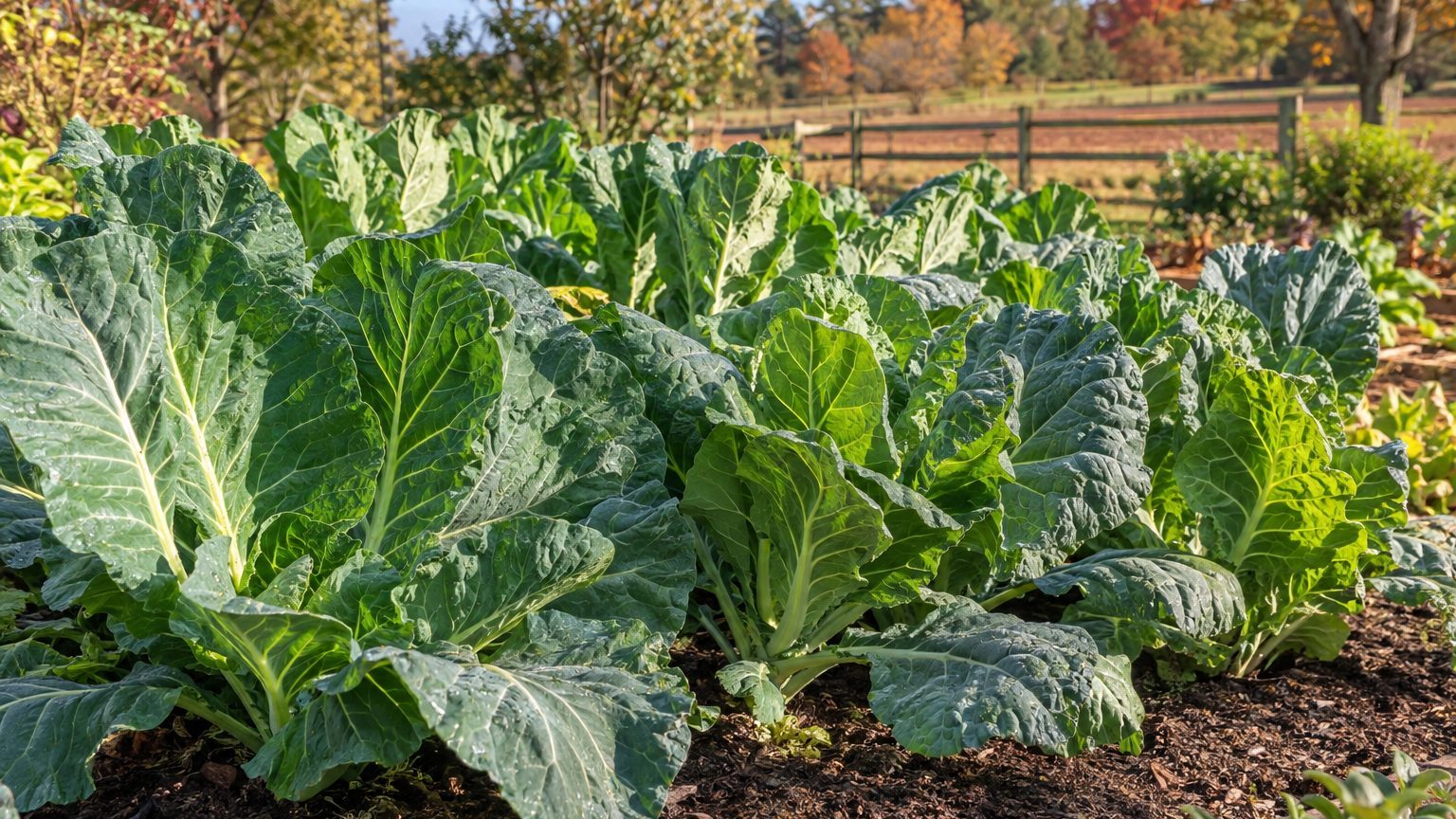

Upright, open-leaf collards are the safe main crop across most of Maryland, with a compact, cold-hardy selection for the mountain counties. Georgia Southern, Vates and Champion are among the names most seed racks carry. Heading types and quick smooth-leaf selections have a smaller role. The season is long enough that when you plant matters more than which cultivar you buy.
The short answer for Maryland
Choose by type, not by catalog hype. An upright open-leaf collard such as Georgia Southern is the workhorse for a spring planting that you cut from all summer. A compact, cold-hardy type such as Vates suits tighter beds and colder sites. A faster smooth-leaf selection gets you leaves sooner, and a loose-heading type like Morris Heading suits anyone who wants a cabbage-like cluster in the center of the plant.
The numbers behind that advice come from the Baltimore reference station in the NOAA 1991-2020 Climate Normals. The last spring freeze falls between April 3 and April 16, and the first fall freeze between October 26 and November 5. Those dates are the 30 to 70 percent probability band for a 32°F freeze. In any given year the real date can land well outside the window, and a freeze after April 16 is entirely possible. Collards shrug off a light freeze, so the window is a guide, not a deadline.
Matching type to season
The gap between those two frost windows is long, which is why slow, large-framed types work here when they would fail in a short northern season. The coldest month has a mean daily minimum of 25.4°F at Baltimore. That is cold enough to bruise outer leaves on the hardest nights and mild enough that a well-established plant often keeps producing through much of winter, particularly near the bay. Cold also converts starch to sugar in the leaves, so a fall crop that has been through a few frosts tastes sweeter than one cut in September.
| Type | Best use | Where it fits |
|---|---|---|
| Upright open-leaf (Georgia Southern) | Main crop, long harvest | Piedmont, Central Maryland, Eastern Shore |
| Compact cold-hardy (Vates) | Small beds, fall and winter picking | Colder counties, tight spaces |
| Faster smooth-leaf | Early leaves, quick turnover | Spring and early fall sowings |
| Loose-heading (Morris Heading) | Cabbage-like clusters | Fall crops that mature in cool weather |
Kale, mustard and turnip greens follow nearly the same rhythm and fill gaps nicely: mustard and turnip greens when you want something quick, kale when you want something that holds through winter. For the sowing dates themselves, see When to Plant Collards in Maryland.
What will not work here

Summer heat and humidity
Maryland summers are hot and humid, and that combination punishes careless spacing. Collards planted shoulder to shoulder hold moisture on their leaves for hours after every thunderstorm, which is exactly what fungal leaf spots and black rot need to spread. Give each plant roughly 18 to 24 inches so air can move through the row, and water at the soil line in the morning rather than overhead in the evening.
Then there is the opposite problem. Late summer often brings a dry stretch, and a weekly sprinkle that works in May does not keep up with a plant that is losing water fast through big leaves in July heat. Collards have a fairly shallow feeding root zone, so a bed that dries out between waterings turns leaves tough and bitter. The common rule of about an inch of water a week is a floor, not a target, in a hot spell. Mulch helps more than extra watering does.
A seed sown in late spring for midsummer picking also meets the worst insect pressure of the year: aphids, cabbage loopers and imported cabbageworms all peak when the weather is warm. Plants that stall in the heat bolt or toughen, so an unprotected late-spring sowing usually disappoints.
Calendars borrowed from farther south
The classic Deep South routine, planting in late summer or early fall and picking all winter without protection, does not transfer cleanly. A first freeze arriving between October 26 and November 5 leaves a short runway for fall seedlings. A plant that is still small when hard cold arrives has little reserve to get through winter, and the 25.4°F average minimum in the coldest month means some nights will go well below that. Fall transplants need to be in the ground and growing strongly by early autumn, not squeezed in after the first cool snap.
Mountain counties are harder still. Western Maryland (Garrett and Allegany) runs weeks later in spring and earlier in fall than the Baltimore figures suggest. A slow, big-framed collard transplanted there on a Baltimore schedule may be cut short by an early freeze before it sizes up, and a spring seedling set out on the Baltimore dates can be burned by a late hard freeze.
What changes across Maryland
Maryland is not one garden. The USDA Plant Hardiness Zone Map (2023 edition, built on 1991-2020 normals) places the state anywhere from zone 5b to 8a. That spread covers three full zones, so there is no single hardiness answer for the state. The map rests on one variable, the average annual extreme minimum temperature, and says nothing about frost dates or summer heat, which matter just as much to a leafy crop.
The Baltimore figures sit in the middle of that range. The mountains in Garrett and Allegany counties fall at the cold end, with a later spring, an earlier fall and harder winters. The Eastern Shore and the lower, bay-moderated parts of the state run milder.
For gardeners in the north and west, or at elevation, the shifts are practical ones. Set spring transplants later than the Baltimore window, and cover them with row cover or a cloche if a late freeze threatens. Favor compact, cold-tolerant types and quick maturities. Start the fall crop earlier than feels natural, since the first freeze arrives sooner. Overwintering is unreliable at the cold end, so treat winter harvests as a bonus.
Gardeners nearer the warm end can sow earlier in spring, count on fall plantings standing through much of winter, and focus their effort on shade and water for the summer stretch. To see where a particular address falls, look it up on the USDA Plant Hardiness Zone Map by ZIP code rather than guessing from a neighbor’s garden or a seed packet.
Where to check this for your own county
University of Maryland Extension is the best next stop. County offices there employ horticulture educators and Master Gardener volunteers who work with the soils, frost pockets and disease pressure in their own area. Two things are worth looking for: the local vegetable planting calendar, with sowing and transplanting dates for cool-season crops, and any varieties recommended or trialed in the county or nearby.
The Home and Garden Information Center inside the extension site is where most home growers will find fact sheets on brassica pests, leaf diseases and fall vegetable timing. When a sheet lists recommended collards or other greens, those picks reflect what has been grown nearby, under the same humidity and the same soil.
A county recommendation beats a state one. A statewide overview like this has to average across three or more hardiness zones, a mountain range and a coastline. A county agent can tell you that your area runs a week behind Baltimore, that cabbageworms arrive early, or that a given variety has been reliable locally. If the county calendar and the dates above disagree, go with the county. For the broader picture on growing, Growing Collards in Maryland covers the crop from seed to harvest.
Checking this against your own garden
Dates describe averages, and your yard is a single point. Three observations will tell you more than any calendar.
- Soil by feel. Squeeze a handful from a few inches down. If it crumbles instead of forming a wet, sticky ball, and it no longer feels icy in your palm, it is ready for transplants. A bed that reaches that state a week before your neighbor’s tells you the site drains well and warms early.
- First true leaves. On seedlings, the first true leaves are the ones that look like a collard leaf, appearing after the rounded seed leaves. How quickly they show tells you how fast the spot warms and how much light it gets. Slow seedlings in a shady corner suggest a later schedule for that bed.
- First frost location. After the first frosty morning, note where white rime lingers: the low corner, the open lawn, the bed against the house wall. The spots that frost first are your cold pockets, and those that stay clear are where fall greens last longest.
Keep notes for two seasons and your own record will outrank the state averages.
Common questions
Which collard is best for a first-time grower?
An upright open-leaf type such as Georgia Southern or a compact selection such as Vates. Both tolerate the cool and the heat, and both let you pick leaves from the bottom while the plant keeps growing.
Do collards survive a Maryland winter?
Often, yes, in the warmer parts of the state. Baltimore’s coldest month averages a daily minimum of 25.4°F, which established plants commonly handle, though harsh nights can damage outer leaves. In the mountains, where zone 5b conditions occur, treat a winter crop as a gamble and protect it with row cover or heavy mulch.
Is a spring or fall planting better?
Fall leaves taste sweeter because cold turns starches into sugars, and pests are fewer. Spring planting gives the longest harvest if the plants make it through summer heat with steady water and room to breathe. Many gardeners do both.
Which other greens pair well with collards?
Kale, mustard and turnip greens share the same growing rhythm and the same pests, so the same row cover protects them all. Mustard and turnip greens mature quickly, which makes them useful for filling the gap while collards size up. Rotating them to a different bed each year, rather than following one brassica with another, also cuts down on soil-borne disease.