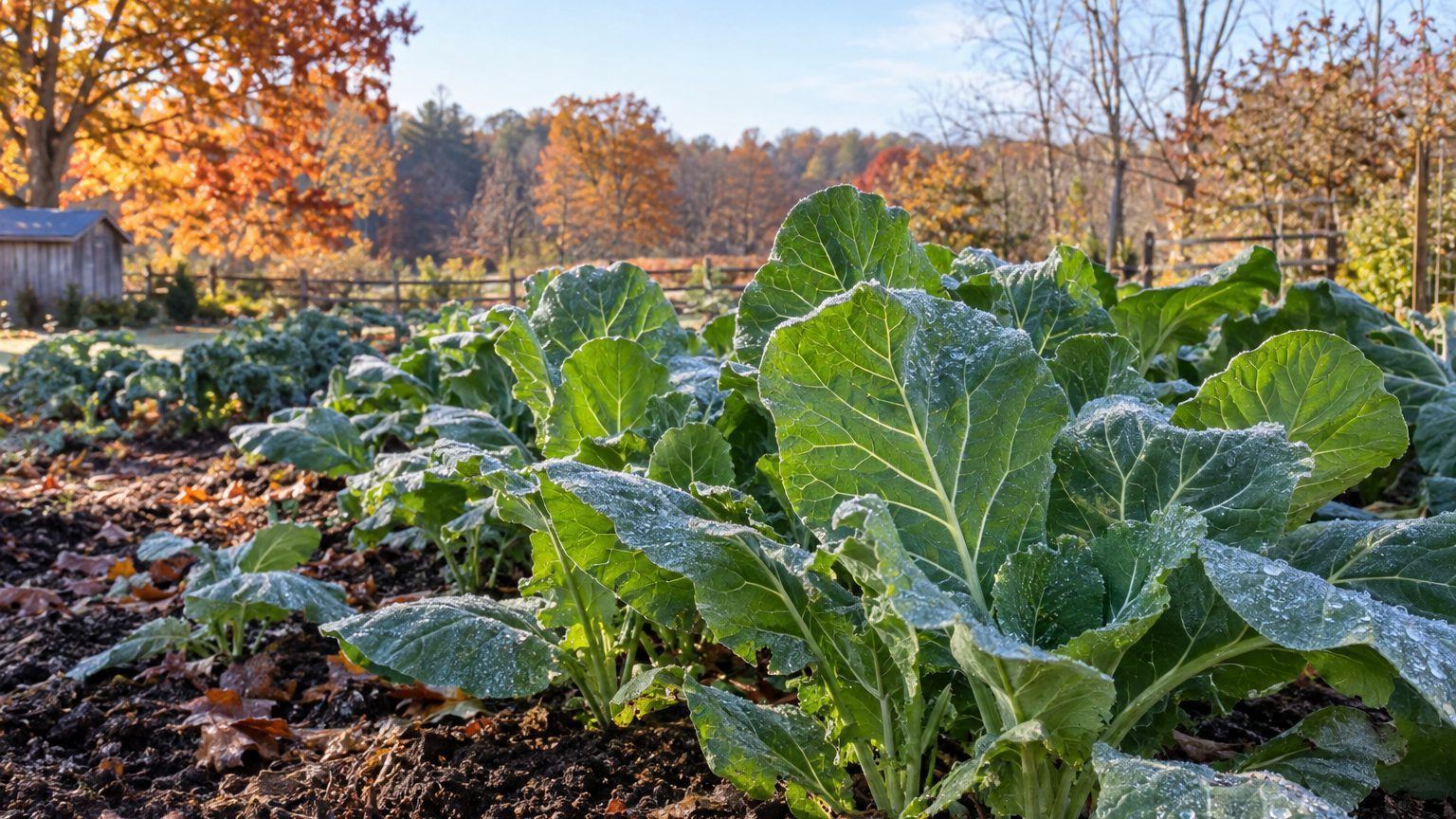

Collards go in twice a year in Maryland. A spring crop is started indoors in late winter and set out around the last spring frost, which falls between April 3 and April 16. A fall crop is sown in summer so it matures as nights cool, ahead of a first fall frost between October 26 and November 5. The fall crop is usually the better one.
The short answer for Maryland
Those frost dates come from the NOAA 1991-2020 Climate Normals for the Baltimore reference station. They are not hard cutoffs. Each marks the stretch where the chance of a 32°F freeze sits between 30 and 70 percent. On April 3, a freeze after that date is still close to a coin flip. By April 16 it is only slightly less so. Because collards shrug off light frost, you do not have to wait for the odds to hit zero before planting.
The fall dates work the same way in reverse. Between October 26 and November 5, the odds that a 32°F freeze has already arrived rise through that same 30 to 70 percent band. A fall planting should be established well before then, since growth slows sharply as nights approach freezing.
| Crop | Start | Anchor date |
|---|---|---|
| Spring collards | Seed indoors in late winter | Transplant outdoors as the April 3 to April 16 window opens |
| Fall collards | Sow in early to midsummer, in trays or a shaded bed | Plants should be sizing up before the October 26 to November 5 window |
| Fall crop kept for winter | Same summer sowing | Leaves can be picked through the first frosts and often well past them |
Why the fall crop wins
Collards are a cool-season brassica. A spring planting has a limited runway: it has to grow before Maryland’s heat arrives, and the plants get bitter and tough once summer takes hold. A summer-sown crop does the opposite, growing into cooling weather and sweetening after frost. The coldest month at the Baltimore station has a mean daily minimum of 25.4°F, which means freezing nights are routine in winter but not deeply severe in the central part of the state. That is why a well-established fall planting can keep producing long after other garden crops have collapsed. For variety choices that suit this schedule, see The Best Collards and Greens for Maryland.
What will not work here

Sowing seed outdoors in cold March ground fails more often than gardeners expect. The last spring freeze lands between April 3 and April 16, so early March soil is still cold and wet. Seed sits and rots, or seedlings come up thin and stalled. Starting indoors and transplanting avoids the problem.
Planting spring collards in May or later fails for a different reason. Maryland summers are hot and humid, and a plant that is still small when that heat arrives never gets the cool weeks it needs. Leaves turn coarse, aphids and caterpillars build up, and the plant may bolt, sending up a flower stalk and turning bitter. Gardeners who plant late in spring and expect a big harvest in July are usually disappointed.
Humidity also rules out tight spacing. Collards crowded shoulder to shoulder hold moisture on their leaves, and in a humid summer that invites leaf spot and other fungal problems. Give each plant room for air to move. A plant that is thinned or set wider apart dries faster after rain and dew, and it is easier to inspect for caterpillars on the undersides.
The fall crop has its own failure point: sowing too late. First frost can arrive as early as October 26, and a seedling that has barely germinated by September has little time to build the leaf area needed to carry it into cold weather. Growth slows as days shorten and nights cool, so late plantings stay small. If a summer sowing was missed, buying transplants in late summer is the practical rescue, but expect smaller plants than an early start would give.
Finally, the hot stretch of July and August is hard on brand-new seedlings. Soil in full sun dries fast, and a once-a-week soaking will not keep a seedling alive. Sow into a lightly shaded bed or start trays in a shaded spot, water often enough to keep the top inch of soil damp, and move plants into full sun as the weather moderates. Growers who water on a weekly schedule, as they would for established vegetables, often lose the whole planting before it begins. More on how the crop behaves overall is in Growing Collards in Maryland.
What changes across Maryland
Maryland is not one garden. The USDA Plant Hardiness Zone Map (2023, built on 1991-2020 normals) places the state anywhere from zone 5b to 8a. That spread is wide, and it means no single sowing date fits everyone. The zone system is built on one variable, the average annual extreme minimum temperature, so it says how cold winters get but not how long the growing season runs.
The dates above are tied to the Baltimore reference station, so they describe the central part of the state. Western Maryland, including Garrett and Allegany counties, is mountainous and its spring runs weeks later. A gardener there should hold off on setting out spring transplants well past mid-April, and should count back from an earlier-arriving fall chill when timing a summer sowing. Higher elevation also means cooler summers, which actually helps collards, but a shorter fall runway makes an early sowing more important.
The Eastern Shore runs milder. Frost arrives later in fall and leaves earlier in spring, so the planting window opens sooner and fall crops can be sown a bit later without losing much. Warm Eastern Shore winters also make it more realistic to keep a fall planting standing for harvest deep into the cold months.
Where you fall within that spread is a matter of looking it up, not guessing. The USDA map lets you enter a ZIP code and read your own zone. Use it, then shift this calendar earlier or later depending on whether your location is milder or colder than the central reference.
Where to check this for your own county
A county recommendation beats a state one every time, and the dates here are the state-level version. Maryland counties differ in elevation, distance from the Chesapeake Bay, and soil, and those differences shift frost dates by days or weeks.
The right place to go is University of Maryland Extension. It runs a presence in every county, and its staff and Master Gardeners work with local conditions rather than statewide averages. Two things are worth looking for there. The first is the local vegetable planting calendar, which lists sowing and transplanting windows for cool-season crops such as collards and other brassicas. The second is the list of varieties that have been trialled or recommended in your county, since a variety that does well on the Eastern Shore may not be the one that suits a mountain garden.
If a county page does not list collards specifically, look for the entry on cabbage, kale or broccoli. The timing logic is similar because they are all cool-season brassicas. A local office can also tell you which pests are active in your area, and when, which affects how early you need row cover on a summer sowing.
Bring your ZIP code and your approximate planting date when you call or write. The staff can compare it to local frost records and tell you whether to move earlier or later.
Checking this against your own garden
Your own observations outrank every date here. Three signs are easy to read without any equipment.
- Soil warmth by feel. In spring, push your hand into the bed in the morning. If the soil feels cold and clammy, direct seed will sit. Soil that feels merely cool and crumbles easily is ready for transplants. A south-facing bed or one beside a wall will warm days ahead of a shaded corner, which tells you where your earliest planting spot is.
- The first male flowers. When the first male blooms open on early-season plants such as squash, you know summer’s heat is arriving. A spring collard that is still tiny at that point is behind schedule, and a fall sowing is due soon.
- The first true leaves. Seedlings put out a pair of seed leaves first, then the first true leaves, which look like small collard leaves. A tray that reaches that stage in a few weeks is on pace. If seedlings are leggy or stalled at that stage, they are either too hot or too shaded.
Keep notes for a season. Write down when the soil felt workable, when the first frost actually hit, and how big your plants were by then. A year of notes will refine the dates in this calendar for your own yard.
Some gardeners also time this by the Moon: when to plant collard greens by the moon, as almanac tradition rather than fact.
Common questions
Can I plant collards in Maryland in summer?
Yes, and early to midsummer is the right time for the fall crop. Start seeds in trays or a lightly shaded bed and keep the soil damp, since hot, dry conditions are hard on seedlings.
Will frost kill my collards?
Light frost does not. Collards tolerate it and the leaves often taste sweeter afterward. The danger is a hard freeze on small, newly set plants, so fall plants should be well established before the October 26 to November 5 window.
Is it too late to Plant Collards in October?
Seed sown in October is too late in most of the state, because growth slows as first frost approaches. Transplants set out in early fall have a better chance, though they will stay small. Row cover can help.
Do the dates change in Western Maryland?
Yes. The mountains in Garrett and Allegany counties run weeks later in spring, and the USDA hardiness range for the state, 5b to 8a, shows how much conditions vary. Check your county’s extension office for local dates.