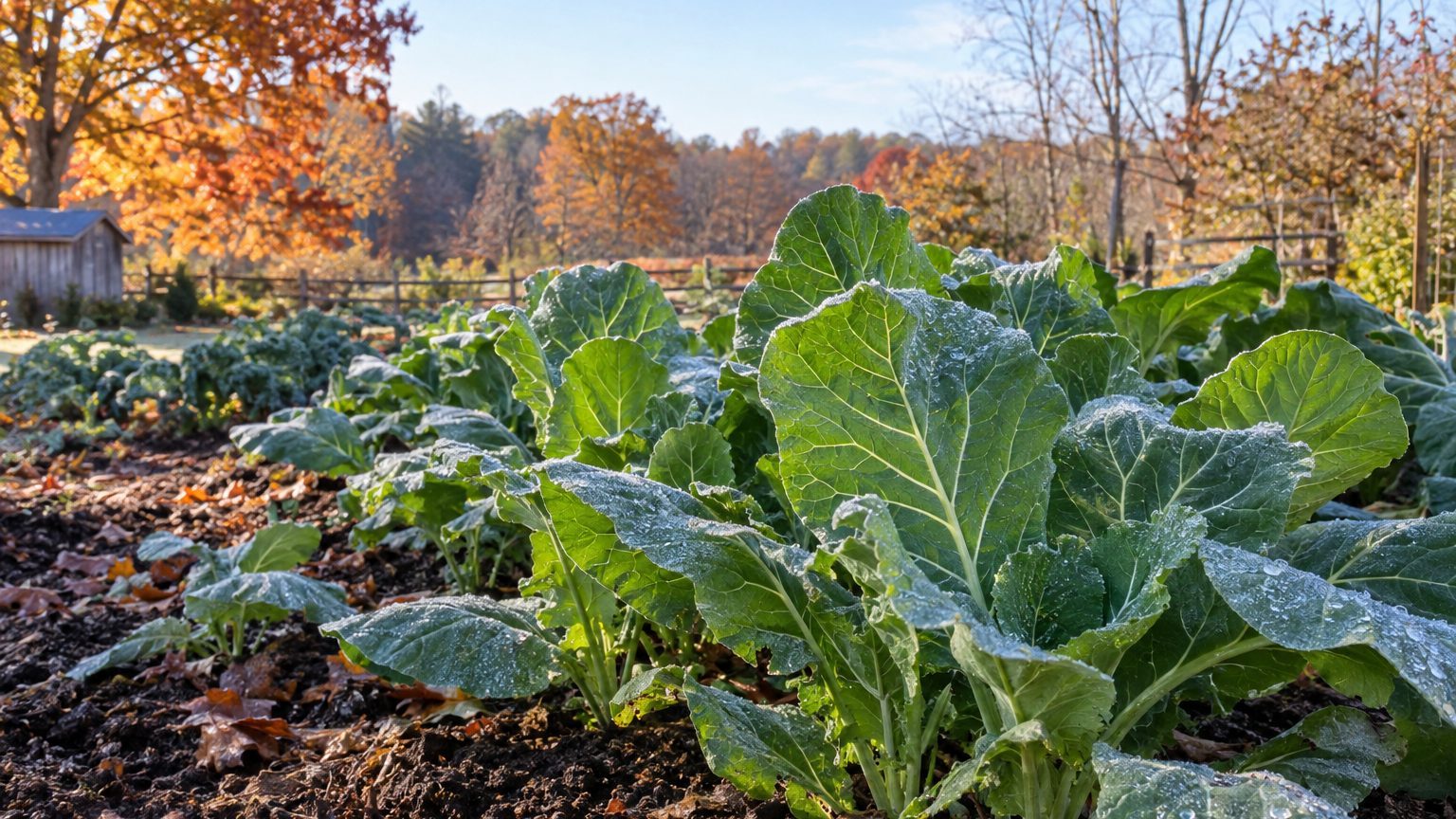

Nebraska gardeners get two shots at collards: a spring planting set out a few weeks before the last freeze, and a midsummer sowing that matures into fall. Fall is the better crop. Cold sweetens the leaves, and the summer heat that turns spring plants tough and bitter is gone by then. Both windows hang on frost dates, and those dates run later in the country than in town.
The short answer for Nebraska
Set spring collard transplants outdoors in the weeks around April 12 to April 23, and sow or transplant the fall crop from midsummer so the plants are full size before October 15 to October 26. Those dates come from the Omaha reference station, and each range marks the stretch in which the chance of a 32°F freeze sits between 30 and 70 percent, based on NOAA’s 1991-2020 climate normals. They describe odds, not a calendar guarantee. In any given year the real last freeze can land well on either side.
Suburban and rural gardens usually see the last spring frost one to two weeks later than that airport station, and the first fall frost one to two weeks earlier. More elevation widens the gap. A garden outside the metro area should shift both windows accordingly: spring a week or two later, fall a week or two earlier.
Spring: transplants, not seed
Collards are a cool-season brassica that shrugs off light frost once hardened off, so there is no reason to wait for the last freeze to pass. Start seed indoors in early to mid March, then move sturdy seedlings out as the frost window opens. A hard freeze can still damage young plants, so keep a bedsheet or row cover handy for the nights after planting. The reason to hurry is simple. Nebraska springs tend to jump into summer heat, and a spring crop needs to be well along before then.
Fall: the better crop
For fall, count backward from the frost window. Collards take about two months from transplant to a decent harvest of leaves, and they keep growing slowly in cool weather, so sowing seed or setting transplants from mid-July into early August puts full-size plants in the ground when October arrives. Light frost does not end the harvest. It tends to sweeten the leaves, so the first-frost dates mark when plants should be big, not when you should be finished.
| Task | Reference-city timing (Omaha) | Suburban, rural or higher ground |
|---|---|---|
| Start seed indoors | Early to mid March | Mid to late March |
| Set spring transplants out | Around April 12 to April 23 | One to two weeks later |
| Sow or transplant for fall | Mid-July to early August | Toward the early end of that range |
| Plants at full size | Before October 15 to October 26 | Before the first frost in your county |
For variety choices that match these windows, see The Best Collards and Greens for Nebraska.
What will not work here
Sowing seed directly into cold March soil is the most common false start. Collard seed germinates slowly in cold ground, and a late snap or a soggy spell leaves gaps in the row. Indoor starts planted at the right moment beat seed sown outdoors early, every time.
Late spring starts and weekly watering
A spring crop started in May is in trouble. Plants that are still small when midsummer heat arrives stall, toughen and turn bitter. Collards handle heat better than most brassicas, but Nebraska’s hot summer stretches, often with wind, dry out soil fast. A once-a-week soak does not hold a shallow-rooted transplant through that. Plan on deep watering as often as the soil needs it, and mulch to slow the loss. A couple of inches of straw or shredded leaves keeps the root zone cooler and steadier.
A fall sowing that starts too late
Sowing in September feels natural, because that is when the garden slows and the cool air returns. It is also too late for collards. With the first freeze probability reaching 30 to 70 percent between October 15 and October 26 at the reference station, and arriving sooner in rural and higher areas, September seed has only a few weeks of growth before days shorten and growth crawls. The plants survive but stay small. Midsummer is the time, even though planting a cool-season crop in July heat feels wrong. Shade cloth or a spot that gets afternoon shade helps seedlings get through the first couple of weeks.
Counting on winter survival
Gardeners in milder states sometimes expect collards to overwinter. In Nebraska the mean daily minimum of the coldest month is 15.2°F at the Omaha station, and that is an average, which means plenty of nights fall below it. Plants that tolerate a stretch in the 20s generally do not come through repeated teens, and dry winter wind makes it worse. Treat collards as a crop that ends in the first deep cold of winter. A thick mulch or a low tunnel can stretch the harvest into December, but plan on pulling plants rather than waiting on a spring regrowth.
Relying on the airport dates is the last mistake. Those are Omaha numbers. A garden in the Panhandle or on the northern edge of the state that follows them to the day will plant too early in spring and cut the fall window short.
What changes across Nebraska
Nebraska is not one garden. Under the USDA Plant Hardiness Zone Map 2023, built on 1991-2020 normals, the state runs from zone 4a to zone 5b. That is a wide spread, and it means there is no single planting date for the whole state. The zone system rests on one variable, the average annual extreme minimum temperature, so it tells you about winter survival rather than about the length of the collard season. It still gives a rough sense of how much colder one part of the state runs than another, and colder usually means a later spring and an earlier fall.
Readers in the north or at higher elevations should shift both windows toward the short end. Set spring transplants later, hold them under row cover through the nights that dip near freezing, and put the fall crop in early enough in July that it has a full two months before the first hard freeze. Where summers are cooler, a spring crop has a longer stretch before the heat, so spring is more productive there than in a hot corner of the state. In the warmer southeast, closer to the reference city, the windows in the table above are a fair starting point, with the usual one-to-two-week allowance for open country.
The USDA map is searchable by ZIP code, so find your own zone there rather than guessing from a neighbor’s garden or a seed catalog. Zone changes from one valley or hillside to the next, and a low spot where cold air pools can behave like a zone colder than the ground fifty feet away. Your starting guide is the Growing Collards in Nebraska overview, and the zone tells you which direction to adjust it.
Where to check this for your own county
A county recommendation beats a state one, and what you are reading is the state version. For local guidance, go to University of Nebraska–Lincoln Extension, the land-grant extension service for the state. Its county offices answer planting questions from people who garden in the same soil and weather you do.
Two things are worth looking for there. The first is a local planting calendar for cool-season vegetables, which should give spring and fall windows for your part of the state. Extension calendars are usually written crop by crop, so look for the entry covering brassicas or leafy greens rather than a generic lawn or vegetable schedule. The second is the list of varieties trialled or recommended in your county. A variety that performs well in the eastern part of the state may bolt, stall or struggle in the dry west, and local trials show which ones held up.
If you call or visit, ask three questions. What is the typical last spring freeze for your county, and how variable is it? When do local gardeners start fall brassicas? And does your area run unusually windy, dry or frost-prone? Those answers adjust every date in the table above, usually by a week or two in one direction.
Checking this against your own garden
Your own observations outrank every date here. Three things are worth watching, and none requires equipment.
- Soil warmth by feel. Push a hand into the bed down to your wrist in the morning. If the soil feels cold and damp enough to make you pull back, wait a few days before setting transplants. Beds that warm early are on a sunny or sheltered side of the yard. Slow beds sit in shade or hold water.
- The first true leaves. Seedlings start with a pair of rounded seed leaves, then grow their first true leaves, which look like small collard leaves. That is the stage for hardening off, and it tells you whether your indoor setup has enough light. Leggy, pale seedlings reaching toward a window need more light, not more water.
- Frost on the grass. On a clear, still morning in early spring or fall, walk the yard and note where white frost lingers. Low corners and open ground frost first and thaw last. Raised, sheltered spots near a wall stay clear longer. That pattern shows where the earliest spring planting and the latest fall harvest will do best.
Keep a few notes for a season or two, with the date you planted, the first frost you saw and how the plants responded. After two years you have a calendar more accurate than any reference station’s.
The Moon calendar is a separate, older custom: see when to plant collard greens by the moon, written as tradition rather than fact.
Common questions
Can I plant collards in Nebraska in summer?
Yes, but only as the start of the fall crop. Sowing seed or setting transplants from mid-July into early August gives plants time to reach size before the first freeze window of October 15 to October 26 at the Omaha reference station, and earlier in rural and higher areas. A collard planted in early summer to harvest in July heat does poorly.
Do collards survive a Nebraska winter?
Rarely. The coldest month’s mean daily minimum at the Omaha station is 15.2°F, and repeated nights in the teens usually kill plants even if a light frost does not. Mulch or a low tunnel can extend the harvest into early winter, but do not count on regrowth in spring.
How late can I plant collards in spring?
Aim to have transplants in the ground around the April 12 to April 23 window, or a week or two later in country gardens. Later is possible, but plants set out in May have less time to grow before summer heat, which slows them and toughens the leaves.
Is the frost date for my town the same as Omaha’s?
Probably not. Those dates come from an airport station, and suburban and rural gardens usually see the last spring frost one to two weeks later and the first fall frost one to two weeks earlier. Check with your county’s University of Nebraska–Lincoln Extension office for local dates.