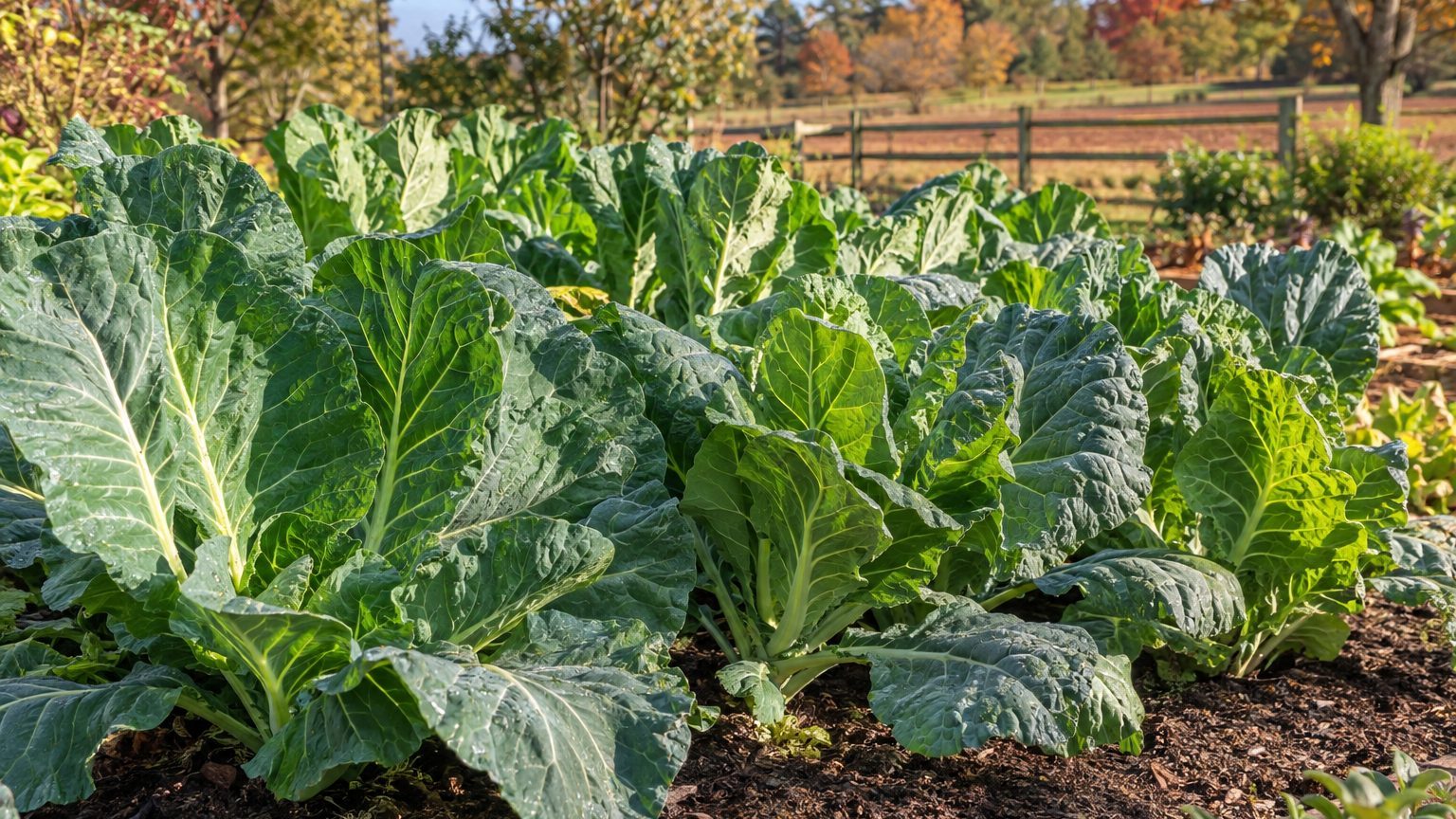

The best collards for Nova Scotia are early and standard types that reach picking size in about two to two and a half months from transplanting, with a hardy kale alongside as insurance. Slow heirlooms can pay off in a good year, but they gamble with a season that averages about 23 weeks between frosts. Start transplants indoors, set them out once the last frost risk fades, and keep picking into the cold.
The short answer for Nova Scotia
Pick quick and mid-season types over long-season heirlooms. At the Halifax Stanfield station, the last spring frost falls on average on May 7 and the first fall frost on average on October 18, which leaves roughly 164 days in between. Both dates are means from the 1981-2010 Canadian normals, so treat each as the midpoint of a window. In one year out of two, spring frost arrives later than May 7. In one year out of two, fall frost arrives earlier than October 18. Neither date is a safe one.
Collards are not a frost-limited crop the way tomatoes are, which is why the fall date matters less than it seems. Light frost sweetens the leaves, and sturdy plants keep producing well after the first frost. What the short season punishes is time to size, because a plant that needs most of the summer to fill out has little room for a cool spring or a cold snap.
Choosing by type
| Type | Examples | Typical packet timing from transplant | Fit for Nova Scotia |
|---|---|---|---|
| Quick, compact | Flash | About 55 to 65 days | Best for spring plantings and for a second planting set out in midsummer |
| Standard, cold-tolerant | Vates | About 60 to 70 days | The dependable all-rounder; plants hold well through fall |
| Slow heirloom | Georgia (Southern) | 75 days or more | Workable only from an early start; poor choice for late plantings |
| Cabbage-like heading | Morris Heading | Mid to long | A curiosity for the keen gardener, not a first-year pick |
Packet days count from transplanting for collards started indoors, and they assume steady summer growth. Growth in September and October runs slower than the packet suggests, so subtract a margin from any fall plan. For spring and summer timing, see When to Plant Collards in Nova Scotia, and for the broader growing picture, Growing Collards in Nova Scotia. A row of kale beside the collards is cheap insurance, since kale tolerates hard cold a little better.
What will not work here
Slow heirlooms planted late fail first. A 75-day plant set out in mid-May has time to size up, but the same plant set out in late summer for a fall crop meets short days and cooling nights before it fills out. Fall plantings need quick or standard types, set out early enough to be well established by the time the October 18 average frost date comes around.
Direct sowing into cold spring soil also loses weeks. Seed sown in April sits in soil that stays cold and wet, and germination is slow and patchy. Transplants started indoors and hardened off sidestep the problem.
Planting on May 7 as though it were a guarantee is a third mistake. Since frost comes later than that date in half of years, young plants set out right at the average can be caught by a late frost or a cold snap. Hardened-off transplants take a light frost, but a hard freeze can set back or kill small ones. Keep a floating row cover on hand for the first weeks.
Counting on winter harvests the way Southern gardeners do is another trap. The mean daily minimum in the coldest month is -10.4 °C (13.3 °F). Collards left uncovered in that kind of cold generally die back, and the leaves that survive turn leathery. Winter picking from the open row is not a plan to build around.
Southern spacing advice backfires in a damp coastal climate. Crowding collards where fog and humid mornings keep leaves wet invites trouble. Give plants room so air can move and foliage dries. Also lean on cold performance over heat tolerance when reading seed descriptions. A “heat-tolerant” label is a selling point in Georgia and close to irrelevant here.
Finally, watch for clubroot in brassicas and cabbage root maggot in spring plantings. Liming where a soil test calls for it, rotating brassica beds, and using row cover over young plants all help. They matter more than picking one variety over another.
What changes across Nova Scotia
Nova Scotia is not one garden. The reference city on Natural Resources Canada’s map falls in Canadian hardiness zone 6b (1991-2020 normals). That is the Canadian system, built on seven climate variables, and it does not convert to a USDA zone. NRCan itself says there are no simple conversions between the two systems. The 6b figure describes the reference city, not the province.
Inside the province, zones differ from coast to interior and from lowland to upland. There is no single answer. Northern and upland districts run weeks behind the Halifax Stanfield dates, with later springs and earlier fall frosts. The Atlantic coast moderates temperatures, while inland valleys and higher ground cool faster at night.
A gardener in the north or at altitude should shift in three ways. First, sow indoors a week or two later, since transplants set out by May 7 will not find friendly weather in a district running weeks behind. Second, lean toward the quick and standard types in the table above and skip the heirlooms. Third, treat fall as shorter: set the final transplants out earlier, and plan on row cover to carry the crop through early cold snaps. Kale becomes a larger share of the bed in those districts.
Which zone applies to a given yard is something the map answers better than any article can. NRCan’s Plant Hardiness Site lets readers look up their municipality directly. Use that result, and the adjustments above, as a starting offset rather than a rule.
Where to check this for your own county
The Nova Scotia Department of Agriculture is the provincial agricultural authority, and the right place to look for local guidance. Look for two things. One is a planting calendar for your area, built from your region’s frost dates rather than the Halifax airport’s. The other is any vegetable variety trial results for your county or region, which show what has actually performed in local soil and weather.
A county recommendation beats a provincial one, because it reflects a narrower slice of the climate. Everything above is a provincewide starting point, and the frost dates quoted come from one airport station and the 1981-2010 Canadian normals. American readers comparing them with US tables should know that US frost figures usually use 1991-2020, so the periods differ slightly.
When a local source and a provincewide rule disagree, go with the local source. If you only have a province-level calendar, add a buffer for upland or northern sites, as described above.
Checking this against your own garden
Your own observations outrank every date here. Three are worth tracking, and none needs equipment.
- Soil warmth by feel. Push a bare hand a few inches into the bed in the morning. If it feels cold and clammy and clumps heavily, transplants will sit and sulk. A soil that crumbles and feels cool rather than cold is ready. Faster warming points to a sheltered or south-facing microclimate.
- First true leaves on your seedlings. Seedlings hardened off outdoors are ready to go out. If they stretch or yellow under your indoor setup, your light is the limit, not the calendar.
- Where frost lingers. Watch where white frost stays on the grass the longest in the morning. Those low spots hold cold air and will run later in spring and earlier in fall than the rest of the yard, so site early crops elsewhere.
Keep notes for a season or two. A line on the calendar for each observation will teach you more than any average.
Common questions
Which collard variety is the safest first choice for Nova Scotia?
A standard, cold-tolerant type such as Vates, set out as transplants after the frost risk eases. It reaches size within the season and keeps going well after the first frost.
Can collards survive a Nova Scotia winter?
Not reliably in the open. The mean daily minimum in the coldest month is -10.4 °C (13.3 °F), which is too cold for collards left uncovered. Cover can extend harvests into late fall, but plan on replanting each spring.
Is May 7 a safe date to transplant collards?
No. It is the average last spring frost at the Halifax Stanfield station, so frost arrives later in about half of years. Hardened-off transplants tolerate light frost, but keep row cover handy. Northern and upland gardens run weeks later.
Is kale a better choice than collards?
Kale handles hard cold a little better, so it makes a sensible partner in colder districts. Collards give bigger leaves and a milder taste when cooked, so many gardeners grow both.