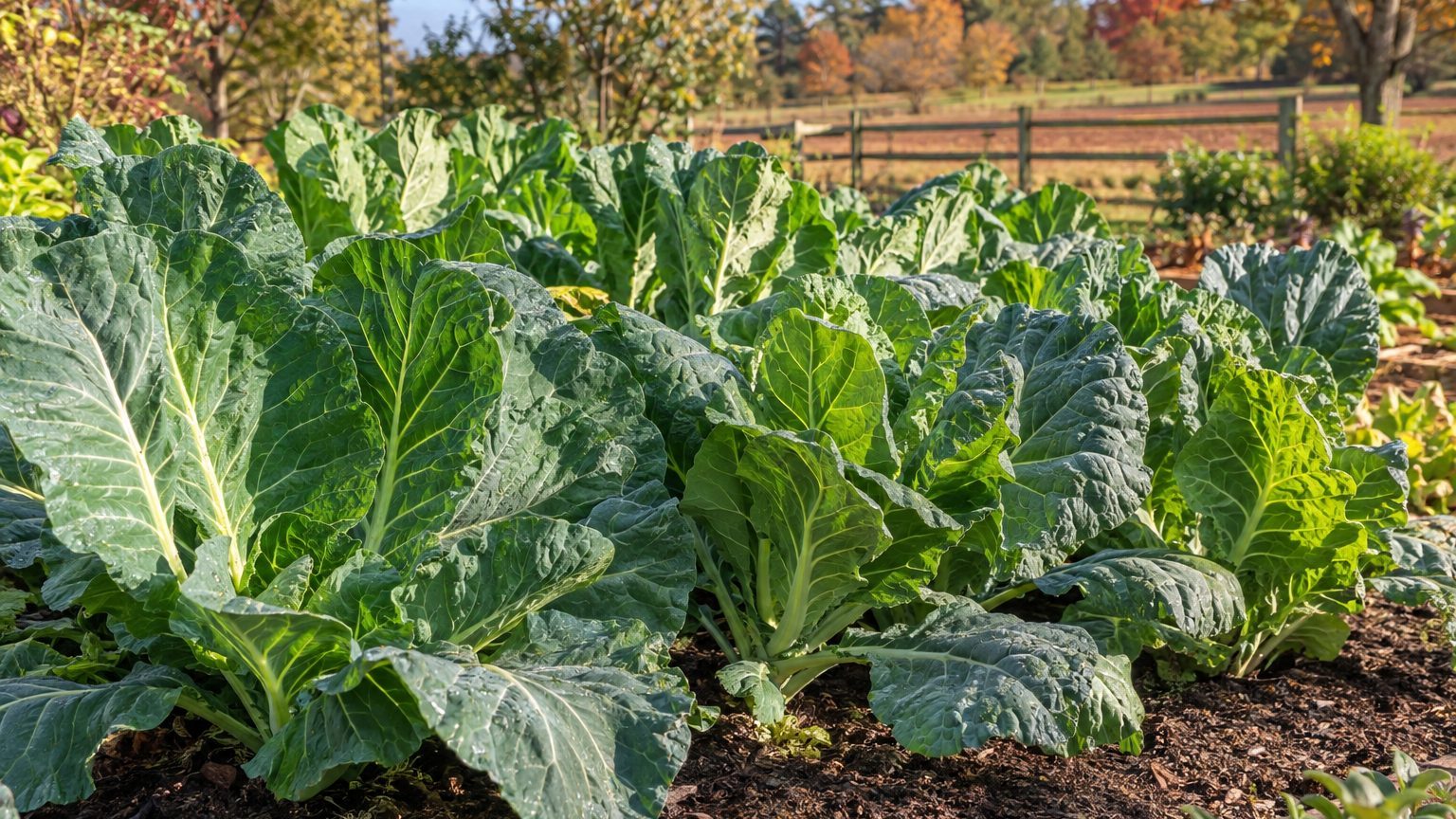

Plant a compact, cold-tolerant collard or an early-maturing one, and grow it as an annual in two rounds: spring transplants and a midsummer planting for fall. Ontario has enough frost-free time for standard collards. The biggest, slowest heirlooms are the risky choice, especially if they go in late. Kale and mustard greens cover whatever collards can’t.
The short answer for Ontario
For most Ontario gardens, the best collards are standard-season, cold-tolerant types that reach harvest size in one growing season. Early or compact varieties are the safest picks. Large Southern heirlooms can work, but only when transplanted early and given the full season.
The Toronto Pearson reference station has about 169 frost-free days between the mean last spring frost (April 30) and the mean first fall frost (October 16). Both are averages from Environment and Climate Change Canada’s 1981-2010 normals. In one year out of two, the last spring frost falls after April 30. In one year out of two, the first fall frost arrives before October 16. Treat each date as the middle of a window. Our guide to When to Plant Collards in Ontario turns those dates into sowing windows, and Growing Collards in Ontario covers the full crop.
Which collard types suit a short Ontario season?
Sort by speed and cold tolerance first, flavor second. Collards shrug off light frost, so cold tolerance matters less than the time a plant needs to reach picking size.
| Type | Examples | Fit for Ontario |
|---|---|---|
| Early, fast-maturing | Flash | Safest for northern districts and for a second planting in midsummer |
| Compact, cold-tolerant, open-pollinated | Vates | Dependable all-round choice for spring transplants |
| Large Southern heirloom | Georgia Southern | Needs early transplanting and the full frost-free season; a gamble if started late |
| Other greens | Kale (Lacinato, Siberian types), mustard greens | Kale holds on later into fall; mustard is quick in cool spring and fall weather |
When do Ontario collards taste best?
After a few frosts. Cold pushes the plant to turn starch into sugar, which takes the bitterness out of the leaves. A midsummer planting that comes to size in October and November gives the sweetest picking of the year, well past the mean first frost date.
What will not work here
Overwintering is the first casualty. The mean daily minimum of the coldest month at the reference station is -10.2 °C (13.6 °F), and that is an average, so colder nights come with it. The Southern habit of leaving collards in the ground and picking all winter does not carry over. Plants left standing generally don’t come through, and a crop planted in September for winter harvest meets a hard freeze before it has size.
Late-started giants come next. A frost-free season of about 169 days sounds generous, but a large, slow heirloom started late in May has less time than it needs, and districts north of the reference station have fewer days again. Plants that are still small when the hard freezes arrive give small harvests.
Direct-seeding in cold April soil also fails. Seed sits, germinates unevenly, and the seedlings that do emerge face the half of years when the last frost falls after April 30. Transplants started indoors and hardened off give a much steadier start.
Why does close spacing fail in Ontario summers?
Ontario summers are humid. Plants crowded together keep their leaves wet after rain and dew, and wet foliage invites leaf spot and gives cabbageworms and loopers shelter. Give standard collards room between plants so air moves through the canopy. Rotate them away from other brassicas, such as cabbage and broccoli, planted in the same bed the year before.
Weekly deep watering is not the problem here as it would be in a hot, dry climate. Summer rainfall usually covers part of the need, and the common mistake is overhead watering late in the day, which leaves leaves wet overnight. Water the soil in the morning.
What changes across Ontario
Ontario is not one garden. The Canadian plant hardiness zone for the reference city is 7a, from Natural Resources Canada’s 1991-2020 normals. That is the zone of one city, not of the province. The province spreads across many zones, from mild lakeshore districts in the south to far colder country in the north, so there is no single answer for the whole of it.
The Canadian system is built on seven climate variables, while the American one rests on a single winter minimum. Natural Resources Canada says plainly that the two do not convert, so a Canadian zone number should never be read as a USDA zone. The frost dates above come from 1981-2010 normals and the zones from 1991-2020 normals, so the two sets of numbers are close cousins rather than exact partners.
Gardeners north of the reference station, or on higher ground, should shift everything. Frost dates run weeks behind the Toronto averages, so spring transplanting moves later and the fall crop has less runway. Lean on the fastest types, start plants indoors rather than sowing seed outside, and use row cover in both seasons. Kale becomes the safer fall green where hard freezes come early. Look up your own location on Natural Resources Canada’s Plant Hardiness Site and read the zone for your municipality from the map.
Where to check this for your own county
Ontario’s provincial agriculture service is the next stop. The Government of Ontario’s agriculture and food pages lead to regional crop information, and your local agricultural office or Master Gardener group can narrow it to your own district.
Look for three things. First, a local planting calendar for cole crops, since collards follow the schedule of cabbage and broccoli. Second, the varieties that have been trialled near you, which tell you more than a seed catalogue will. Third, local pest alerts. Flea beetles, cabbage maggots, and imported cabbageworms arrive on a schedule that shifts from one district to the next, and knowing the timing helps you cover plants before damage starts.
A recommendation from your own county outranks any provincewide guidance, including everything above. Provincial figures average very different places. A variety that thrives near the lakeshore may be too slow two hours north.
Checking this against your own garden
Your own yard outranks every date in this article. Three observations will tell you more than any average.
- Soil by feel. Squeeze a handful in spring. If it crumbles instead of staying in a wet ball, it is workable. If it still feels cold against your palm after a minute, wait a few days before transplanting. Beds that warm up first are your early spots.
- First true leaves. Collard seedlings show their first true leaves after the round seed leaves. Seedlings that take much longer than usual to produce them are telling you the light or warmth is short, and they should stay indoors a little longer.
- Where frost lies. After a cold night, walk the yard at dawn. Frost on the lawn, car windshield, or low corner but not near the house wall shows you the cold pockets, and which spots are safe a week or two earlier.
Keep notes for a season or two. Your own dates will tighten the averages faster than any table.
Common questions
Are collards or kale better for Ontario?
Both do well. Collards give bigger, milder leaves from a spring or midsummer planting. Kale tolerates the cold a little longer and is the safer choice in northern districts or where fall freezes arrive early. Many gardeners grow both.
Can Southern heirloom collards grow in Ontario?
Yes, with early transplants and a full season. They are slower than compact or early types, so they suit southern districts better than northern ones. In short-season areas, choose a faster variety.
Is it too late to plant collards in August?
Early August is late but workable with transplants of a fast variety, since the mean first fall frost is October 16 and collards tolerate light frost. Seed sown in August leaves little time to reach full size. Smaller leaves can still be harvested.
How far apart should collards be planted?
Plant them with room between them. The extra room matters in humid Ontario summers because it lets leaves dry quickly after rain and reduces leaf disease.