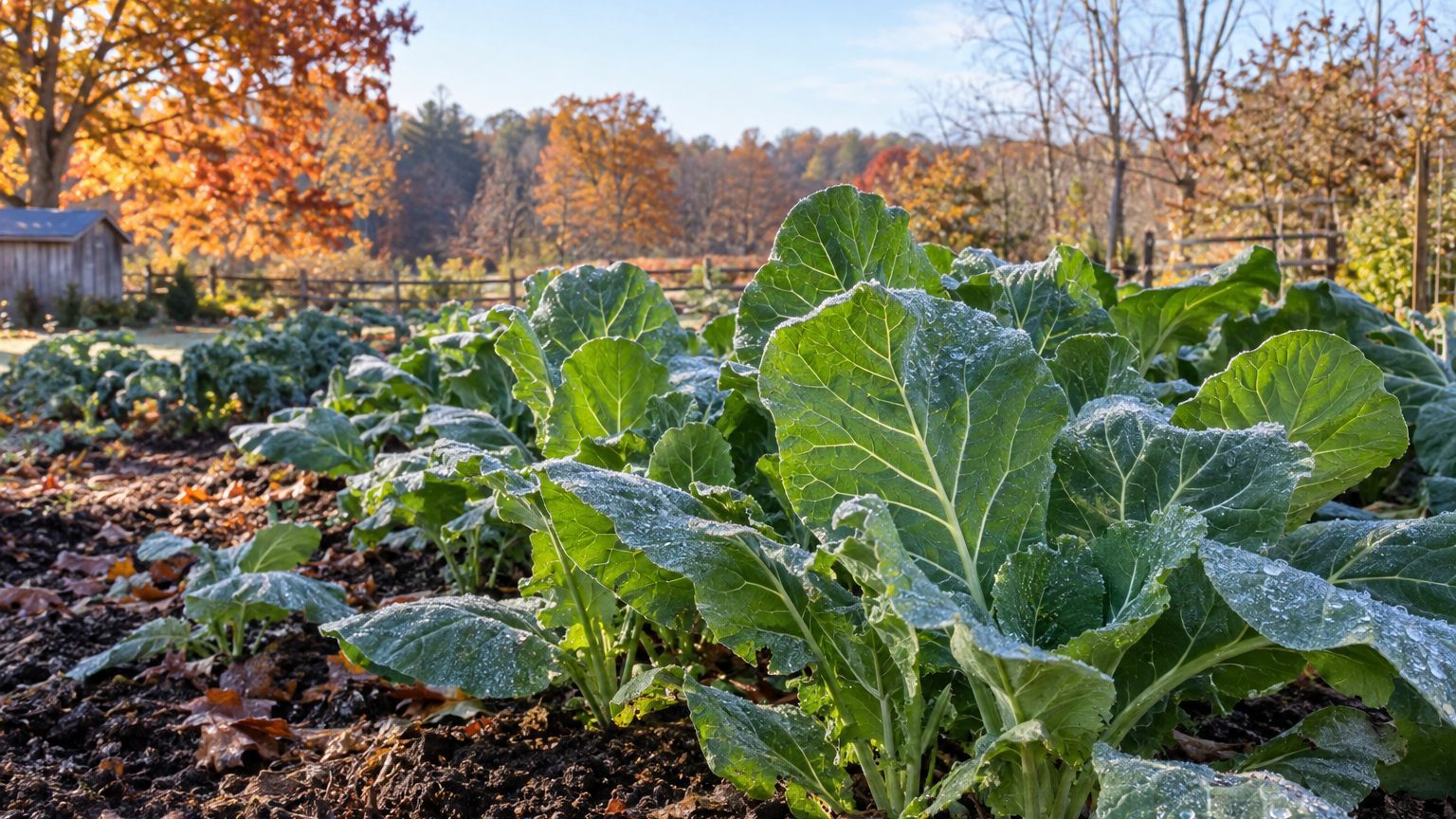

Collards go in the ground twice in Oklahoma. Transplants go out in March for a spring crop, and a second planting runs from mid-August into early September for the fall crop. Most gardeners prefer the fall crop, because cool nights sweeten the leaves and the plants often keep producing into winter. The spring crop has to finish before summer heat arrives. Local dates shift with region and year.
The short answer for Oklahoma
Set spring collard transplants outdoors from mid-March to early April, and set fall transplants from mid-August to early September. At the Oklahoma City airport weather station, the last spring 32°F freeze falls between March 28 and April 10, and the first fall freeze between October 29 and November 8.
Those dates come from NOAA’s 1991-2020 U.S. Climate Normals. Each pair marks the stretch of days when the chance of a 32°F freeze runs between 30 and 70 percent. Before March 28, the chance of another spring freeze is above 70 percent. After April 10 it drops below 30 percent. In fall, the odds that a first freeze has already happened are under 30 percent before October 29 and over 70 percent after November 8.
These are reference-city figures. Suburban and rural gardens usually see the last spring frost one to two weeks later and the first fall frost one to two weeks earlier, and elevation adds more.
When do you plant collards in spring in Oklahoma?
Collards shrug off light frost, so you do not have to wait for the last freeze. Start seeds indoors in late January or early February, harden the seedlings off, and plant them out in mid-March to early April. Direct sowing in March also works. The goal is to harvest before the hottest part of June, when plants toughen and run to seed.
When do you plant collards for fall in Oklahoma?
Sow seed in flats in July, or direct sow in late July, and move transplants into the garden from mid-August to early September. That gives the plants weeks of growth before the freeze band of October 29 to November 8. Leaves picked after a frost taste noticeably sweeter.
| Planting | Seed or transplant | Timing in Oklahoma City terms |
|---|---|---|
| Spring | Start seed indoors | Late January to early February |
| Spring | Transplants in the garden | Mid-March to early April, around the March 28 to April 10 band |
| Fall | Sow seed in flats | July |
| Fall | Transplants in the garden | Mid-August to early September, ahead of the October 29 to November 8 band |
What will not work here
Can you plant collards in May in Oklahoma?
You can, but the plants will not thank you. Collards set out in May are still small when June and July heat arrives. Growth stalls, leaves turn tough and bitter, and aphids move in on stressed plants. The spring window closes in early April for most gardens, and a week or two earlier where summer heat comes on fast.
Slow varieties have the same problem in fall. A long-season type set out in late September has little time to size up before the freeze band starts on October 29. Early-maturing types suit late plantings better. The guide to The Best Collards and Greens for Oklahoma covers which ones to choose.
Does weekly watering work for fall transplants?
Not in August. Oklahoma summers are hot, often dry and frequently windy, and a once-a-week soak leaves the top few inches of soil bone dry for most of the week. Newly set transplants have shallow roots in that layer. They need a daily check while they settle in, with water whenever the soil just below the surface feels dry.
A layer of mulch around each plant slows the drying. A scrap of shade cloth, or even a propped board on the west side, helps through the afternoon. Skip either step and the August crop often fails before the cool weather can rescue it.
What about hard winter cold?
The mean daily minimum of the coldest month at Oklahoma City is 27.0°F. Typical January nights dip below freezing, and cold snaps go well below the average. Collards handle light and moderate freezes, but an exposed bed during a sharp snap can lose its outer leaves. Mulch around the base, and keep a row cover or old sheet ready for the worst nights.
What changes across Oklahoma
Oklahoma is not one garden. The USDA Plant Hardiness Zone Map (2023 edition) puts the state across zones 6a to 8a, so there is no single answer. The colder end sits in the northwest and the Panhandle, and the milder end in the southeast. That zone system rests on one number, the average yearly extreme minimum temperature. It says whether a plant survives winter and nothing about when to sow.
For planting dates, the practical shift is simple. In the north, in the Panhandle, and at higher elevation, spring comes later and fall comes sooner. Move spring transplanting back by a week or two and start fall seed a week or two earlier, so the plants have their size before the first hard freeze. In the south and southeast, you can lean the other way. Spring starts earlier, but the heat window closes earlier too, and fall plantings can run longer into winter.
Cold hardiness matters most in the northern tier. Collards that sail through winter near Oklahoma City may need mulch or row cover farther north, and may not overwinter at all in the coldest spots. Look up your own zone on the USDA map by ZIP code rather than guessing from a neighbor’s yard.
The broader Growing Collards in Oklahoma guide covers soil, feeding and harvest once the plants are in the ground.
Where to check this for your own county
Oklahoma State University Extension is the place to confirm these dates. Every county has an extension office, and the staff there know local frost patterns, soil, and which pests are active in a given year.
Two things are worth looking for. The first is a local planting calendar for cool-season vegetables, which usually lists spring and fall windows for brassicas like collards, broccoli and cabbage. The second is the list of varieties trialled in your area. A variety that performed well in a trial near you is a safer pick than one that did well somewhere with different heat or winters.
A county recommendation beats a state one. The dates above are a state-level frame built on one reference station, and Oklahoma runs from the Panhandle to the southeast corner. When the county calendar and this frame disagree, go with the county.
Checking this against your own garden
Your own beds outrank every date here, and three observations will tell you more than a calendar.
- Soil warmth by feel. In early spring, push your hand 2 inches into the bed. Cold, wet soil that clumps means wait. Soil that crumbles and feels cool but not icy is ready. Beds near a south-facing wall or raised beds usually warm first, which tells you which spot to plant earliest.
- First true leaves. Seedlings first show two rounded seed leaves, then the first ruffled true leaves. Once those appear, they can start hardening off. If yours lag behind a neighbor’s, your spot runs cooler or shadier, and your dates should shift later.
- Frost on the ground. On a clear, calm morning, notice where frost lingers on grass and roofs. Low corners that stay white longest collect cold air, and they will be the last to clear in spring and the first to freeze in fall. Plant fall collards on the higher ground.
Jot down the date of each observation, and after a year or two you will have a calendar tuned to your own yard.
Some gardeners also time this by the Moon: when to plant collard greens by the moon, as almanac tradition rather than fact.
Common questions
Can collards survive an Oklahoma winter?
In many gardens, yes. They tolerate light and moderate freezes, and flavor improves after frost. Sharp cold snaps can burn leaves, especially in the north and in exposed beds, so mulch the base and cover the plants on the coldest nights.
Is spring or fall better for collards?
Fall is the stronger season. Plants mature in cool weather, and the leaves sweeten after frost. Spring crops work, but they race the heat of June and need to be in the ground by early April.
Should I start collards from seed or transplants?
Either works. Transplants save several weeks in spring and are easier to establish in August heat. Direct seeding costs less and suits late July sowings if you can keep the seedbed moist.
How late can I plant fall collards?
Aim for transplants in the ground by early September. Plants set out much later may stay small going into the October 29 to November 8 freeze band, though you can still harvest small leaves from them. A county extension office can tell you how those dates shift where you live.