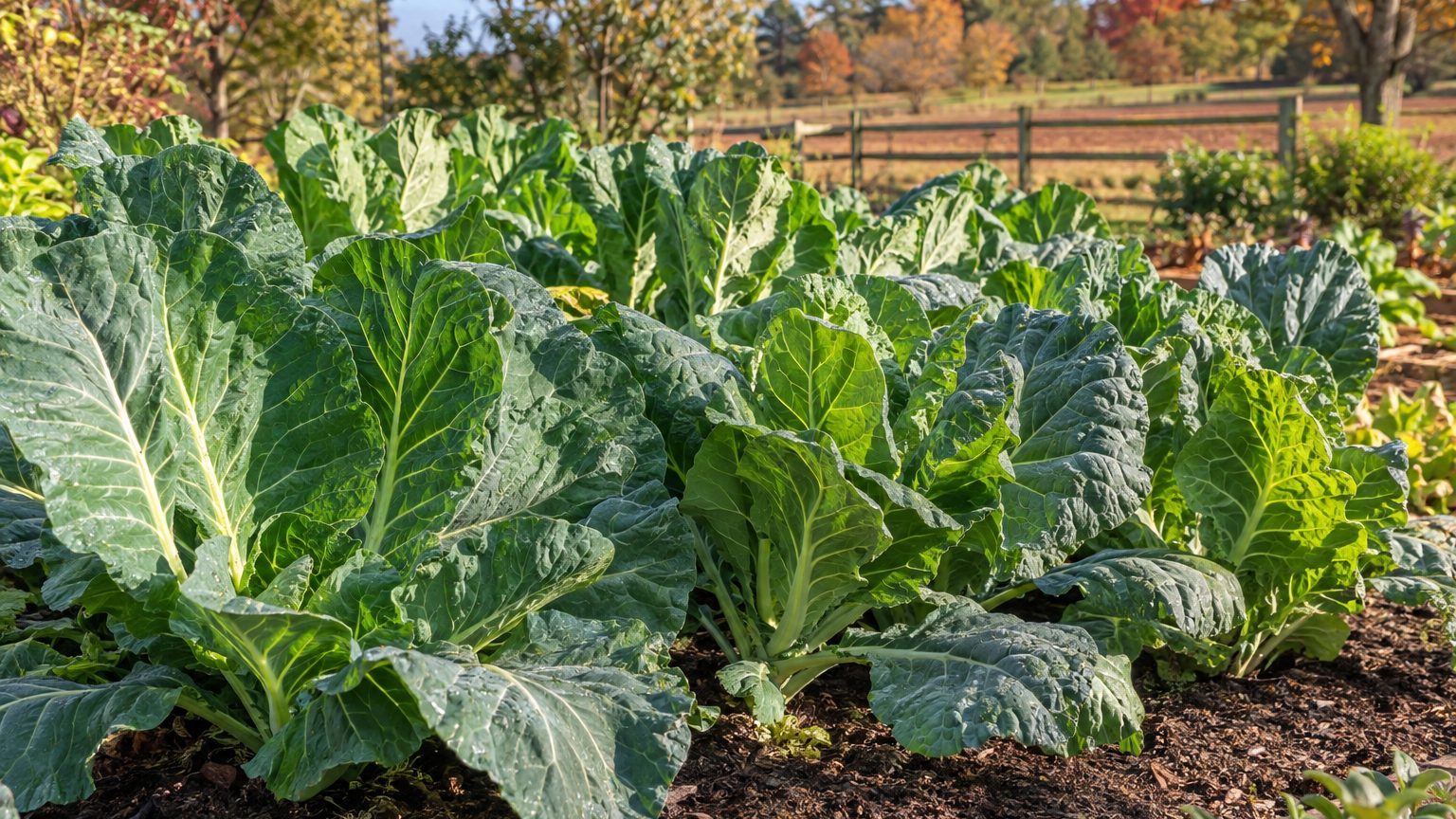

For most Oklahoma gardens, the best collards are an open-leaf, non-heading type such as Georgia, Vates, or Champion, set out as transplants for a fall crop and harvested well into winter. A spring planting works too, using a faster, uniform type that sizes up before summer heat. Collards take Oklahoma’s heat better than most greens and ride out its typical winter nights. Timing matters as much as the variety you pick.
The short answer for Oklahoma
Make fall your main collard season and a standard open-leaf type your main crop. At the Oklahoma City reference station, the last spring freeze falls between March 28 and April 10, and the first fall freeze between October 29 and November 8. Those are the dates when a 32°F reading has a 30 to 70 percent chance of showing up, according to NOAA’s 1991-2020 climate normals. The frost-free stretch runs from early April to early November. Collards do not need all of it, but they use it well.
That station sits at an airport. Suburban and rural gardens usually freeze later in spring and earlier in fall, often by one to two weeks, and more at elevation. Treat the dates as a reference for Oklahoma City, then adjust for your own ground.
Which collard type fits an Oklahoma garden?
Choose by type first and by seed catalog second. The varieties named below are widely sold, and each stands for a type you can swap for a close relative.
| Type | Examples | Where it fits in Oklahoma |
|---|---|---|
| Open-leaf heirloom | Georgia | Main crop. Handles heat, and you pick leaves from the bottom for months. |
| Compact, uniform open-leaf | Vates, Champion | Good for smaller beds and even rows. Holds up in cold snaps and before bolting. |
| Faster, uniform | Flash | Spring planting, where you want a harvest before summer heat. |
| Heading type | Morris Heading | Cool fall only. Forms loose, cabbage-like heads and dislikes hot weather. |
A reasonable plan for a first year is two or three plants of an heirloom and a short row of a compact type. Collards are transplanted crops, so buy or start plants rather than sowing seed into hot ground. The Growing Collards in Oklahoma guide covers the full growing season, and the When to Plant Collards in Oklahoma guide covers the dates.
How cold is too cold for collards here?
The mean daily minimum in the coldest month at Oklahoma City is 27.0°F. That means frost is a routine winter event, and collards handle it. Light freezes also sweeten the leaves, which is why many cooks wait for one before the first big picking. A hard Arctic outbreak far below that average is another matter. It can burn the leaves or kill young plants, so keep a row cover or a pile of straw handy.
What will not work here
Late planting and summer neglect cause most of the failures. Oklahoma gives collards a long season and then hands them a rough middle of it.
Why do spring collards struggle in an Oklahoma summer?
A spring transplant set out in May has only a few weeks before the heat arrives. Collards survive hot weather, but the leaves toughen and turn bitter, and aphids and cabbageworms build up fast. Plants that started in cold ground in March have time to size up first. Plants that started late may never catch up. If you want a spring crop, set transplants out a few weeks before the last frost band, since collards tolerate light freezes, and pick heavily by early summer.
A heading type planted in spring is the worst case. It needs cool weather to form heads, and in Oklahoma’s May and June it simply bolts or stays loose and bitter.
Does weekly watering work in a hot, dry summer?
No. A summer with highs in the upper 90s and drying wind pulls moisture out of the top foot of soil in days. A deep soak once a week suits cooler climates, but it leaves collards stressed between waterings here, especially in the drier western half of the state. Heavy clay soils make this worse, because they crack and shed water when they dry out. Two to three inches of mulch and a deep watering every few days through July and August keep plants alive for the fall flush.
What goes wrong with fall plantings?
Starting too late is the common mistake. Fall transplants need to make most of their size before the first freeze band, October 29 to November 8 at the reference station, because growth slows sharply as days shorten. Plants set out in November will survive but give you little to pick before spring. A slow heirloom is the one most hurt by a late start, which is another reason to choose a compact type if you are behind schedule.
Close spacing is the last trap. Collards crowded to a foot apart hold moisture in the canopy during wet spells, which are more common in the humid east of the state, and that invites leaf disease. Give each plant 18 inches or so, and a bit more for a big heirloom.
What changes across Oklahoma
Oklahoma has no single garden. The USDA Plant Hardiness Zone Map (2023 edition, built on 1991-2020 normals) places the state in zones 6a through 8a. That map rates only one thing, the average annual extreme minimum temperature. It tells you whether a plant survives winter, not when to plant it, so use it for context and use your local frost dates for timing. Because the range is so wide, there is no single answer for the whole state.
What should a gardener in northern Oklahoma or at elevation change?
In the colder north and the Panhandle, and on higher ground anywhere, plan on a shorter fall. Set transplants out earlier so they are well sized before the first freeze. Mulch the crowns, and keep row cover on hand because a hard freeze is more likely. In spring, wait a little longer after the reference-city dates before judging the ground ready. A compact, cold-tolerant type is the safer choice there than a slow heirloom.
What changes in the south and southeast?
Warmer, wetter ground at the southern end of the state stretches the fall crop and makes winter harvests more dependable. The tradeoff is a hotter, longer summer, so the spring crop has less time and watering matters more. Heirlooms do well here, and fall plantings can go in a bit later than in the north. To see where your own address falls, look it up on the USDA Plant Hardiness Zone Map by ZIP code instead of guessing from the state range.
Where to check this for your own county
Your state extension service is the best next stop. Oklahoma State University Extension runs offices at the county level, staffed by people who know the soil and the weather where you live. A county recommendation beats a statewide one every time, and everything above is a statewide view built around one reference city.
What should you look for there?
Two things matter most. The first is a local vegetable planting calendar for your part of the state, which gives you spring and fall windows set for your county’s frost dates. The second is the list of varieties that have been trialled or are recommended in your area. If a leafy green does well in county trials, it will probably do well in your yard, and that beats any catalog description.
Call or stop by the county office with specific questions: which collard types they recommend, when local gardeners set fall transplants, and which pests are active in your area. Many counties also have Master Gardener volunteers who answer these questions for free. Keep the reference-city frost dates in mind as a starting point, then replace them with your county’s numbers once you have them.
Checking this against your own garden
Your own observations outrank every date in a guide. Three things are worth watching, and none needs equipment.
- Soil warmth by feel. In late winter and early spring, dig a handful from the bed. If it still feels cold and sticky, the ground is behind the calendar. Soil that crumbles and feels neutral in your palm is ready for transplants. A bed that warms early is usually sunny and well drained.
- First true leaves on seedlings. The first pair are seed leaves. The leaves that follow are the true ones. If you start your own plants, a seedling with a few true leaves is ready to harden off. Slow, leggy growth tells you the spot gets too little light or warmth.
- Frost on the grass. On the first cold mornings, walk the yard and note where frost lies. A low corner that whitens first is a frost pocket. A bed beside a south wall that stays green is the spot for your latest fall plants.
Write the dates down for a season or two. Your own notes will soon be more useful than any regional average.
Common questions
What is the best collard variety for Oklahoma?
An open-leaf, non-heading type is the safest bet. Georgia is the classic heirloom, and Vates and Champion are compact options. Choose a compact type if you plant late or have a small bed.
Can collards survive an Oklahoma winter?
Usually, yes. Winter nights at the reference station average 27.0°F in the coldest month, and collards tolerate that. A severe cold snap can damage leaves, so cover plants or mulch them heavily when a hard freeze is forecast.
Should I plant collards in spring or fall?
Fall is the better season because the crop matures as the weather cools and the leaves sweeten after frost. Spring works if you set transplants out early and harvest before the heat. The planting calendar gives the windows.
Do mustard and turnip greens grow well alongside collards?
Yes. Both are faster than collards and suit the cool edges of the year, early spring and mid to late fall. Collards are the one that stays productive through the hot months if you water and mulch them.