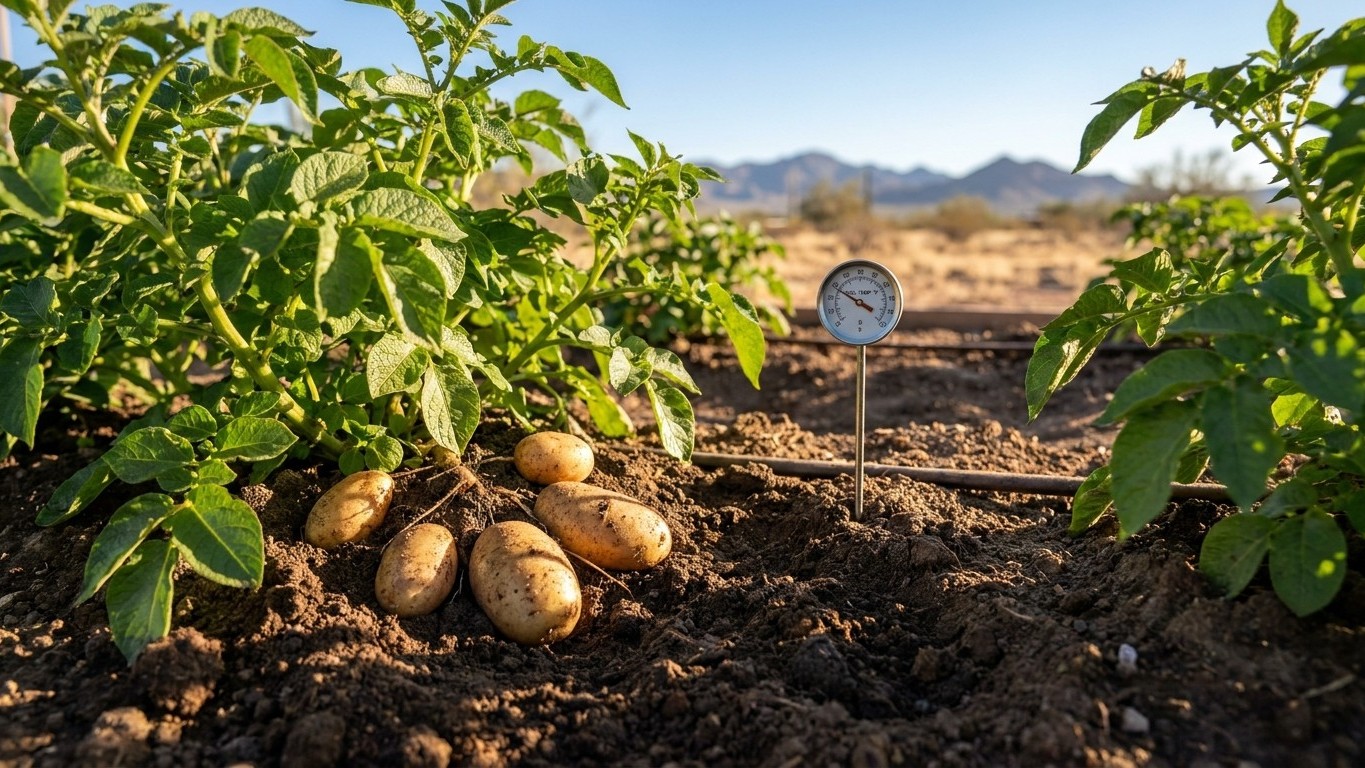

Sweet potato slips go into Utah ground in late May or early June, a few weeks after the last spring frost, once the soil has warmed and nights stay mild. Harvest has to finish before the first fall freeze. At the Salt Lake City reference station, that freeze arrives between October 18 and October 29. Higher and more southern gardens will shift these dates.
The short answer for Utah
At the Salt Lake City station, the last spring frost falls between April 12 and April 29, and the first fall frost between October 18 and October 29. Both ranges come from NOAA’s 1991-2020 Climate Normals and describe the 30 to 70 percent probability band for a 32°F freeze. A freeze can still land before or after those dates in any given year, so treat them as the middle of the odds.
Salt Lake sits in a mild valley, and most of Utah is higher and colder, while southern Utah is warmer. A sweet potato is a tropical vine that sits idle in cold soil. The last frost date only marks the earliest day worth thinking about planting, and the real start comes a few weeks later.
When do sweet potato slips go in the ground in Utah?
In the valleys, late May into early June works for most gardens. Wait until nights hold warm and the soil feels warm to the hand at planting depth. Sweet potatoes are grown from slips, which are rooted shoots set out as transplants, so the days to harvest on a variety’s label count from the day the slips go in. A slip set into cold soil loses those days anyway.
When does the sweet potato season end in Utah?
Frost blackens the vines, and the roots below should be dug soon after, before cold soil spoils them. Count back from October 18, the early end of the range, instead of the 29th. Dig on a dry day and handle the roots gently, since the skins bruise easily. The Growing Sweet Potatoes in Utah guide covers the full season from slips to storage.
What will not work here
Planting on the last frost date fails first. The range runs to April 29 at the reference station, and soil that has just stopped freezing is far too cold for slips. Gardeners who start in April or early May usually get slow, yellowing plants and lose weeks they cannot get back.
The slowest varieties fail at the other end. The October 18 to 29 range at the valley station is the best case in the state. Higher gardens see the first freeze earlier, so a variety that needs the longest stretch from transplant to harvest may still be bulking up when frost ends the season. Fast-maturing types are the safer bet, and The Best Sweet Potatoes to Grow in Utah sorts them by type.
Late planting fails for the same reason. Slips that go in during July, after a failed first attempt or a late order, have only a few months left. The roots do most of their swelling late in the season, and a freeze can cut that short.
Heat is not the problem. The reference station averages 52.1 days a year at 90°F or more, which suits a plant that comes from warm climates. What fails is relying on rain to supply water. Summer brings about 2.0 inches across June, July and August (15.5 inches over the whole year), with June at 0.95, July at 0.49 and August at 0.58. A gardener who waters once a week and counts on the sky for the rest will find the beds dry for long stretches.
Soil changes the picture. On sand, a rain soaks through within the day and the surface dries fast. On clay, the same rain can hold for a week. Those 52.1 hot days pull moisture out of the ground, and a summer thunderstorm mostly runs off instead of soaking in. A newly set slip needs steady water until it roots. After that, a deep soaking works better than a daily sprinkle. These are regional normals, so a rain gauge on your own plot is what tells you what your bed actually receives.
What changes across Utah
Utah has no single planting date. The USDA Plant Hardiness Zone Map (2023 edition, built on 1991-2020 normals) places the state anywhere from zone 4a to zone 9a. That is a spread of many zones inside one set of borders. The system rests on one variable, the average annual extreme minimum temperature, so it measures winter cold. Sweet potatoes are grown as a summer annual and never face that winter. The zone still tells you how far your garden sits from the reference valley.
The frost dates quoted above belong to Salt Lake City and are the safest dated recommendation available. Other parts of the state differ, sometimes by weeks. A reader in the north or at altitude should shift later in spring, because the last frost arrives later and the soil warms slower. The fall deadline moves earlier. A shorter window means choosing fast-maturing varieties, and it often rewards tricks that warm the bed, such as black plastic or a south-facing spot against a wall.
In southern Utah the calendar moves the other way. Frost comes earlier in spring and later in fall, which gives slips more time to size up. Water demand rises with the heat, so the dry summer matters even more there. A bed on sandy soil may need frequent soaking.
Which end of the range you fall in is a question for the map, not for this article. The USDA Plant Hardiness Zone Map lets you enter a ZIP code and read off your own zone, and that tells you roughly how much to adjust the Salt Lake dates.
Where to check this for your own county
Utah State University Extension is the state’s land-grant extension service, with offices that serve individual counties. Start there. Look for a local planting calendar for warm-season vegetables, and for the average last and first frost dates in your county. If the office or its publications list sweet potato varieties trialled in your area, those matter more than any general recommendation.
Ask the county office a few direct questions. Which varieties have finished the season in gardens near you? When do local growers set slips out? Has a cool summer cut the harvest in recent years? Extension staff and Master Gardener volunteers see the same valleys and benches year after year, and they know where cold air settles.
A county recommendation beats a state one every time. Dates for the whole state, like the ones above, are a starting point built on a single valley station. A county office knows the elevation, the soil and the frost pockets of your part of Utah. When the two disagree, go with the county.
Checking this against your own garden
Your own observations outrank every date here. Three are worth watching.
- Soil warmth by feel. Push your hand a few inches into the bed in mid-morning. If it feels cool, wait. A bed that warms early is likely sunny and sheltered, while one that stays cool is probably shaded or low.
- New growth on the slips. After planting, watch the plant for new leaves. If the slips sit unchanged, the soil is still too cold or too dry, and your spot runs cooler than the valley dates suggest.
- Where frost shows first. In fall, look at which part of the yard whitens first on a cold morning. If your sweet potato bed is there, you have less time than the calendar says, and you should dig earlier.
Keep a few notes from one year to the next. Two seasons of your own planting and harvest dates will teach you more about your microclimate than any chart.
If you follow the almanac, here is when to plant sweet potatoes by the moon. It is a tradition, not a proven method.
Common questions
Can I plant sweet potatoes in Utah in April?
No. The last spring frost at the Salt Lake City station falls between April 12 and April 29, and the soil is still cold well after that. Slips set out in April tend to stall or get nipped by a late freeze. Late May into early June is the safer window for most valley gardens.
Is it too late to plant sweet potatoes in late June?
It is tight. Planting that late leaves only a few months before the first freeze, which can arrive as early as October 18 in the valley and sooner at higher elevations. Fast-maturing varieties give late plantings their best chance, and the roots will likely be smaller.
Do sweet potatoes handle Utah’s summer heat?
Yes. The reference station averages 52.1 days a year at 90°F or more, and sweet potatoes thrive in warmth. The challenge is water. Summer rainfall is about 2.0 inches across June, July and August, so plan on irrigating.
How often should I water sweet potatoes in a Utah summer?
It depends on your soil. Sandy beds drain within the day and dry fast, while clay holds moisture longer. Keep new slips evenly moist until they root, then water deeply instead of lightly. A rain gauge and a quick check of the soil a few inches down will tell you when the bed is dry.