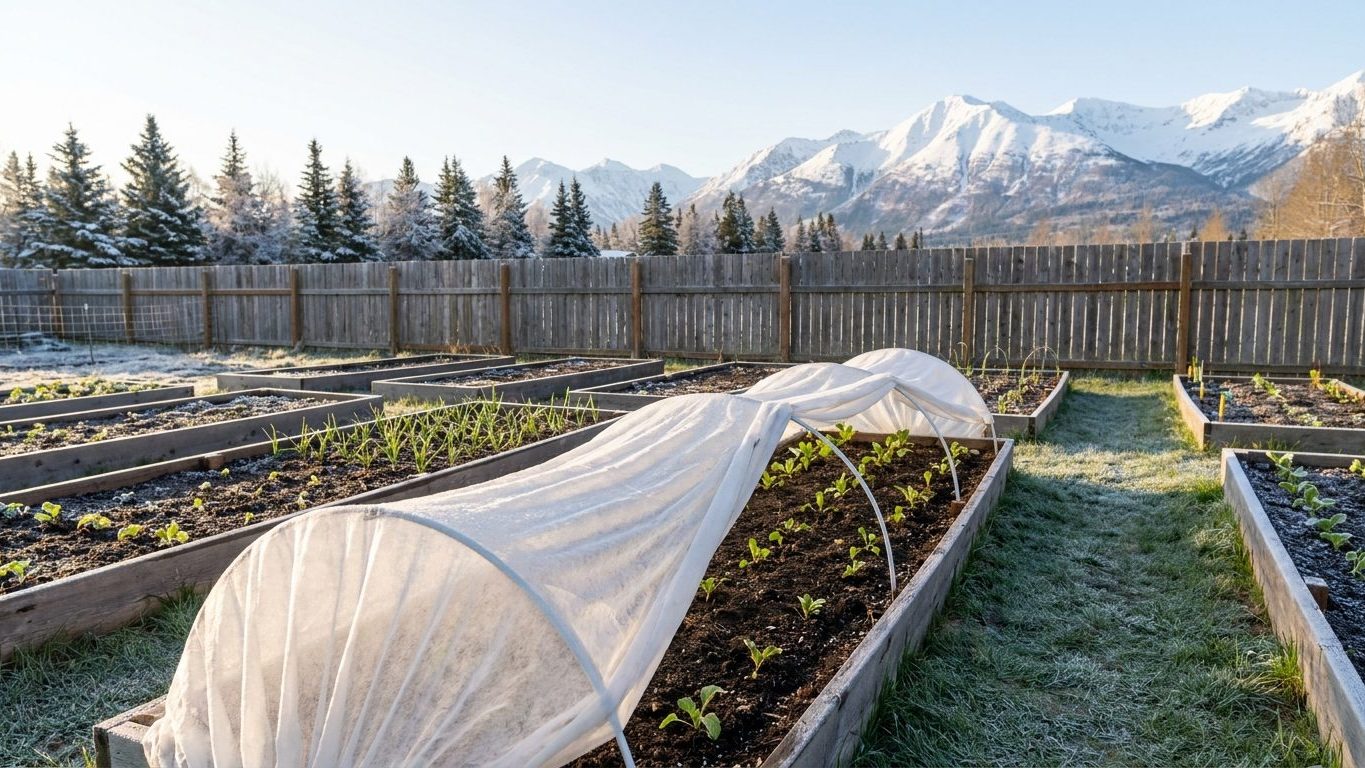

Cover the garden the evening a freeze is forecast, and pull the cover off the next morning once the air warms. Around Charlotte, those evenings cluster from late October into early November in fall and from late March into early April in spring. The Blue Ridge runs later in spring, the coastal plain earlier.
The short answer for North Carolina
Put covers on when the forecast low reaches 32°F or below, and leave them off on mild nights. The calendar only tells you when to start paying attention to the forecast.
Those dates come from the Piedmont reference station in Charlotte (NOAA, 1991-2020 normals). For the last spring frost, March 23 to April 5 is the stretch when the odds of one more 32°F freeze fall between 30 and 70 percent. Before March 23, a freeze is more likely than not. By April 5, the chance is down around 30 percent, which is still roughly three springs in ten.
Fall works the same way in reverse. October 30 to November 8 is when the odds that the first 32°F freeze has already happened run from 30 to 70 percent. A gardener who waits for November 8 to think about covers will lose some years.
The coldest month at that station has a mean daily minimum of 31.8°F. The coldest month averages a low right at freezing, so the same cover that saves a tomato in October can carry spinach, kale, and collards through winter without much drama. Hardy greens and root crops shrug off a light freeze. They need cover only when the low drops well below 32°F or when a hard wind comes with it.
Tender crops are the ones that make the dates matter. Tomatoes, peppers, squash, and beans blacken at the first freeze. A fall cover over them is worth it if the forecast shows warmer days right after the first cold snap, because that can buy a few more weeks of fruit. In spring, a cover lets you set transplants out a little ahead of the average date, but only a little. Which covers suit which job is covered in Which Season Extenders Work in North Carolina.
What will not work here
Covering on a fixed date in early fall fails. The first freeze at the reference station arrives around the end of October or in early November, and September and early October days can still run warm. A closed cover over tomatoes in that weather traps heat and humidity and does nothing about cold. Keep the material in a pile until a real forecast low shows up.
Planting warm-season crops under plastic in February or early March fails too. The freeze window runs into April, and even a good cover only adds a few degrees on a clear night. A night that falls well below freezing goes through thin fabric. Cold soil also stalls tomato and pepper roots long before a frost kills the leaves, so the plants sit there without growing.
Sealed tunnels and cold frames fail on sunny winter days. Because winter nights here hover near freezing, the days are often mild enough to push the air under plastic well past what a lettuce or spinach plant likes. Prop the lid or open the tunnel ends by mid-morning, then close up in the afternoon before the air cools.
Where summers are hot and humid, a cover that stays on for days holds moisture against the leaves. Dense planting under a tunnel makes that worse, because air barely moves between plants. Wet foliage invites fungal disease. Space plants as you would in the open, vent on any day above freezing, and take the cover off entirely when a mild stretch settles in.
A single calendar date fails as well. Treating April 5 as the end of frost ignores that roughly three years in ten still see a freeze after it. Treating October 30 as safe ignores that about three years in ten have already had one by then. Keep a light sheet or row cover within reach for a few weeks on either side of the window, and check the forecast every evening.
What changes across North Carolina
North Carolina has no single answer, because the state covers a huge range. The USDA Plant Hardiness Zone Map (2023, built on 1991-2020 normals) places it anywhere from zone 5b to 8b. That system rests on one number, the average annual extreme minimum temperature. It tells you what survives the winter, but it does not tell you when the last spring freeze will hit.
Charlotte is Piedmont, so the dates above fit the middle of the state. The Blue Ridge to the west runs several weeks later in spring. A gardener at altitude should push every spring covering and transplanting date back by those weeks, and expect fall freezes to arrive sooner too. That gives a mountain garden a shorter season on both ends, so covers there earn their keep for hardy crops, while tender ones often need a head start indoors and a sturdy cover to finish.
The coastal plain runs earlier. Spring covering season there opens sooner and closes sooner, and a gardener near the coast can often plant cool-season crops outdoors earlier in the fall and keep them going through winter with light covers.
The Charlotte latitude is 35.22 degrees north. A reader in the far northern mountains or the far southeastern corner of the state sits at a different latitude, so day length differs a bit. Covers add warmth and shelter from wind, but they add no daylight. In midwinter, short days limit how fast anything grows under cover, which is why winter crops should be sown early enough to be nearly full size by the time the days shorten.
To find your zone, use the USDA Plant Hardiness Zone Map and look up your ZIP code rather than guessing from a neighbor. For a wider look at timing and materials across the state, see Extending the Growing Season in North Carolina.
Where to check this for your own county
North Carolina State Extension runs a county center in every county, staffed by agents who know the local frost pockets and soil. Start there and look for two things. The first is the local planting calendar, which lists sowing and transplanting windows for your county and often for cool-season and warm-season crops separately. The second is the list of varieties trialled in your county, since a tomato that performs in the Piedmont may sulk in the mountains.
Many extension offices also post frost advisories, publish gardening newsletters, and take questions by phone or email. If you are weighing a high tunnel or a cold frame, ask an agent which crops they see do well under cover in your area and which ones they see fail.
A county recommendation beats a state one every time. A county in the foothills or on the coast can sit weeks off from them, and a valley floor can differ from a ridge three miles away.
Checking this against your own garden
Your own beds outrank any date in print. Three things are worth watching.
- Soil warmth by feel. Push your hand a few inches into the bed in the morning. Soil that feels cold and damp is not ready for tomato or pepper transplants, cover or no cover. Beds that warm sooner than your neighbor’s usually have good sun and drainage, and a south-facing wall or fence adds even more.
- The first male flowers. Squash and cucumbers produce male blooms first. When they open, the plants have settled in and the nights are warm enough to start leaving covers off. If they appear much later in one corner of the garden, that corner is the cooler one.
- The first true leaves. The first pair of leaves on a seedling are seed leaves. The next set, the true leaves, show the plant is rooted and growing. Once they open, a seedling can take mild nights uncovered, which tells you how well a bed holds heat.
Frost on the grass at dawn is another clue. If the low corner of the yard is white while the high ground stays green, cold air is pooling there, and that spot needs covers earlier in fall and later in spring than the rest.
Common questions
What temperature should I cover plants in North Carolina?
Cover tender plants when the forecast low reaches 32°F. Hardy greens and root crops can wait for a hard freeze, which means a low well under 32°F or a cold night with strong wind.
Should I put covers on in the evening or the morning?
Evening, before the air cools, so the soil’s stored warmth stays under the cover. Take the cover off the next morning once the temperature climbs above freezing, so plants get light and air.
Can covers stay on all winter?
Row covers can for hardy crops, but a tunnel or cold frame needs venting on mild or sunny days. Closed plastic overheats quickly, and constant dampness invites disease.
Does one frost mean my tender plants are finished?
A light frost often follows with a stretch of mild weather. A cover over tomatoes, peppers, and beans on the first cold night can extend the harvest by a few weeks, as long as the forecast shows warmer days ahead.