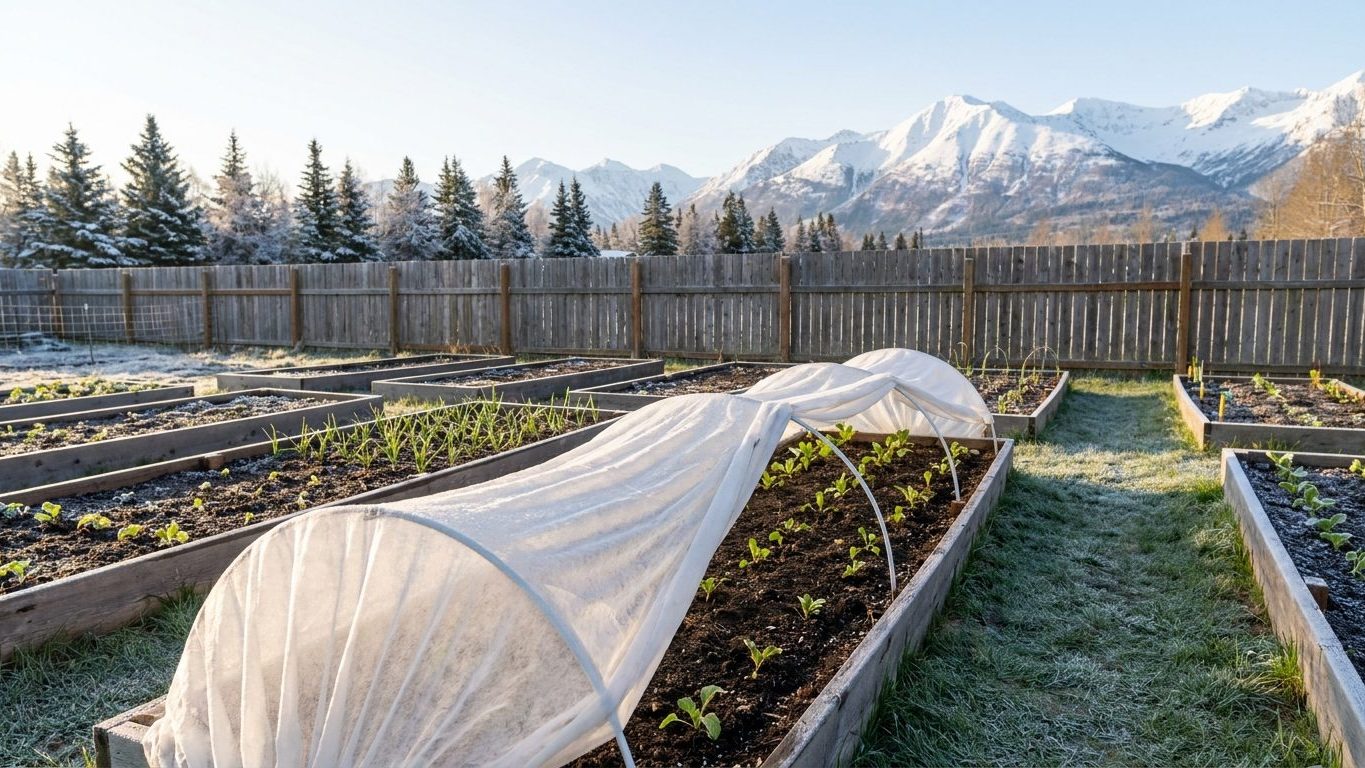

Cover tender plants on any night the forecast low nears freezing, and keep covering until the cold snaps stop. Spring covers go on at transplanting and stay on while frost is still possible, and gardens away from the reference city often see frost later. Your elevation and your garden’s low spots move those dates, so use the calendar below as a starting line and the nightly forecast as the deciding factor.
The short answer for New Hampshire
At the Manchester airport reference station, the last spring freeze falls between April 16 and April 27, and the first fall freeze between October 13 and October 26. Both ranges come from NOAA’s 1991-2020 climate normals and sit in the 30 to 70 percent probability band for a 32°F freeze. A freeze after April 27 or before October 13 is still possible, which is why the covers matter.
Those are airport numbers. Suburban and rural gardens usually see the last spring frost later and the first fall frost earlier, often by one to two weeks, and the gap grows with elevation. A garden in a hill town should push the spring dates back and pull the fall dates forward accordingly. Your county extension office can tell you by how much.
When should you cover plants in spring?
Covering does two jobs in spring. Laid over bare beds before planting, plastic or fabric warms the soil. After planting, it guards against frost nights. The trigger is a forecast of frost on a clear, still night, because cold air settles at ground level and a garden bed can run colder than the number on your phone.
Put covers on while the soil still holds the day’s heat, and take them off once the frost has melted. Peas, spinach, lettuce, and kale shrug off light frost and rarely need cover. Tomatoes, peppers, cucumbers, squash, and basil need it until nights run reliably milder, which in much of the state means well into May.
When should you cover plants in fall?
Fall uses the same trigger, but each cover buys days instead of weeks. The first frost night is often followed by a milder stretch, so tomatoes, peppers, and basil covered through that first cold night can keep producing for a while. Carrots, beets, kale, and other hardy crops tolerate frost and can sit under cover much longer. For the full picture of how these tools fit together, see Extending the Growing Season in New Hampshire.
What will not work here
A row cover will not turn January into April. The mean daily minimum of the coldest month at Manchester is 17.1°F, and the state’s coldest corners are much colder. A single layer of light fabric adds only a little warmth, so it cannot carry tomatoes through a hard freeze or keep a summer garden alive into winter.
Does planting on the average last frost date work?
Rarely. The April 16 to April 27 range marks the middle of the odds, with a freeze still possible after it, and rural gardens run one to two weeks behind. Even without frost, tomatoes, peppers, and squash sulk in cold soil. Plants set out on April 20 because “the date said so” often sit unchanged for weeks. A gardener who waits and warms the soil under plastic usually ends up with the stronger plant.
Can covers rescue crops planted too late?
Not the slow ones. A short season defeats any plan that starts long-season crops late and counts on covers to finish them. Sweet potatoes, melons, and big winter squash need weeks of warmth that the October 13 to October 26 freeze band, or an earlier freeze inland, cuts off. Covers add only a little time, and those crops need far more than that.
Late fall brings a second limit. As the days shorten, plants under cover mostly hold their size rather than grow. Greens meant for winter picking need to be close to full size by then.
What goes wrong with covers during the season?
Closed covers on a sunny spring day can cook seedlings, so vent hoops or pull fabric back in the morning. Wet snow collapses hoops and tears plastic, so plan to clear them or take the plastic off before a storm. Squash and cucumbers also need the cover removed once flowers open, or pollinators cannot reach them. Material choice matters for all of this, and Which Season Extenders Work in New Hampshire covers it in detail.
What changes across New Hampshire
No single answer fits the whole state. The USDA Plant Hardiness Zone Map (2023 edition, built on 1991-2020 normals) places New Hampshire anywhere from zone 3b to 6a. That spans six half-zone steps, from a high, cold interior to the milder southeast. The Manchester numbers sit near the warmer end of that spread.
A gardener in the north or at altitude should shift the calendar in both directions: later covers off in spring, earlier covers on in fall. Plan on more cover nights overall. The extra week or two beyond the airport dates is a minimum there. Cold air also drains downhill and pools in valleys and low pockets, so a garden at the bottom of a slope can freeze while one higher up stays clear.
Latitude matters too. Manchester sits at 42.93 degrees north, and the state reaches well beyond it. Farther north, fall days shorten faster, so plants under cover stop growing sooner. Someone near the northern edge should check their own latitude and lean toward finishing fall crops earlier.
Hardiness zones describe how cold the winter gets. They do not set frost dates, and two gardens in the same zone can freeze weeks apart. To see which zone covers your address, look it up on the USDA Plant Hardiness Zone Map, then treat it as one input beside your own frost observations.
Where to check this for your own county
A county recommendation beats a state one, and the dates here are reference-city figures. University of New Hampshire Extension is the place to find the county version. Its educators work with gardeners in each county and know which stretches run colder than the airport numbers suggest.
Look for two things. The first is a local planting calendar, ideally with frost-date guidance for your county rather than the whole state. The second is the list of varieties that have been trialed where you garden. Short-season tomatoes, early peppers, and cold-tolerant greens differ a lot in how they handle a cold May or a chilly September, and a variety that performed well in a trial one county over is a better bet than a packet picked from the rack.
While you are there, ask how local gardeners use row cover and low tunnels, and when they pull them in spring. The answers often include practical details about local wind, snow load, and typical cold snaps that no statewide calendar carries.
Checking this against your own garden
Your own observations outrank every date above. Three are worth watching, and none requires equipment.
- Soil warmth by feel. Push your hand a few inches into the bed in the morning. If the soil feels cold and clammy, warm-season transplants will sit idle. Compare beds: the one that warms first, usually near a south-facing wall or on a slope, tells you where to plant your earliest tender crops.
- The first male squash flowers. Male blooms open before female ones, and their arrival shows that plants have settled in. If neighbors’ squash flowers earlier than yours, your garden runs cooler, and you should keep covers on longer.
- The first true leaves. The first rounded seed leaves are not the real thing. Once the true leaves appear on a seedling, it is usually better able to take light frost. A seedling slow to produce them is telling you the bed is cold or shaded.
Keep a note of the dates you see these signs, and of the first and last frost nights in your own beds. Over time, those notes will be a better guide than any reference station.
Common questions
Should I cover plants if the forecast low is 34°F?
Yes, for tender plants on a clear, calm night. Cold air pools near the ground, and frost can form even when the forecast stays a few degrees above 32°F. Cloudy, windy nights are less risky.
Do I leave covers on during the day?
Take them off or vent them on sunny mornings once the frost has melted. Closed covers trap heat and can scorch seedlings. On cold, gray days when temperatures never climb, light fabric can stay on.
How long do spring covers stay on?
Until nights are reliably mild and the soil has warmed. For tomatoes, peppers, and squash, that is often into May, later in the north and at higher elevations. Remove covers from squash and cucumbers once flowers open so pollinators can work.
Do hardy crops like kale need covers in October?
Not at first. Kale, carrots, beets, and similar crops tolerate frost. Covers help later, when deeper freezes arrive, and when you want to keep harvesting longer or keep snow off the plants.