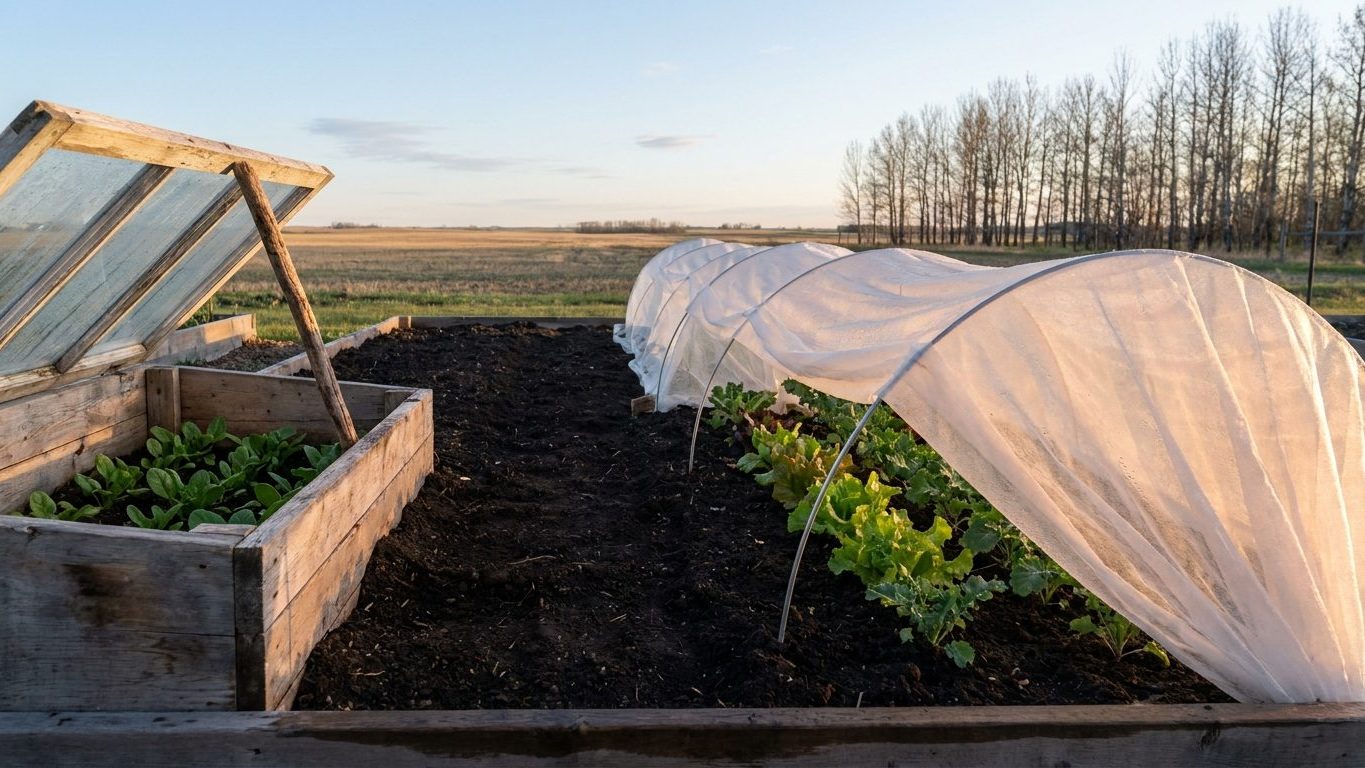

Floating row covers, low tunnels and cold frames are the season extenders that earn their keep in Oklahoma. They push spring planting a few weeks earlier and keep hardy greens and roots going through winter, because winter nights here dip below freezing but rarely stay there. Heated structures and tightly sealed plastic cost more and cause more trouble than they solve.
The short answer for Oklahoma
Buy floating row cover and a set of hoops first, then add a cold frame or low tunnel for winter greens. Skip anything that needs a heater or a sealed seam.
The reasoning starts with the frost window. At the Oklahoma City airport station, NOAA’s 1991-2020 normals put the last spring 32°F freeze between March 28 and April 10, and the first fall freeze between October 29 and November 8. Those are the dates when the odds of a freeze are somewhere between 30 and 70 percent. Suburban and rural gardens typically freeze later in spring and earlier in fall than the airport, often by one to two weeks, and more at elevation. For the wider picture, see Extending the Growing Season in Oklahoma.
What do the frost dates tell you about covers?
The coldest month at the reference station has a mean daily minimum of 27.0°F. That is only a few degrees under freezing, and a few degrees is exactly what a layer of fabric or a vented tunnel can add. A sheltered bed can hold a hardy crop through a night that would flatten the same crop in the open.
Which season extender fits which job?
| Extender | Best job | Main risk |
|---|---|---|
| Floating row cover | Spring and fall frost nights over beds | Wind lifting it if edges are loose |
| Low tunnel (hoops plus fabric or vented plastic) | Early spring transplants, winter greens | Overheating on sunny days |
| Cold frame | Hardening off, winter lettuce and spinach | Needs opening on mild afternoons |
| Water-filled plant protectors | Single tomato or pepper plants set out early | Cost per plant adds up |
| Straw mulch | Carrots, beets and other roots left in the ground | Mice nesting in it |
What will not work here
Sealed clear plastic is the first failure. Oklahoma spring days swing widely, and a March afternoon in sunshine can cook seedlings under a closed tunnel even when the night before dropped to freezing. Any plastic needs vents or ends that open every sunny morning, which is a daily chore many gardeners drop by the second week. Fabric forgives more because it breathes.
Planting to the earliest date on the calendar fails too. On March 28 the odds of another 32°F freeze are around 70 percent, and on April 10 they are still around 30 percent. Cover buys a few degrees, but a hard freeze after a warm spell can beat one layer of fabric. The timing of the covers matters as much as owning them, and when to cover your garden in Oklahoma goes through it.
Stretching summer crops deep into November rarely pays off. The first fall freeze at the reference station arrives between October 29 and November 8, earlier in many rural gardens. By then nights are long and soil is cooling, so tomato and pepper plants stop ripening fruit even if they survive under cover. Cover can save fruit that is already set, but it cannot restart a plant that has stalled.
Winter growth is the third letdown. Even under a tunnel, short December and January days slow lettuce, spinach and kale to a crawl. Sow them in early fall so they reach size before the light fades. After that, the cover keeps them alive and harvestable.
Heated greenhouses also rarely make sense for a backyard here. Winters are mild enough that unheated protection handles most nights, and fuel or electricity for a heater costs more than the crop is worth. Spring wind is a last point. Unpinned fabric can strip off a bed in one gusty afternoon, so bury the edges, or weigh them down with boards or sandbags.
What changes across Oklahoma
The USDA Plant Hardiness Zone Map (2023 edition, built on 1991-2020 data) puts Oklahoma in zones 6a to 8a. That spans three zones, so no single answer fits the whole state. The system rests on one variable, the average annual extreme minimum temperature, so it says how cold winter gets and nothing about how soon spring warms.
Oklahoma City is the reference point for the frost dates here, at 35.39 degrees north latitude. The Panhandle and the northern tier sit farther north and higher, so gardeners there should expect a later last spring freeze and an earlier first fall freeze than the airport figures. They get less margin on both ends. A heavier fabric weight, a second layer, or a cold frame with an old blanket for the coldest nights is a reasonable shift.
In the south and southeast, winters are milder and spring arrives sooner, so cover is less about winter survival and more about the occasional late freeze after a warm stretch. Summer heat comes earlier too. The same hoops that hold fabric in March can carry shade cloth in late summer to help fall lettuce and spinach sprout in warm soil.
Elevation, hills and open prairie matter inside any county. Cold air pools in low spots on still nights, and exposed ridges take the wind. To find your own zone, look up your location on the USDA Plant Hardiness Zone Map and read it there. Treat the zone as a guide to winter survival, and the local frost dates as the guide to cover timing.
Where to check this for your own county
Your county office of Oklahoma State University Extension is the next stop. A county recommendation beats a statewide one, because statewide numbers average across hundreds of miles of prairie, hills and river bottoms. The airport frost dates above are one city’s weather, and a county office knows how its own area runs.
Ask for two things. The first is the local planting calendar, which shows when cool-season and warm-season crops go in for your county and the frost dates behind it. The second is the list of vegetable varieties trialed nearby. A variety that does well in one part of the state may bolt, stall or crack in another, and local trials show which ones handle your heat and spring swings.
While you are at it, ask what cover materials local growers use and what they do about wind. County offices and Master Gardener volunteers hear the same questions every spring. They can tell you if gardeners in your area lose seedlings to a late freeze in April, or to heat under plastic, and how they adjust.
Write down the frost dates they give and compare them with your own records. If your yard frosts later in the spring than the county average, your dates shift with it.
Checking this against your own garden
Your own observations outrank any date in print, and three of them need no equipment.
Soil warmth by feel. Push your hand a few inches into a bed under cover and into one without. If the covered soil feels clearly warmer by afternoon, the extender is working. If the two feel the same, the cover is too thin or too loose. Try the south side of a wall and a low corner of the yard, too. The difference shows you how much your own spot swings.
The first flush of male flowers. Squash and cucumbers open male flowers before the females. Note the date they appear each year. A date that runs early under cover shows how much extra warmth the structure adds, and a date that matches the open bed suggests the cover is not earning its cost.
The first true leaves. The first pair of leaves on a seedling are seed leaves. The true leaves come after. Seedlings that sit at seed leaves for weeks under cover are probably cold, while tall, pale, floppy ones are probably too hot or too shaded. Either one tells you how well your tunnel is venting.
Common questions
Is row cover enough, or do I need a cold frame?
Row cover handles frost nights over a bed and costs the least. A cold frame is better for winter greens and for hardening off seedlings, because it keeps wind and rain off and holds more warmth.
Can I grow vegetables through an Oklahoma winter under cover?
Hardy ones, yes. Spinach, kale, lettuce varieties bred for cold, and carrots left in the ground can all be harvested through winter with a tunnel or frame. Growth is slow because days are short, so sow in early fall.
When do I take row cover off in spring?
Keep it on for nights when a freeze is forecast, and vent or remove it on sunny days. Open it once squash, melons or cucumbers start flowering so bees can reach the blooms.
Is plastic or fabric better?
Fabric breathes and lets water through, so it is harder to overheat. Plastic holds more warmth but needs daily venting, which is why fabric is the safer first buy for most Oklahoma gardens.