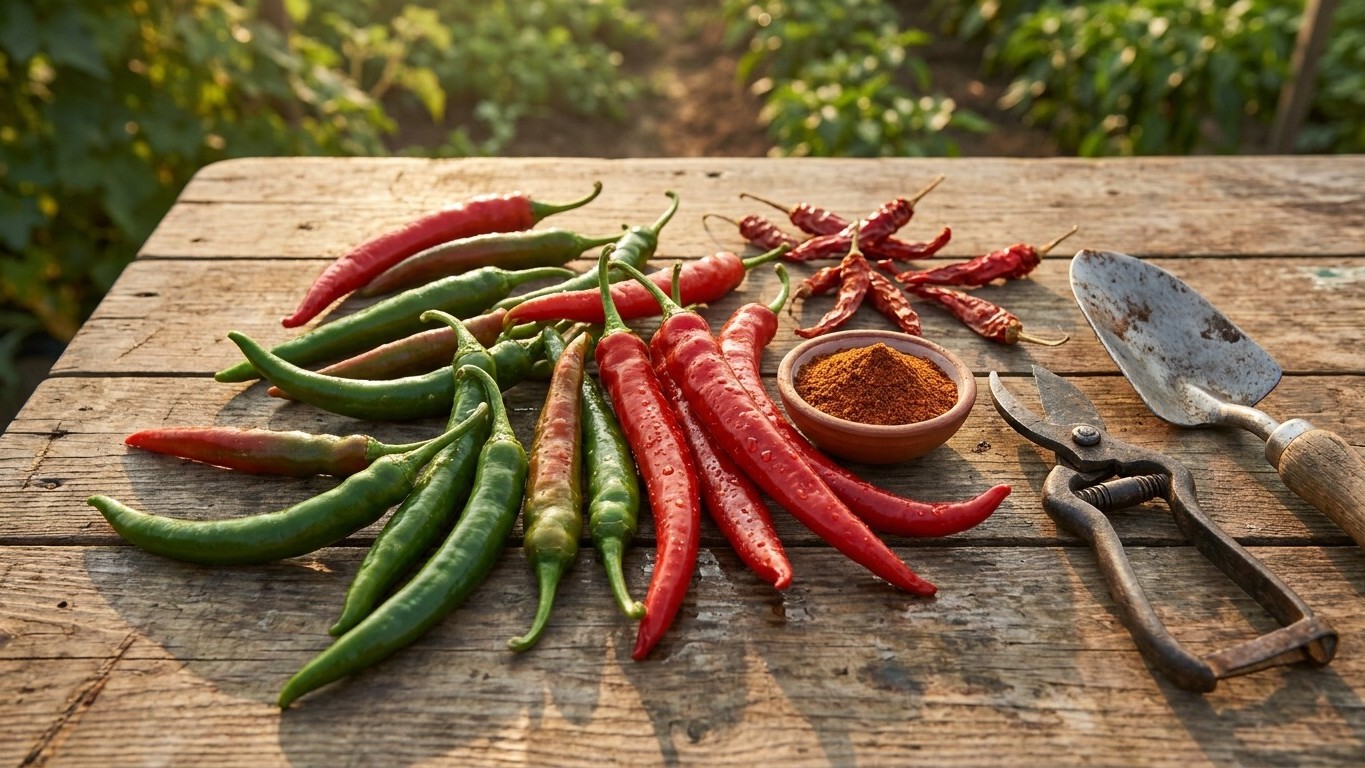

Pick peppers when the fruit has reached full size for its variety and feels firm and glossy. Then keep them out of the fridge. Clemson Cooperative Extension puts the best storage at 45 to 50 °F and 80 to 90 percent relative humidity, and a domestic refrigerator runs colder than that. Below about 45 °F, peppers pit and soften.
How do you know a pepper is ready to pick in Saskatchewan?
Seed packets count maturity from transplanting. Clemson Extension says peppers should be ready for harvest in about 70 to 85 days after transplanting. Transplants need 8 to 10 weeks indoors, according to Utah State University Extension, and they go out once frost has passed and the soil reaches 60 °F (about 16 °C). At the Saskatoon SRC station, Environment and Climate Change Canada’s climate normals put the average last spring frost on May 18. That date is the midpoint of a window, so in one year out of two the last frost comes later. Northern and upland districts run weeks behind the station.
A plant set out after the spring frost reaches that 70 to 85 day window later in the season. A cold June pushes it later. Treat the packet number as a guide and let the fruit make the call. A ready pepper has reached the full size its variety is supposed to reach, the skin is smooth and shiny, and the walls feel thick and firm when you squeeze gently. Soft, wrinkled or dull fruit is past its best.
Green is a legitimate stage to pick. Peppers left on the plant to turn red, yellow or orange get sweeter and fuller in flavor, but color takes extra weeks. Every one of those weeks is a week closer to frost, and plants carrying a heavy load of ripening fruit often slow down on new flowers. Many Saskatchewan gardeners pick a first round green, then let the later fruit color if the weather allows. Cut with pruners or scissors and leave a short stub of stem. The branches are brittle and a hard pull can snap one.
Does summer weather change when peppers are ready?
It can, because fruit set fails at both ends. Utah State University Extension says it fails with nights below 55 °F (about 13 °C) or days above 90 °F (32 °C). On the hot side, Saskatoon Diefenbaker Int’l A averages 4.98 days a year reaching 32 °C and 13.1 days a year above 30 °C. Those are a handful of days, enough to pause flowering during a heat wave but a small part of the season.
The cool end depends on your own garden. Nights vary a lot between a sheltered city yard and an open rural field, so a min-max thermometer next to the bed tells you more than any regional number. Flowers that drop during a cold snap leave a gap in the harvest, and the next wave of fruit ripens close to frost. The reasons fruit fails to form, and what to do about them, are covered in Why Peppers Fail to Set Fruit in Saskatchewan. Fruit with chewed spots should be picked and used first, and What Eats Pepper in Saskatchewan, and When explains who is likely responsible.
Keeping them, and for how long
Why does the fridge ruin peppers?
Peppers come from warm climates and are damaged by cold well above freezing. This is chilling injury. Below about 45 °F the skin develops sunken pits, the walls go soft and watery, and the fruit rots quickly once it warms up again. The damage often shows only a day or two after the pepper leaves the cold, which is why people blame the pepper instead of the fridge. A domestic refrigerator runs colder than the range peppers tolerate, and this is the mistake nearly everyone makes.
The crisper drawer does not fix it. It holds humidity better than the shelves, but the temperature is still too low for whole, fresh peppers.
How long do picked peppers really last?
Clemson Cooperative Extension’s Home & Garden Information Center gives the optimal storage conditions as 45 to 50 °F (about 7 to 10 °C) with 80 to 90 percent relative humidity, for two to three weeks. That duration is a maximum under optimal conditions, and it assumes sound fruit. A pepper picked with a bruise, a pest wound or a soft spot will not last that long, and neither will one stored a few degrees outside the range.
The humidity number matters as much as the temperature. Dry air shrivels the skin within days, while wet, stagnant air invites mold. A loosely closed or perforated bag keeps moisture around the fruit without trapping it. Store peppers dry, wash them just before use, and check the batch every few days. One soft pepper can spoil its neighbors.
If you cannot use a harvest inside that window, move on to other methods. Sliced raw peppers freeze well for cooking, and strips dry or pickle without much fuss. Once a pepper is cut, the clock changes completely, and the fridge is fine for a few days of cut fruit in a sealed container.
Where in the house that actually is
The target of 45 to 50 °F is cooler than a living space and warmer than a refrigerator, and few spots in a Saskatchewan house sit in that band all season. Furnaces and wood stoves keep main floors warm, and a garage follows the weather. On a mild September afternoon it may be ideal, then a clear October night can drop it to freezing, and frozen peppers collapse when they thaw.
| Spot | Compared with 45 to 50 °F | What to expect |
|---|---|---|
| Refrigerator | Colder | Pitting and soft spots from chilling injury |
| Kitchen counter or heated room | Warmer | Fine for a few days of eating, then wrinkling and softening |
| Garage | Swings with the weather | Good on mild days, a freezing risk on cold nights |
| Cool basement or cold room | Often closest | Best candidate, if humidity is checked |
A cool basement or an unheated room on an inside wall usually comes closest, especially a corner away from the furnace, water heater and ductwork. Basements run damp, which helps with the humidity side. Exterior walls and windows tend to be colder in late fall, so the exact corner you pick matters more than the room.
Guessing is the risk here. A basement can run cool in fall, and a room that looks right can sit a few degrees off. Put a thermometer in the spot for several days before you commit a whole harvest to it, because a wrong guess costs you the batch within a week or two.
What should you do with peppers when frost is in the forecast?
Pick everything of usable size before the frost. A pepper plant that has been through a freeze drops its leaves and the fruit follows, and frost-damaged fruit goes soft in storage. For a single cold night, a sheet or row cover over the plants may be enough if warmer days follow. A real freeze ends the season.
Fruit that is full-size but still green can be stored at the range above and used as green peppers. Fruit that has begun to blush often finishes coloring indoors, though slowly. Lay the fruit in a single layer, sort out anything damaged, and use those first. The wider picture of choosing, starting and timing plants is in Growing Peppers in Saskatchewan.
Common questions
Can I put whole peppers in the fridge for a few days?
You can, but it is a gamble. Below about 45 °F peppers pit and soften, and the damage appears after the fruit warms up. A cool room, a basement or a cold room at 45 to 50 °F is the safer choice.
How long will picked peppers keep?
Clemson Extension gives two to three weeks at 45 to 50 °F and 80 to 90 percent relative humidity. That is the best case for sound fruit. Check every few days and use any that soften first.
Should I wait for peppers to turn red before picking?
No rule forces you to. Green fruit of full size is ready to eat, and color adds sweetness at the cost of extra weeks on the plant. In a short season with frost on the way, picking at full size is the safer call.
When is the safe time to plant peppers outside?
There is no safe date. At the Saskatoon SRC station the average last spring frost is May 18, which means frost comes later in half of all years, and northern or upland districts run weeks behind. Transplant after frost, when the soil reaches 60 °F (about 16 °C). Your county or rural municipality’s local frost pattern is worth confirming with a nearby extension office.