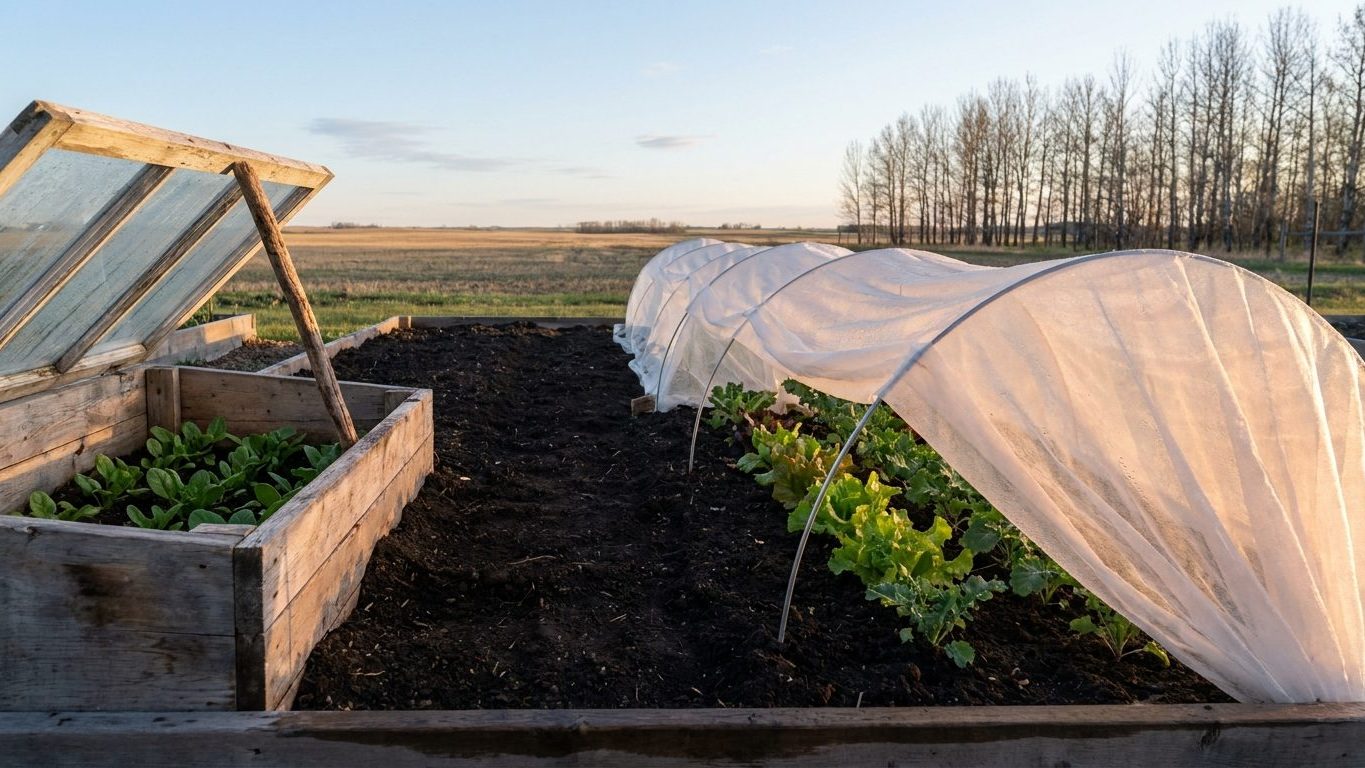

A low tunnel, which is hoops covered with floating row cover, is the best first season extender for Oregon gardens, with a cold frame close behind. West of the Cascades winters are mild and wet, so covers mostly buy earlier spring planting and fall and winter greens. East of the mountains the season is much shorter, and the same fabric closes only part of the gap.
The short answer for Oregon
Row cover on hoops is the best all-around choice, and cold frames are a close second for starts and winter greens. Greenhouses and high tunnels pay off only if you want tomatoes and peppers to ripen reliably, or fresh produce through the darkest weeks of winter. For most backyard gardens, the cheaper tools do most of the work.
How long is the growing season in Portland?
Portland is the reference city for the climate numbers here. Its last spring freeze falls between March 6 and March 21, and its first fall freeze between November 11 and November 27. Those are the dates when the chance of a 32°F freeze sits between 30 and 70 percent, taken from the NOAA 1991-2020 climate normals. A freeze after the earlier date is common, and a freeze before the later date is common in fall.
The coldest month at the same station has a mean daily minimum of 36.2°F. That is above freezing on average, so most hardy vegetables survive the winter without any cover. Kale, leeks and collards live through it. What covers change is quality and speed: cleaner leaves, less rain damage, and growth that restarts sooner in late winter.
Which season extender fits which job?
Covers hold warmth, cut wind and shed some rain. They cannot add daylight. The reference city sits at 45.59 degrees north, where winter days are short enough that growth slows to a crawl in midwinter whatever you put over the bed. Fall crops need to be near full size before the days shorten, and the cover then keeps them in good shape while they wait for harvest.
| Extender | Best job | Main limit |
|---|---|---|
| Floating row cover on hoops (low tunnel) | Early spring greens, fall and winter crops, frost nights | Light fabric does little against deep cold |
| Cold frame | Hardening off, starts, winter lettuce and spinach | Needs venting on sunny days; small footprint |
| Individual cloche or water-filled wall | Warming soil around early tomatoes and peppers | One plant at a time |
| High tunnel or greenhouse | Ripening warm-season crops, year-round production | Highest cost; heat and humidity control |
For a broader look at how these tools fit together across the state, see Extending the Growing Season in Oregon.
What will not work here
Why does sealed clear plastic fail in a mild, wet winter?
West of the Cascades, a closed plastic tunnel in November is a damp box. With cool air, rain and little sun, moisture builds up on the leaves and gray mold follows. Slugs also move in under any cover that sits on wet ground. Fabric row cover breathes and lets some rain through, which makes it the safer choice for the long, soggy stretch from late fall to early spring. Plastic works best when you can open the ends every day.
A mild spell can cook the plants too. On a bright February afternoon a closed tunnel or cold frame climbs fast, and seedlings can scorch while the air outside is still cool. A cover you cannot vent is a liability in a climate that swings between gray days and sunny breaks.
Why can’t a single layer of fabric carry warm-season crops past the cold?
The last spring freeze window runs from March 6 to March 21 at the reference station, with the chance of a 32°F freeze still real on either side of it. A tomato transplant set out in early March under a thin cover is a gamble. The soil is still cold, and cold soil stalls roots even when the air stays above freezing. Covers help once the ground has begun to warm, which in much of the Willamette Valley means April for the most tender crops, and later in cooler spots.
Light fabric also cannot rescue a bed during a hard arctic outbreak. The 36.2°F average low of the coldest month hides the occasional clear, still night that drops well below freezing. On those nights a single layer is not enough. Doubling the cover, or adding a second layer of fabric over the hoops, is the fix. The timing question is covered in When to Cover Your Garden in Oregon.
What fails east of the Cascades?
Central and eastern Oregon are high desert, and the season there is far shorter than Portland’s. A cover that stretches a mild-winter season by a few weeks cannot turn a short, cold season into a long one. Slow, heat-hungry crops such as melons and long-season peppers run out of time, and a single row cover will not change that. Wind is a second problem. Hoops and fabric that sit fine in a Portland yard can tear loose or shred in open eastern country unless they are staked down firmly with ground anchors or soil along the edges.
What changes across Oregon
Oregon has no single answer. The USDA Plant Hardiness Zone Map, which rates each place by its average annual extreme minimum temperature, runs from zone 4a to zone 9b across the state. That is a wide spread of USDA hardiness zones, from some of the coldest mountain and high-desert basins to the mildest coastal and southern valleys. The map is the place to find your own zone, since the number shifts over short distances in hilly country.
How should a gardener in the north or at altitude adjust?
The figures above belong to one city at 45.59 degrees north. A reader near the northern or southern edge of the state, or high in the foothills, should check their own latitude and elevation. Day length and cold shift with both.
Higher ground has a later last frost and an earlier first frost, so the planting window narrows from both ends. In practice that means three shifts. First, hold spring planting back until the soil has warmed rather than starting on the western valley schedule. Second, move fall sowings earlier, because the days of useful growth run out sooner. Third, use heavier cover: two layers of fabric, a tunnel with plastic, or a cold frame with a lid you can close at night.
The coast has the opposite problem. Mild winters and frequent fog mean frost is rarely the issue. There, covers mainly warm the soil and shelter crops from wind and rain, and ventilation matters even more.
Where to check this for your own county
Oregon State University Extension is the state’s land-grant extension service, with local offices and gardening staff in most counties. A county recommendation beats a state one, because Oregon spans too many climates for any statewide guide to settle the details. This article is the state-level view.
What should you look for at your county extension office?
Start with the local planting calendar. Extension offices publish dates for sowing and transplanting that match the frost dates in your own county, and those dates tell you when a cover is worth putting out. A calendar built for a valley floor will not fit a hillside twenty miles away.
Then look for the varieties trialled in your county. Some lettuce, spinach, kale and tomato varieties cope better with cold soil, short days or cool summers, and local trials show which ones have performed in your conditions. That is more reliable than a seed-packet claim written for the whole country.
Checking this against your own garden
Your own yard outranks every date in this article. Three things are worth watching, and none needs a gadget.
Soil warmth by feel. Push your hand into the bed a few inches. If it feels cold and damp, seeds will sit and sulk, no matter what the calendar says. A bed that feels warm sooner than the rest of the yard is sheltered, perhaps by a south-facing wall or fence, and can host your earliest sowings. A bed that stays cold is probably low ground where cold air settles.
The first flush of male flowers. On squash, cucumbers and melons, the first blooms are male. When they open, the plants have started to grow in earnest. A covered bed should flower earlier than an uncovered one, and the gap tells you what the cover is actually worth.
The first true leaves. Seedlings put out a pair of seed leaves first, then the true leaves that look like the mature plant. Slow true leaves mean cold soil or too little light. If seedlings under a tunnel develop them well ahead of seedlings in the open, the cover is earning its keep. If they stretch and turn pale, the tunnel is too dim or too warm and needs venting.
Common questions
Do I need season extenders if winters are mild west of the Cascades?
Not for survival. The mean daily minimum of the coldest month is 36.2°F at the Portland station, so hardy crops live through winter on their own. Covers help with earlier spring crops, tidy winter greens and protection on the occasional hard-freeze night.
What is the cheapest season extender to start with?
Floating row cover over simple hoops. It costs little, goes up in an afternoon and works in spring, fall and winter. A cold frame built from salvaged windows is another low-cost choice.
Do cold frames work in eastern Oregon?
They work, but the season is much shorter than in the western valleys, so expect a smaller gain. Use a cold frame with a closing lid, add insulation on cold nights, and anchor everything against wind. Your county extension office can tell you how local growers manage it.