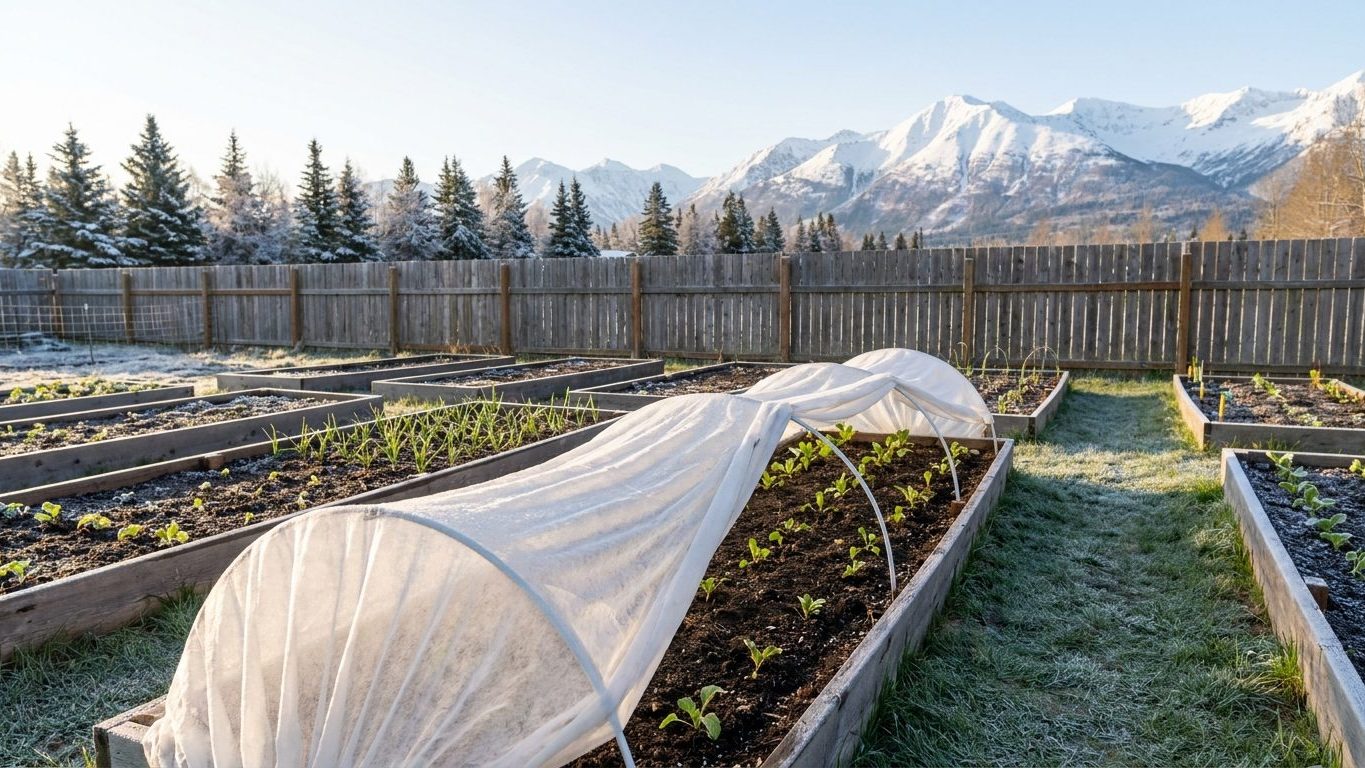

Cover the garden whenever the forecast low sinks toward freezing on a clear, calm night. In southern Ontario that means some nights from April into late May, and again from late September on. Near Toronto, the average last spring frost lands on April 30 and the average first fall frost on October 16. Those are midpoints, so frost can arrive on either side of them. A cover is cheap insurance for those edge weeks.
The short answer for Ontario
Put a cover over tender plants any night when the forecast calls for a low at or near 0 °C. In spring, keep covers handy from early April until the end of May, a stretch that traditionally ends around the Victoria Day weekend. In fall, start watching the forecast in late September and keep covering until the plants are done for the year. Both windows are wider than the calendar dates suggest, and the reason is in how those dates are calculated.
Environment and Climate Change Canada’s 1981-2010 climate normals for Toronto Pearson airport put the last spring frost at April 30 on average and the first fall frost at October 16 on average. Both are means. In one year out of two, the last spring frost falls after April 30. In one year out of two, the first fall frost arrives before October 16. Treat each date as the middle of a window, not as a safe date. The same station has a frost-free window between those two dates. That is a comfortable season for most vegetables, but it still leaves a few weeks on each end where a cover decides whether a crop lives.
When should you cover plants in spring in Ontario?
Cover newly set transplants and emerging seedlings from the moment they go outside until nighttime lows stay safely above freezing. Tomatoes, peppers, eggplant, cucumbers, squash and basil are the plants that suffer. Cool-season crops such as lettuce, peas, spinach, onions and brassicas shrug off a light frost, so they only need covers for a hard freeze. Planting hardy crops in early April and holding tender ones until the middle or end of May lets the same set of covers protect both groups. Gardeners who want the extra weeks can read more in Extending the Growing Season in Ontario.
When should you cover plants in fall in Ontario?
The fall window opens earlier than most people expect. Because half of all years bring the first frost before October 16, a gardener who waits for the calendar date will lose some tomatoes, peppers and beans. Watch the forecast from late September. A night or two of cover often carries tender crops through the first light frost, and the weeks after it are frequently mild. That extra stretch is where covers pay off: ripening tomatoes, a second cut of lettuce, or carrots sweetened by the cold. The kind of cover matters too, and Which Season Extenders Work in Ontario sorts the options.
What kind of night calls for a cover?
Clear, still nights are the dangerous ones. With no cloud to hold heat and no wind to mix the air, the ground loses warmth to the sky and the lowest layer of air can fall below freezing even when the thermometer at head height reads a degree or two above. Cloudy, breezy nights are much safer. Put the cover on in late afternoon while the soil still holds the day’s heat, make sure it reaches the ground and is weighted at the edges, and take it off the next morning once the frost has thawed and the air has warmed.
What will not work here
Covering at the calendar date and nothing else fails first. A mean first fall frost of October 16 means the date is a coin flip. A gardener who sets out to cover on October 16 is, in half of years, covering after the damage. Fixed dates also mislead in spring, where a warm week in late April coaxes seedlings along and then a clear night finishes them.
Will a thin row cover carry a garden through an Ontario winter?
No. At the Toronto reference station, the mean daily minimum in the coldest month is -10.2 °C (13.6 °F). That is the average night, so the cold snaps run well below it. A single layer of lightweight fabric buys a little protection against a light frost, and nothing like enough for weeks at that temperature. Hardy crops such as kale, leeks and carrots left in the ground can last well into winter with a deep mulch and a sturdy cover, but tender plants will not survive on fabric alone. Anyone planning true winter harvests should expect to build something heavier, such as a hoop house or a cold frame with a proper lid.
Can plastic sheeting cook plants in spring?
It can, and in Ontario’s spring it often does. A sunny April afternoon can heat air under clear plastic far above what seedlings tolerate, even when the outside air is cool. Plastic left closed through the day will scorch lettuce and cook young tomatoes. Plan to vent or remove it every morning, then close it again before sunset. Lightweight fabric is more forgiving because it lets heat and moisture escape.
Humidity is the other weak point. Southern Ontario summers are muggy, and a cover that stays on through warm, damp weather holds moisture around the leaves and invites mildew and fungal spots. Squash, cucumbers and melons also need their covers off once flowers open, or the bees cannot get in. Put the cover away in early summer and bring it back out when fall nights turn cold.
Does covering after mid-October still save tomatoes?
Sometimes, but only for the first light frost. Tomato and pepper plants that have already been hit once will not recover, and ripening slows to a crawl once nights stay cold. A cover helps most when it goes on before the first frost, in a mild stretch that follows. After a hard freeze, the better move is to pick the green fruit and ripen it indoors.
What changes across Ontario
Ontario is not one garden. The Toronto-area reference city sits at Canadian hardiness zone 7a, and that number belongs to that city, not to the province. The Canadian system is built from several climate variables, and it does not convert to a USDA zone. Ontario runs from the milder, lake-moderated shores of the south to far colder country in the north, with several zones in between. There is no single answer, only a spread.
The Toronto-area reference point sits at 43.86 degrees north. Readers well north of it, in the Near North, Algonquin country, Sudbury or Thunder Bay, should expect spring to arrive weeks later and fall frost weeks earlier than the Pearson dates. For them, the cover windows widen at both ends: covers stay on the beds deep into May or even June, and they come out again in early September. Readers near the edge of the territory should check their own local conditions before relying on these dates. Low-lying fields, river valleys and frost pockets run colder than the surrounding hills on still nights, even a short distance apart.
Gardeners who want to know their own zone should look it up on Natural Resources Canada’s plant hardiness map, which lists zones by municipality using 1991-2020 normals. Note that the frost dates above come from the older 1981-2010 period, so recent years may sit a little differently.
Where to check this for your own county
The dates and rules here describe a typical southern Ontario year. A county or regional recommendation beats a provincial one, and what you are reading is the provincial version. For local guidance, start with Ontario Agriculture and Food, then look for material written for your own part of the province.
Three things are worth finding there. The first is a planting calendar for your region, with dates for sowing and transplanting that account for local frost. The second is the list of varieties trialled near you: a tomato that ripens reliably in Windsor may stall in Timmins, and trial results tell you which ones to trust. The third is any local guidance on frost dates and cover use, especially for fruit and market crops.
Checking this against your own garden
Your own observations outrank every date above. Three signs cost nothing and tell you a lot about your own patch.
- Soil warmth by feel. Push your hand a few inches into the bed in the morning. If the soil feels cold enough to ache, tender transplants will sit and stall. A bed that warms sooner than a neighbour’s is a sunny, sheltered spot, and one that stays cold is probably low or shaded.
- The first male flowers on squash. Male blooms open before female ones, and their arrival signals real warmth. If they show up weeks after a friend’s, your garden runs cool and covers should stay on longer.
- The first true leaves. Seedlings first show rounded seed leaves, then the shaped true leaves. Once those appear and stay healthy through a cool week, the plant is ready for lighter protection. If they yellow or stall, the bed is still too cold or too wet.
Write down the date of the last frost you see in your own yard and the date of the first. After two or three seasons, those notes will tell you more about your microclimate than a regional average can.
Common questions
Is April 30 safe for planting tomatoes in Ontario?
No. April 30 is the average last spring frost at the Toronto Pearson station, so in half of years frost comes later. Most gardeners hold tomatoes, peppers and squash until late May, and cover them if a cold night is forecast.
What temperature should I cover plants at?
Cover tender plants when the forecast low approaches 0 °C, especially on a clear, calm night. Hardy crops such as kale, spinach and carrots can take a light frost and only need covers for a hard freeze.
When should I take covers off in spring?
Remove plastic and venting covers during the day once seedlings are growing, and take fabric off when nights stay above freezing and flowers open on crops that need pollinators.
Do frost dates differ across Ontario?
Yes, a lot. Northern and upland districts run weeks behind the Toronto dates, while lakeshore areas in the south can be a little ahead. Use local frost records and your own observations over any single provincial date.