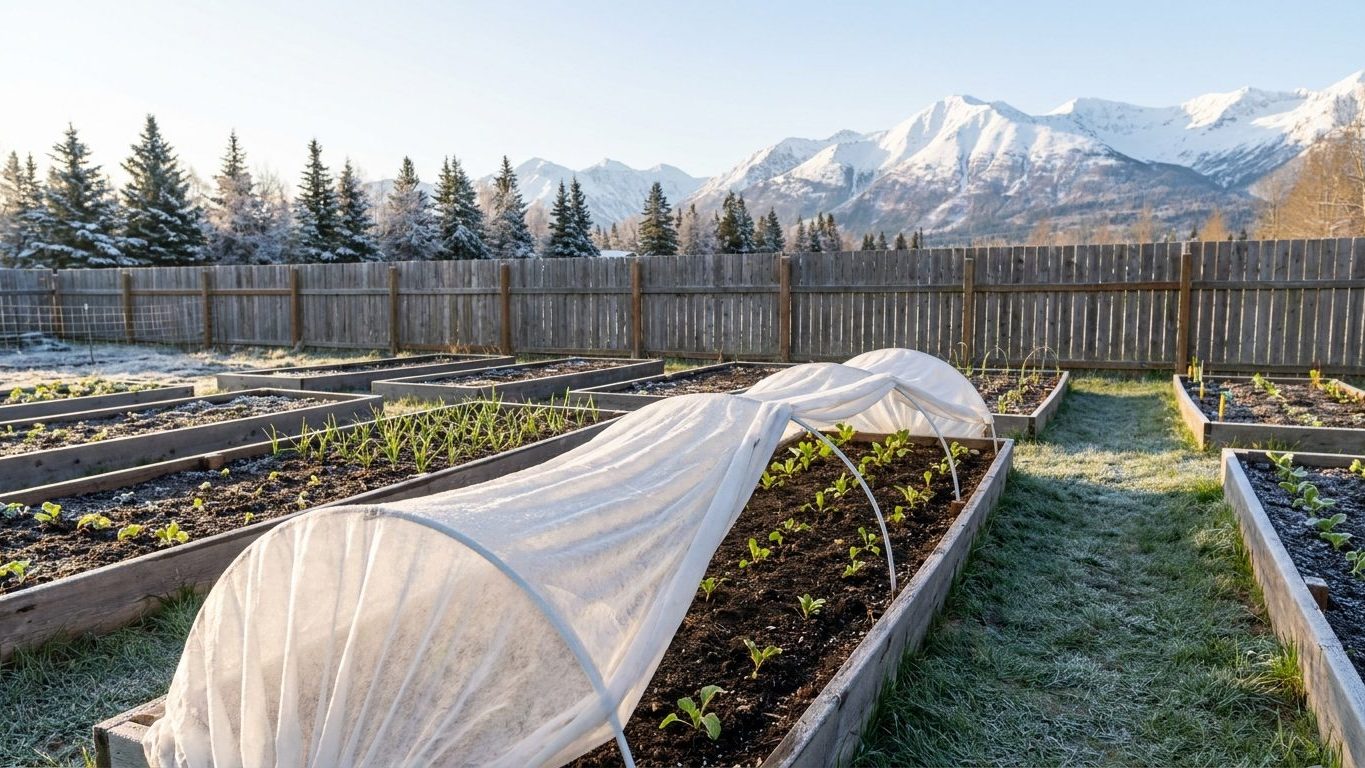

Cover tender plants on any night the forecast low reaches about 32°F. In New York City that means keeping covers handy from late March into early April, and again from mid-November. Upstate and in the Adirondacks, freezes come later in spring and earlier in fall, so the dates move. The temperature forecast matters more than the calendar page.
The short answer for New York
Cover the garden on any night forecast at or near 32°F, and on clear, calm nights a few degrees above that. In New York City, the 1991-2020 NOAA climate normals put the last spring freeze between March 23 and April 3, and the first fall freeze between November 14 and November 27. Those are the dates where the probability of a 32°F freeze sits in the 30 to 70 percent band. They describe odds of a freeze, and a freeze can still arrive after the later date in a cold year.
The dates belong to Central Park, a dense urban site that holds heat. Upstate New York and the Adirondacks frost far earlier in fall and later in spring. The coldest month at the city station has a mean daily minimum of 27.9°F, so winter nights there sit below freezing on average, and the shoulder seasons are where covers earn their keep.
What you cover depends on what you planted. Plants differ in how much cold they take, and the cover should match the plant.
| Crop type | Examples | When to cover |
|---|---|---|
| Tender | Tomatoes, peppers, squash, beans, basil | Any night forecast near 32°F, in spring after planting and in fall until the plants are finished |
| Half-hardy | Lettuce, beets, chard, potatoes | A hard freeze, or a frost after new growth has emerged |
| Hardy | Kale, spinach, carrots, peas, garlic | Deep freezes or drying winter wind; light frost does little harm |
A cover works by holding the heat the soil gave off during the day. That is why covering before sunset beats covering at midnight: the air and soil under the fabric are still warm when you close it. Lightweight row cover gives a few degrees of protection. Heavier fabric or a double layer gives more, at the price of less light. For help choosing, see Which Season Extenders Work in New York.
What will not work here
Planting tender crops on the earliest date and trusting that date alone fails. The 30 to 70 percent band means the end of the window still carries real risk, and soil stays cold long after the air feels mild. Tomatoes set out in late March, even under cover, sit in chilled ground and stall. Covers protect against frost. They do not warm cold soil enough to make roots grow.
Covers also fail when they are managed badly. A few common mistakes:
- Leaving clear plastic closed on a sunny spring day. The air inside climbs fast and cooks seedlings.
- Letting fabric touch foliage on a freezing night. Frost passes through at the contact points and burns the leaves.
- Skipping anchors. Wind off the coast or across open upstate fields strips unsecured covers by morning.
- Keeping tunnels sealed through humid weather. New York’s humid summers and damp falls invite fungal disease when air cannot move.
Fall brings a different limit. Day length shrinks quickly after the equinox, and by the November freeze dates, growth has nearly stopped. A cover can protect a tomato plant from the first frost, but it cannot make green fruit ripen in cold, dim weeks. In New York City it buys a few extra weeks. In the colder parts of the state, the same cover buys little for warm-season crops, and it works better on hardy greens, carrots and root crops that sweeten in the cold.
Last, a single thin layer will not carry anything through a northern winter. Where winter lows run far below those at the city station, a floating row cover only extends the harvest of hardy crops, and only with added insulation such as a low tunnel over the top. Anyone expecting salad greens in January from one sheet of fabric will be disappointed.
What changes across New York
New York has no single answer. The USDA Plant Hardiness Zone Map (2023, built on 1991-2020 normals) places the state in zones 3b through 7b. That spread covers the mildest parts of the city and Long Island down to the coldest Adirondack valleys. The zone number rests on one thing, the average annual extreme minimum temperature, so it says what survives winter and says nothing about the date of the last spring frost.
The latitude behind the city dates is 40.78 degrees north, the position of Central Park. A gardener near the Canadian border or the far western end of the state sits at a different latitude and should check theirs. Day length changes with latitude, and it governs how quickly plants slow down in autumn.
A reader in the north or at higher elevation should shift several habits:
- Start tender crops later and keep covers on hand well past the city’s early April date.
- Expect the first fall freeze to arrive earlier than mid-November, and have covers ready by early fall.
- Pick short-season varieties and rely on hardy crops for fall extension.
- Use sturdier protection, such as double layers or low tunnels, because lows run colder.
Elevation and valley floors matter as much as latitude. Cold air drains downhill and pools in low spots, so a garden at the bottom of a slope can freeze while a garden a hundred feet higher stays clear. To find your own zone, use the USDA map and enter your ZIP code rather than guessing from a neighboring town. The broader picture is in Extending the Growing Season in New York.
Where to check this for your own county
Your state extension service holds the local answer. Cornell Cooperative Extension runs an office in nearly every county, staffed by people who know the local frost pockets, soils and growing records.
When you contact your county office, look for two things. The first is the local planting calendar, which lists safe dates for sowing and transplanting in your county, usually broken out by crop. Extension calendars are often published one per crop or crop group, so find the one for what you actually grow. The second is the list of varieties that have been trialled in your county, because a variety that ripens in a long Hudson Valley season may fall short in the North Country.
A county recommendation beats a state one. Anything written for New York as a whole is a statewide average that smooths over the Adirondacks, the Finger Lakes, the Catskills and the city. Extension offices also run master gardener help lines and publish notes on frost dates and cover use, which is useful if your garden sits in a spot that behaves differently from the county norm.
Checking this against your own garden
Your own observations outrank every date above. Three signs are worth watching, and none needs equipment.
How does the soil feel in the morning?
Push your hand a few inches into the bed. If it feels cold and damp, roots will sit idle, and tender transplants should wait even if the forecast looks safe. A bed that feels warmer than your neighbor’s, perhaps against a south-facing wall, tells you that you have a warm pocket and can start a little earlier.
When do the first male squash flowers open?
Squash, cucumbers and melons produce a first flush of male flowers before the female ones appear. When they show, the plants have settled in. If they come late compared with other gardens nearby, your site runs cool.
When do the first true leaves appear?
The first pair of leaves on a seedling are seed leaves. True leaves come next and have the shape of the adult plant. Seedlings that reach this stage slowly under the same weather point to a shaded or low, cold site. Fast, even growth points to a sheltered one. Note the dates each year, and your garden will give you a calendar better than any chart.
Common questions
Should I cover plants if the forecast is a few degrees above freezing?
On a clear, still night, yes. Cold air settles near the ground, and the ground can reach freezing while the forecast reads higher. Cloudy or windy nights are less risky.
Should I put covers on in the evening or the morning?
Put them on in the late afternoon, before the sun drops, so the soil heat is trapped. Remove them the next morning once frost has melted and the air warms, so plants do not overheat.
Can I use the New York City dates upstate?
No. They come from Central Park, a warm urban site. Upstate gardens frost later in spring and earlier in fall, so use your county’s calendar.
Will a cover save tomatoes from a hard freeze?
Only a mild one. Fabric adds a few degrees. A hard freeze can still kill tender plants, so pick fruit and bring it indoors when the forecast drops well below 32°F.