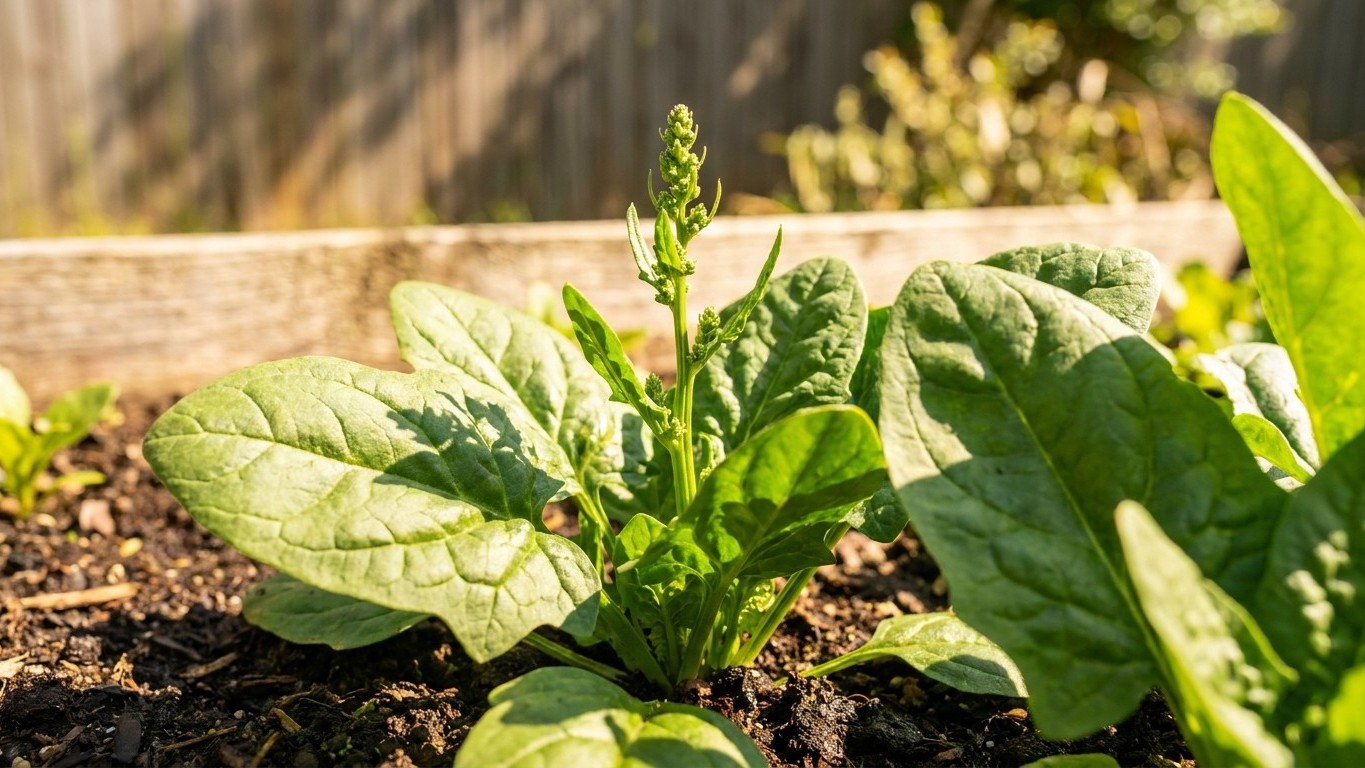

Nevada spinach gets eaten by a short list of garden pests: sap-sucking insects, leaf-chewing beetles, leaf-tunneling larvae, night-feeding caterpillars at the soil line, slugs, and the occasional rabbit or bird. Each arrives on its own schedule, and that schedule follows the cool-season window, which runs very differently in Las Vegas than in Reno or at elevation. Knowing the first symptom is worth more than knowing the insect’s name.
Which pests attack spinach in Nevada
University of Nevada, Reno Extension is the service that documents garden pests for the state, and its county offices identify what turns up in local beds. Its guidance on leafy greens points to a handful of feeding groups rather than dozens of unrelated insects. Here is the working list for a spinach bed.
- Soft-bodied sap-feeders that cluster on leaf undersides and new growth, often leaving leaves curled or sticky.
- Leaf-chewing beetles that punch small round holes, called shot holes, mostly in young leaves.
- Leaf-tunneling larvae that live between the two leaf surfaces and leave pale winding trails or blotches.
- Night-feeding caterpillars that cut seedlings off at the soil line or chew ragged holes in older leaves after dark.
- Slugs and snails that thrive under mulch and along drip lines, leaving slime trails.
The heat explains why pest pressure here comes in short bursts. The Las Vegas station reaches 90 F or more on 131.3 days a year, according to the NOAA NCEI Climate Normals for 1991-2020. Spinach grows best where temperatures do not exceed 75 F, Utah State University Extension says. In the hot parts of the state, then, the useful window for the crop is narrow, and insects get that same narrow window to find it.
When each one shows up, and what it does first
The calendar here moves with the frost dates, and those dates swing widely. The NOAA NCEI Climate Normals for the Las Vegas airport put the mean last spring freeze between January 7 and February 1 and the mean first fall freeze between December 8 and December 23. That station sits in a desert heat island, so those dates are an extreme. Reno, Carson City, and anywhere at elevation freeze months earlier in fall and months later in spring. A pest schedule tied to the calendar month would be wrong for half the state, so tie it to the plant instead.
Seedling stage comes first. When the first true leaves open, the night-feeding caterpillars go to work. The first sign is a seedling that is simply gone, or one lying on its side with a clean cut at the soil line. Slugs and snails strike in the same weeks wherever the bed stays damp. A fresh slime trail on the soil gives them away before any leaf shows damage.
Leaf-chewing beetles follow within a few weeks of emergence. The first thing you see is a scatter of tiny round holes in the youngest leaves, which can make a row look peppered. The tunneling larvae come once leaves are full enough to hide them. Look for a pale squiggle or a clear blotch that you can see through when you hold the leaf to the sun.
Sap-feeders build through the first warm spell, once daytime highs start pushing toward 75 F. Their first sign is rarely the insect. Leaves curl at the margins, new growth looks stunted, and the undersides feel tacky. By the time you spot the insects, a colony has been there for a while.
Day length sets the end of the season. The longest day at the reference city runs 14 h 27 of daylight, and spinach bolts during long days as well as warm temperatures. A cool spell does not buy extra weeks once the days stretch that long. Once the center of a plant starts sending up a stalk, the leaves turn bitter and the pest question stops mattering. The Will Spinach Bolt Early in Nevada? guide covers how to spot that turn.
Telling the damage apart from everything else
Plenty of spinach problems look like pest damage and aren’t. Misreading them leads to spraying a bed that needed water or a different planting date. Flip the leaf before you decide anything. Insects leave evidence: the insects themselves, sticky residue, cast skins, droppings, trails, or chew marks with a pattern. A problem with no trace on the leaf deserves a second look at the plant’s conditions.
| What you see | Possible causes beyond insects | What settles it |
|---|---|---|
| Yellowing, mostly on older leaves | Nutrient shortfall or overwatering | Even pattern across the plant with no holes, trails, or insects on the underside |
| Midday wilting | Water stress or heat | Plant recovers by evening, and the soil is dry a few inches down |
| Tall center stalk, narrowing leaves | Bolting from long days and warmth | Stalk grows from the middle of the plant, and leaves taste bitter |
| Ragged, torn leaf edges | Wind, hail, or handling | Damage hits the same side of every plant, with no droppings or slime |
| Brown, crisp leaf margins | Heat scorch, wind, or salts in soil or water | Burn shows on the sun-facing side and spreads from the edge inward |
| Spots with fuzzy growth beneath | A leaf disease, especially in damp stretches | Growth appears on the underside and does not wipe off like soot |
Rabbit damage deserves its own note because it fools people. Rabbits leave clean, angled cuts, usually at a uniform height. Chewing insects leave irregular edges or holes inside the leaf. Birds peck and tear.
If the cause is still unclear after a leaf check, take a sample to your county office of University of Nevada, Reno Extension. They can look at the actual leaf, which beats a guess from a photo or a table.
What actually works here, and what is a waste of time
On a short season, timing beats treatment. The fall sowing is blocked by warm soil, not cold, since seed germination is reduced above 80 F soil (Utah State University Extension). Sow when the soil falls below 80 F and the seedlings come up strong enough to outgrow a few chewed leaves. The same extension source says to count back from the date you want to harvest a fall crop, so counting back from your own first freeze gives the sowing date. The When to Sow Autumn Spinach in Nevada guide walks through that count.
Physical barriers come next. A lightweight row cover laid over the bed at sowing blocks beetles, moths, and egg-laying adults before they find the crop. Seal the cover edges to the soil on the day you sow, because pests walk in through gaps. Collars around seedlings stop cutworm-style cutting. A cover left on through warm afternoons can trap heat above 75 F, so lift it when highs climb.
Other habits help without any product. Water at the base of the plants to keep leaves dry and give slugs less to work with. Pull plant debris after each crop so pests have nowhere to overwinter. Hand-pick caterpillars and slugs at dusk. A strong spray of plain water knocks soft-bodied sap-feeders off the leaves.
Several common moves are a waste of time. Spraying the whole bed at the first hole treats cosmetic damage on a leaf crop. Spraying anything on wet leaves under strong desert sun invites leaf burn. Planting in late spring to outrun the insects only walks the crop into the heat, and the plants bolt before they size up. For anything stronger than these steps, ask your county office what is registered in the state. The extension office is the one authority that knows what is currently allowed.
Where to check this for your own county
Pest presence varies inside Nevada as much as the frost dates do. A statewide pest list tells you what the state’s gardens have seen. It does not tell you what is in your bed. A garden near Reno, one in Elko County, and one in Clark County each deal with a different season length, so the insects reach them at different times and in different numbers.
The place to check is University of Nevada, Reno Extension, which runs offices in the state’s counties. County staff can identify an insect or a damaged leaf, tell you which pests have been active locally this season, and confirm your planting window for a cool-season crop. Many offices also take questions by phone or email, and some run a plant diagnostic service for sample drop-off.
When you call, bring something concrete: a leaf with the damage, a sealed bag with the insect or its trail, and a note of when the damage started and what the bed looks like.
For the full crop picture, Growing Spinach in Nevada covers the season from sowing through harvest. Before you buy any spray, take a sample to your county office. A five-minute look under a leaf often saves you the whole bottle.
Common questions
Are the holes in my spinach leaves always from insects?
No. Wind, hail, and handling tear leaves, and rabbits leave clean angled cuts. Insect holes come with trace evidence: insects on the underside, droppings, slime, or trails. If you find none of those, check the plant’s water and heat conditions before treating for pests.
Do I need to spray spinach in Nevada?
Often not. A row cover sealed at sowing, a sowing date matched to cooling soil, and a dusk check cover most problems. If damage keeps spreading, your county office of University of Nevada, Reno Extension can say what is registered in the state.
Can spinach grow through a Nevada summer?
Spinach grows best where temperatures do not exceed 75 F, and it bolts during long days and warm temperatures. The longest day at the Las Vegas reference city has 14 h 27 of daylight, and that station sees 90 F or more on 131.3 days a year. Plan for spring and fall crops instead.
How long does harvested spinach keep?
The UC Davis Postharvest Technology Center puts optimum storage at 32°F and 95-98% relative humidity, and says spinach will not maintain good quality for more than 2 weeks.