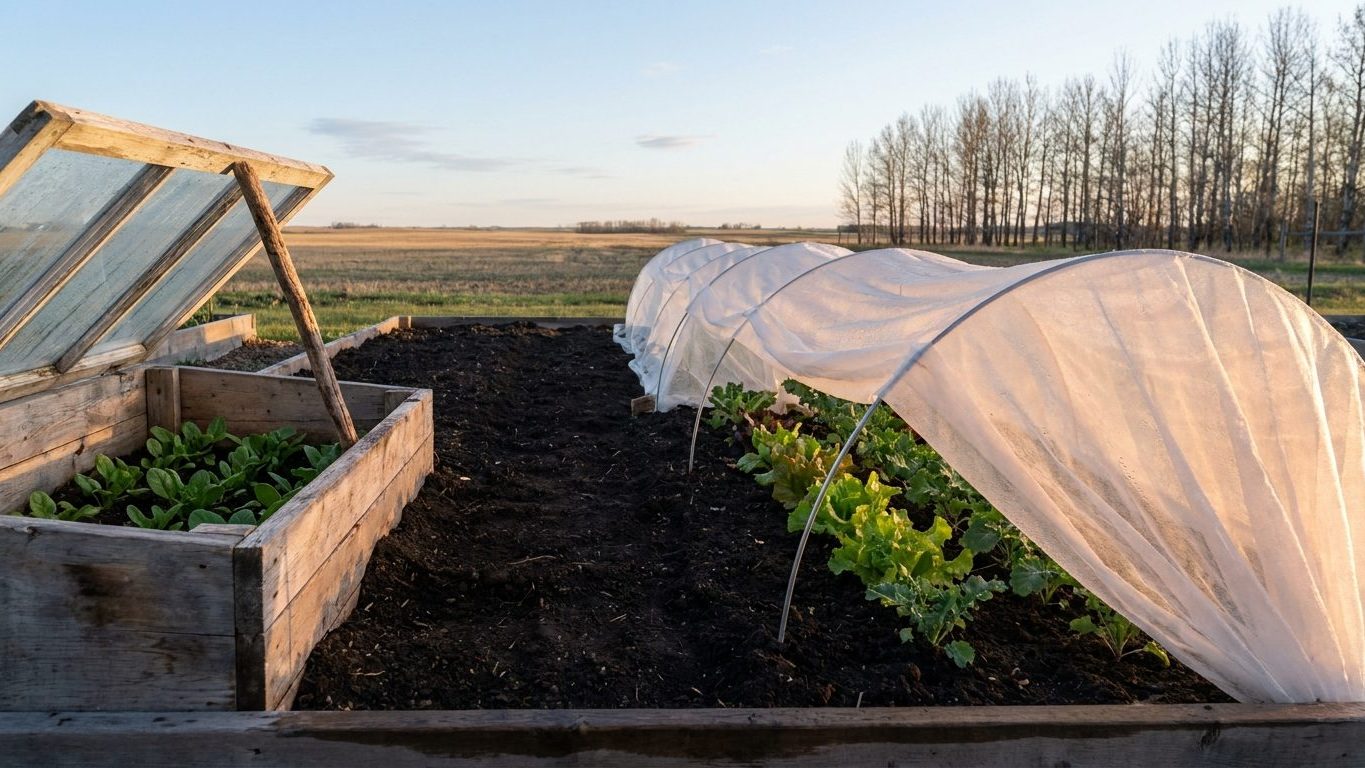

Floating row cover, low tunnels and cold frames are the season extenders that earn their space in South Carolina gardens. Winters are mild enough that a layer of fabric or vented plastic carries cool-season crops through the cold months and into spring. Heated greenhouses and heavy insulation are overkill. The real work is matching the cover to the job and venting it before the sun cooks what is underneath.
The short answer for South Carolina
Use lightweight to midweight floating row cover and low tunnels for fall, winter and early spring crops, and add a cold frame for starting and hardening off transplants. Skip anything built for a northern winter, because the cold here is occasional, not constant.
The numbers explain why. At the Charleston reference station, the last spring freeze at 32°F falls between February 28 and March 17, and the first fall freeze between November 20 and December 5. Those are the dates where the probability of a 32°F freeze sits in the 30 to 70 percent band, so a freeze outside them is still possible. The mean daily minimum of the coldest month is 38.9°F, which is above freezing. A cover only has to bridge the odd cold snap, and a few degrees of protection is usually enough.
Here is how the main options line up:
| Extender | Best use in South Carolina | Main risk |
|---|---|---|
| Floating row cover | Frost nights in fall and early spring over greens, brassicas, root crops | Heat buildup on sunny days; blocks pollinators on flowering crops |
| Low tunnel with plastic | Winter greens; early spring transplants | Overheating and trapped humidity if not vented |
| Cold frame | Starting seedlings, hardening off, winter lettuce | Cooks plants on a mild sunny afternoon |
| Shade cloth | Stretching lettuce and spinach into late spring heat | Too dense a weave starves plants of light |
The biggest payoff comes at the fall end. With the first freeze arriving late November to early December, a covered bed of collards, kale, lettuce or carrots keeps producing well past the date a bare bed would stall. In spring the gain is smaller, since the last freeze comes so early. Row cover and low tunnels do the most work for the least money, which is why they should be the first thing most gardeners buy.
For the timing side, Extending the Growing Season in South Carolina covers the full approach, and When to Cover Your Garden in South Carolina covers the nights to watch.
What will not work here
A sealed plastic tunnel is the classic failure. Winter days in the Southeast regularly turn mild and sunny, and an unvented tunnel in that sun heats far past what lettuce or spinach tolerates. Plants cook in the afternoon, then the trapped moisture settles overnight. Venting on any sunny day matters more than which plastic you buy.
Heavy, multi-layer systems are a waste of money. A mean coldest-month minimum of 38.9°F does not call for a heated greenhouse, double-wall glazing or thick insulated blankets. Those tools solve a problem that most of the state does not have, and they cost more than the vegetables they protect.
Summer is the other half of the problem. Where summers are hot and humid, clear plastic left on a bed after spring warms up turns it into an oven. Tomatoes, peppers and squash do not need a cover once nights stay mild, and a tunnel left over them simply adds heat and disease pressure. If you want to push a cool-season crop later into spring, shade cloth does the job and plastic does not.
Close spacing under cover also fails in a humid climate. Plants packed tight under fabric hold moisture on their leaves, and fungal disease follows. Give greens and brassicas their normal spacing even when you are trying to fit more in.
Watering habits need adjusting, too. Fabric and plastic shed rain, so a covered bed can run dry while the rest of the garden sits in damp soil. Check by pushing a finger into the soil under the cover before assuming it got rain.
One more trap is trusting a single date. The Charleston station is milder than inland South Carolina, and applying its freeze window in the Upstate leaves you covering too late in fall and uncovering too early in spring. Flowering crops also need the cover off when blooms open, or the bees cannot reach them.
What changes across South Carolina
The state spans USDA hardiness zones 7a to 9a (USDA Plant Hardiness Zone Map, 2023), so there is no single answer. That is a wide spread, from cold winters in the northwest corner to mild coastal ones. Zone is built on the average annual extreme minimum, so it tells you whether a plant survives winter, not when to plant a bean. Find your own zone on the USDA map instead of assuming it.
The Charleston dates are a reference point. Peninsular Charleston is milder than the airport station, and the Upstate runs several weeks tighter at both ends: the first fall freeze arrives earlier and the last spring freeze lingers later. Gardeners in the Upstate or at higher elevation should treat the coastal dates as optimistic, cover earlier in fall, and hold spring plantings under cover a little longer. They also get more from a midweight fabric or a vented low tunnel than coastal gardeners do.
On the coast, the better habit is lighter fabric and more venting. Warm spells there can arrive in the middle of winter, and covered greens bolt or turn bitter when the air stays warm under the cover.
Latitude matters for onions. Bulbing is triggered by day length, and the Charleston station sits at 32.90 degrees north. The Upstate lies farther north, so a gardener near the state’s northern edge should check their own latitude before picking an onion type. Cold hardiness and day length are separate questions, and the second one has nothing to do with covers.
Where to check this for your own county
Clemson Cooperative Extension is the state’s land-grant extension service, and its county offices know the local weather and soils. Two things are worth asking for. The first is the local vegetable planting calendar, which gives sowing and transplanting windows built for your county rather than averaged across the state. The second is the list of varieties trialled in your county, which shows which cultivars handled local heat, humidity and disease.
Clemson publishes its lawn calendars one species at a time, and vegetable guidance follows the same logic of sorting by what you actually grow. Look for the calendar that matches your crop and your region, not the nearest similar one.
A county recommendation beats a state one. Anything written for the whole state, the Charleston dates above included, is the state version. A county agent can tell you that your valley frost pocket gets hit two weeks earlier than the airport, or that a certain collard variety holds up in your clay. Take the state guidance as a starting point and let the county advice overrule it where they differ.
Checking this against your own garden
Your own garden outranks every date above. Three observations tell you more than any calendar.
- Soil warmth by feel. Push your hand a few inches into the bed in mid-morning. If it feels cold, warm-season transplants will sit and sulk. A bed that feels comfortably warm to the hand has caught up with the season, and a sheltered bed will reach that point sooner than an open one.
- The first flush of male flowers on squash or cucumbers. Male blooms open ahead of female ones, so their arrival shows how fast your site is warming. If they appear early in one corner and late in another, you have found a warm microclimate.
- The first true leaves on seedlings, the ones that follow the rounded seed leaves. Compare seedlings under cover with seedlings in the open. A big gap tells you the cover is working, and little difference says you can lighten it.
Write those dates down each year. After two or three seasons, they give you a local calendar sharper than the statewide one, and they pair well with the cover timing in When to Cover Your Garden in South Carolina.
Common questions
Do I need a greenhouse to extend the season in South Carolina?
Rarely. With a coldest-month mean minimum of 38.9°F at the Charleston reference station, most gardeners do well with row cover, low tunnels and a cold frame. A greenhouse makes sense mainly for starting large numbers of seedlings or for gardeners in the colder Upstate.
Which row cover weight should I buy?
Lightweight fabric passes the most light and suits mild nights and pest protection. Heavier fabric holds more warmth but lets in less light and overheats faster on sunny days. Coastal gardeners can stay on the lighter end, and Upstate gardeners can go heavier.
When should I stop planting fall crops under cover?
Work back from the first fall freeze window, November 20 to December 5 at the Charleston reference station, and allow time for the crop to reach harvest size before growth slows. Upstate gardeners should count back from an earlier date.
Can I leave plastic on a low tunnel all winter?
Only if you vent it. Open the ends or lift the sides on any sunny day, even a cold one, and close them again before evening. A tunnel that stays sealed will overheat and hold moisture, and the plants will pay for it.