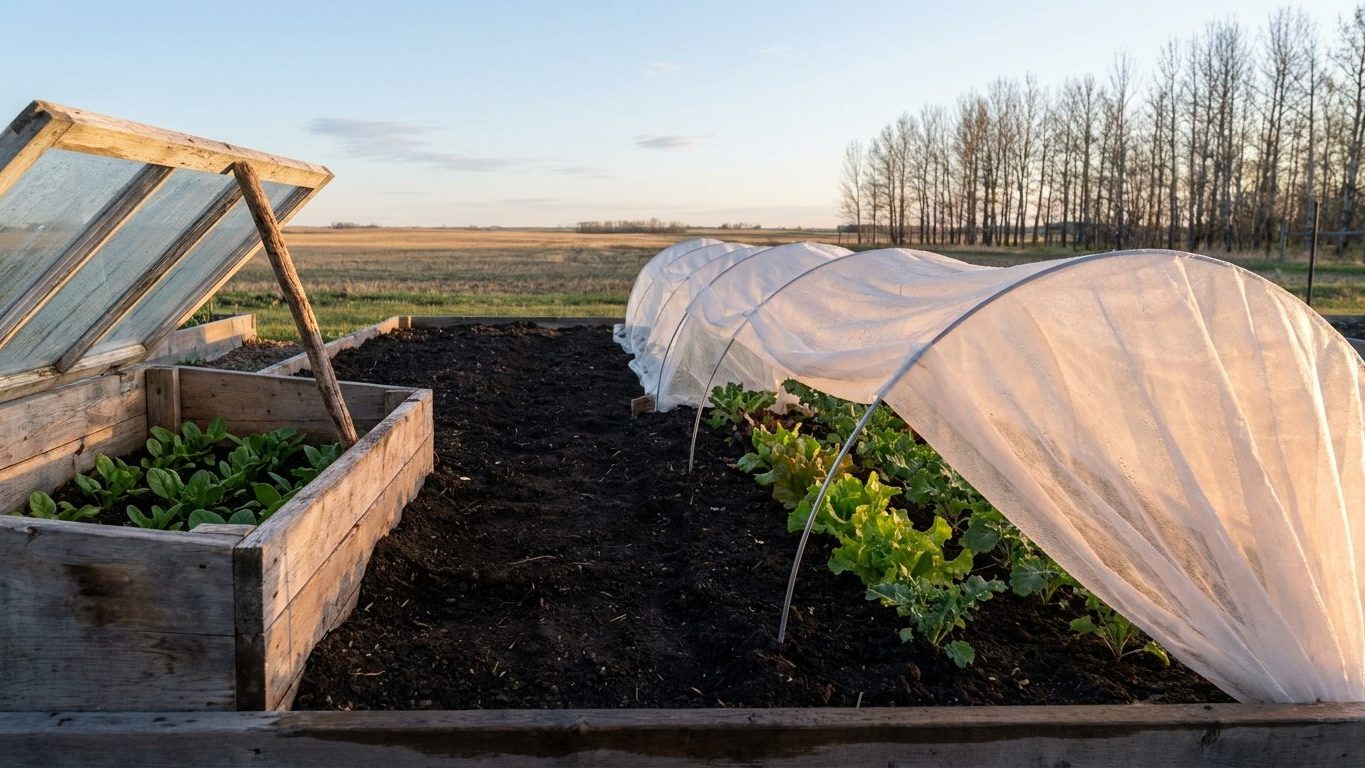

Lightweight row cover on wire hoops earns its keep in most Texas gardens. Shade cloth handles the heat, and a cold frame suits anyone who wants greens through winter. Texas is big enough that the best pick shifts between the Gulf Coast and the Panhandle. Below: what to reach for, what to skip, and how to check the choice against your own yard.
The short answer for Texas
Use floating row cover over hoops for freeze nights, shade cloth for summer heat, and a cold frame or vented plastic tunnel if you want to grow straight through winter. Row cover makes the best first purchase because it is cheap, light, and works in both directions, softening a freeze in February and taking the edge off sun in September.
The reason comes down to how cold Texas winters actually are on the Gulf end. At the Houston Intercontinental Airport station, NOAA’s 1991-2020 normals put the last spring 32°F freeze between February 4 and March 1. That is the span where the odds of a freeze run from 30 to 70 percent. The first fall freeze falls between December 1 and December 19, on the same odds. The mean daily minimum of the coldest month there is 43.7°F. Most winter nights stay above freezing, and what you are covering against is the occasional freeze. A few degrees of protection often decides whether a bed of lettuce lives, so you rarely need a heated structure.
| Extender | Best job in Texas | Main limit |
|---|---|---|
| Lightweight row cover | Light freezes, wind and insect protection | Only a few degrees of gain |
| Heavier row cover | Hard freeze nights | Blocks light if left on for days |
| Plastic low tunnel | Winter greens, early transplants | Overheats on sunny days unless vented |
| Cold frame | Seedlings, hardening off, winter salad | Small footprint, needs opening and closing |
| Shade cloth | Fall seedlings started in late summer, late spring cool crops | Does nothing for cold |
| Straw or leaf mulch | Holding soil warmth around roots | Won’t protect leaves from a freeze |
Which row cover weight works in Texas?
Lightweight fabric passes light and rain, so you can leave it on for days, and it handles the typical Gulf and Central Texas freeze night. Heavier fabric holds more warmth but shades the plants, so save it for a hard freeze and take it off within a day or two. Drape either one over hoops so the cloth does not rest on the leaves, and pin the edges down with soil, boards or sandbags. Texas wind finds every loose corner.
When does a cold frame or tunnel make sense in Texas?
A cold frame or plastic tunnel pays off when you want to harvest greens, start transplants early, or harden off seedlings in a protected spot. For a freeze-by-freeze approach to the timing, see When to Cover Your Garden in Texas, and for the bigger picture of stretching spring and fall, see Extending the Growing Season in Texas.
What will not work here
Heavy winter infrastructure is the first thing to cross off for the Gulf end of the state. With a coldest-month mean minimum of 43.7°F at the Houston reference station, a sealed greenhouse or double-layered tunnel is more than most beds need, and it adds heat problems you did not have.
Why does clear plastic fail on warm Texas days?
Clear plastic traps heat fast. A sunny winter afternoon in Texas can warm a closed tunnel far past what lettuce, spinach or broccoli will tolerate, and the plants wilt or bolt while the nights are still cold. Plastic that stays shut from December to March does more harm than good. If you cannot be home to vent it, choose row cover, which breathes.
Humidity adds a second problem on the Gulf side. A tight cover over wet, closely spaced plants keeps the leaves damp and invites fungal disease. Give plants room, lift the cover on mild mornings so foliage dries, and skip covers entirely when no freeze is forecast.
Summer is the other half of the story. Black plastic mulch that warms the soil in winter will cook roots in a Texas July, and row cover over heat-stressed tomatoes and peppers just adds more warmth. Nights that stay hot make tomato blossoms drop, and no cold-weather extender fixes that. Shade cloth does help, and it is the one extender that makes sense to start with in August.
Can you trust a frost date in Texas?
A date such as February 4 or March 1 marks where the chance of a 32°F freeze at one airport sits at 30 to 70 percent. It does not mean the freeze is over. Setting out tomato transplants on the early end of that window without a cover standing by is a gamble. Houston’s Hobby airport runs about two weeks milder than Intercontinental, so even across one city the dates slide. A cover and a forecast beat any single date.
What changes across Texas
Texas has no single answer. The USDA Plant Hardiness Zone Map (2023, built on 1991-2020 normals) runs from zone 6a to 10a across the state. That system is built on one variable, the average annual extreme minimum temperature, so it tells you what survives the coldest night and says little about the length of the growing season.
The Houston dates above sit at the mild Gulf end, and they are not a Texas calendar. The Panhandle freezes months earlier in fall and months later in spring. North Texas and the Hill Country differ again. Houston’s reference station sits at 29.98 degrees north, and gardeners far from that latitude should look up their own, since day length shifts how crops like onions behave.
What should gardeners in North Texas, the Panhandle or higher ground change?
Move toward sturdier gear and earlier action. Heavier row cover, a low tunnel with plastic, or a cold frame becomes worth the effort where hard freezes arrive earlier and linger later. Start covering fall crops before the first cold snap, and expect to need protection for more nights in a season. Higher ground also drains cold air downhill, so a bed on a slope often fares better than one in a low pocket.
Which zone you are in is a question for the USDA map, so look up your ZIP code there instead of guessing from a neighbor’s garden.
Where to check this for your own county
The best local source is Texas A&M AgriLife Extension, the state’s land-grant extension service, with an office in or near every county. Two things are worth looking for there.
- The planting calendar for your county, which lists sowing and transplant windows for cool-season and warm-season crops.
- The varieties trialled locally, since a lettuce or broccoli that handles Gulf humidity may not suit a Panhandle spring.
A county recommendation beats any statewide rule of thumb. The county staff and Master Gardener volunteers know your freeze history, your soil, and which pests turn up in which month. Treat statewide dates, including the Houston ones above, as a starting guess that your county office can sharpen.
When you call or visit, ask when covers are usually needed in your area and whether shade cloth is common for fall plantings. Those answers fit your location better than anything written for the whole state.
Checking this against your own garden
Your own observations outrank every date here. Three are worth watching, and none needs a tool.
Soil warmth by feel. Push your fingers a few inches into the bed early in the morning. If it still feels cold and damp, the bed is behind, and a covered patch that feels noticeably warmer than an open one shows how much your extender is gaining. A south-facing wall or fence often warms sooner than open ground.
The first flush of male flowers. On squash and cucumbers, male blooms open before female ones. When they appear on a covered plant ahead of an uncovered neighbor, you know the cover is speeding things up. If they are late, the spot may be shaded or sitting in a cold pocket.
First true leaves. Seedlings first show rounded seed leaves, then the first leaves with the crop’s real shape. Compare covered and uncovered rows. A clear gap says your extender is working, and no gap says you can skip the effort in that bed.
Jot down the dates of these signs each year. After a season or two, your own notes will give you a better calendar than any airport station.
Common questions
Is row cover enough for a Texas freeze?
Lightweight cover handles a light freeze, since it adds only a few degrees. For a hard freeze, use heavier fabric or a second layer, cover before sundown, and seal the edges to the ground. Take it off once temperatures recover.
Can I use plastic sheeting instead of row cover?
Yes, on hoops, for cold nights. Open or remove it on sunny days, because trapped heat will damage plants quickly. Do not let plastic touch the leaves during a freeze.
Does shade cloth count as season extension?
In Texas it does. It protects fall seedlings sown in late summer and stretches cool-season crops into late spring, so it extends the season on the hot side.
Should covers stay on all winter?
No. Cover for freeze nights, then vent or remove on mild days so plants get light and air. Flowering crops also need open days for pollinators to reach them.