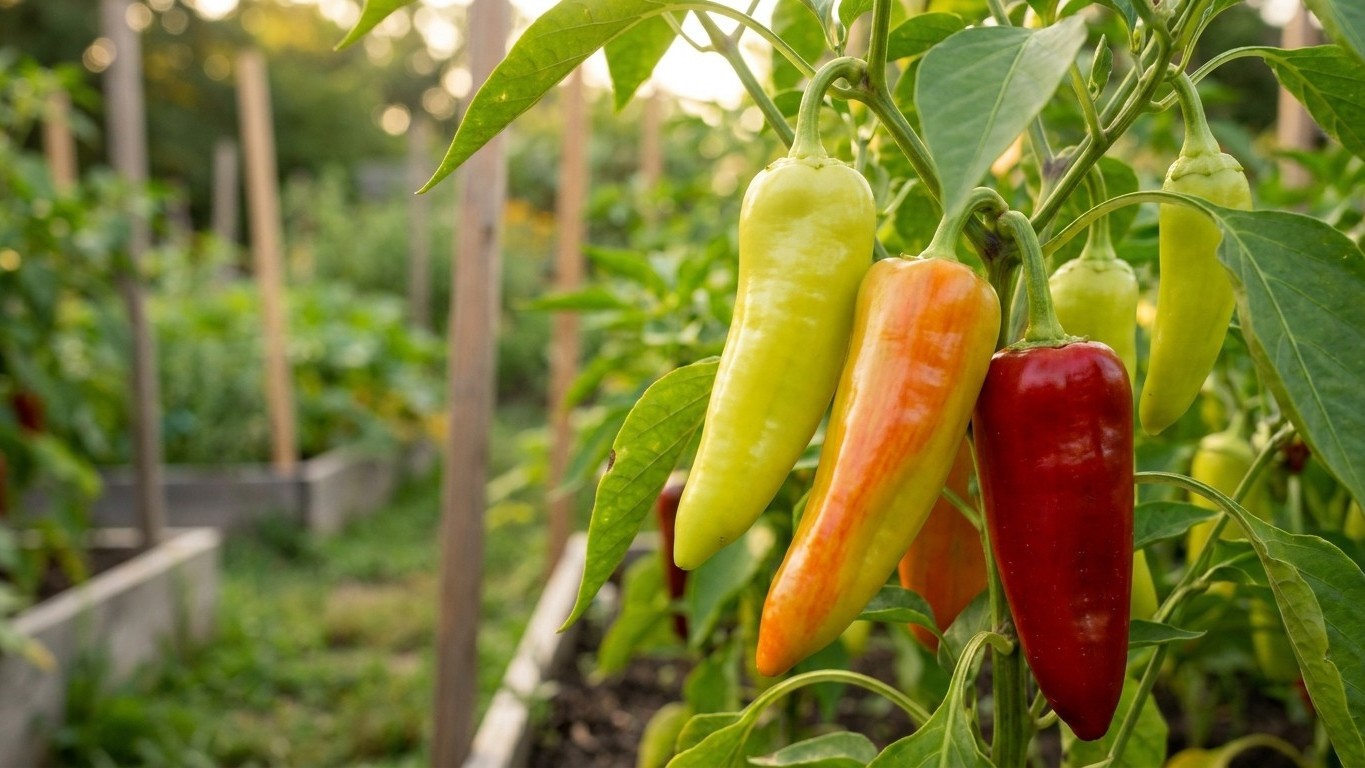

Pick a pepper when it has reached full size and the skin is firm and glossy. Clemson Cooperative Extension puts that at about 70 to 85 days after transplanting. Then keep the fruit out of the refrigerator. A fridge runs colder than a pepper tolerates, and below about 45 °F the flesh pits and goes soft. A cool room does the job better. For the whole season, from seedlings to the last harvest, see Growing Peppers in West Virginia.
Keeping them, and for how long
Clemson Cooperative Extension’s Home & Garden Information Center gives the storage target for harvested peppers as 45 to 50 °F with 80- to 90-percent relative humidity, for two to three weeks (Clemson factsheet on peppers). Two to three weeks is the ceiling. Fruit reaches it only when temperature and humidity both stay in range, and only if the peppers were sound when picked.
Why does the refrigerator ruin peppers?
The 45 to 50 °F range sits above what a household refrigerator holds. Below about 45 °F, peppers suffer chilling injury. The skin develops small sunken pits, the flesh softens, and the fruit breaks down faster than it would on a counter. The damage often becomes obvious after the pepper comes out of the cold, which is why people blame the pepper instead of the fridge.
Nearly everyone makes this mistake. The crisper drawer is where vegetables go, so the peppers go there too. The plant tells you why it shouldn’t. Peppers are a warm-season crop that won’t be transplanted until the soil reaches 60 F, after the last frost, and the fruit carries that sensitivity to cold into storage.
Humidity matters as much as temperature. Air at 80 to 90 percent relative humidity keeps the skin from losing water, so the fruit stays firm instead of wrinkling. Dry indoor air in a heated house pulls moisture out of a pepper quickly.
How long will picked peppers really last?
Count from the day of picking, and treat the three weeks as the best case. A pepper that went into storage with a crack, a sunburned patch, or a chewed spot will not last as long as a clean one. The tunnels and bite marks left by insects are a common culprit, and What Eats Pepper in West Virginia, and When covers who makes them. Use blemished fruit first and keep the unblemished ones for later.
Leave a short piece of stem on each pepper, and cut the fruit from the plant with pruners or scissors instead of yanking it, since a torn stem leaves an open wound. Keep the fruit dry until you cook it, because trapped moisture invites rot. Check the stored peppers every few days. Anything starting to soften goes into tonight’s dinner, the freezer, or a pickle jar.
Where in the house that actually is
A house has a few places that could hold 45 to 50 °F, and most of them miss. The refrigerator is too cold, the kitchen counter and any heated room are too warm, and a garage swings with the weather. Peppers need a spot that lands between those extremes.
Which room comes closest to 45 to 50 °F?
In most homes it is an unfinished basement, a cellar room, or a cool closet against a below-grade wall, during the weeks when peppers come off the plant. Rooms below ground stay cooler than the living space above and usually carry more moisture in the air, which helps with the humidity target. A garage is the weakest candidate. It follows the outdoors, so it can be warm on a September afternoon and close to the temperature of the fridge on a cold October night. Charleston averages 16.0 days a year at or above 90 F, and a garage with sun on its door is warmer than that on those afternoons. A fruit stored there goes through a cycle of heat and chill that wears it down.
Do not count on the counter for more than a few days. A pepper left there will keep for a short time, but warm air shortens its life well below what the cool-room figure allows.
How do you check the spot with a thermometer?
Rooms rarely sit at the temperature you guess. Leave a thermometer in the spot for several days before the main harvest comes in, and read it morning and evening. A min-max thermometer is the easiest tool, because it records the coldest and warmest points between visits. A small hygrometer for the humidity costs little and tells you whether the air runs near the 80 to 90 percent range or much drier.
If the reading stays between 45 and 50 °F, that is your pepper shelf. If it dips below 45 °F, move the peppers to a higher shelf or a room closer to the heated part of the house. If it runs warmer than 50 °F, plan for a shorter storage window and use those peppers sooner. When no spot in the house qualifies, eat or process the harvest quickly. Sliced and frozen, or pickled, peppers keep far longer than a whole fruit sitting in the wrong room. Cut peppers are a separate case, since a sliced pepper is on a short clock and belongs in the refrigerator.
Common questions
When are peppers ready to pick in West Virginia?
Clemson Extension says peppers should be ready for harvest about 70 to 85 days after transplanting. The days count from the day the transplant goes into the garden. Utah State University Extension advises setting transplants out once the soil reaches 60 F, after frost, and notes that the plants need 8 to 10 weeks indoors before that. At the Charleston reference station, NOAA NCEI Climate Normals put the last spring frost between April 9 and April 23. Charleston sits in a river valley, so hillside and higher-elevation gardens run on a different schedule. Ask your county extension office what is typical where you live. The fruit itself tells you the rest: full size for its type, firm, and glossy.
Why are my pepper plants blooming but not making peppers?
Fruit set fails at both ends of the temperature range. Utah State University Extension says to expect trouble when nights fall below 55 F or days climb above 90 F. At the Charleston reference station, the number of days reaching 90 F or more averages 16.0 a year, so the hot end is a limited problem there. The cool end is another matter, because night lows vary from one yard to the next. Watch your own nights, particularly if the garden sits in a low pocket where cold air settles. A thermometer near the plants gives you the answer. More detail is in Why Peppers Fail to Set Fruit in West Virginia.
Can I pick peppers while they are still green?
Yes. Many peppers are picked and eaten green once they have reached full size, and a firm, glossy, full-sized fruit is ready whatever its color. Leaving fruit on the plant to ripen to red, yellow, or orange takes extra time and leaves it exposed to weather and insects longer. Pick green when the forecast turns cold or when pests start chewing the fruit. Wait for color when the weather holds and you want the riper flavor.
Should I pick everything before the first fall frost?
Pick every pepper of usable size when a frost is forecast. Frost damages the plant and the fruit, and the plant won’t keep producing afterward. Higher elevations across West Virginia freeze noticeably earlier in fall than the Charleston river valley, so a ridge-top garden may have to harvest weeks ahead of a valley one. Your county extension office can tell you the typical first-frost window for your area. Bring the harvest to a spot that holds 45 to 50 °F instead of the fridge, and use the softest fruit first.