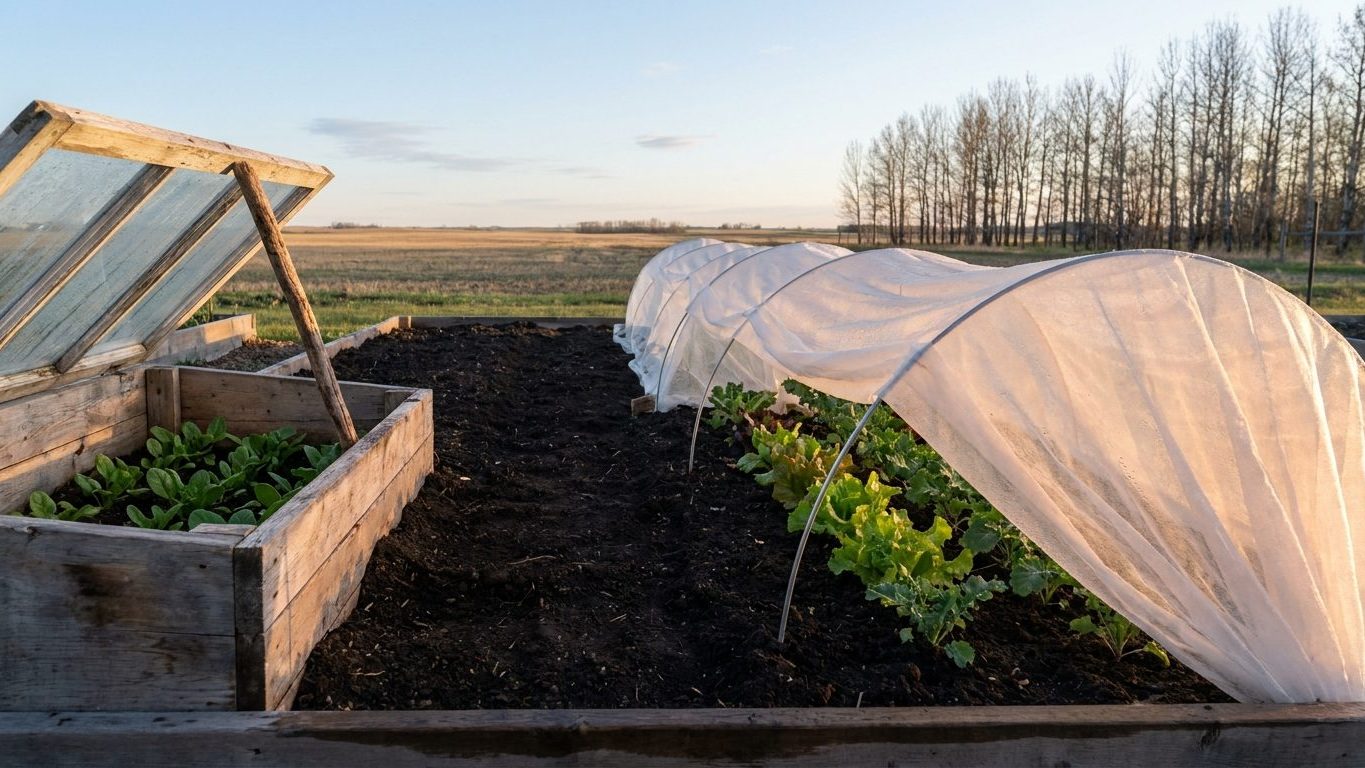

Floating row cover, low tunnels and cold frames do most of the work in Utah gardens. They add weeks at each end of the season, not months. The right pick depends on whether you are protecting a spring planting, a fall crop or winter greens. Heat is the bigger risk in this dry, sunny state, so a cover you can vent beats one you seal shut.
The short answer for Utah
Lightweight row cover over wire hoops is the best all-round choice. A low tunnel with clear plastic suits early spring and late fall. A cold frame carries hardy greens through winter. Walls of water and cloches are good for single warm-season transplants set out early.
The dates explain why covers pay off. At the Salt Lake City reference station, the last spring frost falls between April 12 and April 29, and the first fall frost between October 18 and October 29. Those dates come from NOAA’s 1991-2020 climate normals, and they mark the band where the chance of a 32°F freeze sits between 30 and 70 percent. A freeze can still arrive before or after that band. Covers are what you use to plant ahead of it and to keep growing past it.
Salt Lake sits in a mild valley. Most of Utah is higher and colder, so its dates run later in spring and earlier in fall. Southern Utah is warmer. Treat the Salt Lake dates as a midpoint to adjust from.
Which cover works best for spring in Utah?
Row cover on hoops gives a few degrees of frost protection and breaks the wind. It lets light and water through, which makes it forgiving. A low tunnel under clear plastic runs warmer, so it suits cool-season crops like lettuce, spinach, peas and radishes planted weeks before the frost-free window.
What about fall and winter?
The coldest month at the Salt Lake City station has a mean daily minimum of 24.2°F. That is cold enough to stop tomatoes and peppers, but hardy greens such as spinach, kale and carrots tolerate it, especially with a cover over them. A cold frame holds those crops for harvest well after the first fall frost. For timing, see When to Cover Your Garden in Utah.
| Extender | Best use in Utah | Main risk |
|---|---|---|
| Lightweight row cover on hoops | Spring and fall frost nights, wind protection | Blows off if not pinned down |
| Low tunnel with clear plastic | Early spring greens, late fall crops | Overheats on sunny days if left closed |
| Cold frame | Hardy greens through winter | Needs venting on bright days |
| Wall of water or cloche | Early tomato and pepper transplants | Covers only one plant, hard to scale |
What will not work here
A sealed plastic tunnel fails first. Utah spring days are bright and dry, and air under clear plastic can climb far above what seedlings tolerate, even when the night before dipped below freezing. A tunnel with no venting cooks lettuce and bolts spinach. Plan to open the ends or lift the sides every sunny morning, or choose breathable fabric instead.
Wind defeats the cheapest setups. Loose fabric tossed over plants and held by a few rocks will not last in the gusty weather common along the Wasatch Front and in open valleys. Bury the edges in soil or pin them every foot or two, and anchor hoops deeply enough that they do not lean.
Planting warm-season crops weeks early under cover also fails more often than gardeners expect. Cover warms the air, but soil stays cold after a hard freeze. Tomatoes, peppers and squash set into cold soil stall and wait it out. Melons and sweet corn sown too soon often rot before they sprout. A cover buys you a week or two on warm-season crops, not a month.
Winter is the other limit. Salt Lake City sits at 40.78 degrees north, and midwinter days there are short enough that most crops barely grow, however mild it is under the cover. A cold frame in December holds what you planted in September and October. It will not start new lettuce. Sow fall crops early enough to reach near-full size before the light fades.
Dry soil is the quiet problem. Fabric lets rain through, but plastic does not, and a low tunnel can run dry for weeks while the garden outside looks fine. Check moisture under covers by pushing a finger a couple of inches into the soil.
Finally, a cover will not rescue a crop from a deep, prolonged freeze. It handles the light frosts that bracket the season, and the earliest of those arrive sooner in higher, colder parts of the state than the Salt Lake dates suggest.
What changes across Utah
Utah has no single zone. On the USDA Plant Hardiness Zone Map (2023 edition, based on 1991-2020 normals), the state runs from 4a in the coldest mountain valleys up to 9a in the warmest southwest. The map is built on one variable, the average annual extreme minimum temperature, so it tells you what winter cold a perennial survives. It does not tell you your frost dates.
That is why a reader in the north or at altitude should shift every date later in spring and earlier in fall, and lean harder on the sturdier tools. In a cold, high valley, a low tunnel or cold frame is often worth more than lightweight fabric, and wall-of-water protection for tomatoes earns its keep. Short-season varieties matter more as well. The Salt Lake frost window will not describe your garden if you live well above the valley floor.
Southern Utah flips the problem. Winters are milder, so covers stretch the cool-season harvest into deep winter, and the main task is shade in summer. Fall planting starts when it is still hot, and covers there mostly guard against the occasional hard night rather than extending spring by weeks.
Latitude is the second thing to check. The 40.78 degrees north figure belongs to Salt Lake City. Day length, which drives when onions form bulbs and when fall crops slow, shifts as you move toward the northern or southern border. Gardeners near either edge should look up their own latitude.
To find your own zone, enter your ZIP code on the USDA map instead of guessing. Pair it with your local frost dates, then read Extending the Growing Season in Utah for the overview.
Where to check this for your own county
The best local source is Utah State University Extension, which has offices serving counties across the state. A county recommendation beats a statewide one, and the dates quoted above rest on a single Salt Lake City station.
Look for two things on the site. The first is your county’s planting calendar, which gives sowing and transplanting windows for your elevation and local frost pattern. The second is the list of varieties trialled in your area, since a lettuce or tomato that does well in a warm southern valley may sulk in a cold northern one.
If the website does not answer a question, call your county office. Staff and Master Gardeners often know local pockets, like a canyon mouth that holds cold air or a bench that stays frost-free weeks longer than the valley floor. That kind of detail rarely shows up in a statewide chart. Ask when they would cover and when they would pull the cover off.
Checking this against your own garden
Your own observations outrank any date in print. Three are worth watching, and none needs a gadget.
- Soil warmth by feel. Push your hand into the bed in the morning. If it feels cold enough to numb your fingers within a minute, warm-season seeds will sit. A bed that feels cool but not cold has warmed earlier than the neighbor’s, which usually means a sunny, sheltered spot.
- The first male squash flowers. If they appear early, your bed runs warm. If they come late, hold back on planting more heat-lovers next year.
- First true leaves. Seedlings first show rounded seed leaves, then the shaped leaves of the real plant. If true leaves come slowly under cover, the tunnel is too cool or too shaded.
Write the dates down each year. After two or three seasons you will have a calendar for your own yard, and it is a better guide than a station miles away.
Common questions
What is the cheapest season extender for Utah?
Lightweight row cover on simple hoops is the lowest-cost way to protect against frost. Old bedsheets work on a single cold night, but they trap moisture and blow off in wind, so fabric made for gardens lasts longer.
Can I grow vegetables through a Utah winter?
Hardy greens, such as spinach, kale and mâche, can survive under a cold frame or tunnel. They grow very little in midwinter because of short days, so plant them early enough that they are nearly full-size before the light fades.
When should I remove covers in spring?
Remove or vent them on any sunny day, and close them again before evening. Take them off for good once nights stay above freezing and plants have grown enough to need pollination or room to spread.
Do the Salt Lake frost dates apply to my garden?
They apply to the reference station. Higher and colder parts of the state have a later last frost and an earlier first frost, while southern Utah has the opposite. Your county Extension office can give you dates closer to your location.