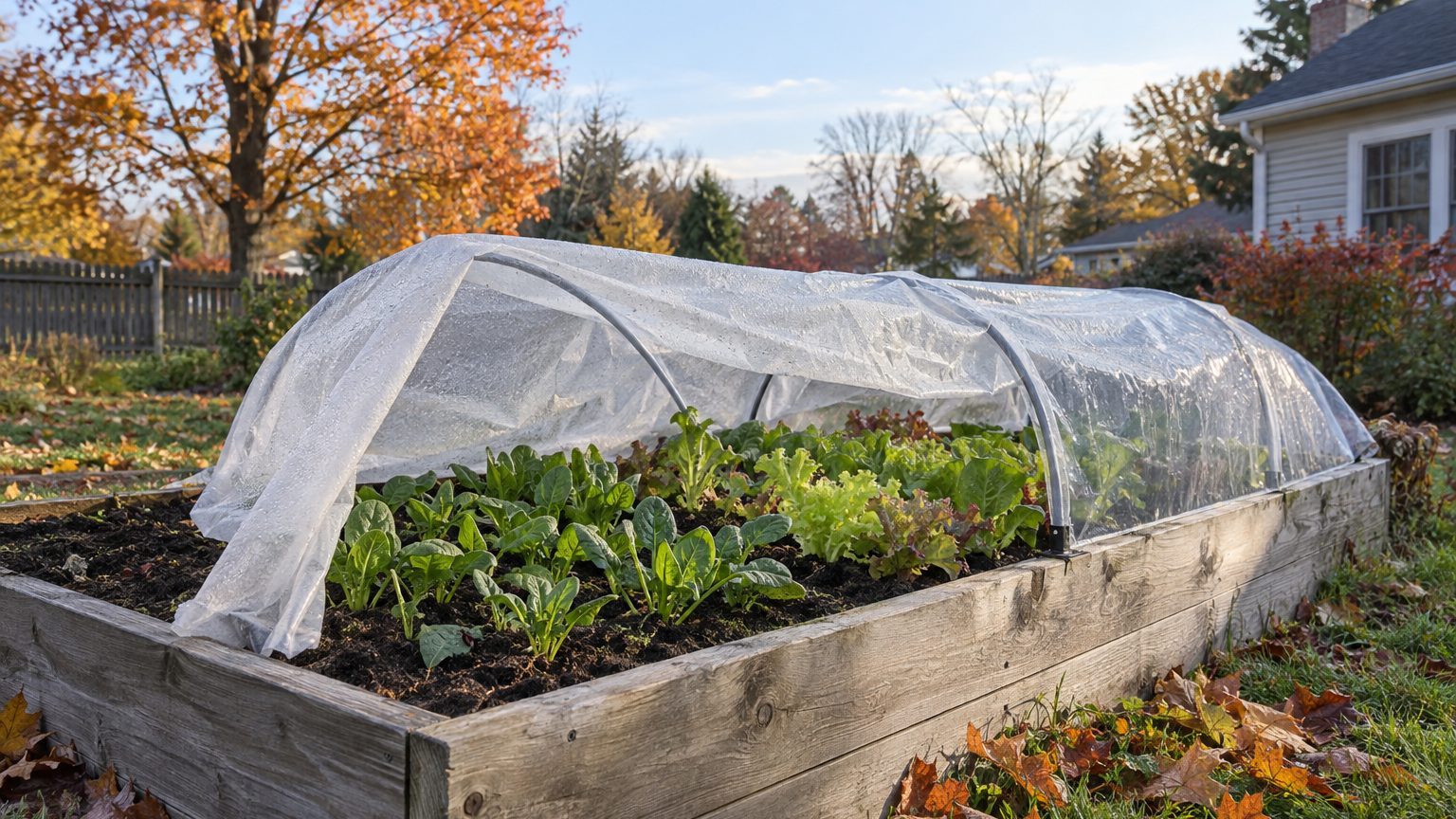

In Salt Lake City, the last 32 F freeze of spring typically falls between April 12 and April 29, and the first of fall between October 18 and October 29. A cover can stretch both ends of that window, but only by a few weeks, and only if soil and daylight cooperate. Most of Utah sits higher and colder than the valley floor, so treat these dates as a reference point for your own yard, not a verdict.
When the soil is warm enough in Utah
April 12 to April 29: that is the span most readers are after. It comes from the NOAA NCEI 1991-2020 Climate Normals for the Salt Lake City station (USW00024127), and it marks the band where the chance of a 32 F freeze runs between 30 and 70 percent. It is a probability, not a promise. Some springs break the pattern in both directions.
The date is also a proxy. A frost date tells you when the air stops threatening to freeze tender leaves. It says nothing about whether seeds will sprout or roots will work. Soil is slow. It gains heat gradually through spring and lags behind the air, so soil readiness arrives after the frost risk ends, not with it. A bed can be frost-safe and still too cold for a bean seed to do anything but rot.
What a cover changes in that gap
A cover works on the soil first and the air second. Laid over a bed for a stretch of days before sowing, it traps the sun’s heat, slows the loss of warmth at night, and keeps wind from stripping it away. Overnight, heat stored in the ground radiates upward and gets caught in the still air under the fabric or glazing. A second layer, such as fabric inside a hoop structure, adds another pocket of still air.
The gain is real but variable. It depends on the material, the night, the wind, and whether the ground was warm to begin with. A clear, calm night after a sunny day is when a cover helps most, and also when the sky is draining heat fastest. A cover shifts the limit. It does not remove it, and a hard freeze can still take everything underneath. This overview of Extending the Season: What a Cover Buys, and What It Cannot covers the mechanism in more detail.
Anything closed needs ventilation, and that is a matter of keeping the crop alive. A shut cold frame in spring sun can cook its contents within an hour, even when the morning was near freezing. Prop it open on any sunny day and close it again in the evening. Everything described here is passive: no heaters, no lamps, no candles, nothing that burns or plugs in.
One caution on geography. Salt Lake sits in a mild valley. Higher benches and mountain valleys warm later, and southern Utah warms earlier. A soil thermometer in your own bed, read in the morning, beats any regional date. The seed packet lists the soil temperature each crop needs, and that number, not the calendar, should set your sowing day.
How long the season lasts here
Put the two sets of dates together and the Salt Lake City window runs from roughly 172 to 200 days. Because each date is a band, the answer depends on which ends you pair:
| Pairing | Last spring freeze | First fall freeze | Days between |
|---|---|---|---|
| Longest window | April 12 | October 29 | 200 |
| Early to early | April 12 | October 18 | 189 |
| Late to late | April 29 | October 29 | 183 |
| Shortest window | April 29 | October 18 | 172 |
That is about 25 to 29 weeks. A number only matters for what it permits, so here is what it permits.
What a window this long allows
A window of nearly six months or more leaves room for two sowings of fast crops: one in spring, a second in mid to late summer that matures before the October freezes. Work backward from October 18, the early edge of the fall band, and subtract the days to maturity on the packet. Then add a cushion, because plants grow more slowly as autumn light shortens, and the packet number assumes midsummer pace. The succession sowing guide on this site lays out that backward count crop by crop.
A long window also changes the math on transplants. Moving a seedling costs it a few days while the roots recover. In the valley, where the season has slack, that setback is easy to absorb, and direct sowing of roots and greens often wins on simplicity.
What a shorter window changes
These figures belong to one valley station. At higher elevations the window is shorter, and the first sowing may be the only one. There, a transplant earns its root check: the weeks it spent growing indoors are weeks the garden never had. The trade is worth making when those banked weeks outnumber the days lost to transplant shock, and for long-season warm crops it nearly always does. Where you live in Utah determines which of these two gardens you actually have. If you are above the valley floor, find your own frost dates before counting days.
Heat and water in Utah
Any such count would describe a single reference station, not the whole state, and guessing would mislead you. Ask the nearest weather station or your county extension office. What can be said honestly is that heat and water change what you do after the cover goes on. Where summers run hot and dry, the work is shade, mulch, and steady moisture at the root. Where a high valley stays cool and damp, the trouble is mildew, slow ripening, and disease that spreads through crowded, humid foliage.
For Utah’s season extension, though, the governing facts are light and cold, working together.
Latitude and daylight
Salt Lake City sits at 40.78 degrees north. That figure belongs to the city, not the state, which spans several degrees. Someone in Logan or in the far south should look up their own latitude. Latitude sets the date in autumn when daylight falls below what leafy crops need to keep growing. After that date, a cover holds a crop alive rather than growing it. You are storing the harvest in the field, not extending the growth. Day length also tells an onion when to stop making leaves and start making a bulb, so the onion’s day-length type matters more than warmth does.
The coldest month decides the structure
At the Salt Lake City reference station, the mean daily minimum of the coldest month is 24.2 F. That is an average low, not a record, so some nights run colder. Every typical night in that month sits below freezing. A light fabric lying on the crop adds some protection in the shoulder seasons, when nights hover near the freezing line. Holding a crop through the deepest cold is a different job, and in general only a framed structure with an air gap and a second layer has a chance. Even then it only shifts the limit. And on any sunny winter day the structure has to be opened, or the heat builds fast.
The USDA Plant Hardiness Zone Map (2023, built on 1991-2020 normals) lists Utah as 4a to 9a. That scale is built on one variable, the average annual extreme minimum temperature, so it predicts whether a perennial survives, not whether lettuce makes it through March.
Which season extension suit Utah
Choose by type, and let your elevation set the criteria. Where the season is short, favor the earliest-maturing, most cold-tolerant types, since every week saved counts more than size or yield. Where summers run hot, the priority shifts to types that tolerate heat and to setups with airflow and shade at the root, so a cover that helped in April does not become a liability by July. Where a site stays humid, disease resistance comes first, ahead of everything else on the seed label.
As for structures, three passive options cover most Utah gardens:
- Floating fabric laid directly on the crop, for shoulder-season nights near freezing.
- Low hoops with fabric or film, which hold still air above the bed and give a second layer.
- A cold frame, which gives the most protection and demands the most ventilation discipline.
The varieties that perform in Utah depend on elevation, soil, and the local trial record. A recommendation without it is a guess dressed as advice. The varieties tested in Utah conditions are listed by Utah State University Extension, and that list is the only recommendation that means anything for your yard.
Gardeners curious how the same tools behave under different weather can compare Extending the Growing Season in New York and Extending the Growing Season in Massachusetts, where humidity rather than dryness shapes the choices.
Common questions
When can I plant outside in Utah?
Start from the frost band, April 12 to April 29 in Salt Lake City, then wait for the soil. Cool-season crops tolerate cold ground. Warm-season crops need warmer soil than the air alone suggests. Check the packet and a soil thermometer.
Does a row cover make plants frost-proof?
No. A cover shifts the limit by an amount that varies with material, wind, and how warm the ground was. A hard, clear night can still kill what is underneath.
Is the Salt Lake City frost date the date for my yard?
Only if you garden in that valley. Higher ground is colder and southern Utah is warmer. Use the city figure as a starting point, then check a station near you.
Do I really need to open a cold frame?
Yes. In spring sun a closed frame can overheat within an hour, even after a cold morning. Prop it open on sunny days and close it at evening.