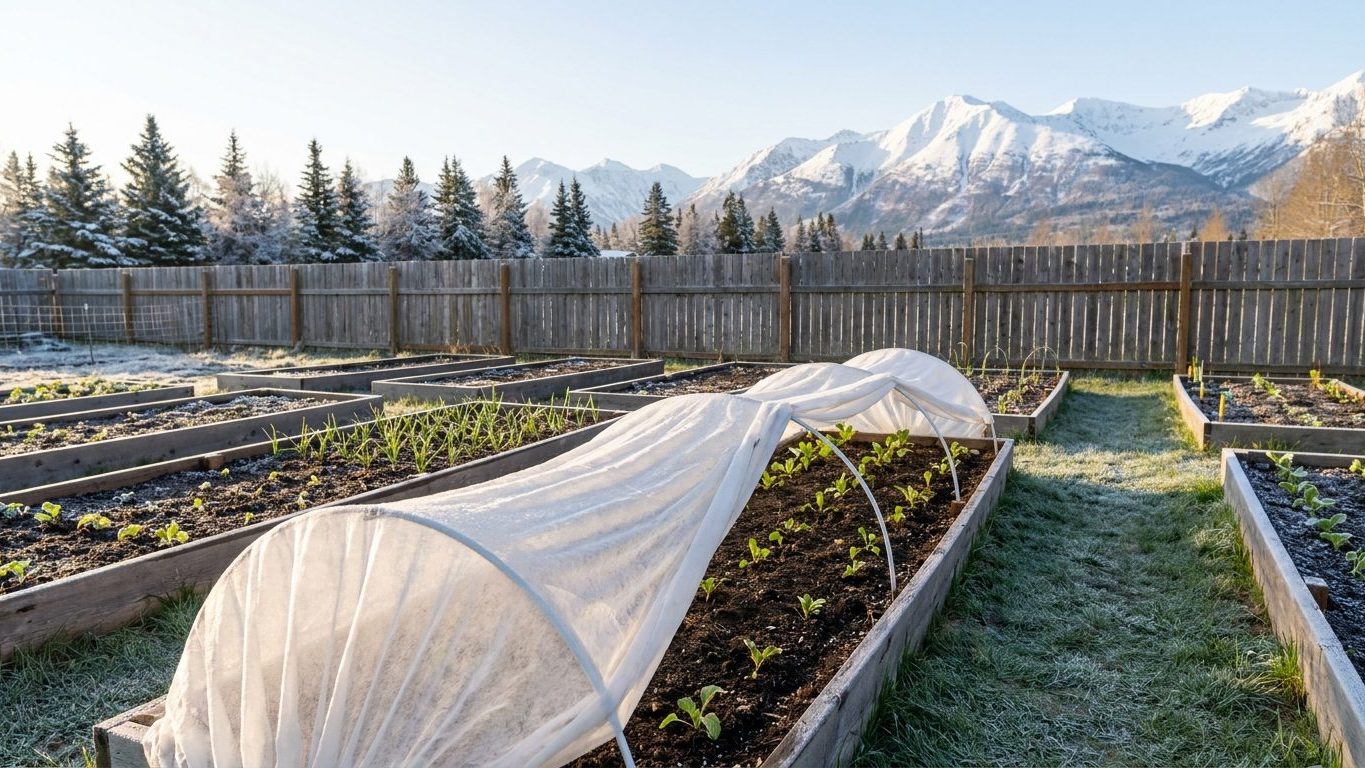

Cover tender plants on any night the forecast low sits at or near 32°F. In Wisconsin that happens into late April in spring and from mid-October in fall, and earlier inland and in the north. Hardy greens can wait for a harder freeze. Tomatoes, peppers and squash cannot. The calendar tells you when to keep covers handy, and the forecast tells you which night to use them. The wider toolkit is laid out in Extending the Growing Season in Wisconsin.
The short answer for Wisconsin
Cover tender plants whenever the overnight forecast calls for 32°F or lower, and keep covers within reach from mid-April through late spring and again from early October on. At Milwaukee, the reference city, the last spring freeze falls between April 16 and April 29, and the first fall freeze between October 17 and October 29.
Those dates come from NOAA’s 1991-2020 climate normals and describe a 30 to 70 percent band of 32°F freeze probability. On a date inside the spring window, a freeze is close to a coin flip. Before April 16 it is more likely than not, and after April 29 it gets rarer but does not vanish. In fall the logic runs the other way. Before October 17 a first freeze is still less likely than not, and by October 29 it has more likely than not already happened.
When do you cover in spring?
Start covering the night a forecast low approaches freezing and the crop is tender. Clear, calm nights after a warm day lose heat fastest, so those are the dangerous ones. Cloudy or windy nights hold warmth near the ground. Drape the cover in late afternoon while the soil still holds the day’s heat, and pull it off the next morning once the air is above freezing.
Hardy crops need less. Peas, spinach, lettuce, kale and onions take a light frost without help, so save the cover for a hard freeze, when the forecast drops well below 32°F.
When do you cover in fall?
The same rule applies, but the Milwaukee dates run late for much of the state. Lake Michigan delays the first fall freeze along the shore. Inland southern Wisconsin typically freezes in early October, and the north freezes far earlier. A gardener away from the lake should start watching forecasts in late September. One light freeze often comes before a stretch of mild weather, so covering tomatoes and peppers through that first cold night can buy a few more weeks of fruit.
What will not work here

A single layer of light fabric will not carry tender crops through a hard freeze. Frost cloth adds a few degrees at best. A night forecast in the low 20s will kill tomatoes and peppers under one layer, and no amount of tucking the edges changes that. The better options, including low tunnels and double layers, are compared in Which Season Extenders Work in Wisconsin.
Can you plant tender crops in mid-April under a cover?
The freeze window of April 16 to April 29 makes this a gamble. Even if the cover saves the leaves, cold soil stalls roots, and a tomato set out that early often sits still for weeks. A cover protects against one cold night, not against a cold month. Plants set out under cover work best when the soil has already warmed and the cover only has to handle the odd frosty morning.
Does a sunny day under plastic cause trouble?
Yes. A closed plastic tunnel on a bright 50°F April day can climb well past what seedlings tolerate, and the damage is as real as frost damage. Vent the ends or lift the sides by mid-morning. Spring wind off the lake and across open fields will also strip loose fabric, so pin or weigh down every edge.
Can you grow through a Wisconsin winter under cover?
Tender crops cannot. The mean daily minimum of the coldest month at Milwaukee is 17.2°F, and inland and northern gardens run colder. Lettuce and other soft greens freeze solid inside an unheated tunnel on nights like that. Spinach, kale and similar hardy crops survive under cover, but they barely grow. At about 43 degrees north, daylight shrinks to a little over nine hours at the winter solstice, and plants make almost no new leaf in those weeks. A winter cover keeps what you grew in fall rather than adding to it, so sow cold-hardy crops early enough that they reach harvest size before the days shorten.
Is covering in October a rescue plan?
It works for one or two nights. By late October, nights are long and the soil is cooling, so a cover on warm-season crops only delays the end by days. Cover as soon as the first freeze is forecast, not after it has already blackened the leaves.
What changes across Wisconsin
Wisconsin has no single answer. The USDA Plant Hardiness Zone Map (2023 edition, built on 1991-2020 normals) places the state in zones 3b through 6a, a spread of roughly six half-zones. That gap is wide enough that a gardener in the far north and one along the southern lakeshore are working with different calendars.
The Milwaukee figures sit near 42.95 degrees north, with a coldest-month mean minimum of 17.2°F. They describe that city. A reader near the northern border or well inland should expect the spring dates to run later and the fall dates to run earlier. In the north, first fall freezes arrive well before October, sometimes in September, so covers belong at the garden’s edge by late summer.
The hardiness zone is built on one variable, the average annual extreme minimum temperature. It tells you whether a perennial survives winter, not when the last spring frost falls. Two gardens in the same zone can have frost dates weeks apart, so use zone numbers for plant selection and frost dates for covering decisions.
Latitude matters as well. Day length changes from the southern border to the northern one, and it sets how quickly fall greens grow after the equinox. A gardener near the edge of the state should look up their own latitude rather than lean on the Milwaukee number.
To find your own zone, enter your ZIP code in the USDA Plant Hardiness Zone Map tool. Do not guess from a neighbor’s garden or a seed packet.
Where to check this for your own county
The University of Wisconsin-Madison Division of Extension is the place to start. Every county has an extension office, and its staff know the local frost pattern, soil and lake influence far better than any statewide average can.
Look for two things there. The first is the local planting calendar, which gives dates for your area, often for each vegetable. The second is the list of varieties that have been trialed in your county. A tomato that ripens in a southern lakeshore county may stall before ripening in a northern one, and the trial results show which ones finish.
A county recommendation beats a state one. Statewide dates, like the Milwaukee windows above, average across lakeshore warmth, inland cold pockets, hills and a hundred different soils. A county office can tell you that your area runs ten days colder than the state figure, or that the nearby lake shields you in fall.
Many counties also have Master Gardener volunteers who answer phone and email questions for free. Ask them when the last hard freeze usually hits locally, and when they start covering tomatoes in fall.
Checking this against your own garden
Your own observations outrank every date on this list. Three things are worth watching, and none needs a tool.
Soil warmth by feel. Push your hand a few inches into the bed on a spring morning. If the soil feels cold enough to ache after a few seconds, tender transplants will sit and stall. Compare a raised bed on the south side of the house with a low bed in the open. The difference shows how much earlier your warm spots can be planted.
The first male flowers on squash or cucumbers. Male blooms open before female ones. Their arrival tells you the plot has finally warmed up. It is also the signal to lift covers during the day so bees can reach the flowers.
The first true leaves on seedlings. The first pair are seed leaves. The second pair, the true leaves, show the plant is growing, not just surviving. If beans or squash hold at seed leaves for more than a week or so, the spot is running cold and covers should stay on at night. Also notice where frost sits on the grass first on a clear morning. Cold air drains downhill, so the lowest corner of the yard can freeze while higher ground stays clear.
Common questions
What temperature should I cover plants in Wisconsin?
Cover tender crops such as tomatoes, peppers, squash and beans when the forecast low is 32°F or lower. Hardy crops like spinach, kale and peas tolerate a light frost and need cover only for a hard freeze.
Can I use a bedsheet instead of frost cloth?
For a single night, yes. Prop it on stakes so it does not rest on the leaves, and remove it in the morning. A sheet gives a few degrees of protection at most, so it will not save plants from a deep freeze.
Should covers stay on during the day?
Fabric row cover can stay on in cool weather, but remove or vent plastic on sunny days to prevent overheating. Lift covers on squash, cucumbers and tomatoes once blossoms open so pollinators can work.
Is the Milwaukee frost date right for my garden?
It applies to Milwaukee. The lake delays the first fall freeze at the shore, inland southern Wisconsin typically freezes in early October, and the north freezes far earlier. Check your county extension office for local dates.