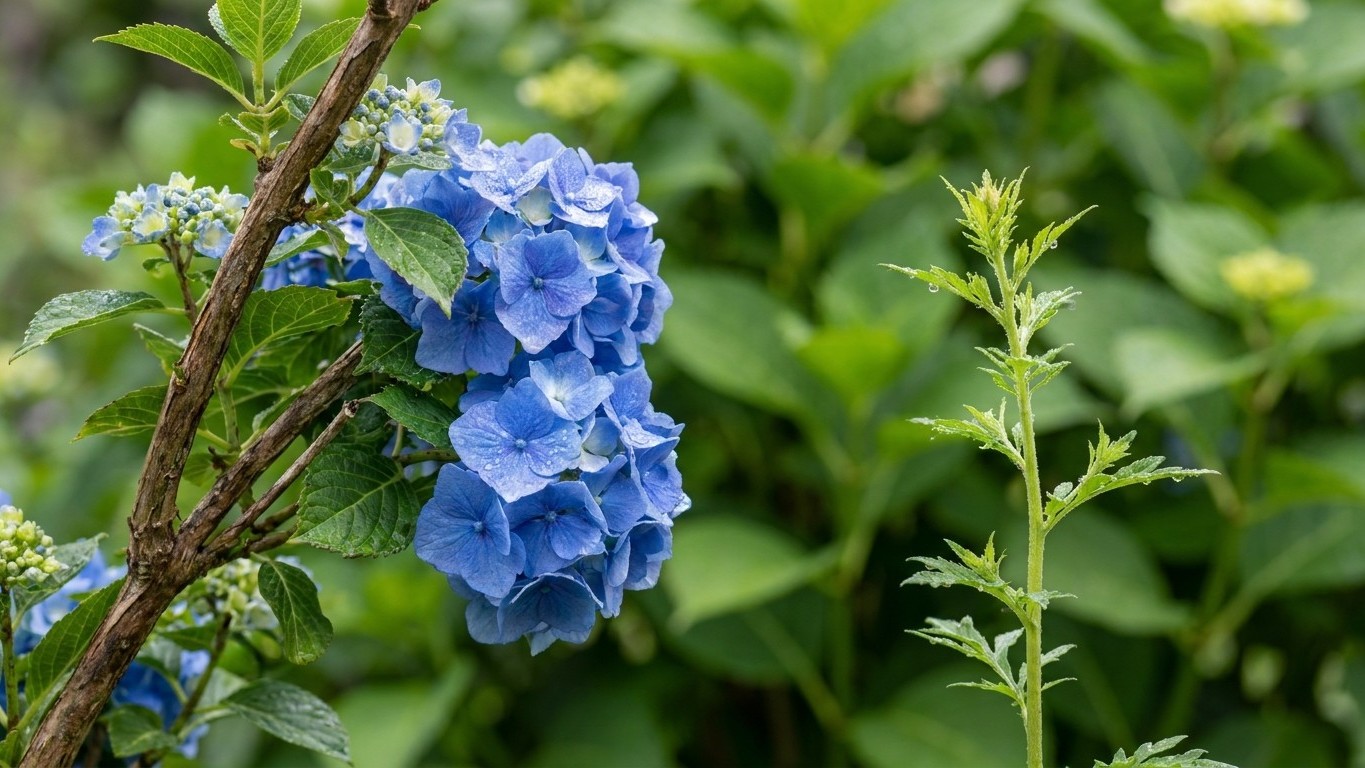

Most hydrangeas in Idaho need some winter help, and how much depends on the type and the elevation. Bigleaf hydrangeas set next summer’s flower buds on old stems, so they need a mulch mound and a stem cage in most of the state. Panicle and smooth types usually need only a deep fall watering and a mulch ring. Timing matters as much as materials: cover too early and you hold in warmth, uncover too early and a late frost takes the buds.
What this comes down to in Idaho

Protection runs from the first hard freeze of fall to the last spring frost. At Boise, the average first fall frost falls between October 7 and October 21, and the average last spring frost between April 23 and May 7 (NOAA NCEI climate normals, Boise station). Boise is a low valley, though, and most of Idaho is higher and colder, so those dates move earlier in fall and later in spring as you climb.
The cold itself is only part of the story. The USDA Plant Hardiness Zone system, which spans 3b to 7b across Idaho, rates a place by one number: the average annual extreme minimum temperature. It says nothing about how fast the temperature swings, how dry the wind is, or whether snow covers the ground. Those three things decide most hydrangea losses here. Dry winter air pulls moisture out of exposed stems faster than frozen roots can replace it, and a warm spell in late winter can wake buds just before a hard cold snap.
Which hydrangeas need the most protection?
Bigleaf hydrangeas (Hydrangea macrophylla) carry the most risk because the flower buds form on last year’s stems. Lose the stems and you lose the blooms, even if the plant regrows from the base. Panicle and smooth hydrangeas bloom on new growth, so a hard winter costs them a few weeks of regrowth rather than a season of flowers. Oakleaf hydrangeas fall in between: the buds are on old wood, but the plants are reasonably hardy. The full breakdown by type is in Which Hydrangeas Survive a Idaho Winter.
What does winter protection actually consist of?
Four jobs cover nearly every case:
- Water deeply in fall so the roots go into winter moist.
- Pile loose mulch (shredded leaves or straw) around the crown after the ground has cooled.
- Circle bigleaf stems with a wire cage and fill it with leaves or straw.
- Shield plants from wind and winter sun with burlap on stakes if the spot is exposed.
Everything else is a variation on those four. Foam cones and plastic wraps tend to cause more trouble than they prevent, for reasons covered below.
Working it out for your own garden
A fixed calendar date will fail the first time you move or the first cold year, so work from your own frost window. Look up the average first fall frost and average last spring frost for the town nearest you. Boise’s ranges are the example here, and you can swap in your own.
How do you time fall preparation?
Start from the first fall frost and count back. Stop fertilizing about six weeks before it, so the plant stops pushing soft new growth that frost will kill. At Boise, the first fall frost range of October 7 to October 21 minus six weeks gives roughly the last week of August to the first week of September. Water deeply through fall, then give one more long soak before the ground freezes. Mulch and cages go on after a few hard freezes have chilled the soil, which at Boise usually means late October into November. Covering while the soil is still warm invites mice and keeps the plant from hardening off.
When do you uncover in spring?
Count forward from the last spring frost range. At Boise, that is April 23 to May 7. Pull the mulch back in stages through that window instead of all at once, and keep the cage and some burlap handy until the window closes. If a frost is forecast after buds have opened, drape a sheet or burlap over the plant for the night and take it off the next morning.
How do you tell what survived the winter?
Bigleaf hydrangeas leaf out late, sometimes into late May, so a bare plant in early May is not a dead plant. Wait for growth before pruning anything, then check each stem:
- Scratch a small patch of bark with a thumbnail. Green underneath means the stem is alive.
- Brown and brittle all the way down means cut it back to the first live bud pair.
- Green stems with no swelling buds mean the flower buds froze but the stem lived. Expect leaves and few flowers.
That last result tells you the protection was too thin or too late, and next fall you add more mulch or a taller cage. Adjust one variable at a time and you learn your own garden’s pattern within two winters.
What changes across the state
Idaho runs from a low western valley to alpine country, and the hydrangea calendar shifts with it. The single biggest factor is elevation: each step up shortens the season on both ends. Cold air also drains downhill and pools in valley bottoms, so a garden at the foot of a slope can frost earlier than one a few dozen feet higher on the same hillside.
North and south differ in character, too. The Panhandle gets more moisture and more reliable snow, and snow is the best insulation a hydrangea can have. The Snake River Plain in the south is drier, with colder, clearer nights and less dependable snow cover. Eastern Idaho and the high mountain valleys are the harshest, and the numbers there are far from Boise’s.
| Part of the state | Winter pattern | What it means for hydrangeas |
|---|---|---|
| Low valleys and river canyons (Boise area, lowest canyon bottoms) | Longest season, mildest winters, dry air | Bigleafs often do well with mulch and a cage; water in dry spells |
| Panhandle and north | More snow and moisture, cold snaps | Snow cover helps; protect against wet, heavy snow on stems |
| Eastern Idaho and high valleys | Short season, deep cold, late spring frosts | Favor panicle and smooth types; treat bigleafs as containers or heavily protected |
The USDA hardiness range of 3b to 7b across Idaho is a rough measure of that spread, and the extension office in your county can tell you which end you live on. Container hydrangeas are a practical option at the cold end, because a pot can move into an unheated garage once the leaves drop.
The mistakes this state punishes

Mulching too early tops the list. A warm October makes it tempting to pile on leaves while the soil is still mild, but that traps warmth, keeps the plant from going dormant, and gives mice a cozy place to nest and chew bark. Wait for the ground to cool and a few hard freezes to arrive.
Uncovering during a warm spell is the second. A string of sunny days in March or early April can look like spring, but the last spring frost range at Boise runs into early May, and later at higher elevations. Buds that swell under a thin layer of protection and then meet a frost are lost. Remove covers in stages and watch the forecast.
Wrapping plants in plastic is a third. Plastic heats up in winter sun and sweats, which forces buds and invites rot. Burlap and loose leaf-filled cages breathe; plastic does not.
Other mistakes are quieter. Skipping the fall soak sends plants into dry winter air with thirsty roots. Fertilizing in late summer pushes tender growth that dies back. Pruning bigleafs hard in fall removes the very stems that carry next year’s buds. And planting a bigleaf in an exposed, windy spot on the north side of the house asks for dieback no mulch will fix. If color is on your mind, the work of shifting bloom color belongs to soil chemistry, covered in Why Hydrangeas Are Pink in Idaho, and How to Turn Them Blue, and it has nothing to do with winter care.
Checking this against your county
The Boise dates here are a starting point. Your county extension office knows the local frost dates, the cold pockets, and which winters have hit hardest. Start with University of Idaho Extension to find the office that serves you. For the rest of the growing picture, including siting, soil, and watering, see growing hydrangeas in Idaho.
Common questions
When should I cover hydrangeas for winter in Idaho?
Wait until the ground has cooled and a few hard freezes have passed. At Boise, the first fall frost typically arrives between October 7 and October 21, so mulching often lands in late October or November. Colder, higher places get there sooner, so follow your own local frost dates.
Do panicle hydrangeas need winter protection?
Rarely. They bloom on new growth and are hardy through most of the state, so a fall soak and a few inches of mulch are usually enough. Young plants in the coldest valleys can use a little extra mulch for their first winter or two.
Is it better to use burlap or foam cones?
Burlap on stakes, or a wire cage filled with leaves, breathes and keeps wind off. Foam cones and plastic trap moisture and heat on sunny days and tend to promote rot or premature bud swelling.
When can I take winter protection off?
Take it off in stages as the last spring frost approaches. At Boise that window runs from April 23 to May 7, and later at higher elevations. Keep a sheet or burlap ready for frost nights until the window has closed.