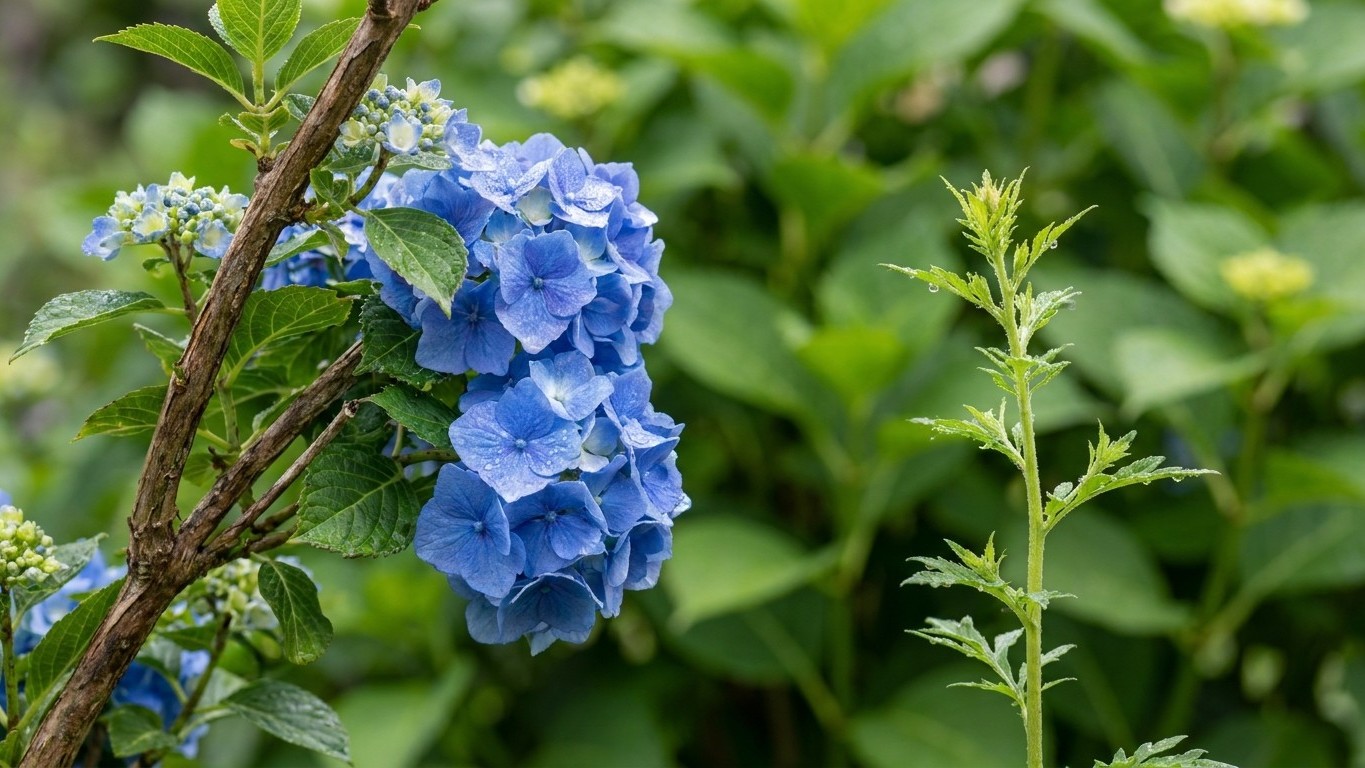

The best time to plant hydrangeas in Texas is fall, with early spring as the backup. Around Houston that means October through early November, or March after the last freeze. Farther north, both windows shift by weeks. Match the species to your soil: panicle and oakleaf types handle heat and alkaline ground better than bigleaf mopheads, which do best in acidic East Texas soils. Afternoon shade helps everywhere. For the big picture, see How to Grow Hydrangeas: The Complete Guide, and browse more Texas guides for the rest of the yard.
When to plant Hydrangeas in Texas

Houston is the reference city here. At Houston Intercontinental (station IAH), the NOAA NCEI 1991-2020 Climate Normals put the last spring 32°F freeze between February 4 and March 1, in the band where the odds of another freeze run 30 to 70 percent. The first fall freeze lands between December 1 and December 19. Those dates describe the mild Gulf end of the state. Texas spans four USDA zones, and the Panhandle, North Texas, the Hill Country and higher ground all freeze later in spring and earlier in fall. Even within Houston, Hobby airport runs about two weeks milder than IAH. Treat the Houston dates as a starting point, then adjust for your county.
What is the best season to plant hydrangeas in Texas?
Fall wins. Soil stays warm for weeks after the air cools, so roots keep growing through the mild months while the top of the shrub rests. A hydrangea planted in October has a full winter and spring of root growth before the first 100-degree afternoon. In the Houston area, aim to have shrubs in the ground by early November, about four weeks before the earliest edge of the first-freeze window.
Spring planting works too, but it gives the plant less time to settle in before summer. In Houston, wait until the February 4 to March 1 band has passed, so early March is the target. Farther north, wait until nights stay above freezing and the buds on established shrubs in your neighborhood are no longer getting nipped. That is often April. Planting in June or July is possible with a nursery pot and daily attention, but it is the hard way.
Can you start hydrangeas from seed indoors?
You can, but you probably shouldn’t. Seedlings are slow, vary a lot from the parent, and take years to bloom. Most Texas gardeners buy container plants or root cuttings from a shrub they already have. Softwood cuttings taken in late spring or early summer usually root in a few weeks, then grow on in pots through the summer and go into the ground that fall.
Hardening off matters for any plant that has spent its life in a greenhouse, on a covered porch or indoors. Work back from your planting date. For a November 1 fall planting near Houston, start hardening off a couple of weeks ahead: gradually longer outdoor stints, beginning in full shade, then a little morning sun, then the exposure it will have in the bed. For an early-March spring planting, start a few weeks ahead. Plants that have been sitting outdoors at the nursery can go in the ground right away. Water the pot well the day before planting, and keep a frost cloth handy if a late cold snap is forecast.
Soil and site preparation
Hydrangeas want morning sun and afternoon shade. Bigleaf and oakleaf types scorch quickly on a west-facing wall in Texas summers, and the leaves wilt hard by 3 p.m. even with moist soil. Panicle hydrangeas take much more sun, up to a full day in the cooler north of the state, though they still look better with a break from late sun in the south. Dappled light under tall pines or high-canopied oaks is close to ideal.
Drainage decides more outcomes than any other factor. Heavy clay, like the Houston gumbo or the black clays of central and north Texas, holds water around roots and invites rot. Sandy East Texas soils drain fast and dry out. Hill Country and West Texas ground is often shallow, rocky and alkaline. In clay, plant the root ball with its top slightly above the surrounding soil, or build a raised bed. In sand and caliche, mix in generous organic matter so the soil holds some moisture.
Start the work weeks ahead. Several weeks before planting, loosen the soil deep and work in compost over the whole bed, not just the planting hole. A soil test through your county extension office tells you pH and nutrients, which saves guessing. If the pH is high and you want blue flowers, sulfur takes months to act, so apply it well before planting. Check the site for fire ant mounds before you dig, and treat them first.
Dig the hole wider than the root ball and no deeper. Spacing runs wider for bigleaf types, wider still for oakleaf and larger panicle types, and closer for smooth hydrangeas. Crowding invites mildew.
Can you grow blue hydrangeas in Texas?
Only bigleaf and mountain hydrangeas change color with soil chemistry. Flowers turn blue where the soil is acidic, because aluminum is then available to the plant. In less acidic soil they turn pink, and in between you get purple. Much of Texas, especially the central, western and blackland regions, has alkaline soil and often alkaline irrigation water, so pink is the default. In East Texas, where soils run acidic, blue comes easily. Elsewhere, blue takes soil sulfur or aluminum sulfate applied by label rate, repeated each year, and it is easier in a large container than in a native bed. White panicle and smooth types ignore soil pH completely.
Varieties that suit Texas
Three traits sort the field in Texas: heat tolerance, whether flower buds form on old wood or new wood, and how the plant copes with alkaline soil. Old-wood bloomers set buds the previous summer, so one hard freeze or one wrong pruning cut can erase a year of flowers. New-wood bloomers form buds on fresh spring growth, which makes them far more dependable where winters swing wildly.
| Type | Blooms on | Sun and heat | Best fit in Texas |
|---|---|---|---|
| Bigleaf (mophead, lacecap) | Old wood, some rebloomers also on new | Morning sun, afternoon shade; scorches easily | East Texas and the Gulf Coast with acidic soil, or containers |
| Panicle | New wood | Tolerates the most sun and heat | Nearly everywhere, including North Texas and the Panhandle |
| Oakleaf | Old wood | Part shade; handles heat well once established | Shady beds, woodland edges, East and Central Texas |
| Smooth | New wood | Prefers cooler conditions; may sulk in extreme heat | Shady sites in the cooler north |
Widely sold varieties carry these traits. Among panicles, Limelight is a sturdy, tall choice with lime-to-white blooms that age to pink, and Little Lime is its compact relative for smaller beds. Quick Fire blooms early in the season. Among bigleaf types, Endless Summer is a reblooming series that sets buds on both old and new wood, which is useful where a spring freeze might kill the old-wood buds. Oakleaf selections such as Snow Queen and Alice bring cone-shaped flowers and burgundy fall color. Annabelle and Incrediball are smooth hydrangeas with large white blooms, and Incrediball has stiffer stems that hold up better in rain.
Plant breeders keep releasing new selections, and the same name sometimes appears in different forms at different nurseries. Check the tag for mature size and sun needs rather than trusting the name alone. The neighboring Gulf state of Louisiana shares much of the East Texas climate; see Growing Hydrangeas in Louisiana: Types, Colour and Winter. If you are comparing with colder regions, Growing Hydrangeas in Maryland: Types, Colour and Winter shows the other end of the hardiness range.
What to plant alongside
The most useful neighbors are plants that like the same conditions. Ferns, such as autumn fern and holly fern, fill the shade at a hydrangea’s feet and keep soil cooler. Liriope makes a tough edging that tolerates Texas heat, and hostas do reasonably well in East Texas shade where summers aren’t too brutal. Azaleas and camellias share a taste for acidic, well-drained, lightly shaded ground, so they make logical groupings in the eastern part of the state.
Pollinator draw varies with the flower. Mophead types have mostly sterile florets that offer bees little. Lacecaps, oakleaf and smooth hydrangeas show small fertile flowers that bees and other pollinators do visit. Mixing in a few flowering natives nearby, such as those the county extension office recommends for your region, brings more insects through the bed.
Keep hydrangeas away from plants that want dry, alkaline soil, such as lavender and rosemary. Their needs clash at every watering. Shallow-rooted trees like silver maple pull moisture from the top foot of soil and leave the shrub thirsty. Turf grass, and Bermuda grass in particular, creeps into beds and competes for water. Roses, planted tightly next to hydrangeas, trap humid air and share powdery mildew, so give both room.
Some pairings come with big claims and thin evidence. Marigolds, garlic and chives are often said to repel hydrangea pests, but there is little reliable evidence that they protect shrubs from aphids or mites. Plant them if you like them, but don’t count on them for pest control.
Watering, feeding and support
The first summer sets the plant’s future. Water deeply, soaking the root zone, a few times a week in hot weather instead of a light sprinkle daily. Shallow watering encourages shallow roots, which fail in July. Established shrubs need a deep soak weekly, and more during drought. Check by pushing a finger into the soil. If it feels dry, water. Afternoon leaf wilt on a hot day is normal if the leaves perk up by evening. Wilting that continues into the morning means the plant is thirsty or its roots are in trouble. Drip lines or soaker hoses keep water off the leaves and cut down on fungal problems.
Mulch with shredded bark, pine straw or leaves, kept a little away from the stems. It slows evaporation, buffers soil temperature and suppresses weeds. Top it up each spring and again in fall.
Feed lightly. Wait until a newly planted shrub has settled in, then use a slow-release shrub fertilizer. For established plants, apply in early spring as growth starts (March in the Houston area, later in the north) and again in early summer. Heavy nitrogen gives leafy growth at the expense of flowers. If you want blue flowers on a bigleaf, choose a low-phosphorus formula, since phosphorus locks up aluminum. Stop feeding by late summer so the plant can slow down before frost.
Support is mainly for panicle and smooth types, which carry heavy flower heads on slender stems. A peony ring or three stakes with twine, set early in the season, saves them from flopping after a downpour. Cut back according to bloom habit. Bigleaf, oakleaf and mountain hydrangeas bloom on old wood, so prune right after flowering. Panicle and smooth types bloom on new wood and can be pruned in late winter. Every few years, cut a few of the oldest canes to the ground to renew the shrub, and remove suckers where they crowd the center.
Common problems

Yellow leaves with dark green veins, especially on new growth, point to iron chlorosis. It is common in alkaline Texas soils, where iron is present but the plant cannot take it up. A soil test will show the pH. Chelated iron gives a quick fix, and sulfur, applied well ahead of time, works on the pH over months. Brown, crispy leaf edges generally mean sun scorch, wind or irregular watering. Move the plant or add shade if it persists.
No flowers is the most frequent complaint. Check these causes in order: pruning at the wrong time on an old-wood bloomer, a late freeze after buds had swollen, too much shade, or too much nitrogen. A warm spell in February followed by a hard freeze will damage buds on bigleaf types even though the stems survive. Reblooming varieties and panicles reduce that risk.
Fungal problems show up in humid weather. Powdery mildew is a white coating on leaves, and Cercospora leaf spot makes brown or purple spots with yellow halos. Space the plants for airflow, water at the base, and clear fallen leaves. Root rot looks like persistent wilting despite wet soil and is usually a drainage problem. Replant higher or raise the bed.
Several of the pests Texas A&M AgriLife Extension highlights for home gardens can reach hydrangeas. Aphids cluster on new growth and leave sticky residue. Whiteflies rise in a cloud when you touch the leaves. Spider mites cause fine stippling and sometimes webbing, and they thrive in hot, dry weather. A strong spray of water, insecticidal soap or horticultural oil handles most light infestations. Root-knot nematodes, microscopic worms that form galls on roots, cause stunting and yellowing, and they are more of a problem in sandy soil. Fire ants build mounds in beds and sting when disturbed, though they rarely harm the shrub itself. Pest pressure varies from county to county, so bring a sample to your county extension office for identification before spraying anything.
Harvest and end of season
Hydrangeas are a cut-flower crop. For a vase, cut in the cool of the morning when blooms are fully open and firm, and plunge the stems into water right away. Re-cutting the stem and dipping the base briefly in alum powder helps bigleaf stems drink. For drying, wait until panicle and smooth blooms turn papery and shift color in late summer. Then cut, strip the leaves, and hang the stems upside down in a dark, dry spot for a few weeks. Dried heads last for months indoors.
As fall arrives, keep watering through dry spells, since stressed shrubs go into winter weak. Stop fertilizing by late summer. Near Houston, the first freeze falls between December 1 and December 19. In the Panhandle and North Texas it comes earlier, so watch your own forecast from mid-autumn. Refresh the mulch before the first freeze. If a hard freeze is predicted, cover bigleaf shrubs with frost cloth or an old sheet the evening before, and bring potted plants into a garage or porch.
Resist the urge to cut back dead-looking canes in winter. Bigleaf and oakleaf stems that look bare may carry live buds. In spring, scratch a bit of bark with a fingernail. Green underneath means the cane is alive. Wait until new leaves are opening to remove anything dead. In colder parts of Texas, a wire cage filled with dry leaves around old-wood bloomers gives extra protection.
Local help
Climate, soil and water quality change enormously from the Gulf to the Panhandle. Texas A&M AgriLife Extension has a county office in nearly every part of the state. Call or visit for local planting dates, soil testing, water-quality guidance and pest identification. A soil test before you plant is the cheapest way to avoid problems with pH and drainage.
Common questions
What month should I plant hydrangeas near Houston?
October through early November is ideal, giving roots a full cool season to grow. March is the second choice, after the February 4 to March 1 freeze window has passed. Summer planting demands near-daily watering.
Why do my hydrangeas wilt every afternoon?
Large leaves lose water faster than roots can supply it in intense heat. If the plant recovers by evening, it is fine. Add mulch, water deeply and move the shrub to afternoon shade if it happens daily.
Which hydrangea handles full sun best in Texas?
Panicle hydrangeas, such as Limelight and Quick Fire, tolerate the most sun. In South Texas, give even these a break from late-afternoon sun.
When should I prune hydrangeas?
It depends on the type. Prune bigleaf and oakleaf right after they bloom, by early August. Prune panicle and smooth types in late winter before new growth starts.
Why are my hydrangea flowers pink instead of blue?
Alkaline soil or irrigation water keeps bigleaf flowers pink. Blue needs acidic soil, which means sulfur or aluminum sulfate applied ahead of time, and it is easiest in containers. Test your soil first.