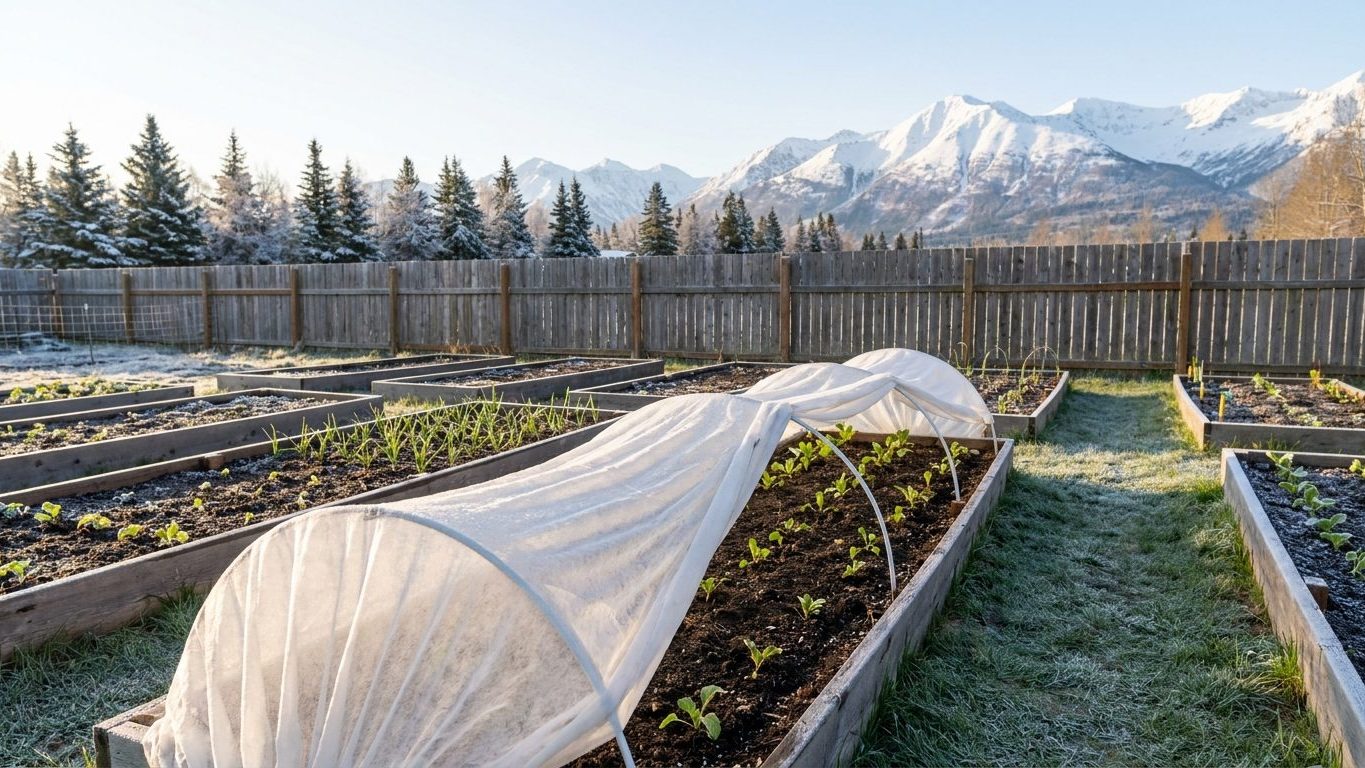

Cover the garden on any night the forecast low nears 32°F, and begin watching for those nights earlier in spring and later in fall than you might expect. In Cheyenne, the reference city for Wyoming, the average last spring freeze falls between May 7 and May 18. The first fall freeze comes between September 24 and October 5. At higher elevations, frost can arrive in any month.
The short answer for Wyoming
Keep covers on tender plants such as tomatoes, peppers and squash from the day they go in the ground until the May 7 to May 18 window is well behind you. Put them back on from September 24 onward. Hardy crops like peas, spinach and lettuce can go out earlier and stay later, with covers used on the coldest nights only.
Those dates come from the NOAA 1991-2020 Climate Normals for the Cheyenne station. They are probabilities of a 32°F freeze, taken from the 30 to 70 percent band. In spring, that means a freeze after those dates is still a real possibility. In fall, a freeze before them is too. The reference station has about 130 frost-free days between the mean last spring frost and the mean first fall frost.
A season that short means covers are routine equipment here. They earn their keep at both ends of the year, which is the whole logic of Extending the Growing Season in Wyoming. The calendar gives you the window to start watching. The forecast tells you which night to act.
In practice, three triggers cover most situations:
- A forecast low at or just above 32°F on a clear, calm night, when the ground loses heat fastest.
- Tender transplants set out before the middle of May, which need cover on every cold night until the weather settles.
- Late-season tomatoes, peppers and squash still ripening in late September, when one cold night can end the harvest.
Which cover to choose depends on how cold the night will be and how long you need it. Which Season Extenders Work in Wyoming sorts that out. The timing question comes first, though. A heavy cover on the wrong night does less than a light one on the right night.
What will not work here

Planting tender crops on the average last frost date and walking away is the most common mistake. Because the May 7 to May 18 dates sit in a middle probability band, watch the forecast closely before setting out tender plants. A tomato set out on May 10 with no cover is gambling against that.
The slowest approaches also fall short. With about 130 frost-free days at the reference station, a long-season crop started from seed in the ground with no head start often runs out of summer. Melons, winter squash and many peppers need a transplant, a warmed bed, or a cover that captures heat in both spring and fall. A cover that goes on only after the first frost has already arrived comes too late.
Cold itself can also beat the cover. The mean daily minimum in the coldest month is 18.1°F at the reference station. That is an average, so many nights run colder. A light fabric cover that handles a night at 30°F will not save tender plants through a deep freeze. In winter, covers protect hardy crops and mulched beds. They do not turn Wyoming into a warm climate.
Wind is the next problem. Covers that are not anchored along every edge blow off or tear, and a loose sheet can leave plants more exposed than they were before. Staples, soil along the edges, boards or heavy clips all work. Hoops that sit too loose rattle and fray the fabric.
Leaving covers on during a bright day is another way to lose a crop. At altitude the sun is strong, and sealed plastic heats up quickly even when the air outside is cool. A closed tunnel can cook seedlings by midday. Vent it in the morning and close it again before the afternoon cools.
The air is dry, too. A cover over bare soil slows evaporation but does not replace water, and a bed that dries out holds less heat overnight. Check moisture under covers before a cold night, since damp soil releases stored warmth more steadily than dry soil does.
What changes across Wyoming
Wyoming has no single answer. The USDA Plant Hardiness Zone Map (2023 edition, based on 1991-2020 data) puts the state anywhere from zone 3a to zone 6a. That spread is the gap between a lowland river valley and a high mountain basin. The zones rest on one variable, the average annual extreme minimum temperature, so they say how cold winters get and nothing about how short the summer is.
How should northern and high-elevation gardeners shift the dates?
Every date in this article belongs to Cheyenne, which sits near 6,000 feet. A garden at higher elevation will have a later last spring freeze, an earlier first fall freeze, and frost possible in any month. Plan on more covering days and a shorter window between them. Choose the earliest-maturing varieties and use covers that hold heat. A garden in a warmer, lower valley may see the opposite.
Latitude matters in a different way. Cheyenne sits at 41.15 degrees north, and Wyoming spans several degrees of latitude. Covers add warmth, but they do not change day length, and day length tells onions when to stop making leaves and start making bulbs. A reader near the Montana border or the Colorado line should check their own latitude before leaning on any date based on Cheyenne.
To find your own zone, use the USDA Plant Hardiness Zone Map and search by ZIP code rather than guessing from a neighbor’s garden. Even two properties in the same town can differ by a zone or a half zone, depending on slope, wind exposure and nearby buildings. Treat the Cheyenne dates as a starting point and shift them earlier or later based on where you live.
Where to check this for your own county
Your state extension service is the next stop. University of Wyoming Extension has county offices staffed by people who know the local frost patterns, the soil, and what has worked in nearby gardens. Look for two things: the local planting calendar for your county, and the list of vegetable varieties that have been trialed there.
The calendar tells you when gardeners in your area typically plant each crop and when they start protecting it. The variety trials matter even more at this altitude, because a variety that ripens in a long season elsewhere may never finish in a short one. Trial results show which tomatoes, peppers and squash ripen under local conditions, with or without covers.
A county recommendation beats a state one. Wyoming’s elevation range is wide enough that a state figure averages out places that behave very differently. The Cheyenne dates here are a state-level reference. They are accurate for the Cheyenne station and a sensible starting point elsewhere, but your county office knows your valley.
Call or stop by if the printed material is too general. Extension staff can say whether your neighborhood runs colder than the county average, how often late-May freezes have hit nearby gardens, and when local gardeners start covering in September. That local detail is worth more than any single date.
Checking this against your own garden
Your own observations outrank every date here. A garden is a small climate of its own, and a few simple signs tell you more than the calendar can.
Soil warmth by feel. Push your hand a few inches into the bed in the morning. If it feels cold and stays that way after a minute, warm-season transplants will sit and stall, and a cover or dark mulch over the bed can help. A bed that feels noticeably warmer than a neighbor’s, such as one beside a south-facing wall, can be planted sooner.
The first male flowers on squash. Squash and cucumbers produce male flowers first, then female flowers a little later. Watching when they open tells you how fast your garden is warming. If they come late, your site runs cooler than the calendar suggests, and you will want to keep covers handy later into the fall.
The first true leaves. The first pair on a seedling are seed leaves. The true leaves that follow show that the plant has settled in and is growing on its own. If true leaves are slow to appear on a transplant in a particular spot, that spot is likely cold, shaded or wind-scoured. Frost also tends to settle in low corners where cold air pools, so notice where the first frost shows up each fall and give those spots cover first.
Common questions
Should I cover plants when the forecast low is 35°F?
On a clear, calm night, yes. The ground and plant surfaces can run a few degrees colder than the forecast air temperature, so frost can form even when the forecast stays above 32°F. Cloudy, windy nights are less risky. Tender plants should be covered either way if the forecast is that close.
Do I need covers in the middle of summer?
At higher elevations, frost is possible in any month, so keep covers within reach all season. In lower areas like Cheyenne, midsummer frost is unlikely, but hail and strong wind can still damage young plants. A light cover can help with both.
What time of day should I put covers on and take them off?
Put them on in the late afternoon, before the air cools, so they trap the day’s stored heat. Take them off in the morning once temperatures are above freezing and the sun is on the bed. Leaving them on through a bright day can overheat plants, especially under plastic.
Can a cover touch the leaves?
Fabric row covers can rest on hardy plants, but plastic and heavy sheets conduct cold to any leaf they touch. For tender plants, hold the cover off the foliage with hoops, stakes or tomato cages. Anchor the edges so wind cannot lift it.