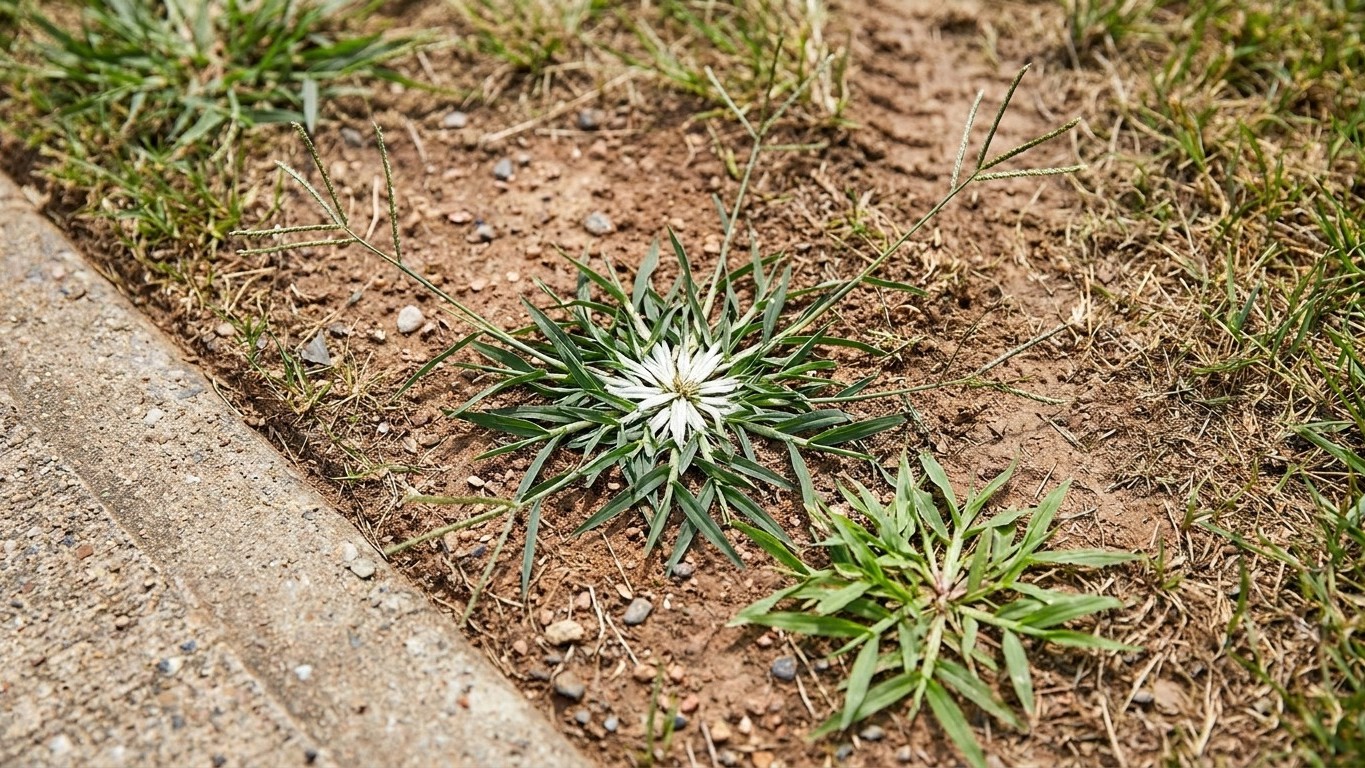

Sow warm-season grass seed in Louisiana in spring and early summer, once the soil two inches down reads 65°F and rising in mid-morning. In the southern parishes frost barely shapes the calendar, because summer heat is the limit. Seed needs about 45 days of growing weather before the first fall freeze, and seed sown later usually sprouts and then dies over winter. What follows covers the timing, the cutoff, the seed rates and the watering.
The best time to sow grass seed in Louisiana
What soil temperature should you wait for?
Warm-season grass seed germinates when the soil holds 65 to 70°F and rising. Air temperature misleads here, since a warm week in February can sit on top of cold ground. Measure the soil itself, two inches down, in mid-morning, and sow when the reading holds at 65°F or higher over several days. Spring seed then has the longest runway: weeks of mild weather to root before the July and August heat arrives.
Why does frost matter so little in south Louisiana?
At the south Louisiana reference station in the NOAA NCEI 1991-2020 Climate Normals, the typical last spring freeze falls between January 18 and February 8. The typical first fall freeze falls between December 17 and January 8. A 32°F freeze occurs there in only 86.8 percent of years, so roughly one year in seven has no freeze at all, and the fall window straddles the New Year. A normal planting calendar built around frost does not fit that pattern. Soil stays too cold for warm-season seed long after the last freeze, and the real constraint is summer heat. North Louisiana freezes far more reliably, so a homeowner there should count from the local freeze date. One city’s figures do not speak for the whole state.
Which grasses can you sow here?
The lawn species that suit the state are warm-season grasses: bahiagrass, bermudagrass, carpetgrass, centipedegrass, seashore paspalum, St. Augustinegrass and zoysiagrass. Seeds are available for some of them only (see the rates below). Cool-season grasses such as tall fescue or Kentucky bluegrass do not hold here. They stall in long, hot, humid summers, thin out and invite disease, so a lawn of them usually fades by midsummer. Winter ryegrass sown over a dormant lawn looks green for a few months, then dies when the heat returns. For a general walk-through of the sowing steps, see Starting a New Lawn From Seed.
The last date that still works
Count backward from the first fall freeze. Warm-season seed needs about 45 days of growing weather before that freeze to build roots. At the south Louisiana station, a freeze date between December 17 and January 8 puts the paper deadline between early and late November. That is the outer limit, and it assumes the weather stays warm enough to grow grass until then.
Soil temperature usually ends the season sooner. In fall the ground cools every week, and seed needs it at 65°F or higher. Once mid-morning readings two inches down fall below that and keep falling, the seed will not germinate well. Seed that does come up in cool soil grows slowly, and the seedlings are small when winter cold arrives. Seed sown too late germinates and then dies over winter, which wastes the seed and the money. When the soil thermometer reads under 65°F in fall and the trend is down, wait for spring.
North Louisiana runs on a tighter schedule. Its first fall freeze comes sooner, so the 45-day count lands earlier on the calendar, and the cutoff moves up with it. Ask the parish office of the LSU AgCenter for the local first-freeze date and count back from there.
Gardeners in neighboring states face the same logic with different dates. Compare the approach in When to Plant Grass Seed in Texas and When to Plant Grass Seed in South Carolina. In every case, the freeze date sets the end of the window. Spring soil warmth sets the start.
Seed rate and soil preparation
How much seed per 1,000 square feet?
Rates depend on the species. The numbers below are pounds per 1,000 square feet for a new lawn, and the ranges cover the differences between extension sources.
| Grass | Seed per 1,000 sq ft (new lawn) |
|---|---|
| Bahiagrass | 5 to 10 lb |
| Bermudagrass | 1 to 4 lb |
| Zoysiagrass | 1 to 2 lb |
| Carpetgrass | 1 lb |
| Centipedegrass | 0.25 to 1 lb |
| Seashore paspalum | Sod, sprigs or plugs only, no seed |
| St. Augustinegrass | Sod, sprigs or plugs only, no seed |
Overseeding an existing lawn takes half these rates. More seed does not insure against a bad stand. Crowded seedlings compete with each other and thin out on their own.
What does the ground tend to be like?
USDA lists the Ruston series as the soil that represents Louisiana. It is an Ultisol, an old, heavily weathered, leached soil that runs naturally acid and low in nutrients. The surface layer averages about 5.5 pH (slightly acid), with 65 percent sand, 24 percent silt and 11 percent clay. Organic matter sits near 1.8 percent. Soil like that drains well and dries out fast, so water runs through it, and it holds few nutrients for the grass to use.
That describes the state’s representative soil, and your yard may differ. River bottoms, hill country and any lot a builder has scraped or filled can be nothing like it. A soil test gives your own pH and nutrient numbers, and the LSU AgCenter runs one for a small fee. Apply lime or fertilizer only as the test directs.
How deep should you cover the seed?
Loosen the top few inches, rake out stones and old roots, and level the surface. Spread the seed evenly and rake it in lightly. Cover it with no more than a quarter inch of soil, then press it down with a roller or the back of a rake so the seed touches soil on every side. Seed buried deeper often never emerges, and that is the most common reason a new lawn comes up patchy.
Watering a new lawn until it holds
The seedbed should stay moist from the day you sow until the seedlings are growing. Moist means damp like a wrung-out sponge in the top inch, without puddles. Let that layer dry out once and the sprouting seed can die. Sandy, well-drained ground dries fast in warm weather, so expect to water lightly, often, and sometimes more than once a day. Short sessions work better than a long soak, which can wash seed into low spots.
Check the bed daily by touching it. Scratch the surface with a fingertip: if the top quarter inch is dry, water again. Rain does part of the work, but a hard downpour on bare seed can push it into clumps, so look for bare patches afterward and rake in fresh seed.
Once the grass is up and covers the soil, stretch the gap between waterings and make each one deeper. This pushes roots down, so the lawn survives hot, dry stretches later. Taper the watering gradually over several weeks instead of stopping all at once, because an abrupt cut leaves shallow roots exposed. Hold off on the first mowing until the grass stands above the mowing height recommended for that species, and keep the mower blade sharp so it cuts the young blades cleanly.
Keep foot traffic off the new lawn while seedlings are small. Fertilize only as the soil test recommends, since seedlings burn easily on a heavy dose.
Common questions
Can I plant grass seed in Louisiana in fall?
Only if the soil still reads 65°F or higher two inches down and the seed has about 45 days of growing weather before the first freeze. After that, seed germinates and then dies over winter. In most yards, spring is the safer choice.
Is a January freeze a reason to delay spring seeding?
The typical last freeze at the south Louisiana station falls between January 18 and February 8, well before soil reaches seeding temperature. Wait for the soil reading, not the freeze date.
Which grasses grow from seed here?
Bahiagrass, bermudagrass, carpetgrass, centipedegrass and zoysiagrass are sold as seed. Seashore paspalum and St. Augustinegrass must go in as sod, sprigs or plugs.
Do I need to test my soil before seeding?
Yes. The state’s representative soil runs slightly acid and sandy, but your lot may differ. A test through the LSU AgCenter tells you what, if anything, to add before you sow.
The Moon calendar is a separate, older custom: see when to plant grass seed by the moon, written as tradition rather than fact.