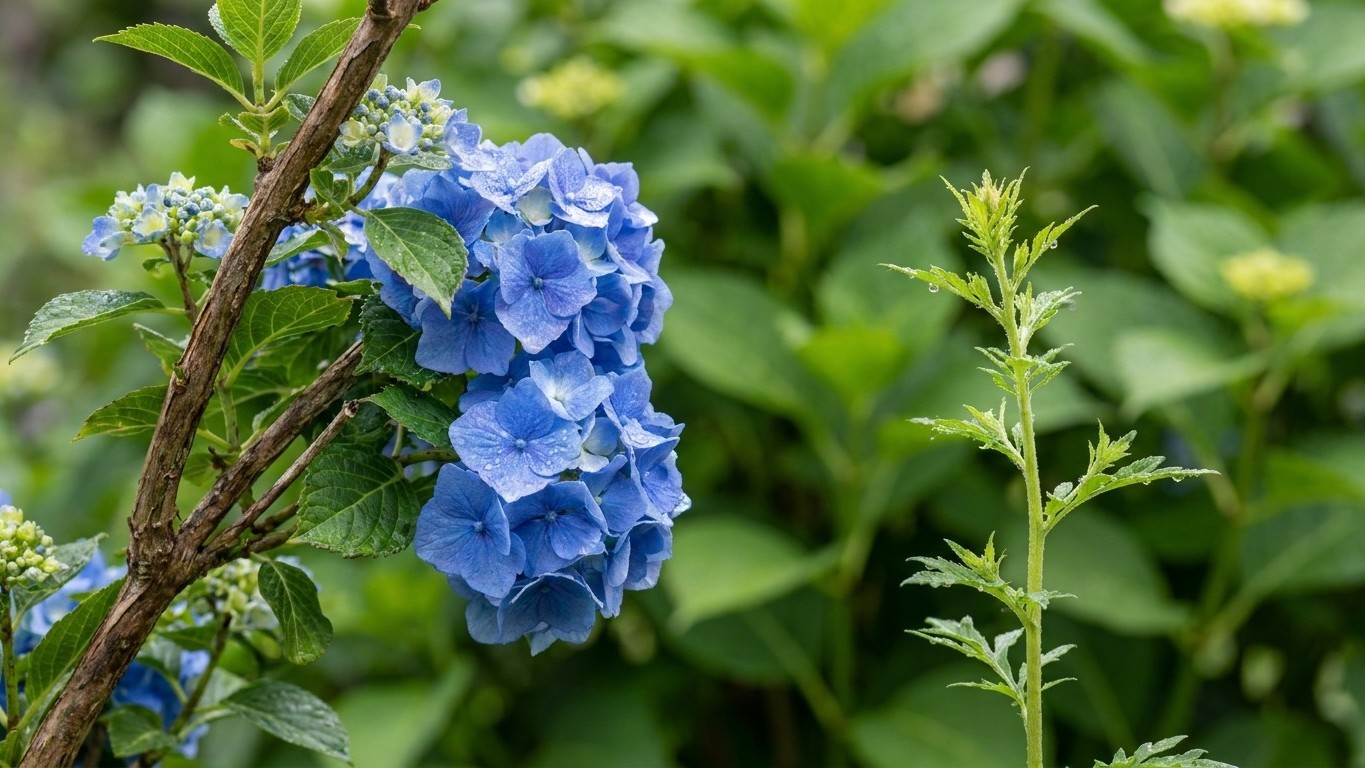

Plant hydrangeas in Virginia in fall or early spring, in a spot with morning sun, afternoon shade and soil that drains. Fall is the better window because roots keep growing through winter while the top sits still. The bigger decision is the type. Bigleaf hydrangeas can lose their flower buds to a late freeze, while panicle and smooth types bloom on new wood and shrug it off. Flower color follows soil pH, but only for bigleaf and mountain types.
When to plant Hydrangeas in Virginia

Hydrangeas come as container shrubs, so the calendar depends on two things: when the ground can be worked, and when the plant will have time to root before heat or hard freezes arrive. Both vary a lot across the state. The reference city here is Virginia Beach, using the NOAA NCEI 1991-2020 Climate Normals for the NAS Oceana station. The 32F freeze probabilities put the last spring frost between March 20 and April 3, and the first fall frost between November 10 and November 24.
That is the mild end of the state. The Blue Ridge and southwest Virginia run weeks later in spring and earlier in fall, and northern and higher-elevation counties sit in between. Use the coastal dates as a floor and shift everything later in spring and earlier in fall as you move inland and uphill.
What month is best for planting hydrangeas in Virginia?
Fall wins. Soil is still warm in October, air is cooler, and the shrub spends its first winter growing roots instead of defending leaves. On the coast and across most of the Piedmont, that means late September through the first week of November. Today is October 19, so this is prime time in those areas. In mountain counties the window is closing, and planting should be done in September or early October so roots settle before the ground freezes.
Spring planting works too. Wait until the last frost has passed for your location, or be ready to throw a sheet over new growth. Nursery shrubs are often pushed along in greenhouses, and their soft leaves blacken in one cold night. On the coast that means late March to mid-April. In the mountains it often means late April or May. Summer planting is possible but demands a deep soak every few days until fall.
Can you grow hydrangeas from seed or cuttings?
Seed is a poor route. Named cultivars do not come true from seed, and seedlings take several years to flower. Cuttings are the practical way to make your own plants. Softwood cuttings taken in June or July root in a few weeks under humid cover, then spend the winter in a protected spot.
Rooted cuttings and any plants grown indoors need hardening off before they go into the ground. Count back from your local last spring frost. Start putting the pots outside in shade about two weeks before that date, lengthening the time outdoors each day. Transplant once the frost date has passed and the plants handle a full day outside without wilting. For a Virginia Beach gardener, hardening off begins in early to mid-March.
For the full picture of how the species behaves everywhere, see How to Grow Hydrangeas: The Complete Guide.
Soil and site preparation
Morning sun and afternoon shade suit bigleaf, smooth and mountain hydrangeas. Afternoon sun in a Virginia July scorches their leaves and keeps them drooping all day. Panicle hydrangeas take full sun if the soil holds moisture. Oakleaf types handle drier shade than most. A spot on the east side of a house or under tall, high-canopied trees fits most of them.
How do you check drainage before planting?
Dig a hole about a foot deep and fill it with water. Let it drain, then fill it again. If the second fill is still standing after several hours, the site is too wet. Heavy clay is common across much of the Piedmont, and sandy, fast-draining soil is common on the coastal plain. Clay needs organic matter worked into a wide area, not just the planting hole. Sand needs it too, to hold water.
Begin four to six weeks before planting. Remove sod, spread two to three inches of compost over the bed, and fork it into the top eight inches or so. A soil test through your local extension office tells you the starting pH and whether lime or sulfur is needed. Both work slowly, so apply them at the start of this window.
On planting day, dig the hole as deep as the root ball and two to three times wider. Set the crown level with the surrounding soil, or an inch higher in clay. Space bigleaf hydrangeas four to six feet apart, smooth types three to four feet, and panicle and oakleaf types six to eight feet. Crowding invites mildew and forces constant pruning.
How do you change hydrangea color in Virginia?
Only bigleaf and mountain hydrangeas respond. Blue flowers need acidic soil, roughly pH 5.5 or lower, where aluminum is available to the plant. Pink flowers form around pH 6.0 to 6.5, where aluminum is locked up. White varieties do not change. Many Virginia soils lean acidic on their own, but a concrete foundation leaches lime into nearby soil and can push blue plants toward pink. Test first, adjust over a full season, and expect the shift to take months.
Varieties that suit Virginia
Virginia spans cold mountain valleys and a mild coast, so the traits that matter are cold hardiness of flower buds, whether the plant blooms on old or new wood, sun tolerance and mildew resistance. Old-wood bloomers set buds the previous summer, so winter kill or a late freeze can erase a year of flowers. New-wood bloomers start fresh each spring and reliably flower. That makes them the safer choice at higher elevations, and a good fit for gardeners who dislike gambling on buds. Gardeners in neighboring Tennessee face a similar mix of conditions, covered in Growing Hydrangeas in Tennessee: Types, Colour and Winter.
| Type | Widely available examples | Blooms on | Good for |
|---|---|---|---|
| Smooth | Annabelle, Incrediball | New wood | Reliable bloom after hard winters, shade, native look |
| Panicle | Limelight, Little Lime, Quick Fire | New wood | Sun, heat, cold hardiness, cut and dried flowers |
| Bigleaf (reblooming) | Endless Summer | Old and new wood | Blue or pink color, a second flush if buds are lost |
| Oakleaf | Snow Queen, Alice | Old wood | Dry shade, red fall foliage, peeling bark |
| Mountain | Tuff Stuff | Old and new wood | Smaller gardens, tougher buds than classic bigleaf |
Smooth hydrangeas such as Annabelle bloom heavily, but the large heads flop after rain. Incrediball carries similar flowers on stiffer stems. Panicle types are the most tolerant of heat, sun and winter cold, and Limelight is the one most nurseries stock. Little Lime stays compact. Quick Fire opens early and fades to pink.
Classic bigleaf hydrangeas are the ones most gardeners picture, and in colder pockets of the state they are the ones that disappoint. A reblooming bigleaf such as Endless Summer keeps flowering even if spring cold took the old buds. Keep bigleaf types in the mildest part of your yard, protected from north wind. In far northern climates the same logic applies more strictly, as Growing Hydrangeas in Minnesota: Types, Colour and Winter explains.
What to plant alongside
Hydrangeas share a shady bed well with plants that want the same moisture and filtered light. Hostas, ferns, hellebores, heuchera and Japanese forest grass sit at their feet and cover bare soil. Ground covers such as liriope and foamflower shade the root zone and slow evaporation, which cuts watering. Azaleas and rhododendrons like the same acidic soil and similar water, so the two groups grow well in one bed. Boxwood makes a tidy evergreen backdrop for winter, when hydrangeas are bare sticks.
For pollinators, the flower structure matters. Panicle, smooth and oakleaf hydrangeas carry small fertile flowers among the showy ones, and bees visit them. Mophead types have mostly sterile florets and offer little. If pollinators are a goal, plant lacecap or panicle types and add a sun-side neighbor like coneflower, which blooms at the same time.
The real competitors are thirsty trees. Silver maples and other shallow-rooted trees take water and nutrients right out of the topsoil, and a hydrangea beneath them wilts every afternoon no matter how often it is watered. Lawn grass pressed against the stem does the same on a smaller scale, so keep a mulched ring at least two feet wide. Black walnut roots release a chemical that harms many shrubs, so give walnut trees plenty of distance.
Claims that marigolds, garlic or herbs planted nearby will confuse or repel hydrangea pests have little evidence behind them. A healthy plant in the right spot, with mulch and regular scouting, does far more.
Watering, feeding and support
Hydrangeas are named for water. Give new plants a deep soak two or three times a week through their first summer, then settle at about an inch of water per week, rain included. Water at the base, slowly, so it soaks to the roots. Frequent shallow sprinkling keeps roots near the surface and makes plants droop sooner. Before watering, push a finger two inches into the soil. A hydrangea that wilts in the afternoon heat but perks up by evening is fine. One that is still limp the next morning is thirsty.
Spread two to three inches of shredded bark, pine straw or leaf mold over the root zone, and keep it a few inches off the stems. Mulch holds moisture, buffers summer heat and keeps weeds down. Refresh it each spring.
Feed lightly. A slow-release balanced fertilizer in spring, as buds swell, is enough for most plants. Reblooming bigleaf types can take a second small dose in early summer. Stop feeding by midsummer so new growth hardens before frost. Heavy nitrogen produces big green leaves and few flowers. Skip fertilizer on newly planted shrubs for the first month or so and let roots establish.
How do you prune hydrangeas in Virginia?
Pruning follows the bloom wood. Bigleaf, oakleaf and mountain types set buds in late summer, so prune right after flowering, by early August at the latest, and take out only dead wood in spring once leaves emerge. Panicle and smooth types bloom on new wood. Cut them back in late winter before growth starts: a third off a panicle for shape, and smooth hydrangeas can drop to 12 to 18 inches for stiffer stems.
Floppy smooth hydrangeas can also be held up with a peony ring or grow-through grid set in early spring, before stems reach knee height. Smooth and oakleaf types spread by suckers. If one spreads past its spot, dig the extras in fall or early spring and plant them elsewhere or share them.
Common problems

Most hydrangea trouble traces back to water, light or pruning timing, not to pests. Read the leaf and the flower head first.
Why are my hydrangeas wilting, browning or not blooming?
Wilting that clears overnight is heat. Wilting that persists means dry roots, or roots sitting in waterlogged soil, so check the soil before reaching for the hose. Brown, crispy leaf edges point to sun scorch, dry spells or fertilizer salts. Yellow leaves with green veins suggest high soil pH, common beside concrete or after too much lime. A soil test settles it.
No flowers is usually one of four things: pruning an old-wood bloomer in fall or spring, flower buds killed by winter cold or a late freeze, too much shade, or too much nitrogen. Check the pruning history first. If you cut a bigleaf hydrangea in March, you removed the buds.
What diseases affect hydrangeas?
Cercospora leaf spot makes small purple-brown spots with yellow halos. Powdery mildew appears as a white, dusty coating, especially in crowded, humid conditions. Both rarely kill the plant. Space plants for airflow, water at the base, remove infected leaves and clean up fallen leaves in autumn. Root rot comes with wet feet, and the fix is drainage, not fungicide.
Which pests bother hydrangeas in Virginia?
The Virginia Cooperative Extension list of insects on home garden plants includes several that also visit hydrangeas: Japanese beetle, aphids, spider mites, thrips and stink bugs, including brown marmorated. Japanese beetles chew leaves into lace in early summer, and hand-picking into soapy water works on a few shrubs. Aphids cluster on new growth and can be rinsed off with a strong spray of water. Spider mites stipple leaves and leave fine webbing in hot, dry spells. Thrips streak petals. Pest pressure varies across the state, so take a sample to your county extension office if you are unsure what you are seeing. Deer also browse hydrangeas, often eating buds and young shoots.
Harvest and end of season
Hydrangeas are harvested as cut flowers. For fresh bouquets, cut in the morning when the flower head is mostly open and the florets feel firm. Take long stems, strip the lower leaves and get them into water right away. If heads wilt, recut the stem and give them a deep drink.
For drying, wait until late summer or early fall, when florets turn papery and take on antique tones of green, burgundy or dusty blue. Cut, remove the leaves and hang the stems upside down in a dark, dry spot for two to three weeks. Another approach is to stand them in an inch of water and let it evaporate. Dried heads last for months in a vase.
As fall frost approaches, shift to protection. On the coast, the first fall freeze arrives between November 10 and November 24. Higher, cooler parts of the state get theirs earlier, so use this as a prompt to check local forecasts. Stop all fertilizing by midsummer. Water deeply before the ground freezes, and add two to three inches of mulch once the soil has cooled. Leave bigleaf flower heads on through winter, since they shelter the buds below, and prune them in spring. In colder pockets, a circle of wire fencing stuffed with leaves protects bigleaf buds. Potted hydrangeas should move to an unheated garage or against a wall. Oakleaf types give you a bonus, as their leaves turn red and burgundy in autumn.
Local help
County conditions differ more than state averages suggest. Virginia Cooperative Extension offices offer soil testing, help identifying pests and diseases, and local planting advice through agents and Master Gardeners. For more state-level planting guides, see the Virginia guides.
Common questions
What is the best hydrangea for full sun in Virginia?
Panicle hydrangeas, such as Limelight, Little Lime and Quick Fire, handle full sun best, provided the soil stays moist. In the hottest summers, some afternoon shade still reduces leaf scorch. Bigleaf and smooth types do better with morning sun only.
When should I cut back hydrangeas in Virginia?
Prune panicle and smooth types in late winter before growth starts. Prune bigleaf, oakleaf and mountain types right after they flower, by early August. Cutting them in fall or early spring removes the buds for next year.
Can I plant hydrangeas in summer?
You can, but it takes work. Plant in the cool part of the day, water deeply every two or three days and mulch well. Fall planting is easier, and spring is next best.
How do I turn pink hydrangeas blue?
Lower soil pH to about 5.5 or below by working in garden sulfur or aluminum sulfate according to the label, after a soil test. This works only for bigleaf and mountain types, and takes months. White varieties will not change color.
Why are my hydrangea leaves drooping in the afternoon?
Large leaves lose water faster in the heat than roots can replace it. If the plant recovers by evening, it is fine. If it stays limp in the morning, water deeply and check for poor drainage or competing tree roots.