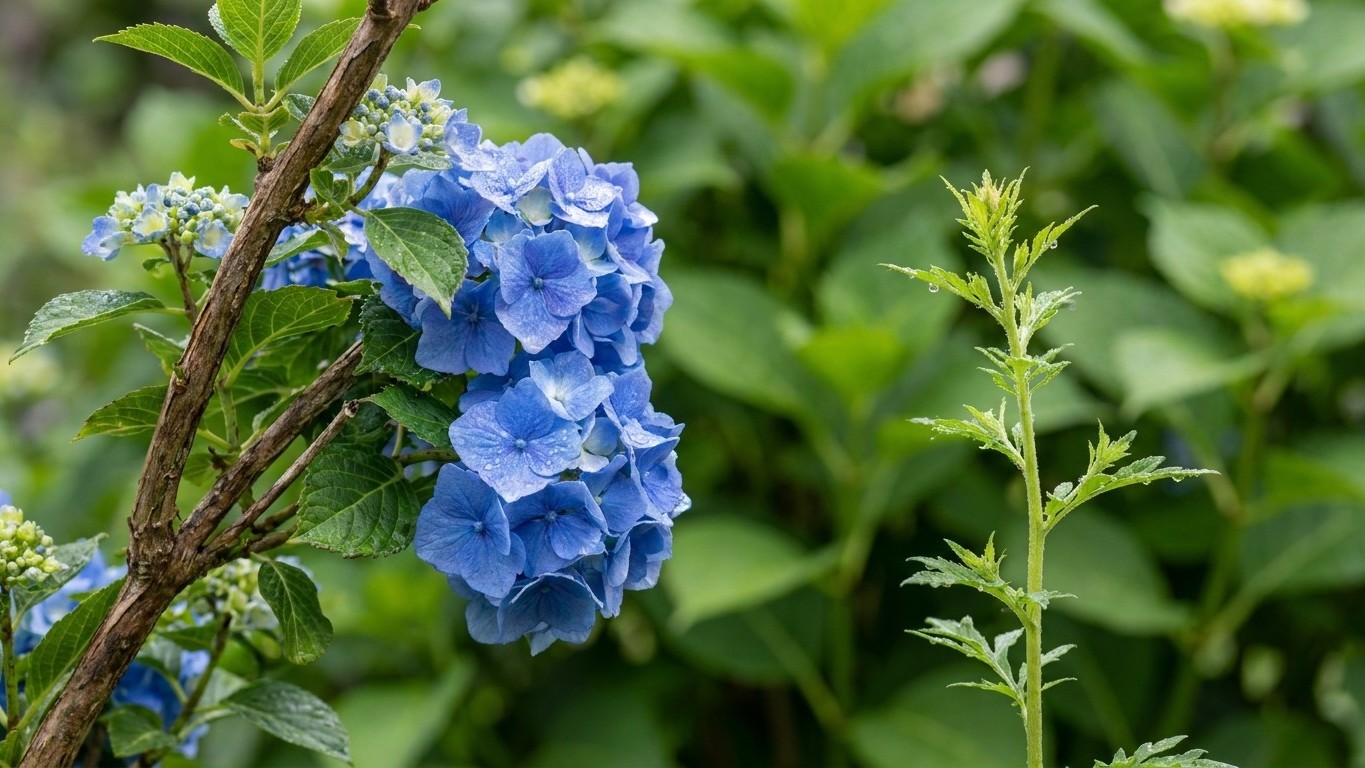

Plant hydrangeas in Minnesota after the last spring freeze, which in the Twin Cities falls between April 17 and April 30, and choose panicle or smooth types. Both bloom on the current season’s growth, so a hard winter that kills stems to the ground still leaves you with flowers by midsummer. Bigleaf hydrangeas, the mopheads with blue or pink globes, are the gamble. Below: timing, site, varieties, care, pests and winter. For plant basics, see How to Grow Hydrangeas: The Complete Guide.
When to plant Hydrangeas in Minnesota

The reference city is the Twin Cities. NOAA NCEI 1991-2020 Climate Normals, using the 30 to 70 percent probability band for a 32°F freeze, put the last spring freeze between April 17 and April 30. That is the mild south of the state. Northern and higher-elevation Minnesota runs two to three weeks tighter at both ends, so the spring window opens that much later up north and the fall one closes that much sooner. One city’s numbers are a starting point for the rest of the state, not a rule for it.
Skip the seed tray
Starting hydrangeas from seed indoors is a poor use of a windowsill. Seedlings take years to flower, and named cultivars grown from seed won’t match the parent plant. Nurseries multiply them from cuttings, and so can you: softwood cuttings taken in early summer root over a few weeks, then spend their first winter in a pot and go into the ground the following spring. For most gardeners, the equivalent of “starting indoors” is buying a plant that a greenhouse has already grown.
Hardening off and the count-back
Greenhouse-grown plants arrive in April with soft, tender leaves. Garden centers sell them early, but the soil and the calendar aren’t ready. Park the pot outdoors in shade for a few hours, then lengthen the time and add sun over 7 to 10 days. Bring it inside whenever the forecast shows a freeze.
The arithmetic runs backward from your planting date. In the Twin Cities the window closes April 30, so May 1 is the earliest sensible date. Subtract 7 to 10 days and hardening off starts between April 21 and April 24. Gardeners who want less risk wait into May, since the band still leaves some chance of a freeze at its far end, and new hydrangea leaves blacken quickly in one. Up north, add the two to three weeks and start hardening off in May.
Fall is the second window. The earliest edge of the Twin Cities first-freeze band is October 11, so count back about five weeks and aim to have the shrub in the ground by early September. Roots need that time to knit into the soil before it freezes. A hydrangea planted in mid-October usually heaves out of the ground in spring.
Soil and site preparation
Morning sun and afternoon shade is the classic hydrangea site, and in Minnesota it matters most for bigleaf and smooth types, which scorch and wilt under western exposure. Panicle hydrangeas take far more sun and flower better for it, provided the soil never dries out. Pick the spot by watching it on a clear day in June, not by guessing from a March yard.
Texture and drainage decide more than fertility. Hydrangeas want moisture-holding loam rich in organic matter, but roots rot in standing water. Dig a hole about a foot deep, fill it with water, and come back the next morning. If water is still sitting there, choose another spot or build a raised bed. Heavy clay is common in many Minnesota yards and is workable with compost, but it needs the drainage check first.
Start about a month ahead and work in this order:
- Four weeks out: send a soil sample for a pH and nutrient test. Bigleaf flower color depends on pH, and you can’t fix what you haven’t measured.
- Three weeks out: spread 2 to 3 inches of compost over the bed and fork it into the top 8 to 12 inches, once the ground has thawed and crumbles instead of smearing.
- Two weeks out: mark the shrub’s footprint with stakes and string, and check that it clears gutters, walkways and the edge of the neighbor’s maple roots.
- One week out: soak the bed so the rootball goes into evenly moist soil.
On planting day, dig the hole twice as wide as the pot and no deeper. Set the crown level with the surrounding soil, backfill with the soil you removed, and skip fertilizer in the hole. Spacing varies a lot by cultivar, so read the tag for mature width and plant at about that distance. A compact panicle needs far less room than a sprawling smooth hydrangea, and crowding invites mildew.
Varieties that suit Minnesota
Winter survival of the flower buds decides the outcome for hydrangeas in Minnesota. The trait to look for is which wood produces the blooms. Types that flower on new growth, formed after spring thaw, are insured against winter dieback. Types that set buds in the previous summer lose them whenever stems die back.
| Type | Blooms on | Minnesota winters | Widely available examples | Good for |
|---|---|---|---|---|
| Panicle (Hydrangea paniculata) | New wood | Most dependable | Limelight, Bobo, Quick Fire | Sun, hedges, long bloom season, white flowers aging to pink |
| Smooth (Hydrangea arborescens) | New wood | Dependable, can be cut to the ground | Annabelle, Incrediball, Invincibelle Spirit II | Part shade, big round heads, woodland edges |
| Bigleaf (Hydrangea macrophylla), reblooming | Old and new wood | Risky, needs protection | Endless Summer | Blue or pink color, Containers, sheltered spots |
Panicle types such as Bobo stay compact enough for foundation beds, while Limelight grows into a large shrub. Annabelle is the old smooth standard, famous for flopping after heavy rain. Incrediball carries the same white heads on stiffer stems. Reblooming bigleaf cultivars like Endless Summer are marketed as flowering on new wood as well as old, which gives some insurance, though they still sulk after the coldest winters.
Color, honestly
Only bigleaf hydrangeas shift color with soil chemistry. Acidic soil, roughly below pH 5.5, with available aluminum, tends toward blue, and neutral to alkaline soil leans pink. Panicle and smooth types do not respond to soil amendments, so don’t spend money on aluminum sulfate for a Limelight. A soil test tells you where you start. If the beds are alkaline, the easiest route to blue is a container with acidic potting mix.
Gardeners in neighboring regions face the same choices under different winters. The Growing Hydrangeas in Iowa: Types, Colour and Winter guide covers a milder situation, while Growing Hydrangeas in Vermont: Types, Colour and Winter and Growing Hydrangeas in Nova Scotia: Types, Colour and Winter cover other cold-region approaches.
What to plant alongside
Hydrangeas are shallow-rooted, so the best neighbors work above or beside them and don’t fight for the top few inches of soil. Hostas, ferns, astilbe and heuchera share the same moisture and part-shade preference, and their leaves shade the ground around the hydrangea’s roots and slow evaporation. Spring bulbs planted around the base flower before the shrub leafs out, then their fading foliage hides under the hydrangea’s growth. Low ground covers such as sweet woodruff do a similar job, as long as you keep them from creeping into the crown.
Pollinators come to panicle and smooth hydrangeas, but many cultivars have mostly sterile showy florets that offer little. The fertile flowers in the center of lacecap types are a better draw. If bees matter to you, mix in a flowering perennial that blooms at the same time. Whole beds of hydrangeas alone are pretty and not much help to wildlife.
Competitors are bigger than most people think. Mature maples and other surface-rooting trees drain the top foot of soil, and a hydrangea beneath one will wilt every afternoon no matter how often you water. Turfgrass is another rival: keep a clear mulched circle around the shrub so lawn roots stay out. Roses nearby deserve a mention, since Japanese beetles favor them, and a big rose planting next door can draw beetles into the same part of the yard. That is a reasoned caution, not a documented rule.
A popular claim says marigolds, garlic or chives planted beside hydrangeas repel beetles and other pests. I found no solid evidence for it. Adult beetles fly in from well beyond your yard and feed on whatever they find. Plant those herbs because you want them, not as pest control.
Watering, feeding and support
The name comes from the Greek for “water vessel,” and the shrub earns it. A new planting needs a deep soak two or three times a week through its first summer. Slow water at the base reaches the full rootball, and frequent light sprinkling keeps roots at the surface where they dry out. Established plants do well on about an inch of water a week from rain and hose combined. A rain gauge saves guessing. Water in the morning, at the soil, so leaves dry quickly and don’t invite disease.
Mulch is the other half of the routine. A 2 to 3 inch layer of shredded bark or wood chips keeps moisture in and moderates temperature swings, and it cuts weed competition without hoeing near shallow roots. Pull the mulch back an inch from the stems, because piled mulch holds moisture against the bark.
Feeding should be modest. A slow-release, balanced fertilizer applied once new growth shows in spring is usually enough, and a soil test result tells you if you need more. Heavy nitrogen produces lush leaves and few flowers, and late feeding pushes soft growth that early frost will kill. Stop by midsummer.
Support is a design issue for smooth types. Annabelle’s heads grow heavy and the stems bend to the ground in rain. A peony ring or a few stakes with twine, set early in the season before stems fill in, hides better than staking after the collapse. Stiffer cultivars like Incrediball skip this chore.
Pruning follows the bloom wood. Panicle and smooth types can be cut in late winter or early spring, before growth begins. Smooth hydrangeas can go down to 6 to 12 inches, and panicles benefit from removing a third of the stems for strong, big flowers. Bigleaf types get only dead-stem removal after they leaf out, since cutting in fall or early spring takes next summer’s buds with it. Smooth hydrangeas also spread by suckers, which you can dig and share or remove.
Common problems

No flowers is the top complaint, and the cause is usually winter. Bigleaf hydrangeas that leaf out beautifully but never bloom lost their buds to cold. The fix is switching to a panicle or smooth type, or protecting stems (see the end-of-season section). Other causes are too much shade, too much nitrogen, and pruning at the wrong time.
Wilting in afternoon heat is normal. If leaves perk up by evening, the plant is fine. If they stay limp the next morning, check the soil: dry means water deeply, soggy means drainage trouble and possible root rot. Competing tree roots can produce the same symptom with no change in watering.
Leaf spots show up as small brown or purplish circles, mainly in wet summers or on crowded plants. They look ugly but rarely kill the shrub. Water at the soil, thin crowded stems, and rake fallen leaves in autumn. Powdery mildew, a white coating on leaves, appears in humid weather with poor air movement. It’s cosmetic on established plants.
Yellow leaves with green veins point to chlorosis, an iron shortage that high-pH soil can cause. A soil test confirms it before you buy anything, and chelated iron or soil acidifiers can help in a bed that tests alkaline. Scorched, crispy leaf edges mean the plant dried out or took too much afternoon sun. Brown flower heads after a hot spell are the same story. Move the plant or add shade and water more deeply.
Floppy stems come from too much shade, too much nitrogen or a top-heavy cultivar, so check light first, then your fertilizer habit. Chewed leaves have a cause worth naming, and the next section covers it.
Pests that actually show up in Minnesota
The University of Minnesota Extension yard and garden insects list highlights Japanese beetle, spotted wing drosophila, squash vine borer, squash bug, cabbage maggot, onion maggot, Colorado potato beetle, striped cucumber beetle, Swede midge and three-lined potato beetle. The list reflects home gardens generally, is not exhaustive, and pressure varies within the state. Of those ten, one routinely damages hydrangeas.
Japanese beetle. What you see first is leaves turning to lace, with veins left and tissue between them eaten, followed by the metallic green and copper beetles themselves. Adults emerge from late June to early July and feed mainly in July and August, which overlaps with panicle and smooth bloom. They also chew petals. The control that works is hand-picking in the cool morning, when beetles are sluggish, and dropping them into soapy water. Pheromone traps tend to draw more beetles to your yard than they catch.
The rest are visitors from the vegetable and berry patch. Spotted wing drosophila turns up in late June or early July and peaks in August, but it attacks ripening soft fruit such as raspberries, not hydrangea flowers. Squash vine borer is active mid-June through July, and squash bugs and striped cucumber beetles (not active before the first week of June in southern Minnesota) target cucurbits. Cabbage and onion root maggots are more common in cool, wet springs and hit those crops. Colorado potato beetle and three-lined potato beetle go for potato-family plants. Swede midge, first found in 2016, has been limited to Hennepin and Ramsey counties and affects cabbage-family crops.
If an unfamiliar insect is on a hydrangea, a photo sent to your county extension office will identify it faster than any chart. Never assume a pest is absent from your area because it isn’t on a short list.
Cut flowers and end of season
Cut hydrangeas for vases in the morning, after the blooms have fully opened and the stems are well hydrated. Take long stems, strip the lower leaves, and plunge them straight into water. Smooth and panicle flowers last a week or so indoors, and bigleaf blooms wilt faster.
Drying is where hydrangeas surprise people. Wait until late summer, when the heads shift to antique tones and feel papery. Flowers cut too early shrivel and brown. Strip the leaves and hang bundles upside down in a dry, dark spot with decent airflow. Or stand them in two inches of water and let it evaporate for a softer finish. Stored dry and out of humidity, they hold their shape for months.
First fall freeze in the Twin Cities falls between October 11 and October 23, according to the NOAA NCEI 1991-2020 normals, and that range runs two to three weeks earlier in the north. A frost won’t hurt an established hydrangea. It ends the bloom season, and the shrub drops its leaves and goes dormant. Stop fertilizing by midsummer so growth hardens off, and keep watering deeply until the ground freezes, because dry soil heading into winter stresses roots.
New plants and anything bigleaf need protection. After the ground begins to freeze, mound 4 to 6 inches of shredded leaves or mulch over the crown. For bigleaf shrubs, build a wire cylinder around the plant and fill it loosely with leaves to shield the stems. Leave panicle and smooth flower heads on over winter for snow-catching structure, then prune in late winter. Uncover bigleaf gradually in spring so a late frost doesn’t hit exposed buds.
Local help
Frost dates, soil pH and pest pressure all shift from county to county. University of Minnesota Extension offers soil testing information, plant diagnostics and your county office’s contacts. For more state-specific advice, browse our other Minnesota guides.
Common questions
Can I grow blue hydrangeas in Minnesota?
Yes, with bigleaf types in acidic soil or in containers with acidic potting mix. Expect to protect stems each winter, because blooms depend on stem survival. Panicle and smooth types won’t turn blue no matter what you add to the soil.
Why didn’t my hydrangea bloom this year?
Winter killed the flower buds on a bigleaf type, or you pruned off old wood. Excess shade and heavy nitrogen are the other usual suspects. Panicle and smooth types rarely have this problem.
Should I cut hydrangeas back in fall?
Not bigleaf, which would lose next year’s buds. Panicle and smooth types are better pruned in late winter or early spring, and leaving the dry flower heads over winter gives interest in the snow.
Is fall planting safe?
It works if the shrub is in the ground by early September in the Twin Cities, about five weeks before the earliest first-freeze date of October 11. Later planting leaves roots short of time. Up north, count back from an earlier freeze.
How far apart should I space them?
Read the plant tag for mature width and plant at about that distance. Compact panicles fit tighter spacing, while large panicles and sprawling smooth types need more room for airflow and mildew control.